
If the title of this essay appears familiar, it’s because this is a totally rewritten version of something I did for Beatdom 16 about ten years ago. It was also posted online here. It was a comparatively short essay that discussed whether or not Jack Kerouac invented the myth of “the Burroughs millions” and his supposed trust fund—something that Burroughs always claimed. This essay continues that investigation but looks in more depth at how Burroughs treated money throughout his life and whether he had more or less of it than he said. It draws upon many more sources and corrects some errors in my original essay.
William S. Burroughs was always quick to observe that thanks to the novels of Jack Kerouac he had been “saddled with” the reputation of being a rather wealthy man. He once explained to an audience:
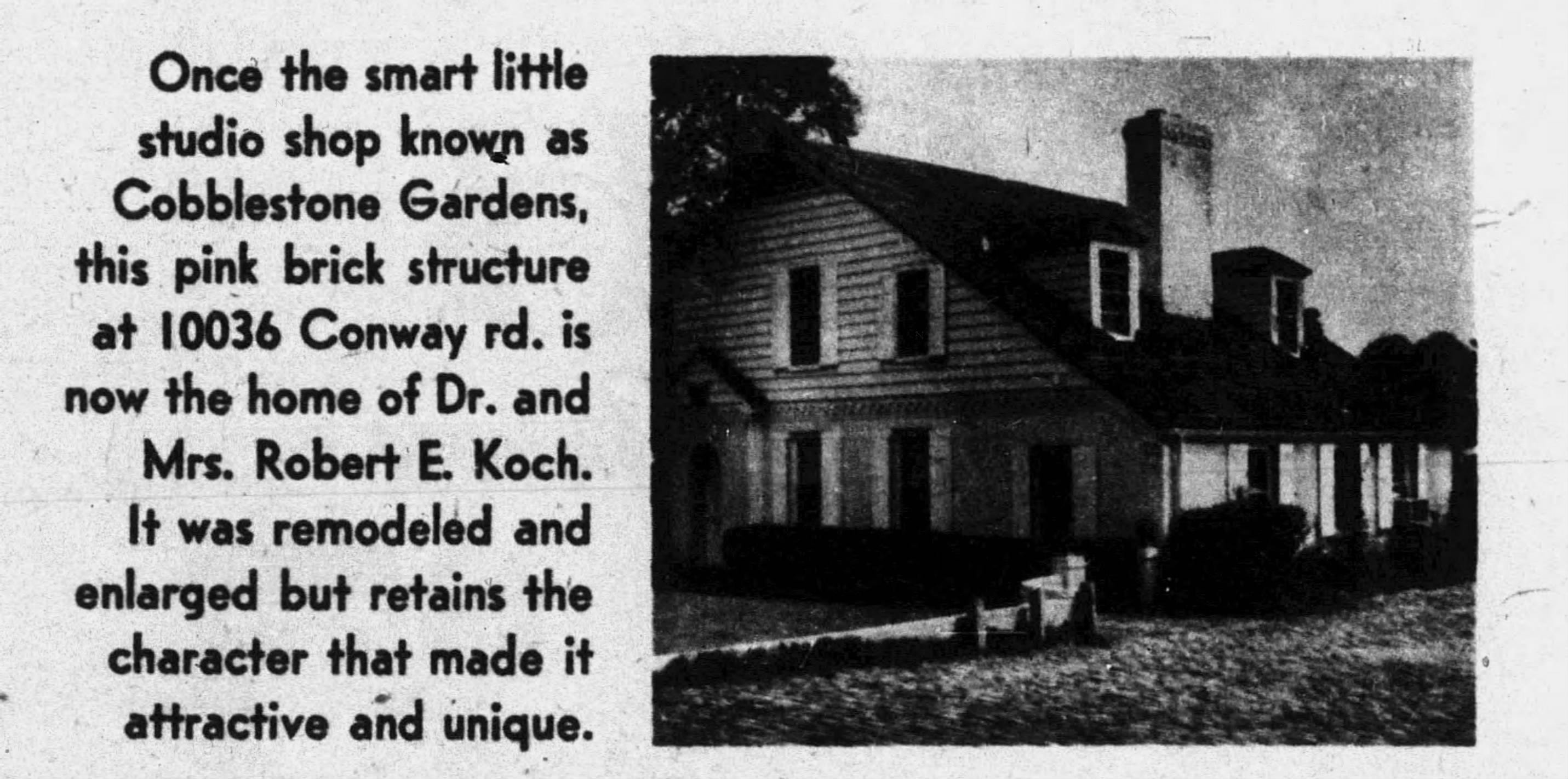
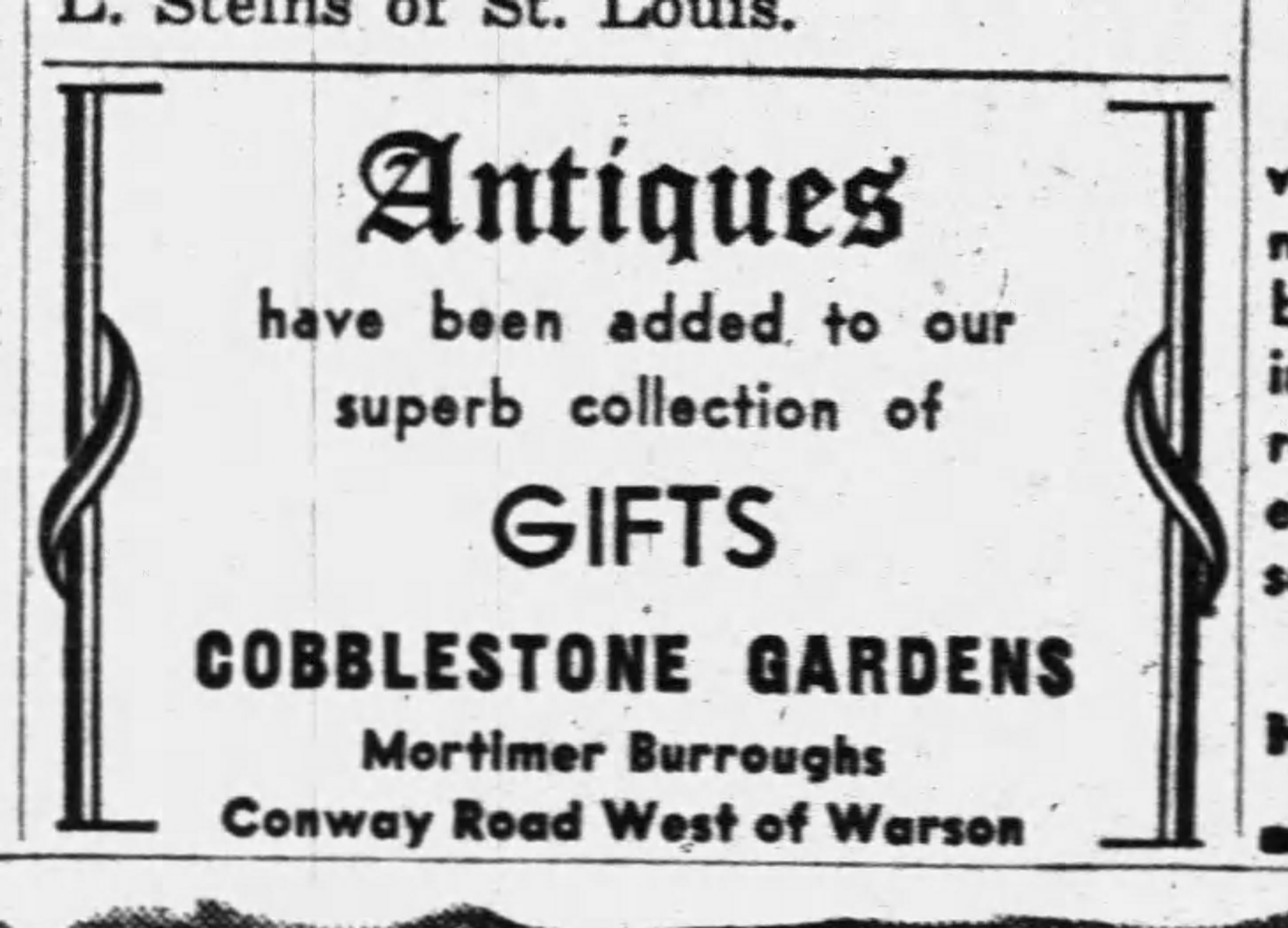
I have never been able to divest myself of the “trust fund” that he foisted upon me. I mean, there isn’t any trust fund. There never was a trust fund. When I was not able to support myself, which was for many years […] I was supported by an allowance from my family—my hard-working parents who ran a gift and art shop in Palm Beach Florida called Cobblestone Gardens. [...] You see, Kerouac thought a trust fund was more interesting and more “romantic.” Let’s face it, there was a very strong Sunday-Supplement streak in his mind. And he also saddled me with a Russian countess. Well, she was a little bit easier to get rid of than the trust fund. And he nurtured the myth of the Burroughs millions. There are no Burroughs millions, except in the company—and the family got nothing out of it. I mean, it’s an old old story how the inventors’ family winds up with zilch. Incompetent executors, they advised the children that the whole thing is absolutely impractical and they had better sell out right now for what they could get—which they did—which was a very small amount. Then I asked Kerouac about this. “What is this trust fund nonsense?” And he said, “Oh well, you’ll see, you will have a trust fund.” Such cheek! He was going to write me a trust fund![i]
He does not explicitly state where Kerouac made the claim but he is adamant that Kerouac was to blame and his mention of a “Russian countess” comes from On the Road. He’s repeated this elsewhere, including several interviews. To give one example, he told Jennie Skerl in 1980:
WSB: There never was a trust fund. It’s impossible to get out from under Kerouac’s fabrications. There never was a trust fund. My family in their latter years ran a gift and arts shop called “Cobblestone Gardens.” It started in St. Louis, then moved to Palm Beach,[1] and they sent me an allowance of $100 out of the money they earned. It was not a trust fund. I never had a trust fund. There never was one.
JS: So, you would not call yourself a scion?
WSB: Certainly not. No connection with Burroughs Adding Machine at all. That was Kerouac’s doing. He said somewhere I had a trust fund, and it’s just been repeated and repeated. I can’t get it through to people that there just never was a trust fund.[ii]
Again and again, interviewers asked about his family’s wealth and his supposed trust fund and Burroughs angrily denied it all, blaming Kerouac. He felt he had been burdened with an unfair reputation and took every opportunity to refute it. Even today, it is a widely held belief. Just this morning, I saw a quote from Burroughs on Facebook that had no relation to money and two random people commented that he was “a trust fund baby.”
Let’s now look into the truth of the matter. We’ll first explore his family’s wealth and the reality behind his supposed “trust fund,” then look at his financial situation throughout his life.
Although Burroughs had easier access to finances than most people—particularly those among his own socio-literary circles—“the Burroughs millions,” as he called them, were imagined. He never had anything close to a million dollars in his bank and his family, whilst far from poor, were certainly not millionaires.
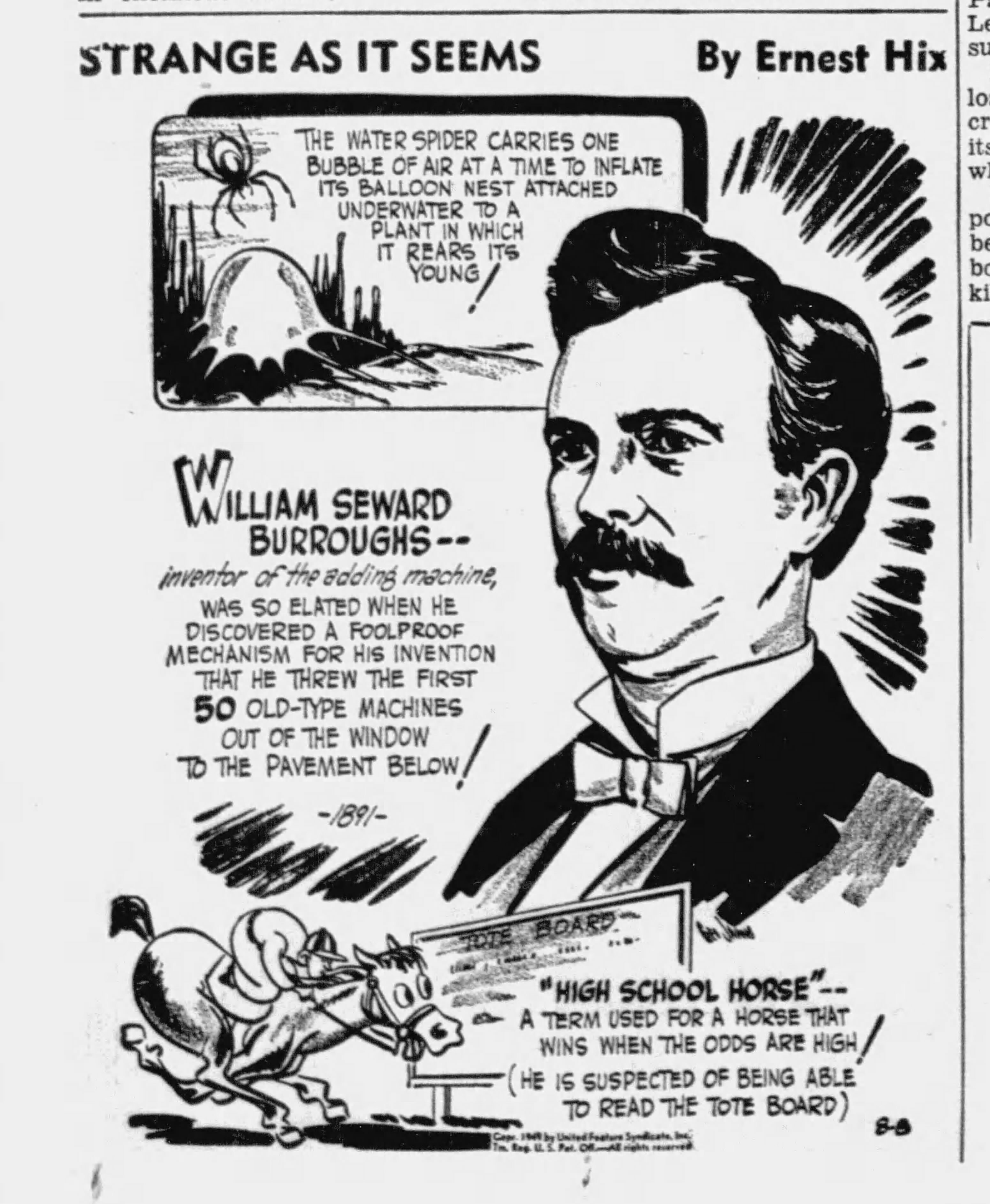
Burroughs’ grandfather, also called William Seward Burroughs, was the inventor of the adding machine. More accurately, he was the man who perfected the adding machine. As Burroughs said in a 1965 interview, “he made it practical and inexpensive.”[iii] He moved from New York to St. Louis in 1880, at only twenty-three years old, and with Joseph Boyer he founded the American Arthimometer Company four years later. In 1888, he filed a number of patents for his creation and the company soon found success. However, at only thirty-nine years old his health failed and in 1898 he died. His business partner was kind enough to rename the company in Burroughs’ honour and installed a large memorial in St. Louis that read: “Erected by his associates as a tribute to his genius.”[iv]
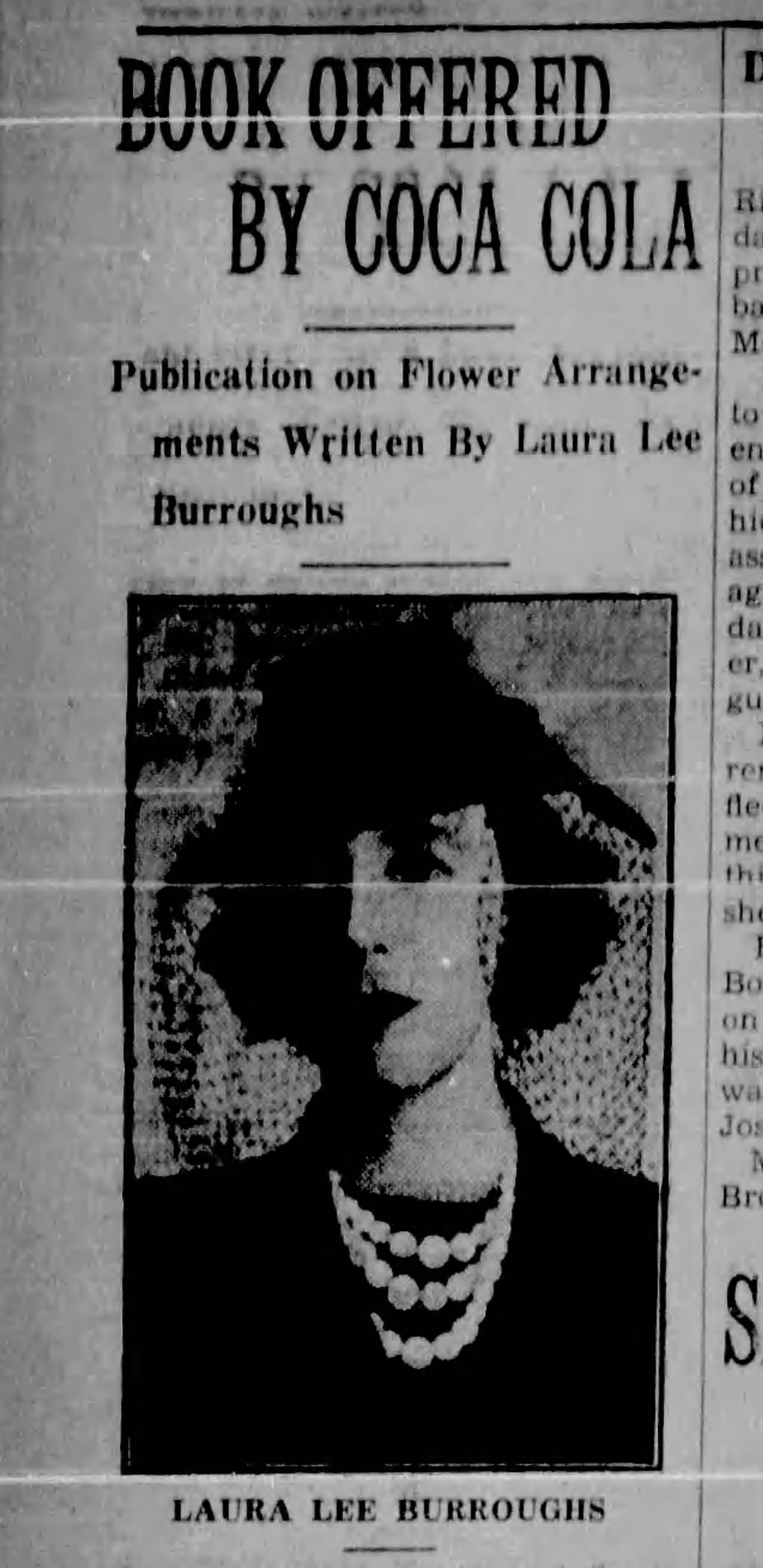
Despite this recognition, Burroughs’ family would not prosper with the company’s growing success. Boyer took the Burroughs Adding Machine Company to Detroit and the company bought back all of the family’s stocks, except for those belonging to Mortimer, the inventor’s second son. He was only thirteen at the time but kept the few shares in the company that belonged to him and, many years later, sold them only three months prior to the Crash of 1929. This was apparently worth $276,000.[v] He was the only descendant to significantly profit from the invention of the adding machine and he did so largely through his own good business sense. He had two sons, the younger of whom was called William S. Burroughs II.[2]
Burroughs’ parents lived the sort of lives in St. Louis that one wouldn’t hesitate to call “upper class.” While Burroughs took every opportunity to highlight the fictional origins of “the Burroughs millions,” his family was hardly hurting for cash during his childhood. He lived in a nice house in a nice neighbourhood with a number of staff, including a maid, a cook, and a gardener. They also had a summer home on Lake Huron. Burroughs, too, went to an excellent school that provided the sort of education expected of future leaders, and from which the students often went on to Ivy League colleges. Burroughs himself went to Harvard.
Yet Burroughs was eager to stress—as his assistant and executor, James Grauerholz, did in a biographical essay in his collection, Word Virus—that his family was not wealthy compared to other families in the area. Grauerholz writes that they “were at the lower end of the social scale” with only “a middling fortune.”[vi] Despite being vastly wealthier than the majority of the US population, it would appear that among the St. Louis elite the Burroughs family was considered rather poor. Burroughs later said of his father’s wise decision to sell the family shares in 1929 that it was “a measly quarter million in the bank, we were not accepted by families with ten, twenty, fifty million.”[vii] Years later, Burroughs spoke harshly of the “WASP elite,” who would not invite his family to the best parties. “Nobody wanted those ratty Burroughses about,” he said.[viii]
Because of this feeling of inferiority, Burroughs was oddly sensitive about later depictions of his family and his privileged upbringing. We’ve seen that already from a few quotes, but here’s a particularly illuminating one from 1976, which is in reference to a seminal Beat publication by John Tytell. Burroughs explained:
It’s riddled with factual errors. You see, he didn’t show it to me before it was published, so my rectification of these errors never got in. He says I was provided for by a trust fund. Well, I never had a trust fund. All this stuff came from Jack Kerouac, and Jack Kerouac was writing fiction. […] Tytell’s material just isn’t true. The trust fund isn’t true. The whole biography he’s given me is not true. He talks as though we were the crème de la crème in St. Louis, which is absolute nonsense. My parents were in fairly good circumstances, but they were not at all in the millionaire class. Money means everything in the class system of a middle-western town like that, and we were very much outsiders as far as the really big money in St. Louis was concerned. And there are lots of other errors. As a matter of fact, my parents were working in a gift and art store they owned called Cobblestone Gardens, which they had in St. Louis and later in Palm Beach, Florida. With the money they made there they sent me an allowance of two hundred dollars a month for many years, until in the early ‘60s I began making enough money and told them I could look after myself. There was no trust fund. I noticed all these errors, and I called them to Tytell’s attention.[ix]
It is easy to sneer at this sort of statement, particularly in a world where people still die of starvation. However, Burroughs’ frustration is somewhat understandable. His childhood appears to have been painful and the cause of lifelong psychological problems. He was not particularly close to his family and obviously he was at a distance from his wealthier schoolmates. He was an extremely insecure child, plagued by feelings of inferiority. As an adult, he would embrace the role of outlaw but having his childhood situation misrepresented—mocked, in some cases—certainly hurt and offended him. He did not think it fair that he was considered a spoiled rich kid, heir to an American dynasty.
Again and again, Burroughs blamed Kerouac and flat-out denied having ever been the recipient of a trust fund, but it seems this is a matter of semantics. He freely admitted, in various interviews—sometimes the same ones in which he criticised Kerouac—that his parents gave him an allowance. Clearly, in his mind, this was an important distinction. And he is correct that they are distinct. An allowance is a sum of money voluntarily given on a regular basis by one party to another whereas a trust fund is a legal arrangement.
The allowance from his family was sent to him each month over a period of about 25 years and the family could—and sometimes, briefly—did cut him off. A trust fund, on the other hand, would be an amount locked up and likely invested, with monthly payments sent and the locked-up sum belonging to the recipient. That locked-up sum would also likely have increased in value, resulting in a growth in the payouts assuming that it was sensibly invested, but Burroughs’ allowance remained fixed and so it would have decreased in purchasing power over the quarter-century that he received it.
To Kerouac, from a far poorer background, there was no difference. Burroughs received a sum of money each month and that was, to Kerouac’s mind, a trust fund.[3] Perhaps in the reader’s mind it is also of no importance, for Burroughs was clearly in a position of great privilege to have had this regular income. It may not have been serious wealth, but it was the sort of security that few in this world possess. Yet what is even more interesting is that Burroughs himself called it a “trust fund” in an early autobiographical text, long before he was irked by Kerouac’s use of the term.
This is the prologue to Junky, which is of course a work of fiction but nonetheless very obviously based on his life and filled with fairly accurate autobiographical details, particularly the prologue, which is simply an account of the life of the author. In the Definitive Text edition, Oliver Harris notes that in this section “most of the details do turn out to be correct.”[x] Burroughs wished to present himself as an outsider, stressing how difficult it was growing up as he did, yet it reeks of privilege. He toned down the aspects of affluence but they were there nonetheless, and he used the term “trust fund” to describe his financial situation. After briefly mentioning his private schools and Ivy League education and Grand Tour of Europe, he wrote:
When I graduated without honors, I had one hundred fifty dollars per month in trust. […] I went back to the States. With my trust fund I could live without working or hustling. I was still cut off from life as I had been in the Midwest suburb. I fooled around taking graduate courses in psychology and Jiu-Jitsu lessons.[xi]
This was 1936 and $150 would equate to about $3,600 today (with the median income at present being somewhere between $4,500 and $5,000). Whilst that hardly makes Burroughs an obscenely wealthy person, it was of course a substantial income for a young man, giving him great freedom to pursue his interests, as he makes clear in this book. Elsewhere, Burroughs claimed that he had an income of $200 per month (worth $3,800 today) and the Skerl interview quoted above he claimed it was just $100 (about $2,400 today).
We can see that he changed his story, possibly out of poor memory but most likely to avoid sounding privileged. He gave the figure $200 far more than he gave $100 or $150, so this is most likely the real figure, but it’s also possible that he received a smaller amount in the late 1930s and that this increased over the coming years. However, in Ted Morgan’s biography, it states that he received $200 per month from his graduation onwards, and I would guess that he wrote $150 in Junky simply to tone down the degree of affluence just as he did in his other autobiographical details in the book.
Whatever the figure and whatever the year, there is no doubt that Burroughs had a guaranteed monthly income from his parents that afforded him some degree of freedom. This lasted from 1936 to 1964. He was not wealthy but did not need to work unless he wanted extra cash. It would have afforded him a reasonable standard of living, allowing him to pursue his various interests without taking on a regular job. This was a situation his friends obviously envied,[4] and it is why so many people relied on him to pay for dinner, but at no point during this period was he rich, and so naturally he felt aggrieved that this was how he was depicted in later years. Over time, of course, the purchasing power of his allowance would have declined substantially. As we saw above, he claimed that he received $200 per month until the early 1960s, which gets closer to $2,000 adjusted for inflation as of 2026. In other words, assuming his allowance remained consistent, it more than halved in value over the time he received it.
Burroughs spoke to Victor Bockris about his income and the problem of inflation. This was in 1978, long after he’d stopped receiving it.
In the last thirty years I’ve seen the subway go from a nickel to sixty cents and of course everything else has gone up too […] In the late forties and early fifties I was living in London and Paris in relative comfort on an income of $200 a month, an allowance from my parents. Can you imagine that today?[xii]
Burroughs never denied the fact that he received money from his parents, but we can see that over time he preferred to call it an “allowance” rather than a “trust fund.” The word “allowance” is primarily used by Morgan and Miles in their biographies, and Morgan once uses the term “stipend,” implying it was intended to offset rather than fully cover expenses.
Regardless of its legal status, this allowance was what gave Burroughs the freedom to write and travel, as he was not forced to find regular work during this period. Had he not had such an addiction to narcotics, or found it necessary to pay young men for sex, it might even have provided him with an extremely comfortable life. We can see from his letters, though, that he rarely felt rich and was often struggling for cash. There are a number of references in his letters to friends of scraping by until the next month’s “allowance,” budgeting for various expenses, and even borrowing from less fortunate friends. For example, in 1955 he wrote Allen Ginsberg:
When I get next month’s allowance I will try to buy a typewriter. A new portable here costs $50. Second-hand machines run $25–$35. I am pretty well in the clear now. Haven’t run up any debts this month. Next few days will be pretty lean, but I’ll make it. Must close now and get this in the mail. Thanks again for life-saving check.[xiii]
Ted Morgan also explained that beyond the monthly allowance, Burroughs’ parents were also willing to help out in emergencies:
And when there was an emergency, his parents were always there. […] It sure was the time he was fined $273 or six months in jail in Beeville, Texas, for drunken driving, and his mother wired the money. Or when he was stranded in Algiers during the war with the French, his bed alive with bedbugs, and his father wired the money.[xiv]
Although Burroughs never felt rich, he had far more security than his peers. He could piss his money away on guns, sex, and heroin, fraternising with criminals and slumming it in bohemian districts, always knowing that he had a safety net that his friends lacked. Whenever things went wrong—and they often did with William S. Burroughs—his family was there to help. In addition to the examples Morgan gives above, there is the time he was jailed after Lucien Carr killed David Kammerer. Kerouac and Burroughs were both arrested and jailed for their minor roles after the fact, but while Kerouac spent weeks locked up because of his comparatively poor family, Burroughs was quickly bailed out. The Burroughs family’s wealth also proved useful in 1951 after the death of Joan Vollmer, when Burroughs needed a lawyer and then various sums of money for bribes.
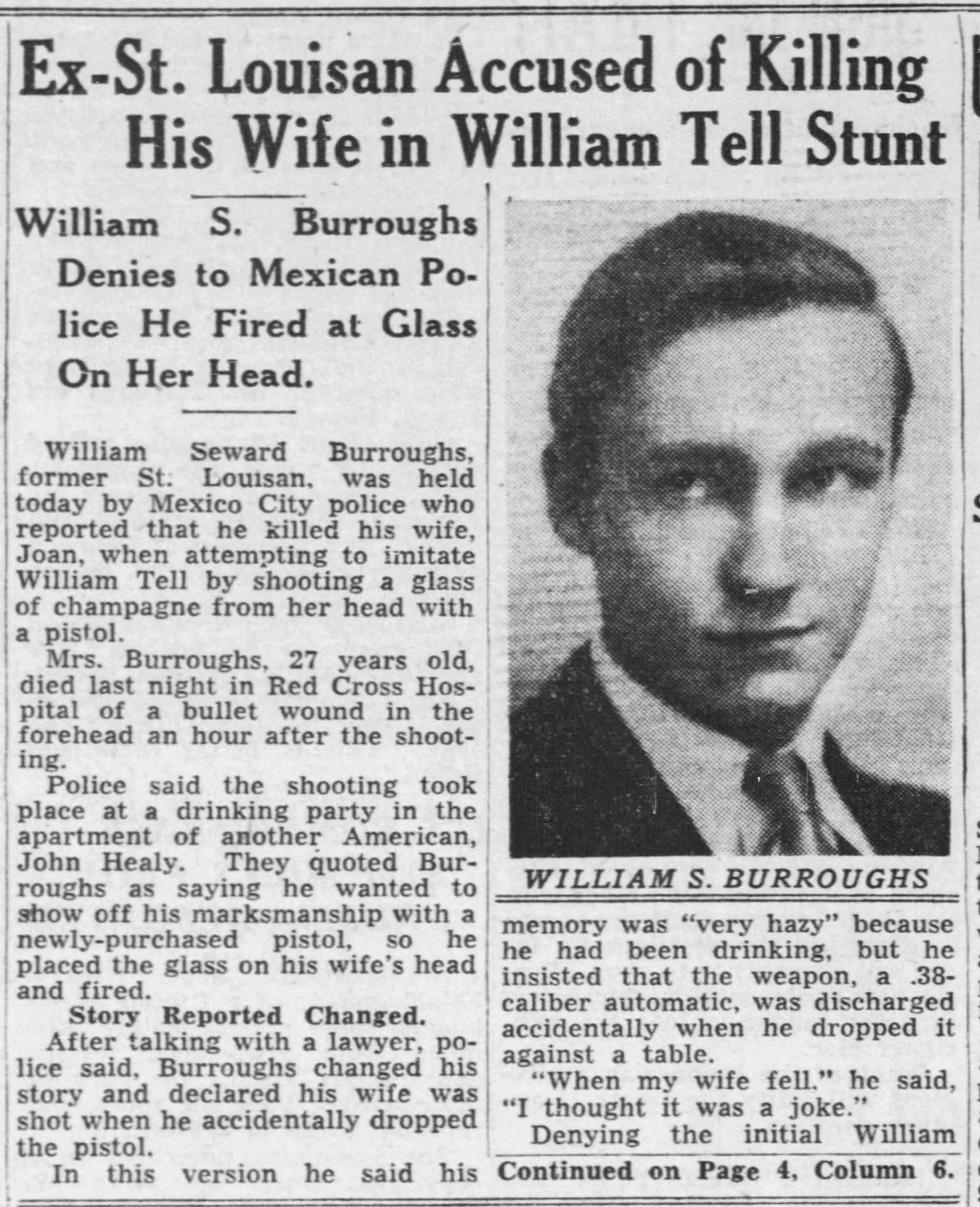
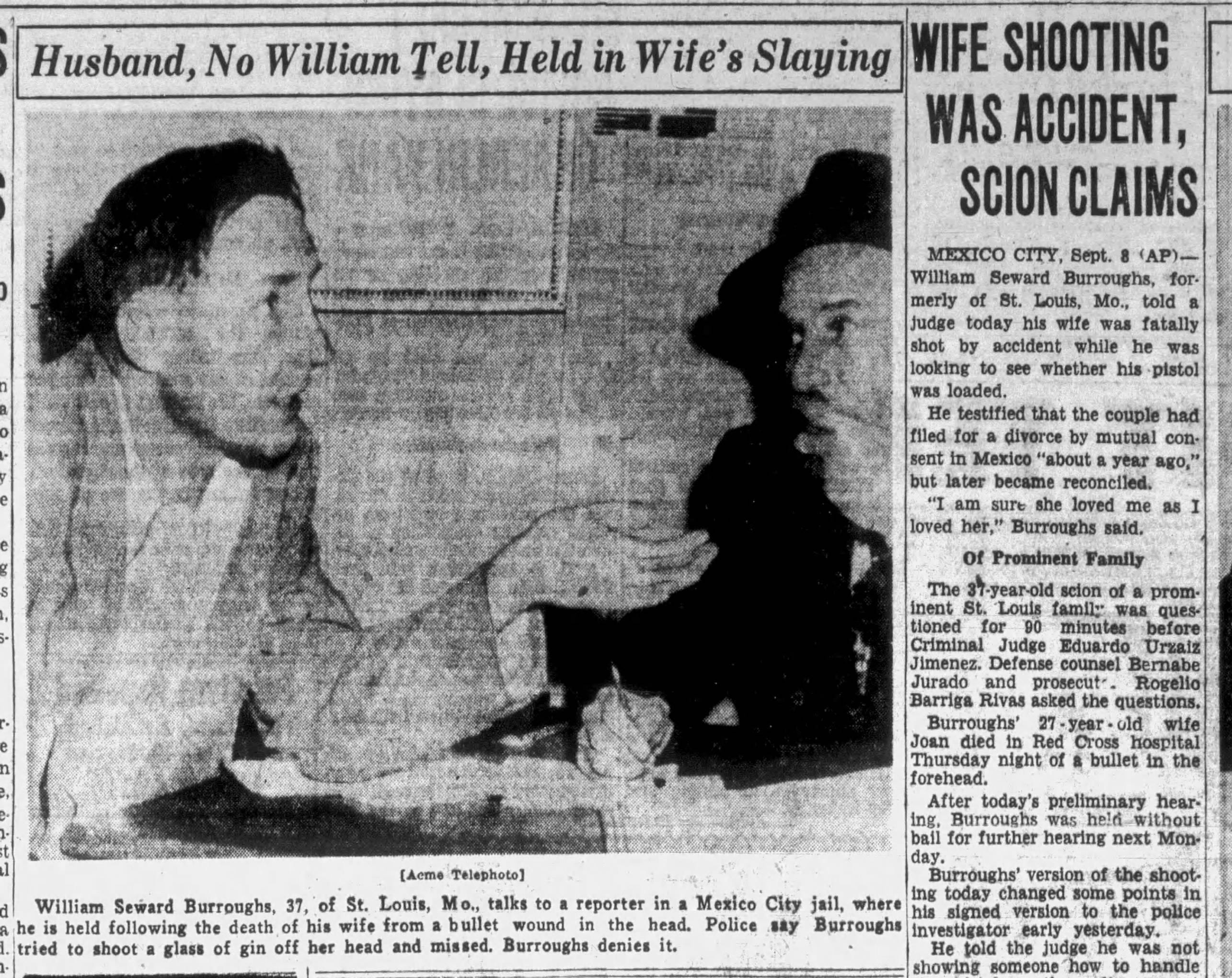
Even though Burroughs quite strangely used the term “trust fund” to describe his monthly allowance in the prologue to Junky, he always repeated the claim that it was Kerouac’s invention, and certainly Kerouac’s books outsold Burroughs’ ones and often presented Burroughs in ways that rankled the older writer. Burroughs wanted control over his image and Kerouac took that away from him, presenting him to the world as a kooky aristocrat with a drug habit.
Kerouac looked at Burroughs with a degree of envy and likely struggled to understand his older friend’s financial situation and psychological hangups. He considered himself an ethnic minority, a true outsider in a way Burroughs could never know. He had experienced real poverty; Burroughs merely dabbled in it whilst knowing he just had to wait for the next cheque or write home for a handout. When Kerouac wrote home for money from his mother, he knew well that she could ill afford it. Two hundred dollars meant little to Mortimer and Laura Burroughs but even $20 was a lot for Gabrielle Kerouac. Jack scrimped and saved, wore clothes ridden with holes, hitchhiked, slept rough, and ate badly, while Burroughs only hurt for cash when he’d spent too much on drugs or paid a mostly straight man to screw him. When the two men ended up in jail at the same time and for the same basic charge, Burroughs was immediately bailed out and Kerouac spent weeks in a cell, then was forced to marry and move to Grosse Pointe and work in a factory just to pay back his new in-laws for the bail money. From Kerouac’s perspective, Burroughs was rich.
Although Kerouac’s most famous depiction of Burroughs was in On the Road, it was not his first and, as we shall see, it had no mention of any “trust fund”—at least not in those exact words. Burroughs appeared in Kerouac’s debut novel, The Town and the City, and it is here that we find the first mention of his trust fund. He writes:
This strange man whose background included a wealthy family, Princeton, travel on the continent, and whose source of income was a trust fund established by his millionaire grandfather, lived in a cold-water flat which rented for twelve dollars a month.”[xv]
Published in 1950, this was the novel that introduced Burroughs as a trust-fund baby. Kerouac does not dwell on it much but he would go on to repeat these basic facts in a number of later works. We can see Burroughs has had certain details changed. His name, of course, is altered and he is referred to as Will Dennison, with his alma mater being Princeton rather than Harvard. The part about “travel on the continent” is true but of most interest is the first mention of a trust fund. It was this that pissed Burroughs off because in spite of his obtaining an allowance, he certainly did not have a trust fund established by a “millionaire grandfather.” It was pure embellishment. Kerouac omits the figure here but the phrase “trust fund” when coupled with “millionaire” obviously imparts for the reader the idea of obscene wealth, incongruous with the slum dwelling he chooses to inhabit.
The next book, On the Road, is where most people would have first encountered Burroughs. He is now Old Bull Lee, and Kerouac writes about him living in Louisiana. It is worth noting, for those who don’t already know, that there is the published version of On the Road and what is called The Original Scroll, a later release drawn from the scroll of paper on which Kerouac famously typed his book in a three-week amphetamine binge. These differ and the scroll was only published long after Kerouac’s and Burroughs’ deaths. I’ll quote from both because Burroughs read a version of the book long before publication, which may have been closer to the scroll than the 1957 novel.
In the scroll version, Kerouac wrote:
He had an income of fifty dollars a week from his family, he always had a big roll in his pocket.[xvi]
Then later he repeats this:
Bill himself only got $50 a week from his own family, which wasn’t too bad except that he spent almost that much per week on a drug habit…morphine; and his wife was also expensive, gobbling up about ten dollars worth a week of benny tubes. Their foodbill was the lowest in the country; they never ate; the children never ate either.[xvii]
However, in the published version he omits the first sentence and slightly revises the second part:
Bull himself only got fifty dollars a week from his own family, which wasn’t too bad except that he spent almost that much per week on his drug habit—and his wife was also expensive, gobbling up about ten dollars’ worth of benny tubes a week. Their food bill was the lowest in the country; they hardly ever ate; nor did the children—they didn’t seem to care.[xviii]
Note that Kerouac correctly states Burroughs’ income as $50 per week (i.e. $200 per month) and that he uses “only” to describe this amount. However, this is not because $50 was a small amount to Kerouac but because in the line immediately prior to the 1957 quote above, Kerouac says that Burroughs’ friend (referring to Kells Elvins) had been “left a fortune” by his father. It is possible that some readers may have misremembered Burroughs/Old Bull Lee having this “fortune.”
In any case, we can see that Kerouac did not use the term “trust fund” when writing about Burroughs in his most famous book and that he revised his description to make him seem less well-off in the published version. No doubt certain readers viewed Old Bull Lee (the Burroughs character) as a slumming aristocrat and certainly $50 a week was a lot of money for many of the people who read the novel.
The fact that Burroughs on numerous occasions mentioned Kerouac starting the trust fund myth and the Russian countess myth leads us to believe that these came from the same book, but to be fair Burroughs did not say they did. In fact, it is possible that Burroughs didn’t really know where Kerouac wrote it. In one of the previous quotes, he said, “He said somewhere I had a trust fund.” (I have added the italics for emphasis.)
The next reference in Kerouac’s books to Burroughs’ “trust fund” came in 1960. In Desolation Angels, Kerouac described Burroughs as looking like “a Texas oil millionaire” and said:
He’s six foot one, blue eyes, glasses, sandy hair, 44, a scion of a great American industrial family but they’ve only a-scioned him a $200 a month trust fund and are soon to cut that down to $120, finally two years later rejecting him completely from their interior decorated livingrooms in Florida because of the mad book he’s written and published in Paris (Nude Supper).
This is the most egregious of his descriptions and probably the one that most upset Burroughs. Although he’s been given a fictional name and his most famous book (the very recently published Naked Lunch) is slightly altered, readers would’ve had no doubt that Kerouac was talking about William S. Burroughs here. The details are unfairly personal. Burroughs’s parents had indeed tried to reduce his allowance and then, after the scandal surrounding the Beat Generation and the beatnik hysteria that ensued, they had threatened to cut him off entirely and forbade him from visiting their home in Florida. Around this time, Burroughs had written to Ginsberg that he was sickened by Kerouac’s use of his friends in his novels, saying that Kerouac had made money from other people’s suffering and didn’t care what damage was done.[xix] It would be hard to see this description as anything but a personal affront.
Kerouac now had a large fanbase and his books were widely reviewed. When his friends were described—even under aliases—readers knew who they were. Newspapers reported on the Beat crowd—Ginsberg, Corso, Burroughs, etc. Their basic biographical details were public record and it wasn’t hard to recognise them, regardless of aliases and other slight efforts at fictionalising backgrounds. With this book, Burroughs was forever linked to the term “trust fund” and even after smoothing things over with his parents, their personal disagreements were now public.
Kerouac had also used the word “scion,” meaning “a descendant of a wealthy, aristocratic, or influential family.” This was the same word that dozens of headlines used to describe him after he killed Joan in 1951—something Burroughs was also not keen to have brought up. (Note his angry response to Jennie Skerl in the interview quoted at the start of this essay when she uses that word.) Kerouac even gave him the name Bull Hubbard, re-using part of “Old Bull Lee” from On the Road. Burroughs had told Kerouac in 1952, after reading the manuscript, that he hated the name “Bull”: “I can not but feel that the epithet Bull contains an uncomplimentary reference, and I am by no means old.”[xx]
That same year, Kerouac published the novella, Tristessa. Here, Kerouac for some reason referred to Bill Gaines by the name Old Bull. Gaines is described as having a $150 trust fund, which may well have helped cement, for Kerouac’s readers, the idea that Burroughs had a trust fund. Yet it is stated in the text that this was a different Old Bull than the one who wrote “Junkey,” as Kerouac spelled it. At only three years after the release of On the Road, and a year after the release of Naked Lunch, it is not hard to imagine some readers, or members of the press, conflating the two characters.
In Vanity of Duluoz, Kerouac also speaks of Burroughs’ trust fund, referring to the mid-forties Columbia era. He admits that Burroughs was working but also “had his monthly trust fund check and always bought us fine dinners.” It is in this book that Kerouac makes clear a class division: Lucien Carr, David Kammerer, and William S. Burroughs all destroy one of Burroughs’ expensive suits as an acte gratuit. Kerouac says, “And of course to a ‘Lowell boy’ like me, destroying a coat was strange but to them… they all came from well-to-do families.”[xxi] The similarly titled Visions of Cody refers to Burroughs again as “Bull,” and Cassady claims in a transcribed audio-tape recording that Burroughs’ income was $500 per month.
No wonder, then, that Burroughs believed Kerouac was the cause of his unwanted public image… But still, whilst Kerouac made it public in a way that Burroughs resented, his later complaints do seem rather unwarranted. Long before Kerouac called him a “scion,” newspapers had used the word in headlines and articles after he killed Joan Vollmer. The fact that he shared his name with his famous grandfather was enough for reporters to assume he had access to the family’s wealth. His parents were known to some degree in elite social circles (still mentioned in society pages even as their wealth declined). And, for those who’d read it, he’d flat-out said he was a trust fund recipient in Junky! He was a Harvard graduate who dressed like a banker even when in the slums, and, as we’ll see in the next section, he’d presented himself as a wheeling-and-dealing landowner. To blame Kerouac for the trust fund myth or “the Burroughs millions” is absurd.
In On the Road, referring to a 1949 trip he made to Burroughs’ home in New Orleans, Kerouac writes that Burroughs “had bought this house in New Orleans with some money he had made growing black-eyed peas in Texas with an old college schoolmate.” In the Original Scroll version, it is cotton, not peas, and he specifies “the Rio Grande valley.” I mention this because it implies some degree of financial independence on Burroughs’ part—in other words, Kerouac suggests that Burroughs had actually made money as a farmer and then bought a house using said money, which should in theory make Burroughs appear less like a trust-fund baby and more like a competent businessman who gets a small degree of financial support from his family. As always, there is a mixture of truth and fiction that needs picked apart. Burroughs did buy a house in Algiers, Louisiana, using the proceeds of a sale, but it was selling a failed farm that yielded the money. And, rather importantly, the money for the farm had come from his parents.
This section will be—I freely admit—rather messy. The facts are sometimes unclear and it has been drawn from a very wide range of often contradictory and incomplete sources. Burroughs’ own statements, as we shall see, are sometimes misleading and verge on outright delusional. He also frequently moved from place to place, sometimes owning land in one area and living in another; sometimes renting property whilst owning other property. I have done my best to present it with a degree of coherence and as much accuracy as possible, but I have no doubt that there will be mistakes. In any case, I did not want to skip this part of his life story or minimise it to avoid difficulty, for I believe it is very important in order for us to gain a full understanding of his financial resources, business aptitude, and views on money. We also need to back up a little in terms of chronology…
In 1946, after the Columbia circle broke up in the aftermath of the Kammerer murder, Burroughs found himself in St. Louis, where he reconnected with an old friend called Kells Elvins. Elvins was from another wealthy family and he was currently investing in various businesses in Texas.[5] This sounded like a great idea to Burroughs, who—according to the biographies—had his parents advance him the money to buy land near Elvins’ allotments. Burroughs planned to grow cotton, citrus, and several less-legal crops. He wrote Ginsberg in October to say, “I expect to clear about $10,000 this winter in the mail order citrus business.”[xxii] Needless to say, Burroughs was a poor farmer and an awful businessman and the venture did not succeed. Even growing marijuana failed.
Burroughs had various plots of land across the state between 1946 and 1951. One tract was in New Waverly, north of Houston. He had this for about two years, consistently failing to grow anything of value. By mid-1948, he was in the process of selling it (for $2,000, the same price he’d paid[xxiii]) and moving to New Orleans, where he bought a home for $3,800.[xxiv] This was on a promissory note and he would eventually fail to pay, with the property reverting to its original owner.[6] He had also bought a new patch of land near the Mexican border, which is the land Kerouac referenced in On the Road. In fact, despite much buying and selling of land, and an uncountable number of planned investments in equipment, crops, and buildings, almost everything he did during this period ended in failure and although it’s hard to track the value of his investments, it is clear that they dwindled from something substantial to nothing at all in a period of about five years.
Still, throughout most of this time, Burroughs was absurdly enthusiastic about his prospects. Late in 1946, the year he moved to Texas and began his short-lived career as a farmer and landowner, he wrote to Ginsberg to say:
My farming enterprise looks very good. I believe I told you that Kells and I have incorporated our holdings, bought equipment, and hired a manager. The first crop comes off in a month. If commodity prices hold up for 6 months we will clean up. Should realize about $15,000 clear for each of us in the next 6 months.[xxv]
There are many more letters in which he speculates about making vast wealth. He seems almost childishly naïve, constantly expecting a fortune to emerge from the next half-assed effort. (He and Elvins also tried their hand as inventors around this time, with predictable results.) Burroughs was mostly in New Orleans whilst his land was managed for him—a good idea, given his poor farming skills. However, in spite of this professional help, there were various problems and what money he did make on crops was drastically lower than expected. Certainly, by the time Kerouac visited him in the trip depicted in On the Road, Burroughs’ investments would have radically outweighed the money generated from a few profitable sales.[7] Still, he remained confident and was not hurting for money.
For all his ventures tended to result in failure, he clearly had the means to invest and he was not merely buying seeds and paying illegal migrant labourers. He was continually buying and selling plots of land. In late 1948 and early 1949, he wrote to friends about his intention to buy land to build houses and in early 1949, he bought two houses in New Orleans, living in one and renting the other. At this point, he already owned a house in New Orleans. No wonder Kerouac, who was hitchhiking and sleeping outdoors, thought of his friend as wealthy. Burroughs had a jeep and a car, and he retained the service of a lawyer, whom he put to use evicting tenants. During this period, Burroughs’ apparent wealth caused him to become rather conservative and his letters are filled with tirades against liberals, socialism, unions, and tenant rights.

However, all was not as it appeared from his letters. A document uncovered by James Grauerholz shows that it was Burroughs’ parents who had bought his various houses in New Orleans—something Burroughs failed to mention in his letters to friends. The document Grauerholz uncovered, which was a medical file based on interviews with Joan Vollmer, says:
In their efforts to be helpful to patient, the parents are stated to “mean well,” and they are “good” to patient, but they also attempt to “arrange” things for him, and “always get him out of trouble,” and patient “violently opposes them occasionally,” as he “would rather do for himself.” [...] They phone frequently and keep in touch with the patient. The father sends substantial checks frequently. Recently, the parents came to New Orleans—visited the patient at his home in Algiers, were not fond of the house, and purchased a new one for patient in the city on Burgundy Street. They had purchased the Algiers home for [the] couple when patient and his wife came to New Orleans about a year ago.
This gives an interesting new dimension to the man who so eagerly informed his younger friends about his business ventures and investments. Not only had he been given money from his parents to invest in farmland, but he was still receiving “substantial checks,” being bailed out whenever he got in trouble, and in fact they were the ones who bought the houses he supposedly purchased with farming profits and/or the sale of farmland. Miles draws upon Grauerholz’s research in his biography, Call Me Burroughs, and says:
All of which rather contradicts the impression that Burroughs had been giving Kerouac and Ginsberg in his letters of himself as a tough businessman. Burroughs was playacting, perhaps unconsciously, acting out a role-playing game as the rapacious landlord, and before that as the cotton farmer, just as he acted out character roles back at 115th Street with Kerouac, Ginsberg, and Chase. It was all inauthentic. He was trying to be the adult, the grown-up that his parents so desperately wanted him to be.[xxvi]
The erratic behaviour and naivety of his letters certainly suggest that he was deluding himself in various ways rather than consciously misleading his friends. A doctor who examined him after the arrest said he was “grossly immature, lacking all adult sense of responsibility”[xxvii] and tried to convince Vollmer that Burroughs should be hospitalised for the benefit of everyone involved. Those familiar with Burroughs’ letters know that for all his intelligence, he was as gullible as they come, always eager to believe in fantastical outcomes and ridiculous theories. (He and Elvins travelled to Mexico to sample some kind of immortality elixir during this time…) And undoubtedly he was immature and irresponsible, with various people horrified by the state of his children as he failed to feed and clothe them properly.
This arrest occurred early in 1949 and that seems to have been a turning point for him. It had resulted in his father paying a $1,500 bail (and presumably covering the costs incurred for a period of rehab at a nearby sanatorium), but even with family intervention he was struggling financially. His letters to friends show he had finally lost some of his naivety and recognised the difficulty of profiting from farming but he does not give any acknowledgement of his parents’ having paid for almost everything. In spite of their continued financial support, he soon had to sell one of his precious guns after running out of cash.[xxviii] After that, he defaulted on land he’d bought, where he intended to build a home, and so it reverted back to the original owner. His hastily built and poorly conceived empire was crumbling. Even so, with some property still in his name, he continued telling his friends about new schemes, which often involved buying a ranch in Mexico and sometimes a house in Mexico City. To Kerouac, he said:
I am selling my property in Texas, and plan to buy a house in Mexico City. You can get a 4 bedroom, brick house in the middle of town for $6,000, a palace for $8,000.
Burroughs clearly had more money problems than he let on in letters and ended up in a strange deal where he sold (or transferred ownership of) one of his properties to his brother. This was the land his father bought for him after visiting the first of his New Orleans houses. Yet more legal proceedings continued after Burroughs left for Mexico and his brother put it up for auction in 1953.
In January 1951, Burroughs and Elvins sold their shared land in South Texas and Burroughs moved to Mexico, having finally given up on his ill-fated career as a farmer. (Elvins moved into the oil business, remaining in Texas.) By the early summer, though, Burroughs had still not received his share. He had to pay a large bribe and various legal fees related to an immigration problem. He enrolled at Mexico City College on the GI Bill, getting $75 per month, but he was usually strapped for cash after three weeks, having spent a considerable amount on young male prostitutes.[xxix] Combined with his parents’ allowance, he was now living on $275 per month in any incredibly cheap part of the world, but he was careless with money. He was at one point robbed for several hundred dollars.
His land money arrived in June 1951 and he quickly took off for a trip to South America with Lewis Adelbert Marker. They were in search of yagé. (Learn how he became interested in yagé in this essay and the Marker story is told in more detail in his novel, Queer.) The deal was that Burroughs would fund the trip in exchange for sex twice per week. Marker agreed but was reluctant. They returned to Mexico City in 1951 flat broke. Burroughs needed money and so he agreed to sell one of his guns. It was during the sale of said gun that he shot Vollmer dead in a horrific accident.
Once again, his family came to the rescue. According to research by James Grauerholz in his essay, “The Death of Joan Vollmer,” they paid something in the region of $20,000, which Burroughs’ lawyer, Bernabé Jurado, used to pay off various people so that Burroughs stayed out of prison. It seems Burroughs also drew upon the money he’d finally gotten after liquidating all his Texas assets. When he fled Mexico after his lawyer murdered someone, he wrote a note to Allen Ginsberg in 1952 to say the bond he forfeited by leaving the country was “all that remains from sale of Texas land.” (This begs the question of why he was so broke after returning from the trip with Marker…)
As we have seen, this was all fairly complex and it would take access to many obscure archives to dig up all the land deeds and contracts required to know how much Burroughs invested and lost over this period of about six years, but certainly he managed to lose—through failed business ventures and an assortment of legal problems relating to drugs, public fornication, and eventually murder—all the money his parents had given or loaned him, as well as many thousands of additional dollars that they had spent to keep him out of jail.
If he was bullshitting about property sales in his letters, then we must also question his claims regarding profits and losses on crops. For once, his drug and alcohol expenses would also have paled in comparison to more legitimate outgoings. Meanwhile, he bought and sold various plots and clearly co-owned some with Elvins, so even estimating his profits, losses, or net worth are beyond me. But one last pair of documents, which I have not seen mentioned anywhere else, is of interest. It begs more questions than it answers and only serves to further confuse the issue, but I came upon two records of land transfers. The first is from 1948 and shows that Burroughs bought a parcel of land for $9,000 and the second tells us that he sold the same plot 13 months later to Elvins for $15,000. I see no explanation in his letters except that he and Kelvins consolidated their ventures, but $6,000 in one year is a hell of a profit (equalling about $84,000 today).[8] This would have arrived just as Burroughs was finally running short on cash and realising it was unlikely he would ever get rich in farming. I would assume given Burroughs’ attitude towards friends that he had some kind of deal with Elvins that meant he was not profiting from his friend. But who knows.
What is clear, though, is that time and again his family came to the rescue with quite large sums of money and that much larger sums simply frittered away when entrusted to Burroughs, even when he was seemingly trying to invest it as a legitimate businessman. It is also abundantly clear that whilst Burroughs’ own personal wealth fluctuated but was never huge, there was certainly a vast pool of money ready to save him whenever he screwed up badly enough.
Despite heaping yet more shame upon his parents, Burroughs continued to receive a monthly allowance of $200 in the years following the death of Joan. He later credited this event as the beginning of his career as a writer and indeed it was not long before his first book was published. The allowance would prove vital as he entered into this most poorly paid of vocations. He moved from one cheap destination to the next to stretch out his allowance and at the same time afford a comfortable and usually drug-filled life. Various accounts from letters, books, and journals suggest that he was often short on cash because of his addictions to substances and his reliance on male prostitutes (and boyfriends). Ironically, as he pissed away their money on his addictions, he noted that his parents—whose own finances dwindled in the mid-fifties—were addicted to helping him:
They have a bad conscience about me. Besides they’ve been giving me money so long it’s a habit. They don’t have what it takes to kick the habit and me out on my ass which is what I would do in their place.[xxx]
Still, he took their money and used it as he wrote his early books. He did not earn much for these but he was unsurprised, given he had no reputation. This would also prove to be the case over the next decades. As he devoted himself to writing what he wanted, he often got little in the way of financial compensation. His first book earned a $800 advance, minus Ginsberg’s 10% agent fee.[xxxi] Ace Publishers sold at least 150,000 copies but were not forthcoming with royalties. Burroughs was able to squeeze $2,000 out of them some years later.[xxxii]
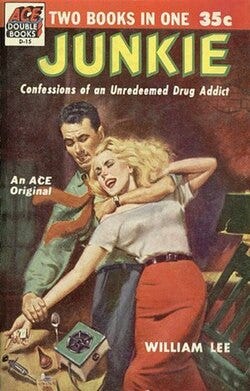
Later deals with publishers were similarly disappointing. He sold the rights to his most successful book, Naked Lunch, to Olympia Press for just $800 and this gave Olympia one third of the foreign rights, too, so presumably when Grove Press paid $3,000 to publish it in the US, Burroughs only got $2,000. With various legal troubles, it was a long time before he got any substantial royalties. This repeated in various countries and even with Olympia Burroughs struggled to actually get paid because of how owner Maurice Girodias attempted to minimise his tax bill.[xxxiii] Girodias later stole the entirety of a $5,000 advance Grove Press sent Burroughs for what seems to have been Nova Express.[xxxiv]
Burroughs was not writing commercial fiction by any means and did not expect to get rich from writing but time and again he found small presses willing to publish his books but for various reasons unable to pay him meaningful sums. Much of his writing went to small magazines in the 1960s and it would be a long time before big publishers were looking to acquire the rights to his work. He did manage to get reasonable payments from men’s magazines, though. Esquire paid him $500 for an essay, to give one example, and he had been offered $500 per lecture to speak in the US.[xxxv]
The man who’d been seen as wealthy mark by some and a generous friend by others ended up in the late fifties and early sixties as the one borrowing from more fortunate acquaintances. Burroughs often relied on another trust-fund recipient, Alan Ansen, and also the wealthy eccentric Jacques Stern. At the Beat Hotel, he borrowed from Bob Gardiner, who said:
I didn’t mind giving Burroughs money, even though I figured I probably wouldn’t get it back. But I did, you know. Years later I wrote him in New York, and he actually sent me a money order.[xxxvi]
When Burroughs had money to spare, he could be generous with his friends and when he needed their help, he mostly stuck to his moral code and returned it when he could. But Burroughs wasn’t always so honest. When Conrad Rooks bought the rights to film Naked Lunch, he gave Burroughs $500. Bill felt Rooks would butcher the story and told him, “The deal’s off. And as for your five hundred dollars, I’ll pay it back, sometime.” He told Ted Morgan, “I never had any intention of paying it back.”[xxxvii]
When Girodias stole Burroughs’ $5,000 advance, it was 1964 and it left Burroughs in a terrible position, but that was the same year he finally determined to stop relying on his parents.[9] Despite his poverty, it was clear to him that he had the ability to make money from writing, even though it wasn’t much. Five grand in 1964 is equivalent to almost $55,000 today, so if he was able to make that much for writing one book, then he could certainly support himself whilst living in the slums of Tangier, a cheap district of Paris, or a London tenement. At the age of 50, he was also eager to move on from the feeling of reliance upon his parents. They had raised his son at their own expense and had watched in horror as Burroughs brought shame on the family name with his drug habits and obscene novels.
At the start of his writing career, he had used a pseudonym partially to avoid embarrassing his parents, but his notoriety had made that impossible later. Through the beatnik hysteria of the late fifties and then with the publication of his own books in the early sixties there was little he could do to make them feel better, except for staying the hell away from Palm Beach. Even if he’d stuck with a pseudonym, reporters were constantly trying to play up the scandal of this wayward scion descending into a life of crime. When Life magazine reported on his supposed debauchery in 1959, his mother threatened to cut off his allowance if he attempted to come anywhere near the family home. The article in question described him thusly:
For sheer horror no member of the Beat Generation has achieved effects to compare with William S. Burroughs, who is regarded by many seekers after coolness as “the greatest writer in the world.” A Harvard man and the offshoot of the wealthy St. Louis family, Burroughs is now 45, a pale, cadaverous and bespectacled being who has devoted most of his adult life to the pursuit of drugs and debauchery.[xxxviii]
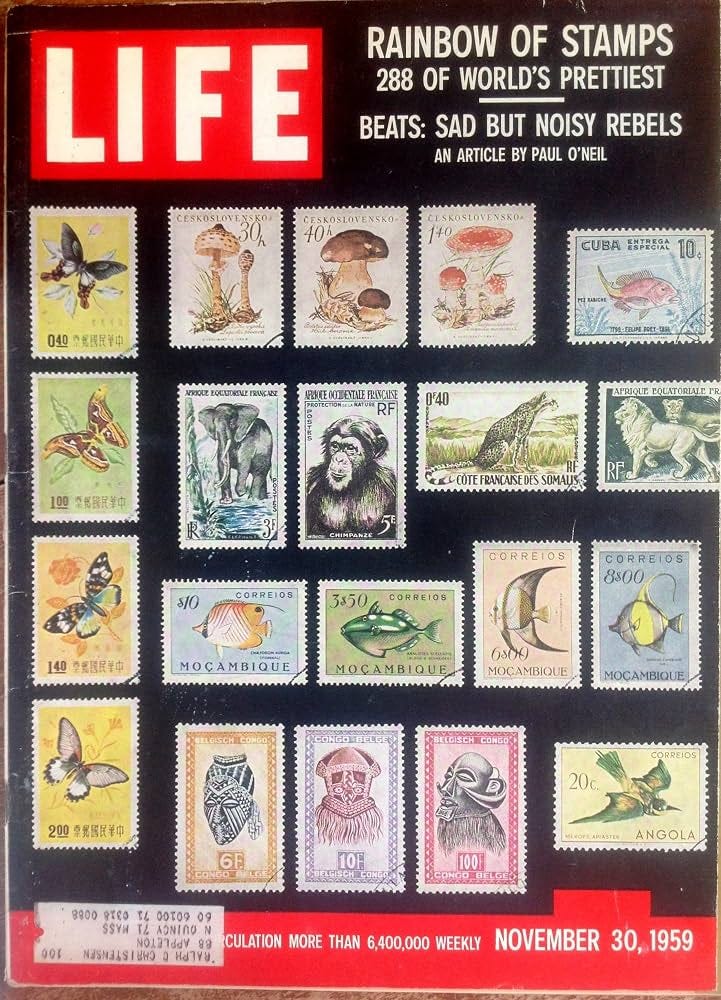
Replete with photos that prove at least the physical description, the article was written after an interview with Burroughs, and the facts given are largely true, even if phrases like “for sheer horror” come across as comical. Yet the careful placement of “Harvard man” and the use of “the” prior to “wealthy St. Louis family” are telling. The article’s author is clearly suggesting that the Burroughs family should be known to Life readers, and that anyone who has attended Harvard should not be wasting their life on the pursuits that interested Burroughs. It cast him decidedly apart from the other Beats, in a mould that would remain for the rest of his life and beyond, as the Beat who chose to slum it, rather than having been consigned to such circumstances.
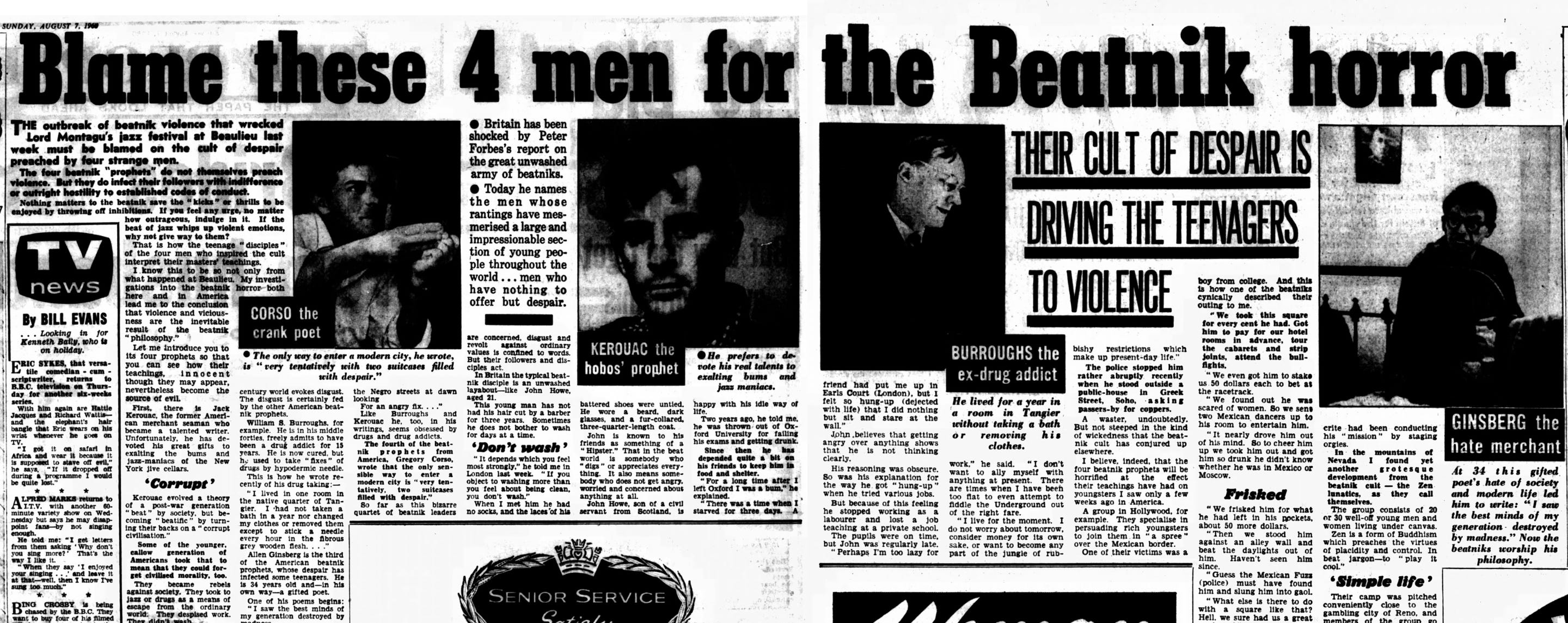
Articles like this became fairly common and then came Kerouac’s novels, further cementing in the public consciousness the idea of William S. Burroughs as a scion of a wealthy family, heir to a vast fortune, recipient of a trust fund… There was no way to avoid the reputation, even when he was mired in poverty. If one scans his letters from the sixties and seventies, one finds more than a hundred references to money, most of which complain of lacking it. There are hundreds of references in the biographies, too. In 1973, to give but one example, he wrote, “I have almost no money. My books don’t sell.”[xxxix] His books did sell, but they weren’t bestsellers. Publishers still weren’t throwing vast sums at him, and even when sales were good, he was somehow screwed out of a fair share. Barry Miles has a detailed paragraph in Call Me Burroughs that shows in 1967 his books earned £44,000 in the UK but after various people had taken their cut (including an accountant who seems to have pocketed more than half Burroughs’ income), he walked away with only £6,602. This was actually quite a good income for the UK at that time, but he did not make that every year.
In 1970, Burroughs’ mother died and he was wracked with guilt. He wrote his brother, “It makes me very sad to think how many years they worked and sent money and how little they ever got in return. They were extraordinarily kind, gentle, and well-intentioned people and that is something very rare now.”[xl] His father had died in 1965 and now with his mother gone his final inheritance was just $10,000.[xli] He did not inherit any part of the Burroughs Adding Machine Company (by then rebranded as the Burroughs Corporation), valued in the hundreds of millions.
A few years later, he sold his archives to a private collector for $60,000 with the intention of funding an alternative university. He talked about this a lot but it never came to fruition. He used this and other sources of income (royalties, advances, film rights) to live a moderately comfortable living whilst supporting various friends. He also sent money to his troubled son, Billy, and paid for his medical treatments as Billy drank himself to death. And of course Burroughs also had his own drug habit throughout much of this time. He often turned down money for what he felt was “undignified,” such as participating in Bob Dylan’s Rolling Thunder Revue. He was unimpressed that Ginsberg and Anne Waldman had taken “pocket money” to do this.[xlii] He did, however, take money in exchange for teaching. He’d rather not have done it, but at least teaching was dignified and he had the freedom to say more or less what he wanted.
Stewart Meyer’s recent book, The Bunker Diaries, shows just how poor Burroughs was in the late 1970s, even when he was one of the world’s best-known writers. Victor Bockris’ Burroughs-Warhol Connection stresses this too. When friends came over to visit, Burroughs and Bockris could barely scrape together the cash for snacks and drinks. He eventually moved out of New York partially because he couldn’t afford it, and in Lawrence, Kansas, he still struggled to get by as inflation pushed up prices and rents. When he got into shotgun art in later years, he made better money than he had as a writer but he was never rich. Just months before he died, old and in very poor health, he appeared in a music video for a band he’d not heard of (U2) just because it was a decent payday. In those last years, he sometimes had to take loans just to pay his bills.
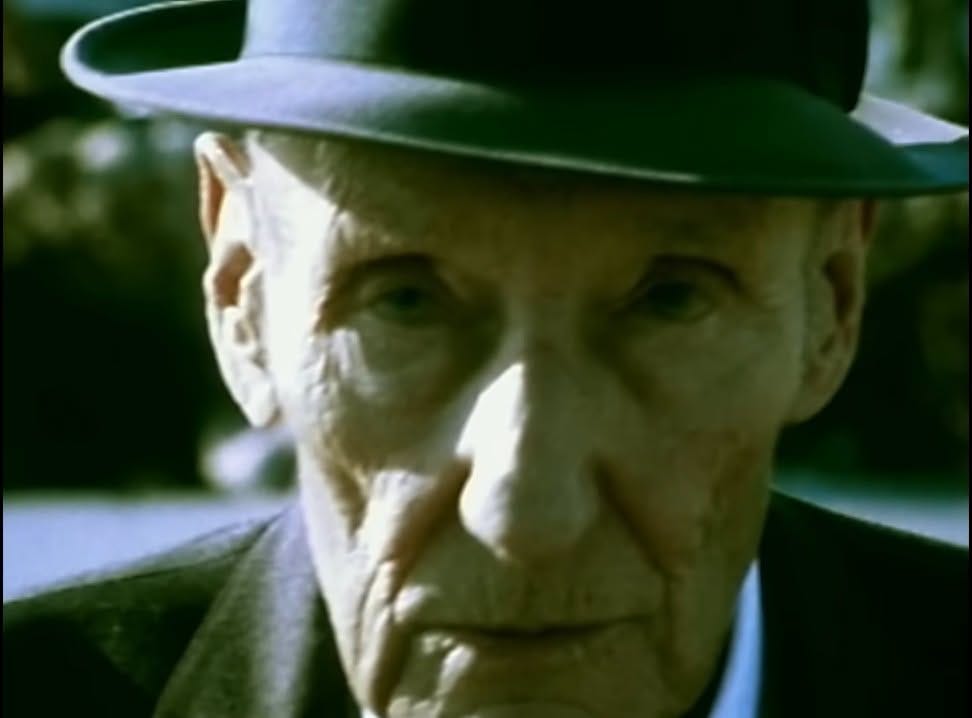
But no matter how bad his finances were, “the Burroughs millions” haunted him. We would forever be the “scion” Kerouac painted him as and linked to the “trust fund” Kerouac had invented for him. He once complained that “One reviewer has even gone as far as to describe me as ‘the world’s richest ex-junkie’ at a time when I had less than $1000 in the bank.”[xliii] This bothered him enough that only a few months before his death he wrote in his journal:
Story of the rich junky.
I [was] described by a moron critic as the world’s richest ex-junky. If $1,500 in [the] bank and no other assets made me the richest.
Had I been rich as I would have been had my father kept his Burroughs stock (ten million $$ right there), Naked Lunch would never have been written, nor any comparable work.
Show me a great writer very rich on inherited money. In France some good writers, like Gide, were well-off but not stratospheric rich.[xliv]
He goes on to talk about the criteria for being rich, describing it as a club with staff and application procedures. It was not the sort of place for “those ratty Burroughses.” Another very late diary entry talks about his father being screwed out of the family wealth, although in this account he credits his mother with making him hold on to some shares.[xlv] In any case, even in his final years he was thinking a lot about money and his reputation. He was still sensitive about it. As a boy, he was an outcast because everyone around him was richer; as an adult people thought that he was rich when he wasn’t
In 1995, just two years before he died, Burroughs published My Education: A Book of Dreams. It was composed of transcriptions of scraps of paper on which he’d written down his dreams. They are undated, sadly, but one of them towards the end of the book mentions Kerouac and says, “I still hold that trust fund against you, the Russian countess is no trouble.”[xlvi]
It is hard to feel sympathy for the rich in a world of extreme wealth inequality and there are parts of this tale that show Burroughs as a whiny, overprivileged brat. Particularly in his early years, when he had a stable income and a loving family who bailed him out (literally and figuratively) on many occasions, he was the very picture of privilege. Sure, he had mental health problems, but unlike most people he could afford to get professional help—and he did.
There were times when money seemed to corrupt him and certainly there were times when he pissed it away recklessly. Often, as is so often the case with junkies, he put his own needs first and let others—including his family—suffer as he fed his habits. When he screwed up, he had others dig him out of trouble and he never seemed to truly appreciate it. But generally, he was generous with what money he had and that money was seldom as much as people thought. He was good to his friends and tried to do right by his son even if it was far, far too late.
After becoming a writer, and after finding a degree of success at it, he voluntarily gave up his allowance and chose to support himself. It is not an easy path. Writers are notoriously underpaid and even famous ones struggle to pay the rent. In Burroughs’ case, he had to both scrape by and defend himself against accusations of wealth. He eked out a living for decades as people assumed he had a trust fund to support him. Certainly, there were countless thousands of writers who had it worse, but few of them had to battle an unfair reputation.
But was it entirely unfair? This essay has shown that “the Burroughs millions” never really existed and that he received an allowance rather than an actual trust fund. It was Kerouac who first put this in writing but who told Kerouac? Burroughs did. And while Kerouac’s first book introduced Burroughs to the world in unfair terms, Burroughs himself repeated much of this just two years later in Junky. Beat history is filled with myths. Many of these were self-created; others were foisted upon them by the media. In the case of Burroughs, it is partly truth and partly myth, and partly self-imposed and partly imposed upon him by others.
If you are interested in supporting an impoverished writer, consider subscribing to Beatdom on the paid tier or buying one of our many publications.
[1] They owned a business called Cobblestone Gardens in St. Louis between 1936 and 1952, then sold it and started a new one under the same name in Palm Beach, Florida.
[2] William S. Burroughs I was the inventor and William S. Burroughs II was the writer. From here on, “Burroughs” will refer to the writer as he is the subject of the essay. His son was also called “William Burroughs” and he’ll be called “Billy” when he later appears, to avoid confusion. Burroughs’ father Mortimer named his first son after himself, so there is yet more confusion.
[3] I should point out here that Kerouac may not even have known what a trust fund was. He seems to have viewed it as some kind of basic savings account. He wrote Joyce Johnson during their time dating to say that he intended to earn money writing and “then, when I have a sufficient trust fund built up, I’ll relax and go cruising around the world.” (Doors Wide Open, p.78)
[4] I should mention that whilst various people looked at Burroughs and saw wealth and sometimes took advantage of him, these people genuinely liked and respected him. Also, Ginsberg’s early journals and letters never make mention of Burroughs’ money and instead show a purely intellectual interest. Ginsberg borrowed small amounts of money from Burroughs several times in desperate situations but always paid it back and seems to have lacked Kerouac’s envy. Kerouac, Huncke, and others felt they could take from Burroughs without having to pay him back, feeling that their poverty and his privilege gave them the right.
[5] Most sources say Elvins was from a wealthier family but this is hard to corroborate. Certainly they were wealthy. The father was a Republican congressman but seems to have gone insane and Elvins was put in charge of his estate in the mid-thirties. A legal dispute in 1938 put the value of the father’s estate between $160k and $250k, which could possibly make him less wealthy than the Burroughses but it’s impossible to say for sure and the low end of that figure was given by a party who wished to play down the family wealth. Elvins’ mother and father were divorced and the mother had substantial wealth, so combined it would’ve likely been more than what the Burroughs had. Much of this was in stocks, so it also depends how well their portfolio performed. The father was heavily invested in lead, which increased substantially after this wealth estimate was made. The rest was mostly in land (much of it in Texas), and it’s reasonable to assume that increased in value too. Upon his death in 1943 it seems he had a valuable art collection.
[6] This information comes from Call Me Burroughs. In searching old land records, I found that Burroughs had indeed paid $3,800 and then sold it back to the agency he bought it from only a year later. He tried to sell it for $9,000 to another party but sold it to the original agent for $7,350 in cash. This is quite odd, to say the least. Presumably he had paid $3,800 upfront but there was some kind of deal in place that required subsequent payments. Also, the agent had bought the property for $8,000 in cash just before selling to Burroughs. One assumes then that he had paid much more than the original $3,800 and the agent gave him back a lump sum with Burroughs taking some kind of loss after a year of paying instalments.
[7] As Miles notes in Call Me Burroughs, Burroughs said in Junky that his cost of living in Texas was $700 per month, at a time when the average annual income was a little less than $3,000. It seems to have been mostly the cost of maintaining his land that accounted for this, for by all accounts he was not spending much on food and was making his own booze.
[8] There is in fact a third document. Six months after buying his land, he seems to buy it again from the same people, paying $3,000. There is no indication of this in the document but I would I guess it was a second instalment, meaning the total was $12,000. In any case, he then flipped the land for a $3,000 profit. It’s all very strange.
[9] Ted Morgan says it was 1963 but a 1964 letter shows he was still receiving monthly cheques. That same letter does not explicitly say he no longer wants to be given an allowance but it is a strong inference and it does seem that he became financially independent at this point.
[i] “William Burroughs on Jack Kerouac at the 1982 Naropa Conference,” URL: https://allenginsberg.org/2014/09/william-burroughs-on-jack-kerouac-at-the-1982-naropa-conference/ You can listen to the speech here: https://archive.org/details/naropa_william_s_burroughs_workshop Note that this speech largely appears as “Remembering Jack Kerouac” in The Adding Machine but the paragraphs above are not in the essay. They only appear in the spoken version. Burroughs compares Kerouac and Hemingway, a subject discussed in greater detail in this 2026 essay. The “Russian Countess” refers to Burroughs’ first wife, who is the main subject of Thomas Antonic’s 2026 book, The Three Wives of William S. Burroughs.
[ii] Hibbard, Allen (ed.), Conversations with William S. Burroughs (University Press of Mississippi, 1999) p.120
[iii] St. Louis Post-Dispatch, January 7, 1965, p.3F
[iv] Word Virus: The William S. Burroughs Reader (Grove Press, 1998) p.3
[v] Morgan, Ted, Literary Outlaw: The Life and Times of William S. Burroughs (WW Norton & Company) p.25 Note that this figure comes from Burroughs’ later memory. It is probably not entirely accurate.
[vi] Word Virus, p.4-5
[vii] Literary Outlaw, p.25-26
[viii] Literary Outlaw, p.26
[ix] Conversations with William S. Burroughs, p.97-98
[x] Burroughs, William S., (ed. by Oliver Harris) Junky: The Definitive Text of “Junk” (50th Anniversary Edition) (Penguin, 2003) p.xiv
[xi] Junky, p.xxxvii
[xii] Bockris, Victor, With William S. Burroughs: A Report from the Bunker (Seaver Books, 1981) p.132
[xiii] Harris, Oliver (ed.) The Letters of William S. Burroughs: 1945-1959 (Viking, 1993) p.270
[xiv] Literary Outlaw, p.70
[xv] Kerouac, John, The Town and the City (1950) p.398
[xvi] Kerouac, Jack, On the Road: Original Scroll (Viking, 2007) p.204)
[xvii] On the Road: Original Scroll, p.244
[xviii] Kerouac, Jack, On the Road (Penguin, 1972) p.142-143
[xix] The Letters of William S. Burroughs: 1945-1959, p.392 It is worth mentioning that Burroughs criticised Kerouac for making money and throwing his friends under the bus: “Jack has reaped fame and money telling Neal’s story, recording his conversation, representing himself as Neal’s life-long friend. Maybe the fuzz got onto Neal through Jack’s book. In any case he has sold Neal’s blood and made money. […] All he wants is security for himself. A weakling, no, a coward who cannot be trusted under any pressure. He doesn’t want his name mentioned. What about your name and Neal’s and mine in his books??”
[xx] The Letters of William S. Burroughs: 1945-1959, p.108
[xxi] Kerouac, Jack, Vanity of Duluoz (Penguin, 1994) p.215
[xxii] The Letters of William S. Burroughs: 1945-1959, p.8
[xxiii] Miles, Barry, Call Me Burroughs: A Life (Twelve, 2014), p.166
[xxiv] Call Me Burroughs, p.167
[xxv] The Letters of William S. Burroughs: 1945-1959, p.22
[xxvi] Call Me Burroughs, p.175
[xxvii] Grauerholz, James, “The Death of Joan Vollmer Burroughs: What Really Happened?” PDF no longer available online. I downloaded it long ago, after James uploaded it. This was published as a book in 2023 but it is sold out.
[xxviii] Call Me Burroughs, p.206
[xxix] The Death of Joan Vollmer Burroughs
[xxx] Call Me Burroughs, p.270
[xxxi] The Letters of William S. Burroughs: 1945-1959, p.111
[xxxii] Call Me Burroughs, p.223
[xxxiii] Call Me Burroughs, p.357
[xxxiv] Call Me Burroughs, p.421
[xxxv] Morgan, Bill (ed.) Rub Out the Words: The Letters of William S. Burroughs 1959-1974 (HarperCollins, 2012) p.165
[xxxvi] Call Me Burroughs, p.383
[xxxvii] Call Me Burroughs (from a Morgan tape), p.406
[xxxviii] This originally appeared in Life, November 30, 1959, but is reprinted in Parkinson, Thomas, A Casebook on the Beat (Thomas Y Crowell Company, 1968). The given quote is on p.240
[xxxix] Rub Out the Words, p.401
[xl] Rub Out the Words, p.352
[xli] Call Me Burroughs, p.486
[xlii] Call Me Burroughs, p.520
[xliii] With William S. Burroughs: A Report from the Bunker, p.27
[xliv] Grauerholz, James, Last Words: The Final Journals of William S. Burroughs (Grove Press, 2000) p.20
[xlv] Last Words: The Final Journals of William S. Burroughs, p.22
[xlvi] Burroughs, William S., My Education: A Book of Dreams (Viking, 1995) p.155
Comments
Nothing yet. Say the first thing.
Sign in to join the conversation.