
There’s a particular weight that builds when people speak of major life transitions. Whether it’s a country, a career, a relationship or simply a familiar season of life, leaving is often framed as a rupture – something to endure or survive, full of loose ends and sleepless nights. It’s understandable. Change, by its very nature, demands energy. And when that energy is scattered, the process becomes chaotic.
But what if transition could feel different?
Not frictionless – I don’t mean that. I don’t believe in bypassing discomfort or pretending we’re immune to the unknown. But there is a quality of movement that feels steady rather than frantic. Aligned rather than reactive. And after working with clients on life transitions for years, it felt important that I lived my own with the same intentionality I invite others into.
So, when it came time to close a chapter I’d been living for over a decade, I didn’t brace. I slowed down. I designed the process to feel like my life – not a disruption of it. And to my own quiet surprise, I moved through the transition without stress, not because everything was simple, but because I met it from a regulated, integrated place. This is what that looked like.
Each morning became an anchor. I chose to begin the day gently – a walk or stretch, coffee brewed with care, some journalling, breathwork, or meditation. Often I’d take a book to the pool or beach and read in the sunlight. These weren’t luxuries. They were cues to my nervous system: you are safe.
Relocation, like any major change, can trigger survival patterns – fight, flight, freeze – even when nothing is objectively wrong.
By offering consistent signals of safety through slow breath, natural light, gentle movement, consistent routines, I ensured that my nervous system stayed in parasympathetic mode – where social engagement, clarity, and calm are possible. No spikes in stress hormones. No rush of adrenaline or cortisol. Just a steady state of calm alertness. Not passive, but grounded. And from that place, it made it possible to respond, not react.
Even in the final days, my apartment remained a home. Fresh flowers stood in a vase. Bread baked. Coffee brewed. I packed in small increments, only in the mornings, and always cleaned up afterwards. The space stayed clean, ordered, familiar.
This matters. The brain draws safety from predictability. In times of change, the external environment plays a key role in regulating the internal one. A messy, chaotic space can feel like a threat to the subconscious. By preserving the visual and sensory coherence of my home, I gave my mind a consistent cue: you’re not in danger. You’re simply shifting.
As I packed or sorted cupboards, I often listened to lectures or podcasts. It helped me feel mentally stimulated, not reduced to logistics. Transitions can make us feel like we’ve pressed pause on our real lives – as if the only priority is to “get through it.”
But cognitive engagement reminds the brain that life continues, that we’re still growing, still curious. And curiosity, neurologically, is an antidote to anxiety – it activates the same dopamine pathways, but without the urgency. It creates an expansive, open state. In a time of natural contraction, that felt like a gift.
That final weeks, I didn’t have energy for structured workouts. So I walked. Everywhere. Long distances, slow pace. On average, 15,000 steps a day. It gave me the benefits of physical exertion – endorphins, circulation, blood flow to the brain – without the strain. Once a week, I did a deep yin yoga class. My body needed it.
The fascia – the connective tissue that wraps around our muscles – stores emotional tension. Yin yoga works slowly into that layer, softening held patterns. It’s not just stretching – it’s emotional release. Likewise, I attended weekly sound healing. Not as a trend, but as a form of vibrational regulation. Sound, when applied skilfully, synchronises brainwave activity and soothes the limbic system. It acts like a tuning fork for the body. These practices weren’t a retreat from life. They were how I stayed in it – present, clear, intact.
I made a point to stay connected. Daily calls with friends across the world gave me perspective and laughter. Many had gone through their own relocations, and hearing their stories reminded me that life after change not only continues, but often deepens.
At the same time, I became selective with my social time locally. I chose depth over breadth. Saw only those who energised me, with whom there was true resonance. In times of transition, we have limited capacity – not because we’re fragile, but because we’re focused. Managing your social energy is an act of self-leadership. And self-leadership, in my view, is what makes any transition sustainable.
Throughout this time, I was in regular peer coaching sessions, refining my practice for the next ICF credential. Almost daily, I was coached on whatever topic felt most alive. It was invaluable.
When the mind is left unobserved during change, it clings to what-ifs and worst-case narratives. But when it's met with skilled reflection, it opens. Coaching gave me perspective, agency, and what I’d call emotional hygiene – the space to notice, name, and release. Transitions are full of noise. Coaching helped me hear what actually mattered.
Throughout the entire period, I made a deliberate decision not to pause my life just because I was in transition. I didn’t want to fall into the waiting room mentality – that place where everything is put on hold until the logistics are complete, the new keys are handed over, and the dust has settled. I’ve seen that happen too often – in others, and at times in myself. It’s easy to forget that transition is part of life, not separate from it.
So I kept living.
I went to art exhibitions, met new people, deepened friendships, and stayed open to moments of spontaneity. I continued my studies – not because I had to, but because I wanted my mind to stay engaged, curious, and nourished. I launched this Substack, started developing a new self-leadership programme, and rebranded my LinkedIn and website. None of these were distractions. They were expressions of continuity – my way of affirming that life isn’t something to resume once stability returns. It is always here, unfolding.
From a psychological point of view, this continuity is important.
The sense of identity can get fragile during change – who we are feels temporarily unclear. By staying actively connected to what brings meaning, creativity, and growth, we reinforce a stable sense of self, even while the external context is shifting.
There’s also something very grounding about contribution during periods of personal shift. Continuing to create, share, connect – it reminds the nervous system that life is not on pause, and neither are we. If anything, it’s often in these in-between seasons that we discover a different layer of ourselves. Not the polished, strategic version, but the real one – the one that adapts, initiates, and keeps becoming.
This wasn’t about being productive. It was about being engaged. Staying close to what feels alive. And that, to me, is one of the most powerful ways to move through any change – not by stepping out of life, but by staying in it, fully.
I didn’t hire a moving company. I wanted to touch every item I owned. To decide if it belonged in the next chapter. And if not, to give it to someone I knew would appreciate it. It became a ritual of integration.
Objects carry stories. By engaging with them intentionally, I wasn’t just packing – I was processing.
This level of presence may sound impractical, but it offered something no speed or outsourcing could have: emotional clarity. I didn’t arrive somewhere new carrying what no longer belonged. I arrived light, with everything chosen.
From the start, I made a plan. A detailed one. Think, Excel spreadsheet one. I mapped what needed to happen when, how it all interrelated, and broke it into tiny, daily actions – one drawer, one shelf, one task at a time. Each step went into my calendar. Nothing lived in my head.
That’s how I avoided overwhelm. In behavioural science, small wins build momentum. They also reduce decision fatigue – a major contributor to stress. I didn’t feel like I was moving. I felt like I was living a purposeful day, over and over, until it was done.
And finally, I made sure to emotionally complete the chapter. I didn’t just “move on.” I paused. I reflected. I wrote. I sat with the shape of the decade I was closing – the beauty, the discomfort, the growth, the missteps, the wins I never celebrated at the time. I gave it language. And in doing so, I gave it closure.
This wasn’t an abstract practice – it was a deliberate process of integration. I journaled. I had coaching sessions focused on the emotional and energetic layers of the transition. I cleared out memories as consciously as I cleared out drawers. I spoke to the people who mattered. I revisited key places. I honoured what this chapter had been – not for nostalgia, but for responsibility. I wanted to leave fully – not fragmented or avoidant, but intact.
Psychologically, this is known as narrative completion – the process of making meaning from experience so we don’t carry it forward in unconscious fragments. Life doesn’t offer clean slates. But there is something deeply powerful about moving on without anything left unsaid inside yourself.
I wrote more about this in a separate reflection, We Celebrate Beginnings, But Do We Honour Endings? – because I truly believe endings deserve their own kind of ceremony. And I gave myself one.
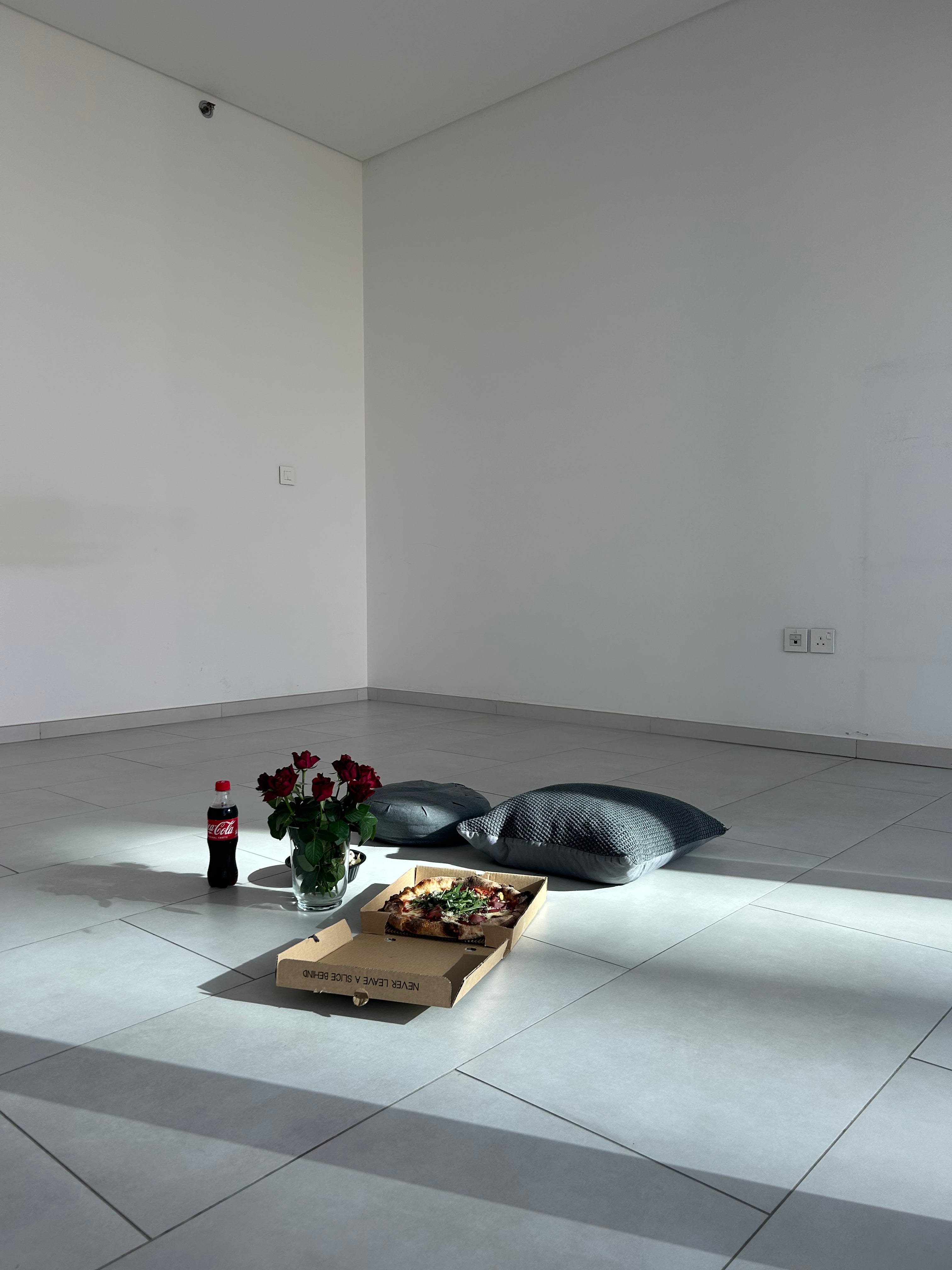
Once my apartment was empty and clean, I stayed for one final moment. I ordered the best pizza in town and watched the sun set over the city I had called home for so many years. I didn’t rush it. I didn’t distract from it. I sat in that stillness – between what had been and what would come next – and savoured it fully.
It wasn’t a goodbye. It was a quiet thank you. A full stop, written in my own hand.
Transitions don’t have to feel like collapse. They don’t have to be messy, frantic, or disorienting. They can be lived – slowly, intentionally, intelligently. The goal isn’t to control every detail. It’s to stay coherent as you move. To remain fully yourself while everything shifts.
That’s what this season offered me. And perhaps, if you’re in a shift of your own – big or small – it offers something to you too.
Comments
Nothing yet. Say the first thing.
Sign in to join the conversation.