
Last week, during SpaceX (SPCX 0.00%↑) Q2 2026 earnings, one number that caught investors attention was the Capex increase for the AI segment.

Again this quarter, SpaceX has spent a massive amount of capital expanding its AI segment, just as expected. But it can still be hard to grasp just how aggressively the company has chosen to go all-in on AI overnight.
Before SpaceX merged with xAI, the company’s previous bet had been connectivity during the Covid lockdown and it turned out to be a very successful one. Just as for AI, SpaceX was pouring a lot of capital into Starlink, betting that connectivity could become a massive and highly profitable business, allowing them to fund the Starship program (closing to loop to deploy even more satellites at scale). And that bet worked as the company generated $791 million in net income for full year of 2024.
This quarter, the company reported $1.66B of operating income for its connectivity segment, up 79% from $923M year-over-year.

Before connectivity, SpaceX’s big bet was achieving full reusability. While the Falcon 9 is currently only partially reusable, with only its first stage being recovered and reused, Starship is designed to be the first fully reusable orbital launch vehicle in the world.
During Starship’s 13th flight test last month, the company successfully demonstrated the next generation of Starlink satellite (the V3), with its successful deployment and at the same occasion delivered in a single launch more payload mass than Rocket Lab has launched in its entire history.
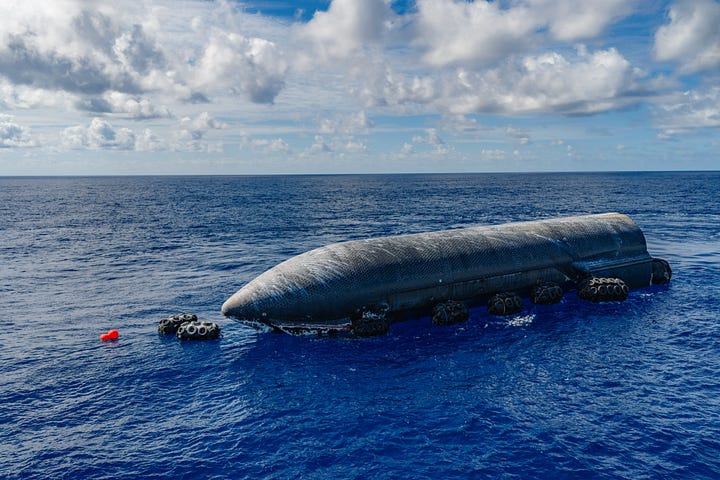
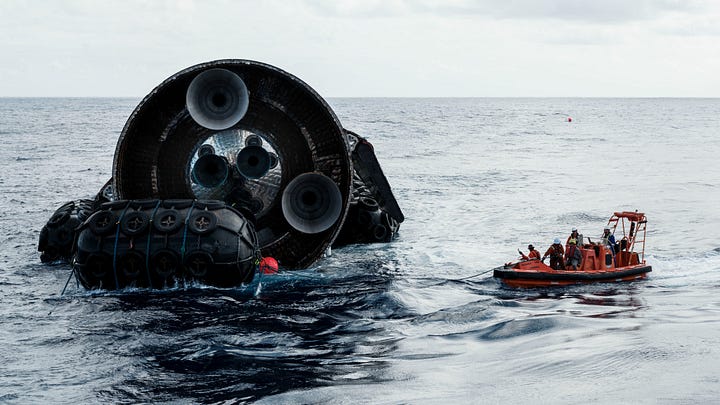
The flight test also exceeded engineers’ expectations, as the Ship performed for the first time a very soft touchdown in the Indian Ocean. This gave the recovery team the opportunity to inspect very closely the second stage of the vehicle for the first time to iterate and perfect its design for future missions, as SpaceX plans to catch the Ship with the launch tower (just as it already does with the Super Heavy booster!)
By achieving reusability, SpaceX has access to space in a very cost-effective way that no other company currently has. By achieving full reusability with their Starship rocket, each launch would cost only fuel, maintenance and other operating costs, similar to a commercial plane, while traditional expendable rockets require a new vehicle for every single launch, which is a huge cost disadvantage for these other companies.
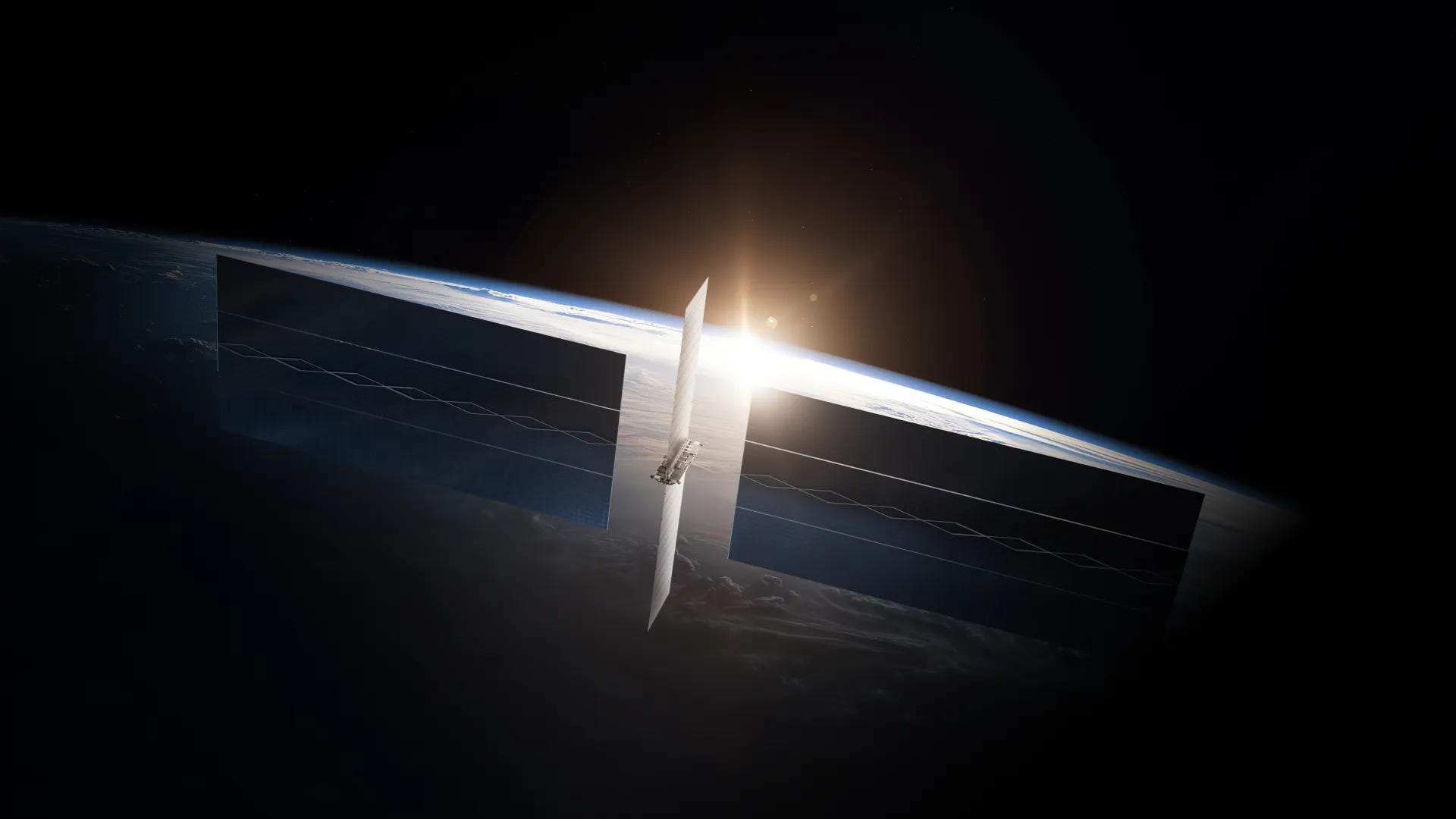
SpaceX has recently unveiled Starmind, an AI satellite with the goal of capturing solar energy in space to power low-cost, high-performance AI compute for Earth, while leveraging the existing Starlink constellation.
To manufacture these AI satellites at massive scale, SpaceX is currently building the Gigasat Factory in Bastrop, TX. and expects it to enable rapid production and deployment of thousands of AI satellites starting as soon as late 2027.
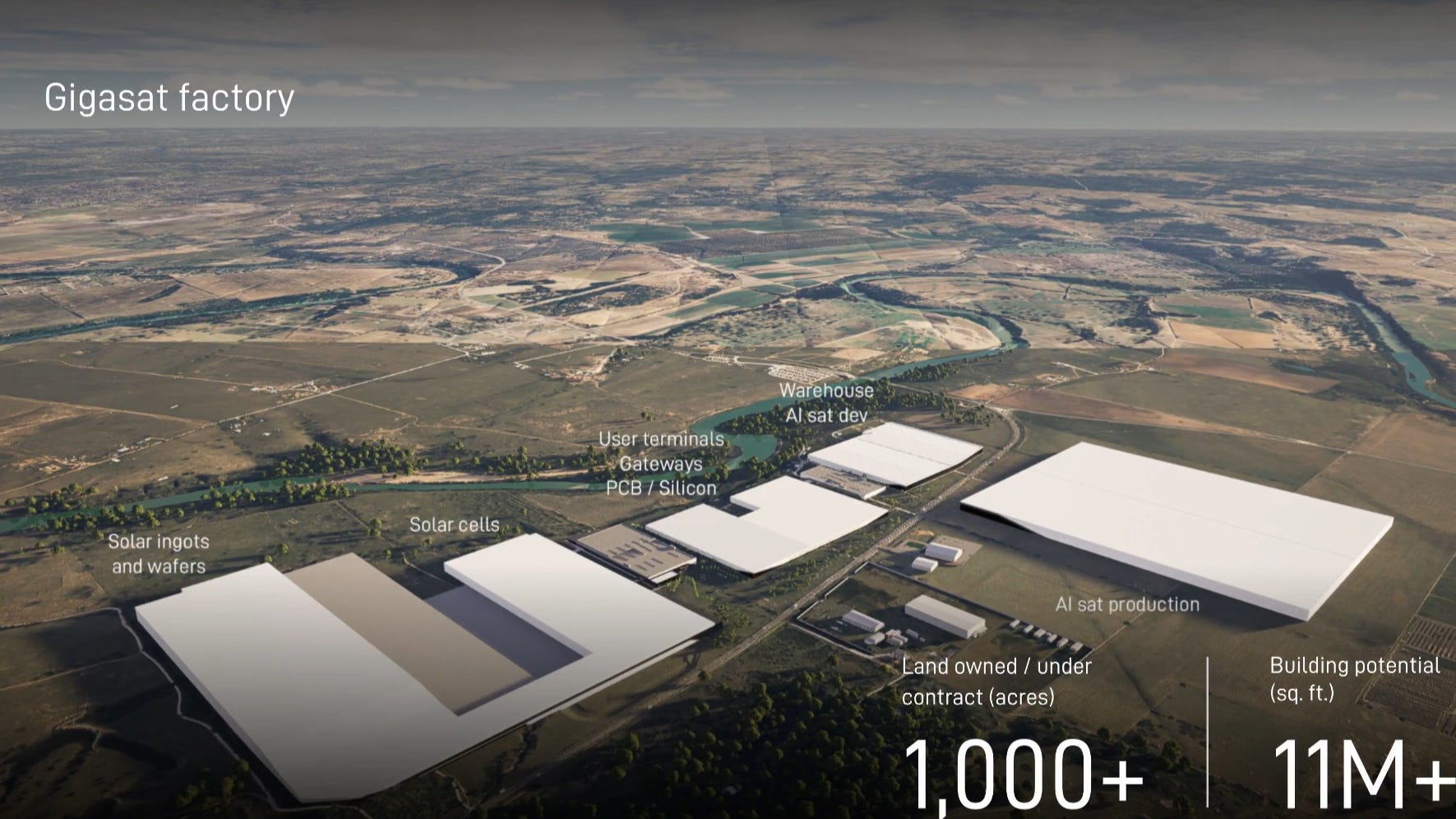
A $55 billion manufacturing complex and thousands of AI satellites being launched into orbit as soon as late next year sound like a lot more research & development and capital expenditure coming for the AI segment!
It’s true that SpaceX will be burning a ton of cash to make Starmind possible, but I think we should not overlook the revenue growth potential once these AI satellites are deployed, because it is very comparable to Starlink.
As proven with Starlink and other satellite connectivity constellations like IRDM 0.00%↑, which has an OEBITDA margin of about 57% and which Rocket Lab agreed to acquire at an $8B valuation, once the infrastructure is deployed, depending on the demand and how cost-effective the infrastructure is to operate on the ground, this can become a passive income generator for the company.
Per SpaceX, Starmind’s primary use case is to move heavy AI computation and machine learning workloads off Earth and into low-Earth orbit, bypassing terrestrial limitations such as land availability, water cooling and local power grids.
The bottlenecks of AI datacenters on Earth at the moment are the continuous operating costs required to run the infrastructure, such as water cooling and local power grids. But in space, there are no such limitations, which could significantly reduce the operating costs of running AI infrastructure.
With the growing demand of AI in the years to come, Starmind could become, similar to Starlink, an enormous revenue driver for SpaceX’s AI segment, with manufacturing and deployment being the main operating costs, just as they are for Starlink, the company’s sole profitable segment at the moment.
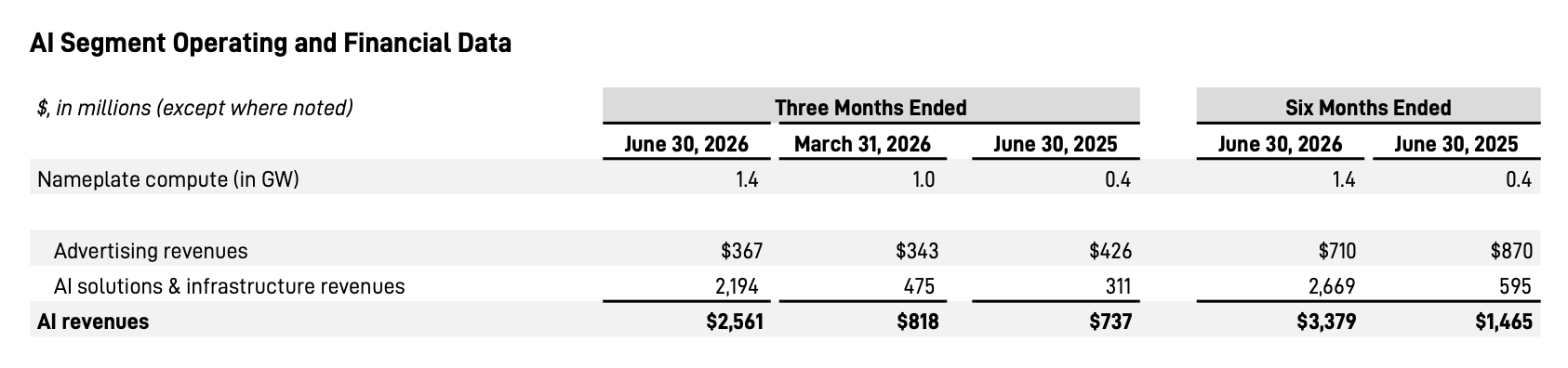
The demand for SpaceXAI products is already proving strong. This quarter, AI revenue was up 213% from Q1 2026 and 247% year-over-year to $2.6 billion, primarily driven by increased AI solutions and infrastructure revenue from new Cloud Service Agreements with Google, Anthropic and Reflection AI, as well as growth in Grok and X subscription revenue.
What Elon Musk is ultimately trying to achieve with SpaceX is to bring humanity closer to a Kardashev Type II civilization, being able to harness a fraction of the energy produced by our Sun.
“You wanna get up in the morning and be excited about the future. We should fight for the things that make us excited about the future. It cannot just be about solving one problem after another.”
— Elon Musk
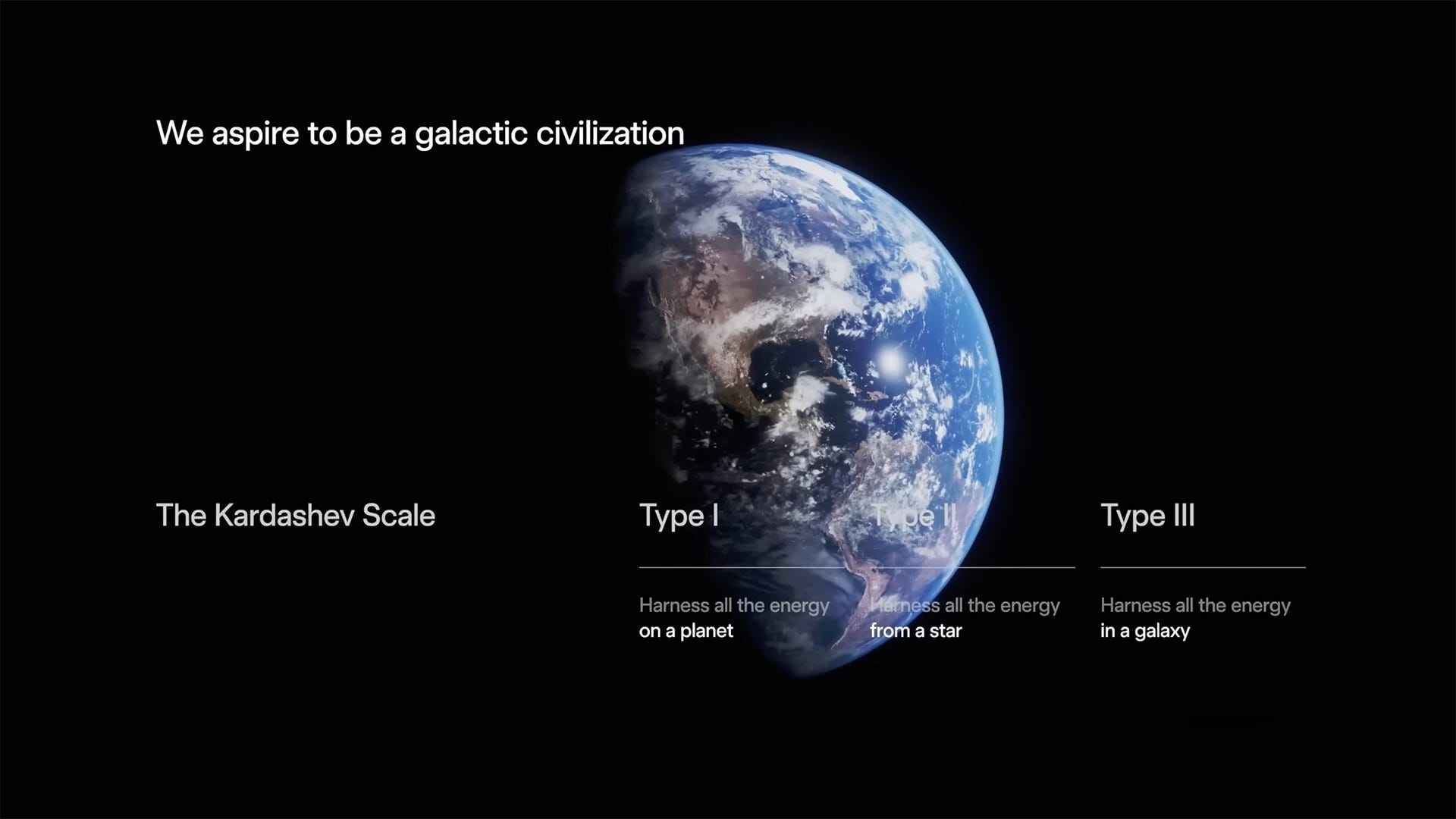
For reference, we are still a Type 0 civilization today, as we are nowhere close to harnessing all the energy available to us on Earth.
So why does this matter so much for Musk and everyone at SpaceX to reach what seems an impossible goal to achieve? Musk says that energy is what allows civilization to scale. The more energy we have access to, the more we can manufacture, compute, automate, transport and build. The more energy we have, the more technology we can build, and the better our technology becomes, the more efficiently we can use that energy.
For example, having much more available energy could allow us to produce more steel, aluminum, batteries, semiconductors and other energy-intensive materials.
Semiconductor factories in space? Not sci-fi! Varda Space is actively manufacturing drugs in space.
For Musk, unlimited energy is ultimately what could allow civilization to keep scaling without being limited by the amount of energy and resources we can produce on Earth.
Money won’t matter in the future?
"We want to be able to take anyone who wants to go to the moon, anyone who wants to go to Mars, or anywhere in the solar system and maybe beyond at some point."
"I'll make another prediction. Money will no longer matter in 2036."
— Elon Musk
In addition to the Gigasat factory where Starmind or the AI satellites will be built, the powerful semiconductors that go into them for future generations will later be manufactured in a 100 million square-foot factory called Terafab.
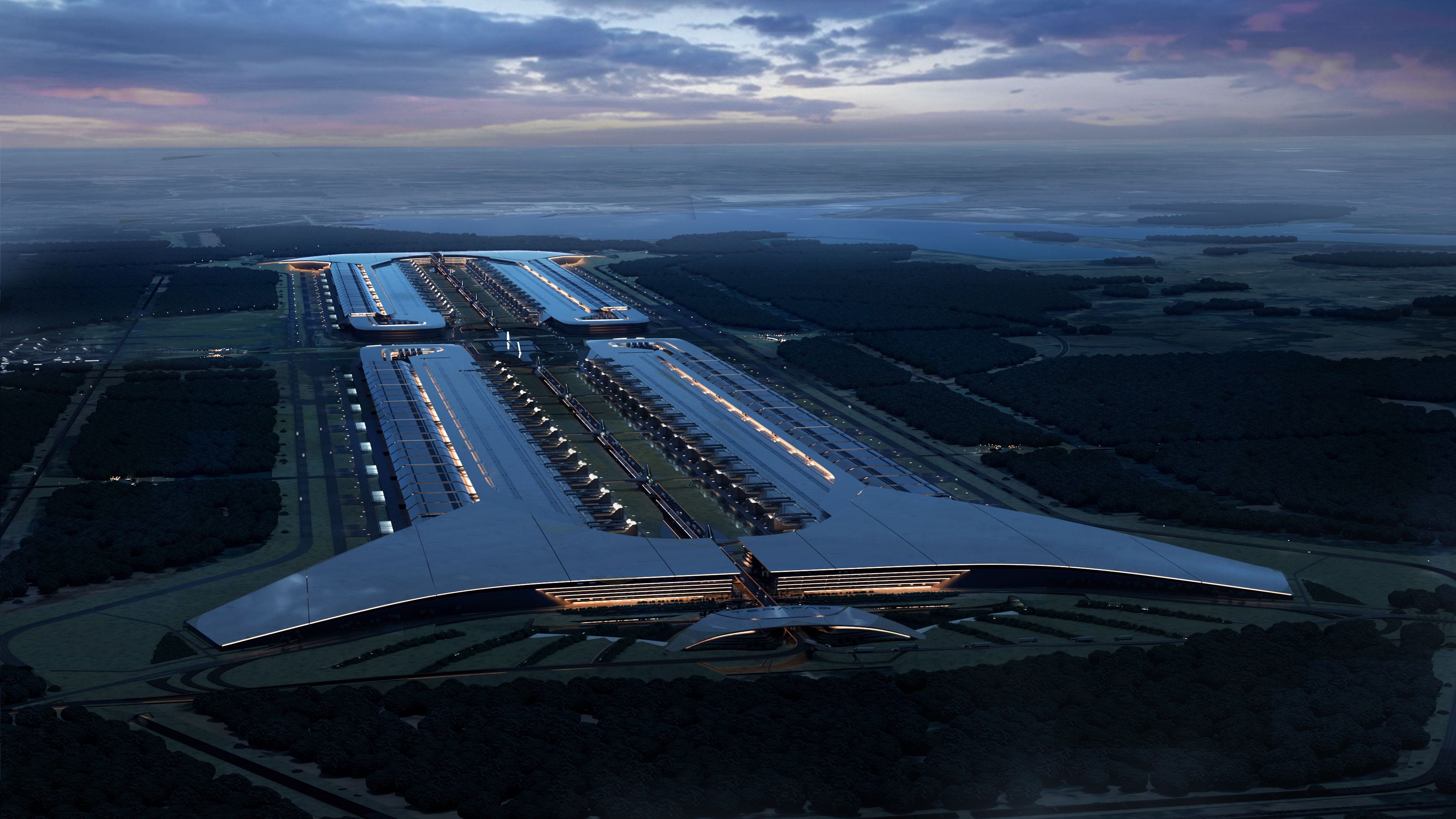
Terafab will be a vertically integrated semiconductor fabrication plant in Grimes County, Texas, in a joint initiative involving SpaceX and Tesla. Per the Office of the Texas Governor, the first phase of the Terafab project represents a capital investment of more than $16.8 billion and will create 3,000 new jobs.
It looks sci-fi but SpaceX actually broke ground on the facility just last week, so things are moving fast!
Until Terafab’s dedicated semiconductor manufacturing lines become fully operational, the first version of Starmind that is expected to be deployed late next year will rely exclusively on NVIDIA Rubin GPUs and Vera CPUs..
SpaceX noted three fundamental technological limitations that must be overcome to unlock gigawatt-scale AI compute in space:
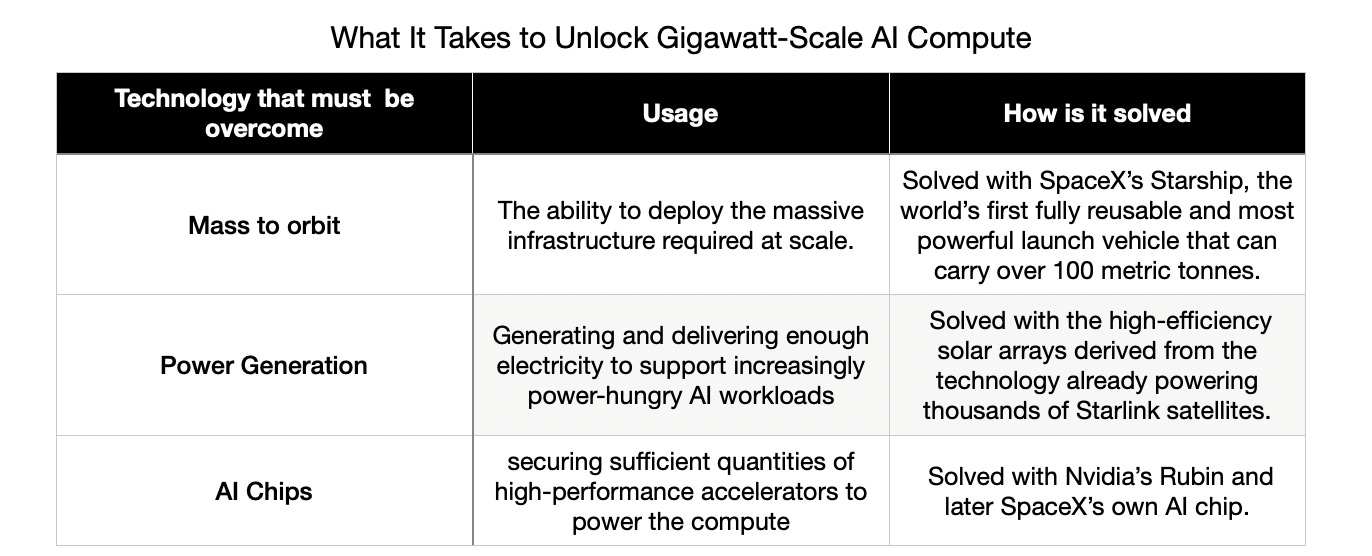
During SpaceX’s earnings call, Musk said that for Starmind the company was committed to sourcing its GPUs from a single supplier… and of course it is Nvidia (NVDA 0.00%↑)
“Going forward, we've decided to build exclusively on Nvidia because we think the Vera Rubin architecture is the best architecture. We think it's the best AI computer, and we greatly value our close cooperation and partnership on many levels with Nvidia. So we're exclusive to Nvidia.”
— Elon Musk
Both SpaceX and Nvidia have dominant positions in their respective markets (arguably approaching quasi-monopolies). SpaceX is able to launch and deploy massive satellite constellations at scale (as proven with Starlink) and super cost-effectively thanks to their Falcon 9 and soon Starship rocket, while Nvidia dominates AI computing and more specifically the manufacture of high-performance chips at scale.
During last week’s earnings call, Musk stated that SpaceX expects to hit $1 trillion in annual revenue by 2030, pulling the target forward a full year from previous projections of 2031. He also noted a non-zero chance of hitting the milestone as early as 2029.
Comments
Nothing yet. Say the first thing.
Sign in to join the conversation.