
Micron just reported gross margins higher than NVIDIA’s. Not close to NVIDIA’s — higher. From a company that makes memory chips, not AI accelerators. That single fact tells you everything about how tight the AI memory market has become.
Micron’s fiscal Q3 FY2026 print, released June 24, didn’t just beat estimates — it obliterated them. Revenue tripled year-over-year. Guidance for the next quarter is now higher than what analysts expected for this one. The stock moved +7.4% after-hours on a $1.19 trillion company. Here’s what actually matters.

The numbers that matter
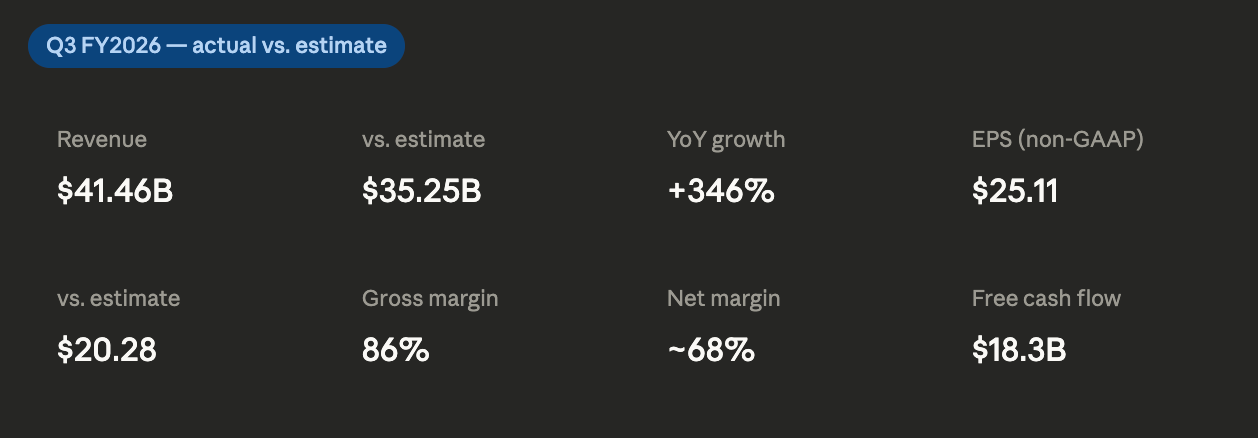
This is the 5th consecutive quarter of beats, averaging a 21.7% positive surprise. Management has been consistently underpromising and overdelivering — the single highest-quality signal in equity research.
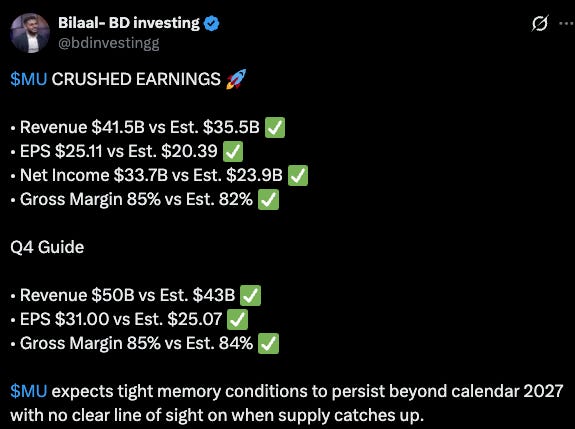
FY2027 EPS estimates went from $90 to $112 in 90 days. That’s not analysts guessing — that’s institutional money repricing the entire business in real time.
Today’s article is free. To receive new stock picks, deepdives & see my portfolio consider becoming a free or paid subscriber.
Why margins exploded
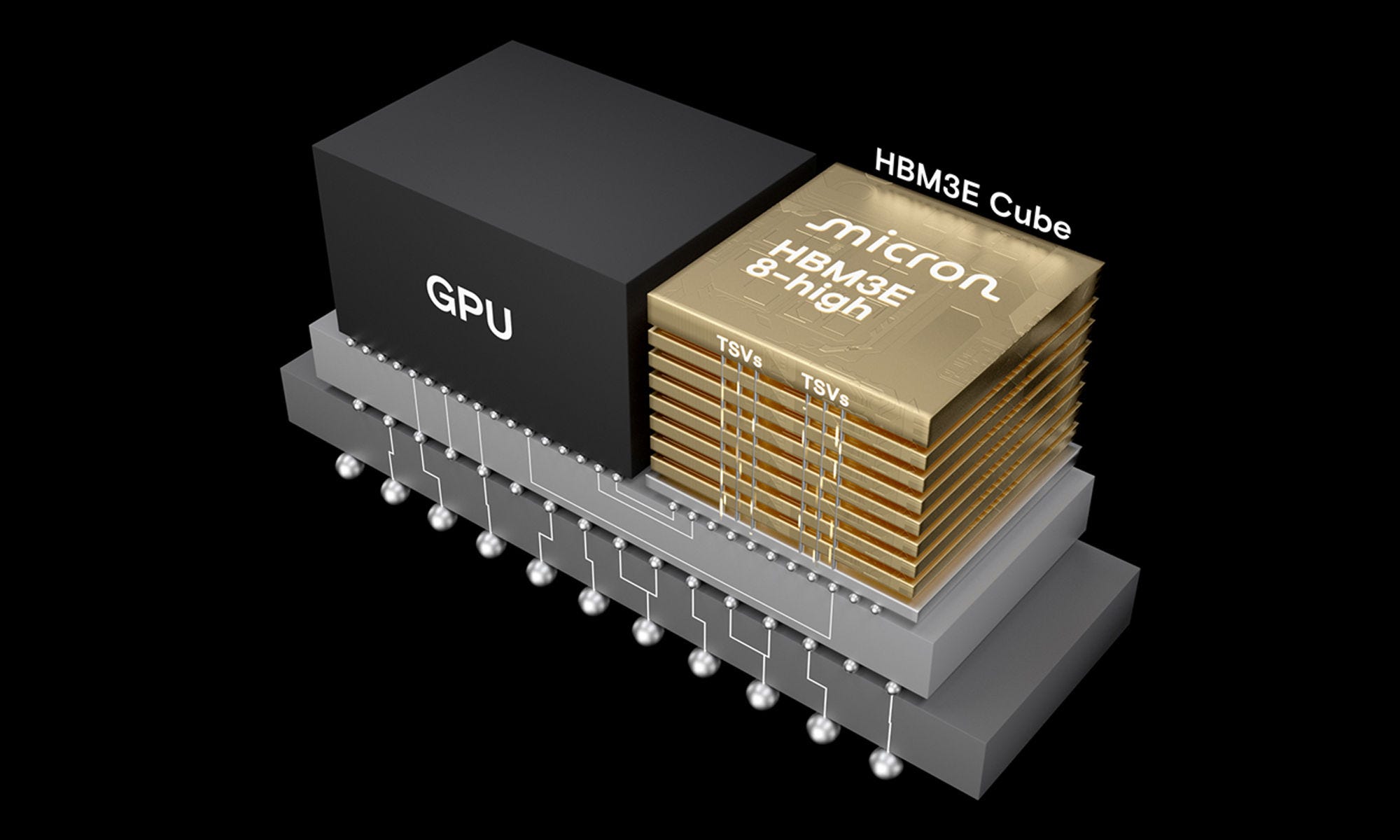
Micron makes three things: DRAM (the fast memory in every device), NAND (storage), and HBM — High Bandwidth Memory, the exotic chip stacked directly on top of every NVIDIA GPU. AI turned HBM from a niche part into the most fought-over silicon on earth, and only three companies on the planet can make it: Micron, SK Hynix, and Samsung.
The supply story behind the beat
16 Strategic Customer Agreements signed — 14 of them guarantee a combined $100B revenue floor through 2030.
$22B in customer cash deposits ($18B upfront) — hyperscalers are paying Micron just to secure future supply.
Management says HBM and NAND supply stays tight beyond calendar 2027 — this is not a one-quarter spike.
Data center revenue hit $25B for the quarter. SSD revenue for data centers more than doubled sequentially.
Microns DRAM revenue is up 10x in under 3 years, showing how AI has made memory one of the biggest bottlenecks in the buildout.
The next wave is agentic AI, where systems need more data access, processing, and learning. That makes standard and low-power DRAM even more important around CPUs.
$NVDA Vera CPU racks show the direction: each rack could use 400TB of DRAM, roughly 5–10x more than other Nvidia GPU racks.
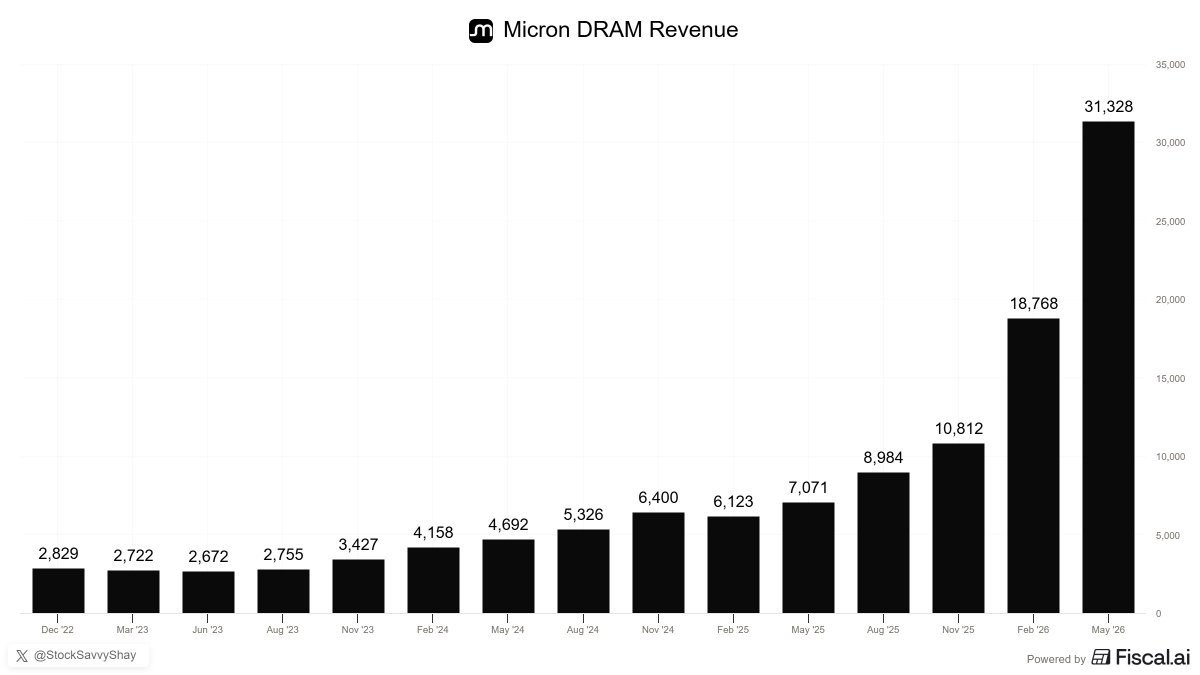
Q4 guidance: even bigger
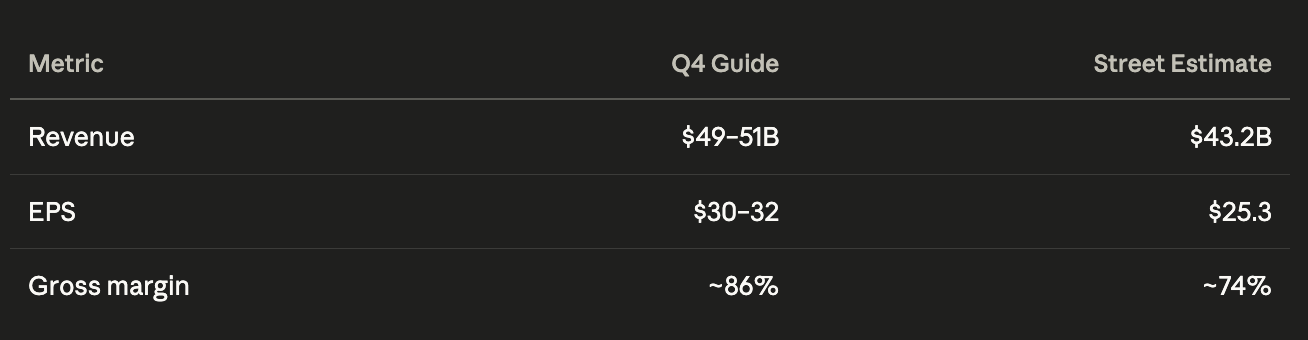
Micron is also raising FY2027 CapEx above $40B to build new cleanroom capacity — meaning even this guidance assumes the shortage continues, and Micron is racing to add supply rather than coast on scarcity.
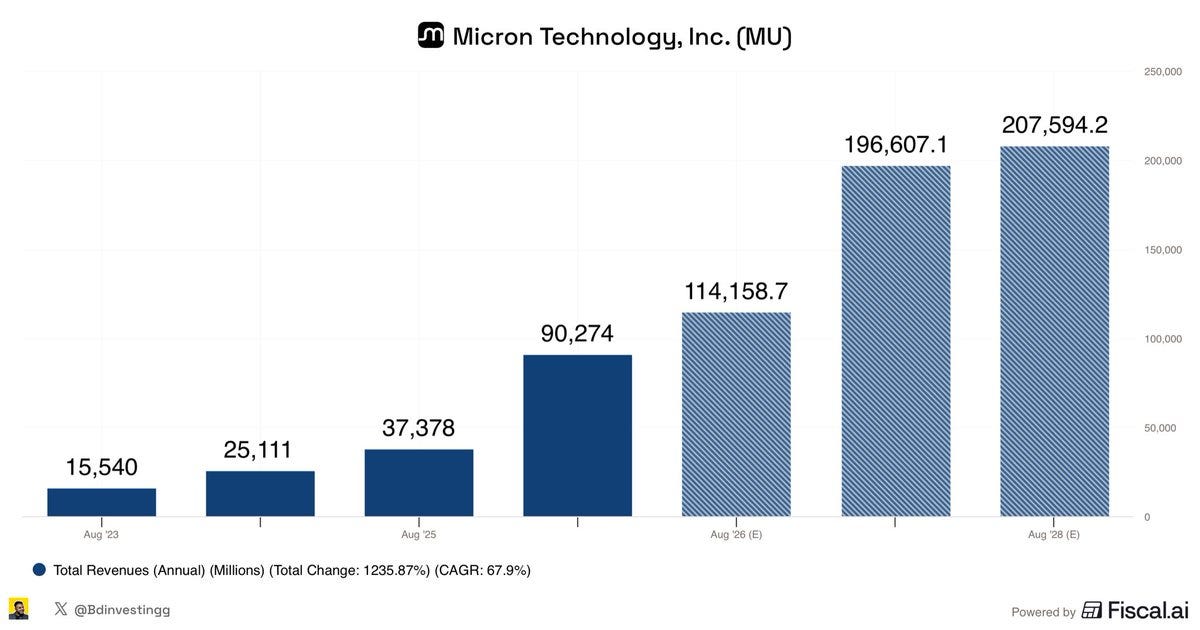
Micron also signaled that the memory shortage may last much longer than investors expected.
The company expects supply to stay tight beyond calendar 2027 and says it still does not have clear visibility on when supply will finally catch up with demand.
Customers are already reacting. Through strategic agreements signed so far, Micron expects roughly $22 billion in cash deposits and related financial commitments, showing how aggressively buyers are trying to secure future memory supply.
Micron CEO on Robotics Memory Demand
“Humanoid robots carry 10 times the amount of memory as an average L2+ vehicle. We expect a sustained substantial multi-decade memory demand cycle to begin in the latter part of this decade.”
“The mix of L2+ and above vehicles is more than doubling this year to over 20%, and is expected to exceed 40% by 2030.”
And if physical AI is the next big thing, according to Nvidia CEO Jensen Huang then this would only increase the revenue for Micron.
The Chart
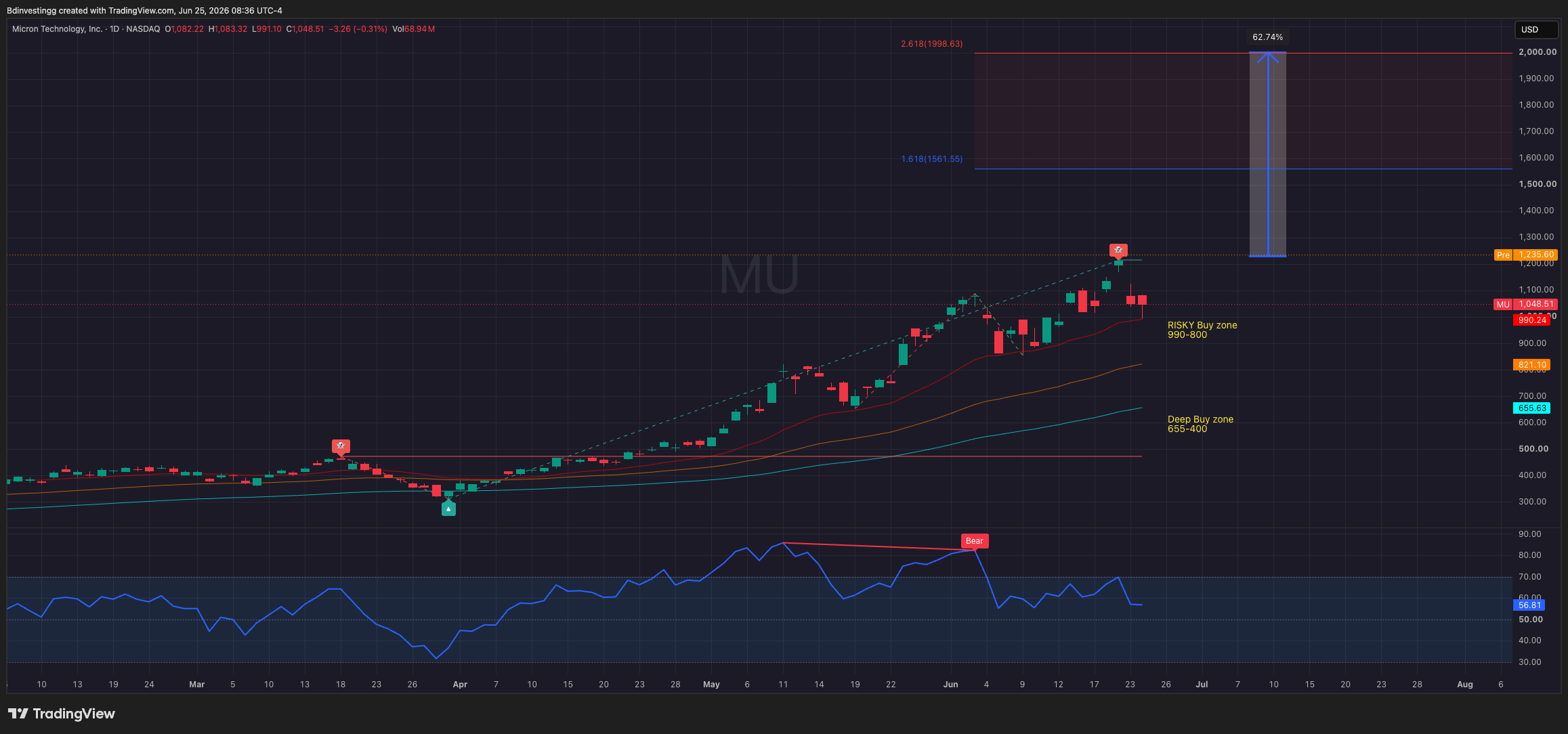
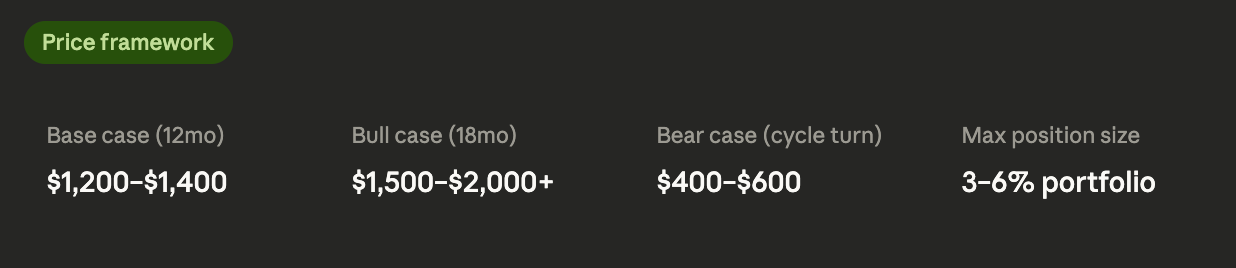
The earnings move is a major breakout attempt. Premarket price is above the prior high area near $1,200–$1,235, which means buyers are trying to confirm a new leg higher.
The big level now is simple:
Bullish above: $1,200–$1,235
If MU holds above this zone after the open, the breakout looks real and momentum can continue.
First upside target: around $1,560
That lines up with the 1.618 extension on your chart.
Stretch target: around $1,990–$2,000
That is the 2.618 extension, but that would likely need continued earnings upgrades and strong memory pricing.
Buy dips around the 20ema (red line) seems to work
The valuation: cheap and expensive at the same time
The forward P/E paradox
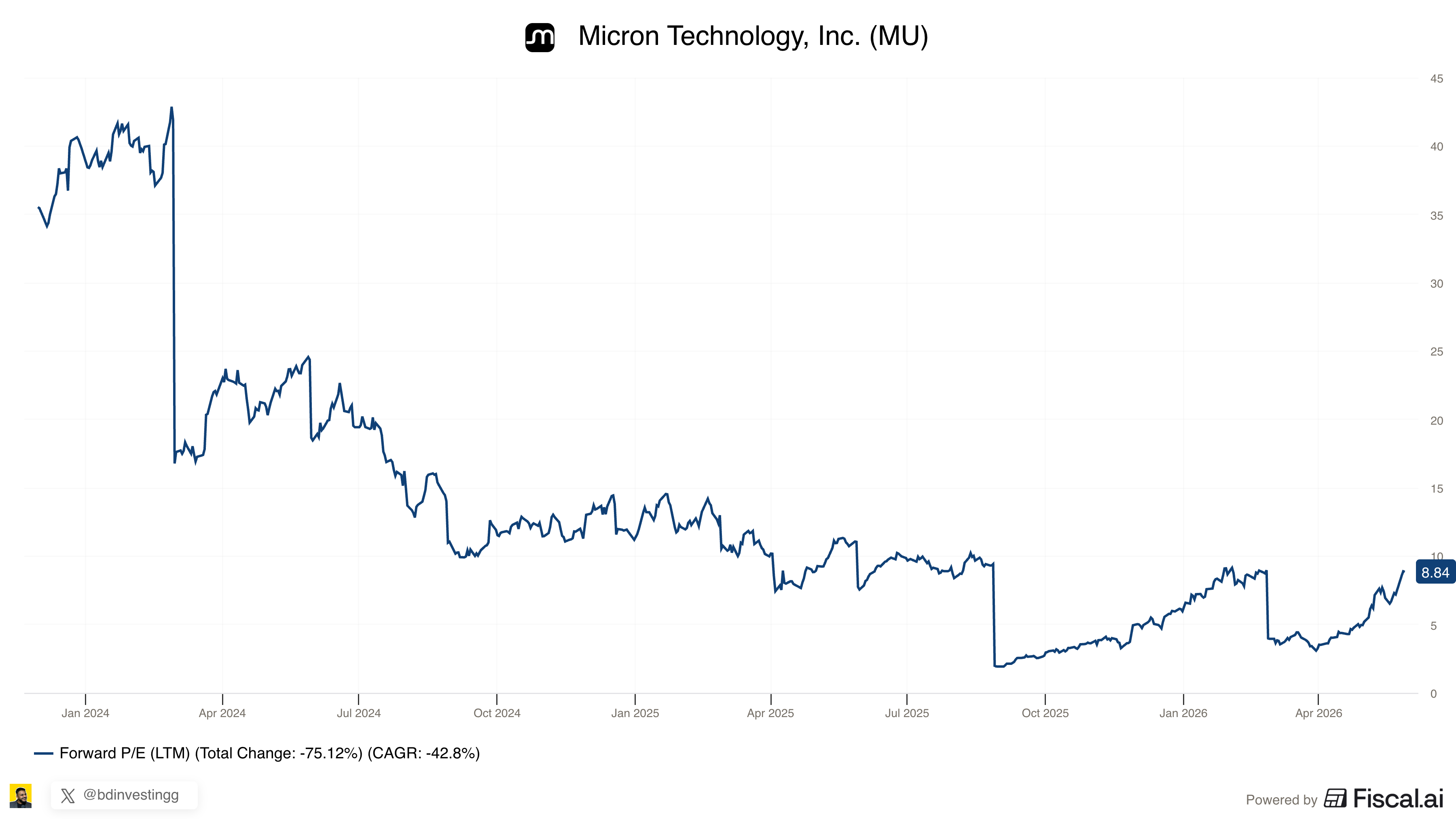
At $1,057, MU trades at roughly 21x trailing earnings — not cheap by historical standards. But against FY2027 consensus EPS of $97–112, that’s just 9–10x forward earnings — the cheapest multiple of any major semiconductor name, despite Micron literally supplying the memory that makes NVIDIA’s chips function.
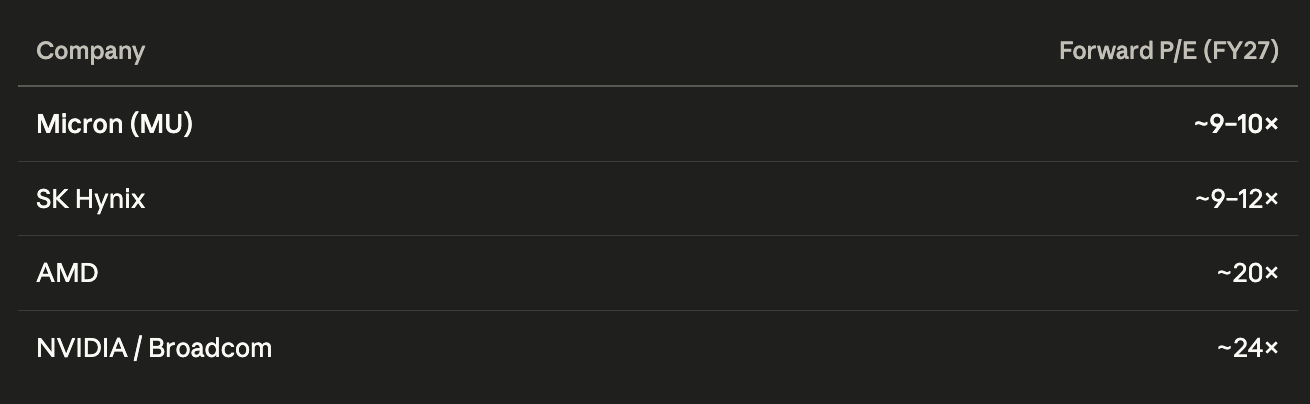
Micron trades at 40% of NVIDIA’s multiple while supplying the memory NVIDIA’s chips can’t function without. That gap exists because the market is pricing in the next downturn — not because the business is worse.
The one risk that actually matters
This isn't the first time memory margins looked unstoppable. In fiscal Q4 2018, Micron posted gross margins of roughly 59% on the back of a DRAM shortage — and the stock traded at just 4–5x forward earnings, with analysts calling it "too cheap to ignore." Over the following six quarters, oversupply hit: by fiscal Q4 2019, gross margins had collapsed to roughly 23%, revenue fell from a peak of $8.4B/quarter to $4.9B/quarter, and MU stock dropped from a 2018 high near $64 to under $30 — a decline of more than 50%. Today's gross margin of 86% is nearly 30 points higher than the 2018 peak, on a revenue base 5x larger. The AI-driven HBM shortage is structurally different from 2018's commodity DRAM cycle — but the historical pattern is clear: margins this elevated have never stayed there. They've reverted every time, usually within 18–24 months of peaking.
Cyclicality is still the real risk — not execution
⚠ Memory is a cyclical commodity, even with AI demand
Micron’s history includes brutal downturns (2023 gross margins fell to single digits). The bull case requires this AI-driven shortage to last through 2027+ as management claims. SK Hynix holds 62% of HBM share today and is the dominant NVIDIA supplier — if it captures most of next-gen HBM4 allocation, Micron’s pricing power compresses faster than expected.
⚠ Beta of 3.04 — this stock moves 3× the market
At a $1.19T market cap with a beta this high, a 20% market correction has historically meant a 50–60% move in MU. The asymmetry today (entry at $1,057) is decent but no longer exceptional — better entries existed at $600–900 before this earnings re-rating.
What would make me wrong: SK Hynix already holds roughly 62% of global HBM market share and is NVIDIA's primary HBM supplier today. Micron's bull case depends on growing its share of next-generation HBM4 allocation alongside Hynix and Samsung. If SK Hynix's HBM4 share with NVIDIA's Vera Rubin platform climbs from today's level toward 70%+ over the next two quarters — squeezing Micron down to a secondary allocation — Micron's pricing power on its highest-margin product compresses faster than the $97–112 FY2027 EPS consensus assumes. Watch Micron's cloud/HBM revenue mix (currently $13.77B of the $41.46B total) in the Q4 print on this specific basis, not just the headline beat.
Verdict
This is one of the cleanest beat-and-raise quarters in semiconductor history — record margins, a locked-in $100B revenue floor, and tight supply guided through 2027. The risk isn’t execution. It’s the next memory cycle, eventually turning, and a beta of 3 means that turn will hurt when it comes.
Get every AI infrastructure deep-dive
⚠️ Disclaimer: For informational and educational purposes only. Not financial advice. MU is a highly cyclical, high-beta semiconductor stock. Always do your own research and consult a financial advisor. Full report: stockswithpawan.com/mu
Comments
Nothing yet. Say the first thing.
Sign in to join the conversation.