
Gold has experienced one of its most violent corrections in years.
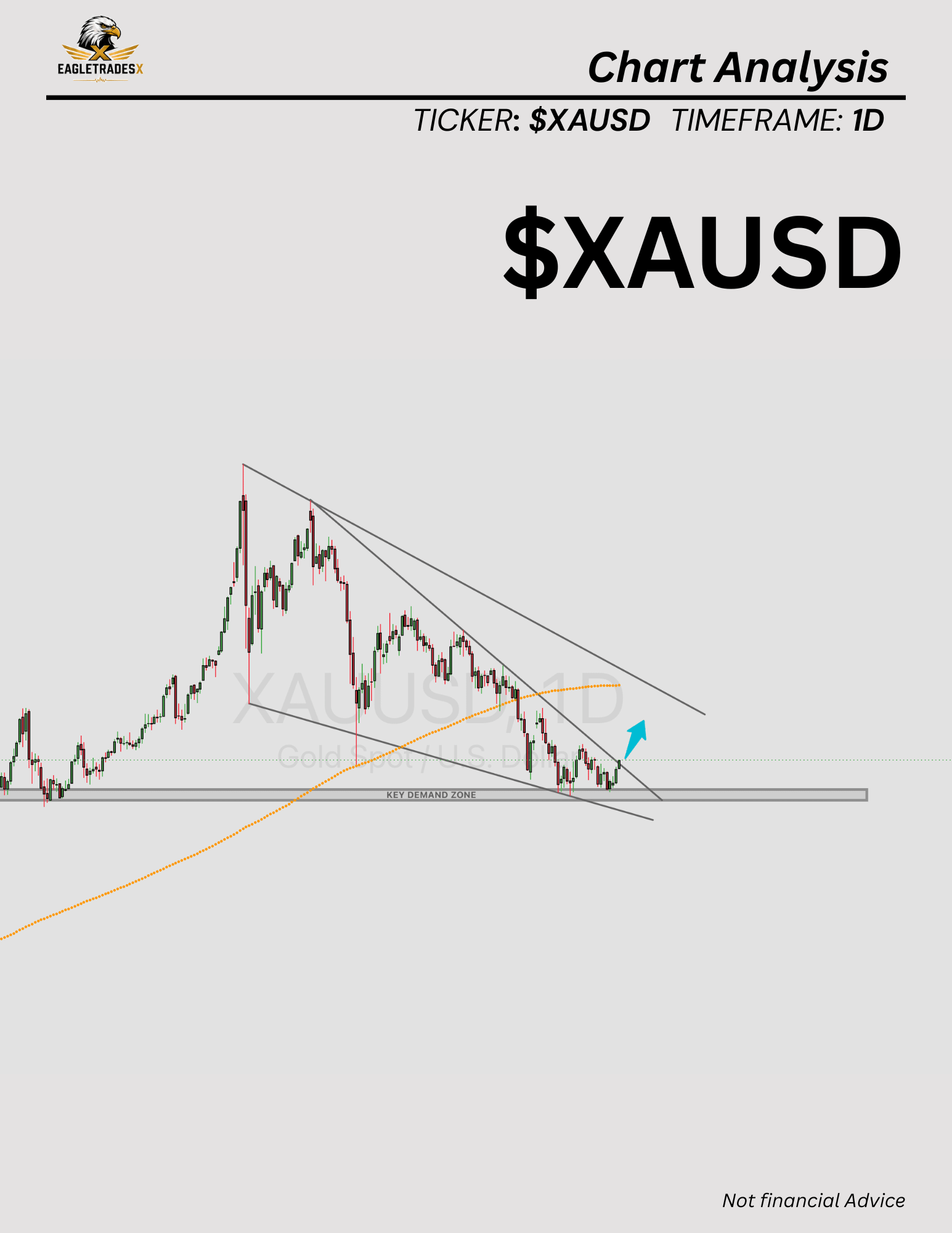
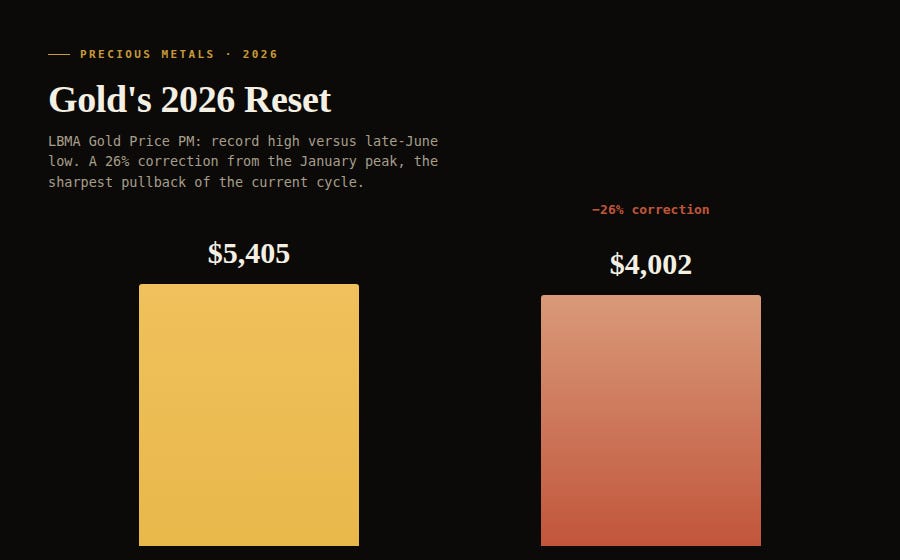
After reaching an intraday record above $5,500 per ounce in January 2026, gold briefly dropped below $4,000 in late June. That represents a decline of approximately 25% from its peak.
To most investors, that looks like a broken trade.
But underneath the price decline, something completely different is happening.
China is importing gold at its fastest pace in more than two years. Central banks expect global gold reserves to keep rising. India is strengthening regulated, physically backed ways to own gold.
The price is falling—but the world’s biggest buyers are accumulating.
That raises one important question:
What if this is not the end of the gold bull market?
What if this correction is preparing gold for its next historic move?
China’s latest customs data delivered a massive signal.
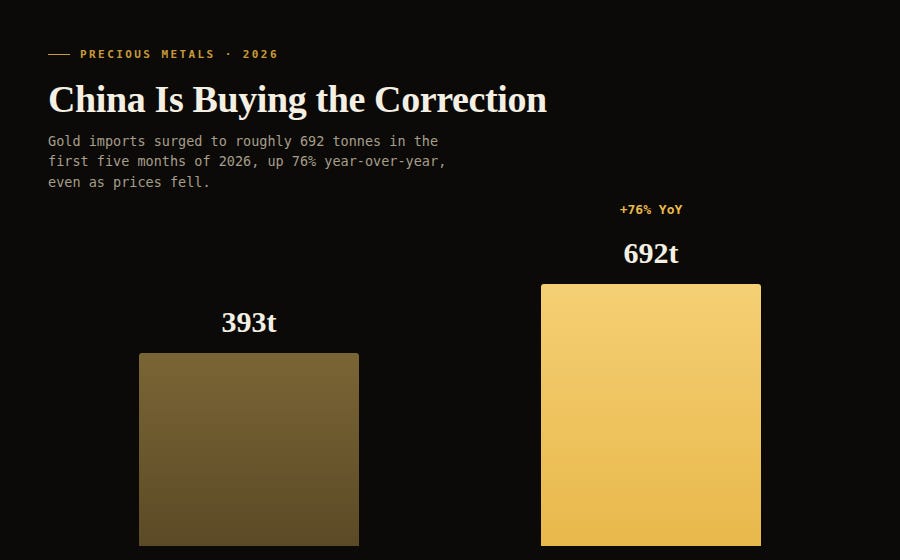
The country imported approximately 163 tonnes of gold in May—the highest monthly amount since March 2024. During the first five months of 2026, total imports reached roughly 692 tonnes, an increase of 76% compared with the same period last year.
This is not just government buying. It includes demand for physical bullion, gold bars and private accumulation plans inside China.
The People’s Bank of China is buying too.
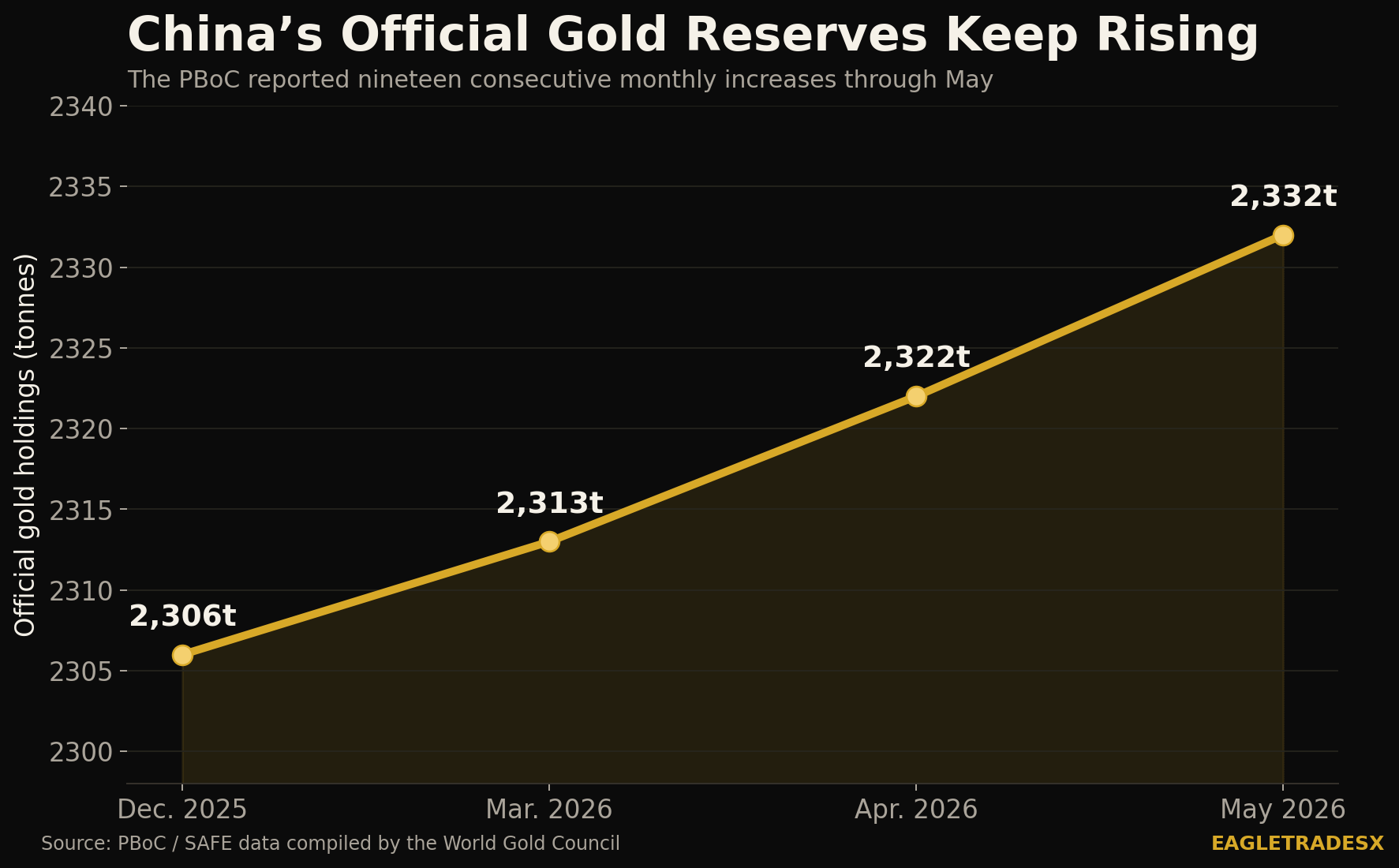
China’s central bank added approximately 10 tonnes to its official reserves in May, its largest reported monthly purchase since December 2024. That pushed its official gold holdings to around 2,332 tonnes—approximately 9% of the country’s total reserves. It was also China’s nineteenth consecutive month of reported gold accumulation.
Think about the timing.
Gold had already fallen sharply from its January high. Investor momentum was weakening and gold ETFs in China were experiencing outflows.
But instead of running away, China increased its physical exposure.
Retail traders often chase strength.
Strategic buyers accumulate weakness.
Why would China want so much gold?
Because gold is more than a commodity. For governments, it is a reserve asset that does not depend on another country’s promise to pay.
China holds a substantial amount of U.S.-dollar assets. That creates exposure to American interest rates, fiscal policy, sanctions and the long-term purchasing power of the dollar.
Gold carries no direct counterparty risk. It cannot be printed by a central bank, frozen by a foreign government through the same mechanisms as financial assets, or diluted by deficit spending.
That makes it useful in a world becoming more divided economically and politically.
This does not mean the dollar is about to disappear. It remains the world’s dominant reserve and transaction currency. However, the dollar’s share of global reserves has gradually declined over the longer term as central banks diversify.
The important story is not the sudden death of the dollar.
It is the gradual search for alternatives—and gold remains the most established neutral reserve asset available.
America is currently attempting to achieve three difficult objectives:
Rebuild domestic manufacturing.
Protect consumers from inflation.
Keep American exports globally competitive.
Tariffs and protectionist policies may encourage companies to manufacture inside the United States. But they can also raise input costs and consumer prices in the short term.
At the same time, a very strong dollar can make American products more expensive for international buyers, weakening export competitiveness.
This creates a complicated balancing act.
Some investors believe the U.S. may eventually tolerate a softer dollar to support manufacturing and exports. However, that is a market theory—not an announced policy. Treasury Secretary Scott Bessent has publicly stated that industrial strength and a “strong dollar policy” are both part of the administration’s strategy.
Still, currency values are determined by more than official statements.
Interest rates, deficits, inflation, global capital flows and market confidence all matter. If real interest rates decline or concerns surrounding U.S. debt rise, the dollar could weaken even without an official devaluation policy.
Historically, a weaker dollar and falling real yields have created a favourable environment for gold.
China is not alone.
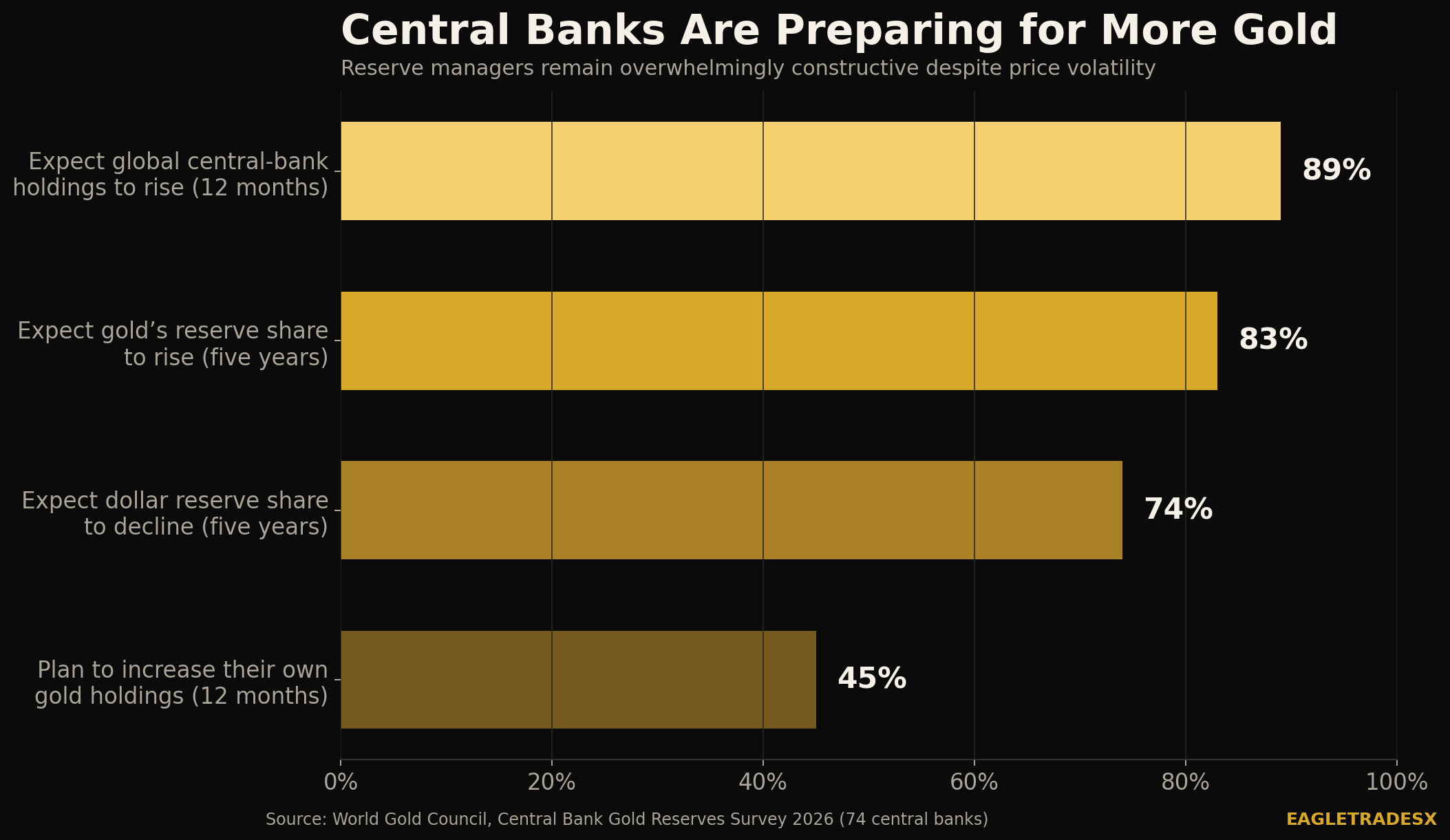
In the World Gold Council’s 2026 survey:
* 89% of reserve managers expected global central-bank gold holdings to increase over the following 12 months.
* A record 45% expected their own institution to increase its gold reserves.
* 74% expected the dollar to represent a moderately or significantly smaller share of global reserves within five years.
* 83% expected gold to account for a larger share of reserves five years from now.
Those are extraordinary numbers. Central Bank Gold Reserves Survey 2026
Central banks are not trying to catch a quick trade.
They are positioning for the next decade.
India Is Quietly Changing How Gold Is Owned
Another major development is happening in India—one of the world’s largest gold-consuming nations.
In November 2025, India’s securities regulator, SEBI, warned investors about unregulated “digital gold” platforms. The regulator said these products could expose investors to counterparty and operational risks because they fall outside its investor-protection framework.
India is now expanding regulated Electronic Gold Receipts.
EGRs can be held in a demat account like securities, but each receipt represents ownership of underlying physical gold stored with an accredited vault manager. NSE began live EGR trading in May 2026.
This does not mean regulators are warning against every form of “paper gold.” Regulated gold ETFs and futures continue to play an important role.
But it does reveal something important:
Investors increasingly want transparency regarding whether their gold exposure is properly regulated and supported by identifiable assets.
During normal markets, futures, ETFs and physical bullion remain closely connected through arbitrage.
But during periods of extreme demand or supply disruption, local premiums can expand. Coins and bars may trade above the international spot price because of refinery constraints, transportation problems, taxes or shortages.
That does not automatically mean the global gold market is failing.
It means physical availability can become more valuable when everyone wants delivery at the same time.
If central banks, institutions and retail investors all accelerate purchases together, physical premiums could rise even if the quoted spot price initially moves more slowly.
That is the scenario worth watching—not an automatic collapse of “paper gold,” but a possible rush toward directly backed and deliverable exposure.
Gold’s drop from above $5,500 to around $4,000 has removed a large amount of speculative excitement from the market.
Comments
Nothing yet. Say the first thing.
Sign in to join the conversation.