
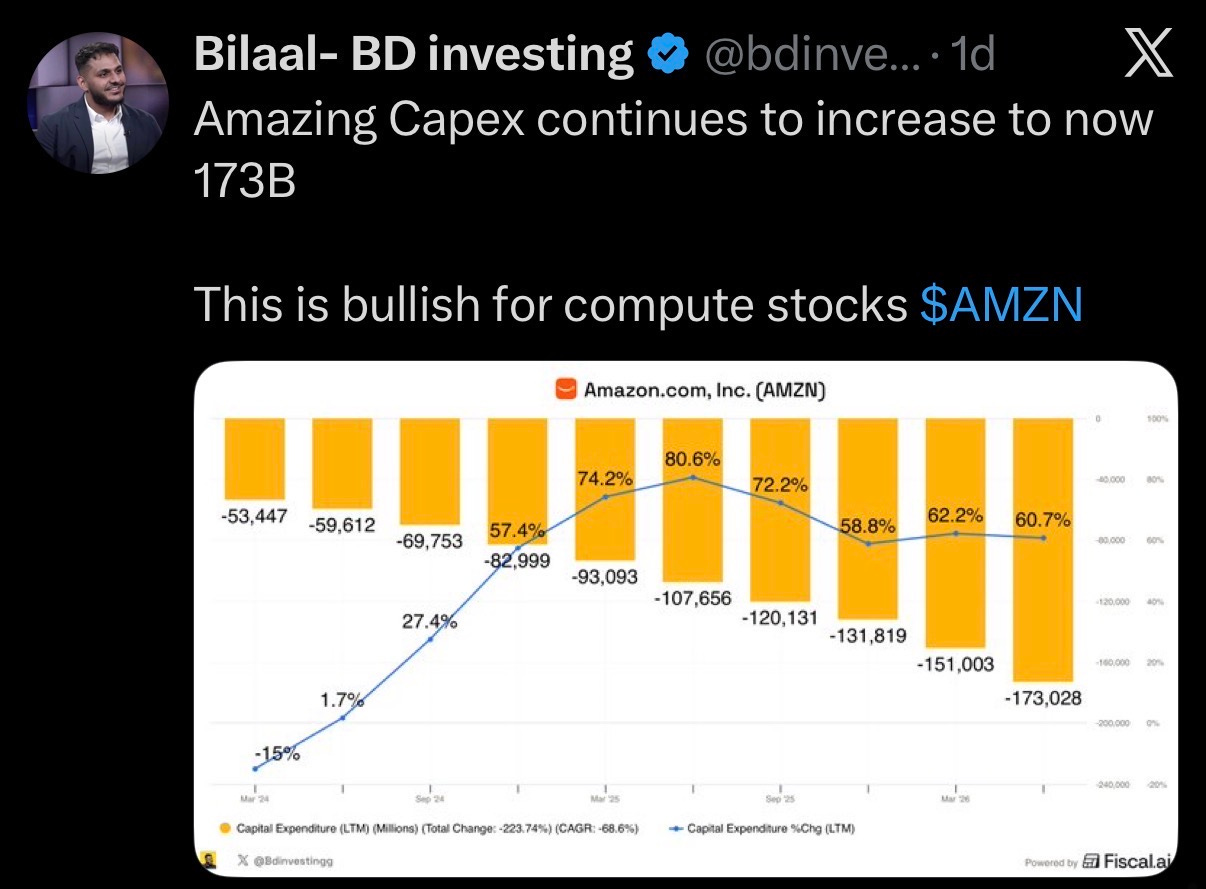
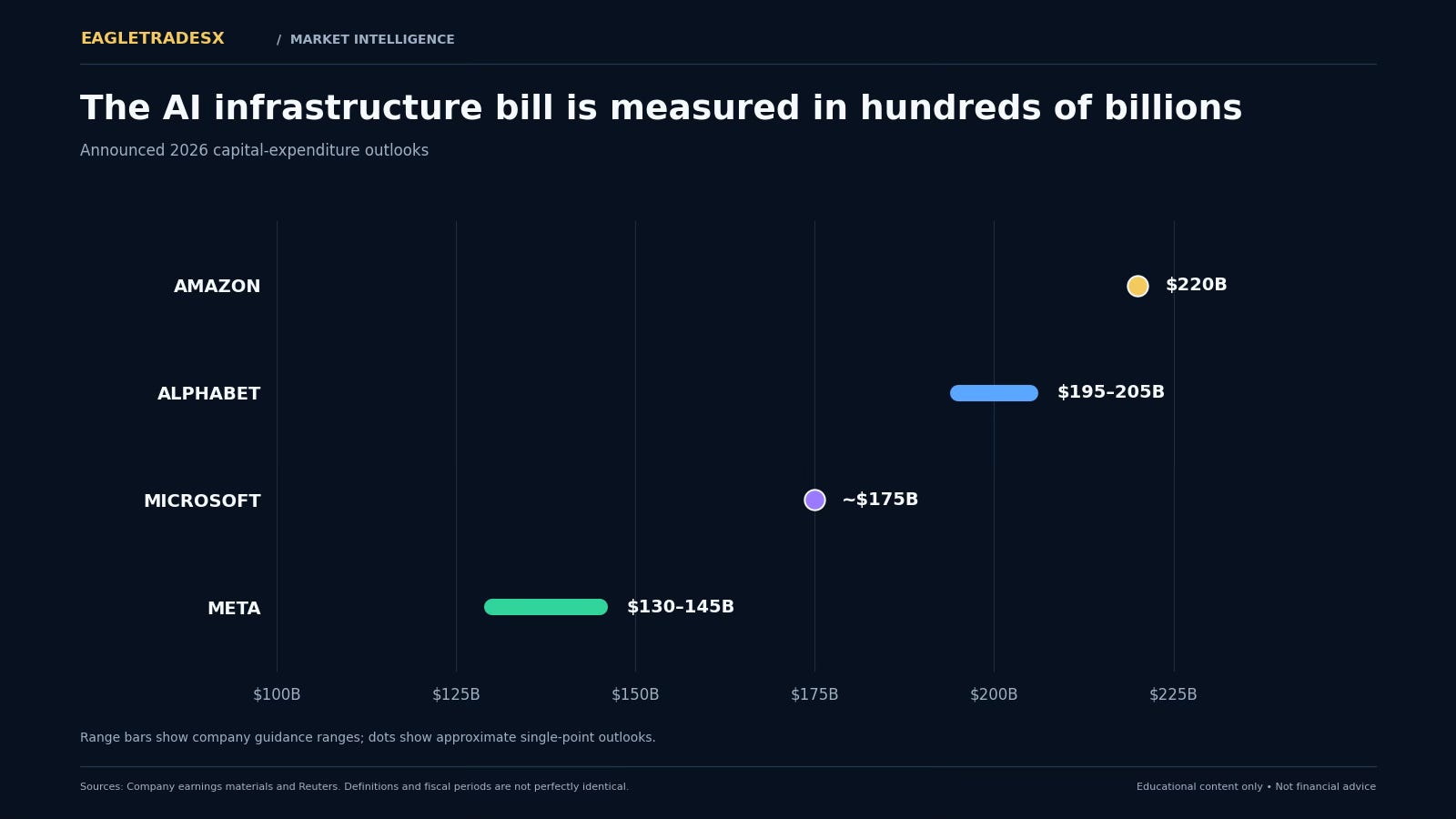
Amazon told investors it now expects to spend $220 billion in 2026.
Its trailing-12-month free cash flow fell from positive $18.2 billion to negative $7.6 billion.
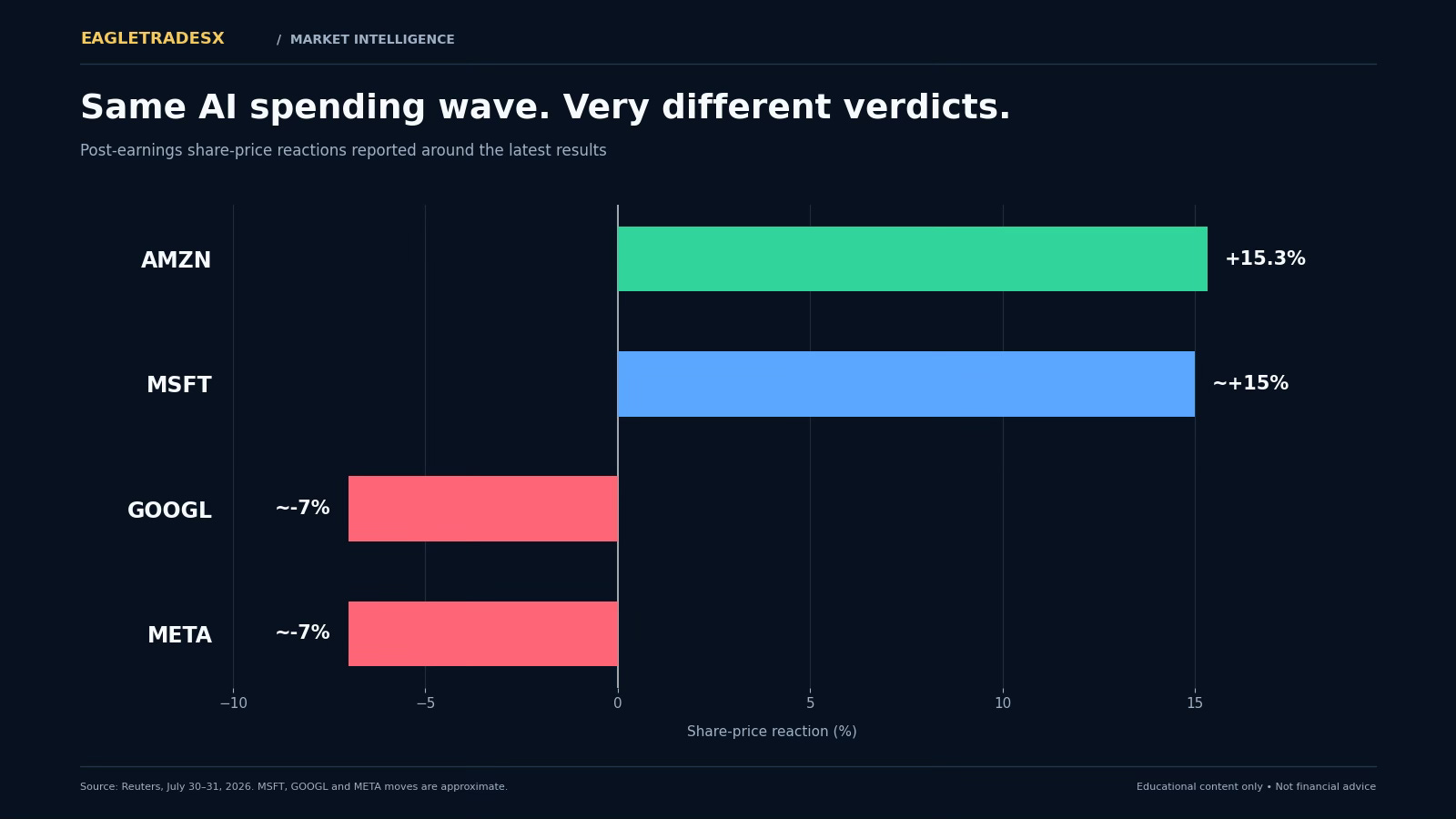
The stock responded by surging 15.3%.
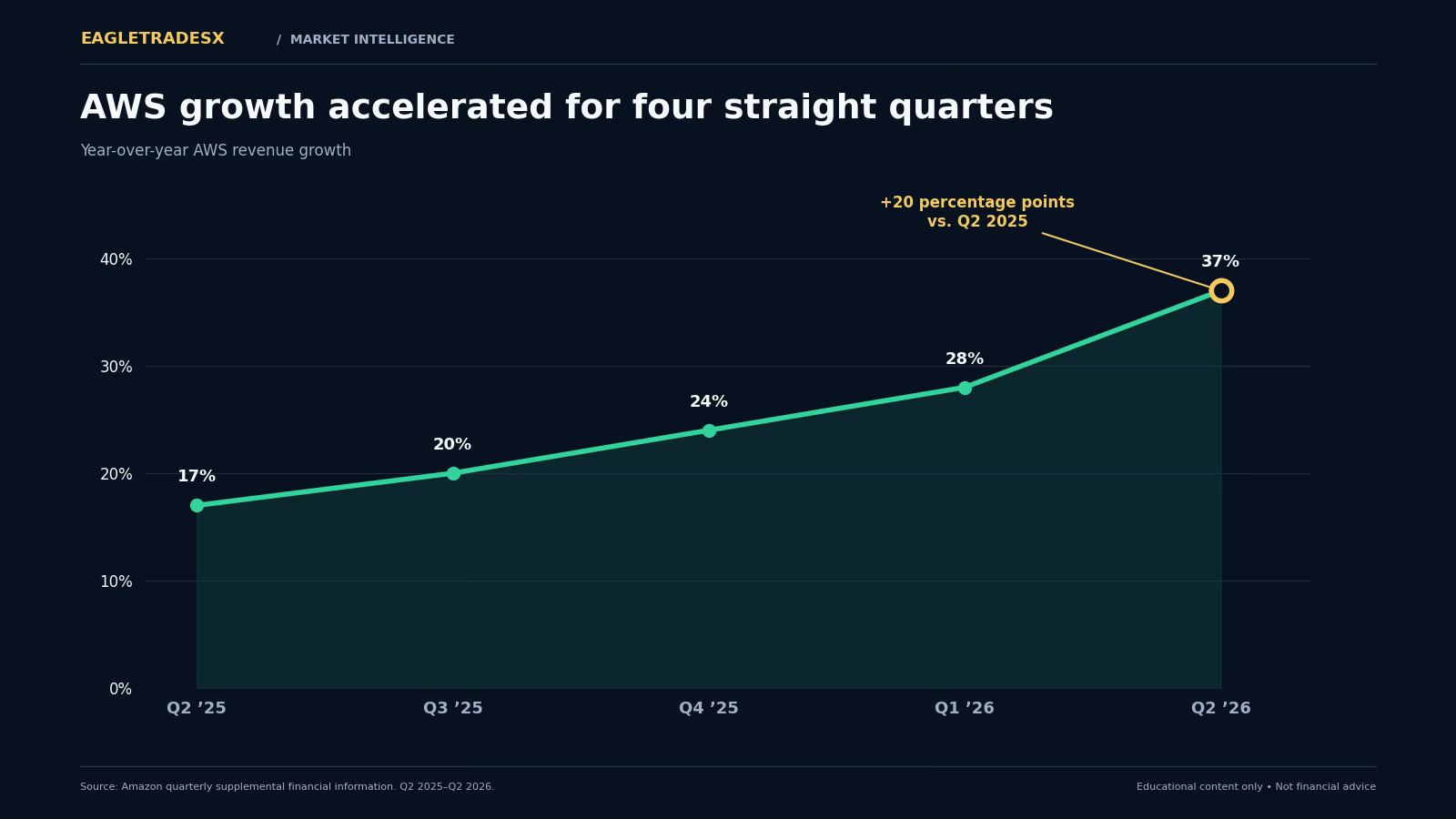
That sounds contradictory until you look at one number: Amazon Web Services revenue accelerated 37% year over year, its fastest growth in 18 quarters.
The market’s message was clear.
Wall Street does not hate AI spending. It hates spending without measurable returns.
This may be the most important change in the AI trade since the infrastructure boom began.
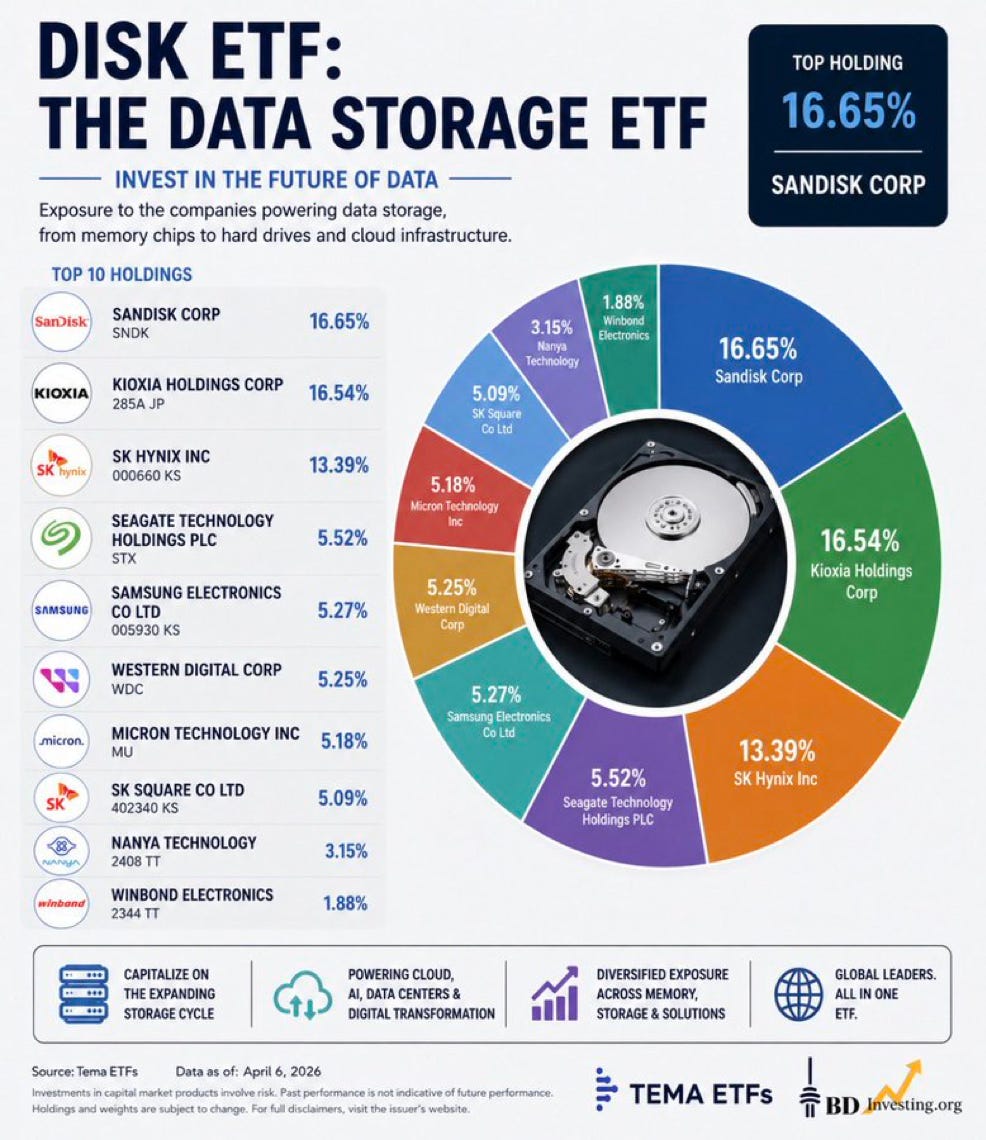
Disclosure: This post is sponsored by Tema ETFs. The information shared is for educational purposes only and should not be considered financial, investment, tax, or legal advice. Always do your own research and consult a qualified financial professional before making investment decisions.
Amazon reported Q2 2026 net sales of $200.6 billion, up 20% year over year.
AWS revenue reached $42.2 billion, up 37% and above analysts’ expected growth rate of approximately 31.2%.
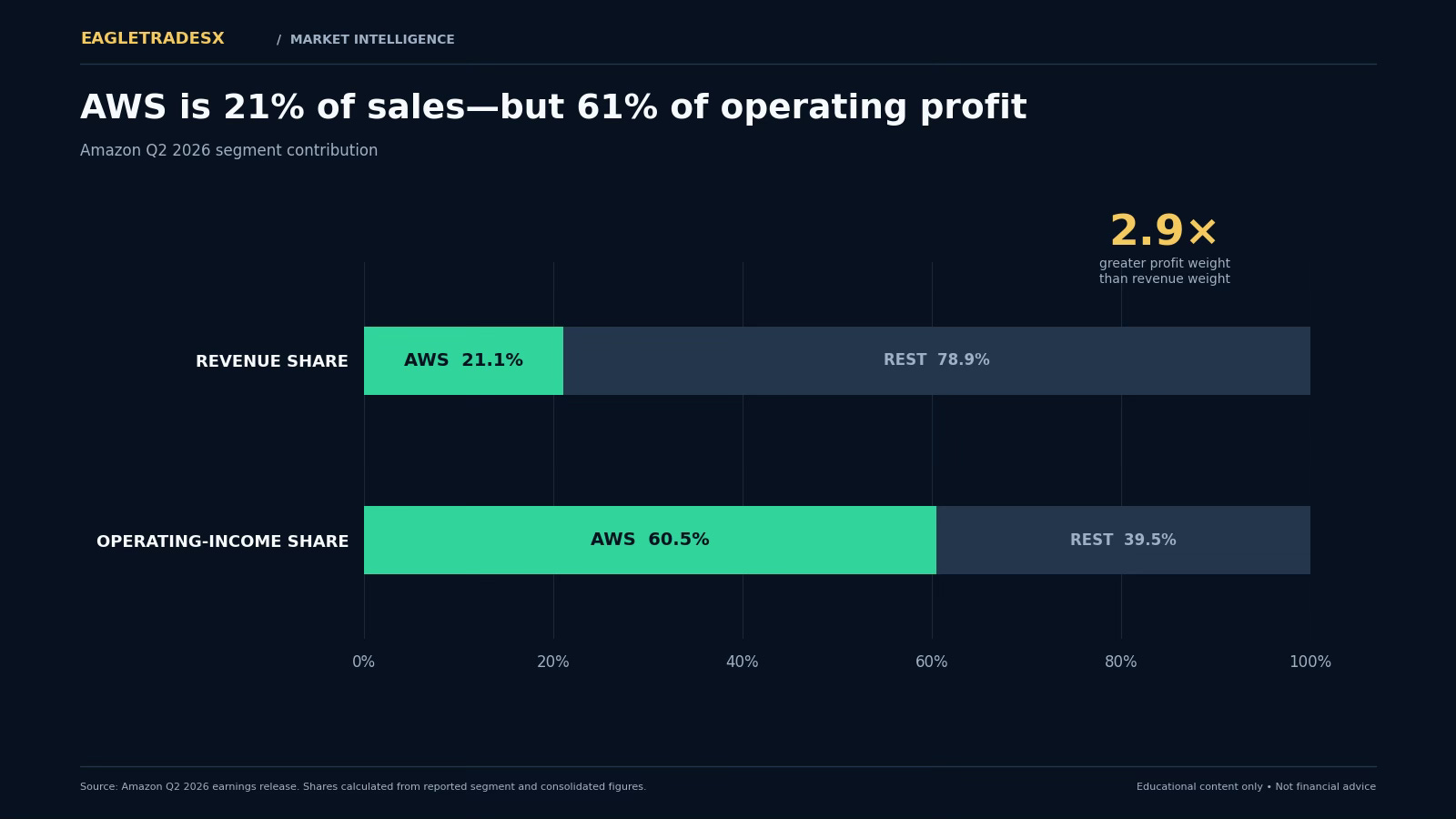
AWS produced roughly 61% of Amazon’s operating income from only about 21% of company revenue.
Amazon increased its planned 2026 capital spending by 10% to $220 billion.
Trailing-12-month free cash flow fell to negative $7.6 billion.
AMZN closed July 31 at $271.58, up 15.32%, on approximately 2.5 times its average volume.
At least 15 brokerages raised their Amazon price targets after the report.
The market entered Big Tech earnings worried that the AI infrastructure boom was becoming too expensive.
Alphabet intensified that concern on July 22.
Revenue increased 24% and Google Cloud revenue jumped 82%, but quarterly CapEx reached $44.9 billion, free cash flow was negative $5.9 billion, and full-year CapEx guidance increased to $195–$205 billion.
Alphabet’s shares subsequently fell about 7%.
Meta added to the anxiety on July 29.
Revenue grew 28%, but operating income declined 8%, quarterly free cash flow fell to just $784 million, and the company’s 2026 CapEx outlook became $130–$145 billion.
Meta also fell about 7% after investors questioned how quickly the spending could produce direct returns.
Microsoft then changed the mood.
Azure revenue grew 43%, quarterly free cash flow remained positive at $19.6 billion, and management forecast approximately 45% constant-currency Azure growth for the next quarter.
Microsoft gained more than 15% on July 30 and added roughly $450 billion in market value.
Amazon delivered the final answer on July 30.
AWS operating income rose 64% to $16.6 billion, Amazon’s total operating income increased 43% to $27.5 billion, and its cloud backlog reached $496 billion.
On July 31, AMZN gained 15.32% and closed at $271.58.
Reported figures and management guidance are confirmed in Amazon’s
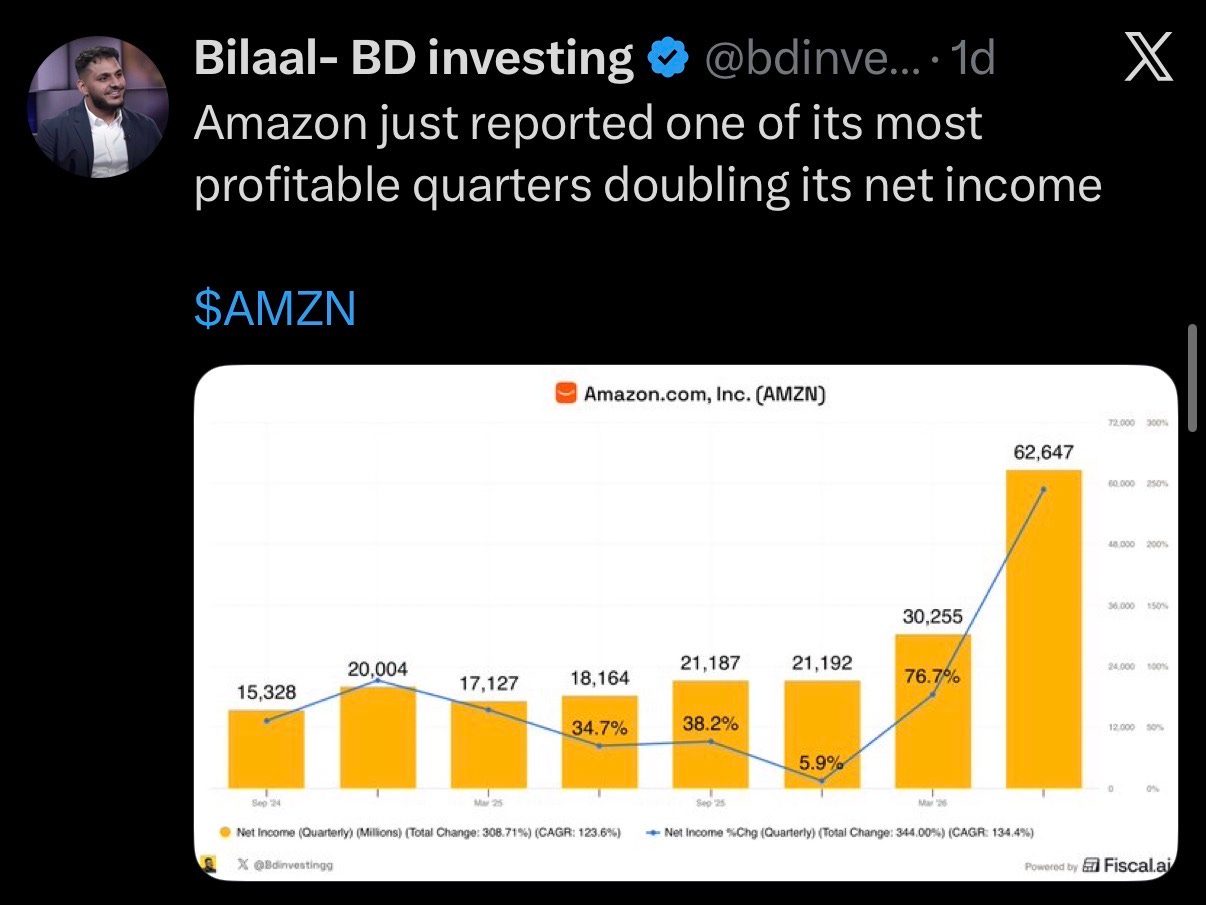
One important warning: Amazon’s reported net income of $62.6 billion and diluted EPS of $5.75 included $53.4 billion of non-operating pre-tax income, primarily related to its Anthropic investment.
That gain should not be confused with Amazon’s normal operating performance.
The most overlooked number was not Amazon’s EPS.
It was the $496 billion AWS backlog.
Backlog represents business that customers have contracted but Amazon has not yet recognized as revenue. It is not the same as guaranteed near-term sales because customers may use those commitments over several years.
However, Amazon’s backlog increased from $364 billion in the previous quarter—approximately 36% sequential growth.
Management also said the majority of available AWS capacity for 2027 and some 2028 capacity had already been reserved by customers.
That changes how investors can interpret the $220 billion spending plan.
Amazon is not simply constructing data centers and hoping demand appears. Based on management’s statements, a meaningful portion of the future capacity is already connected to customer commitments.
Here is the most shareable statistic from the entire report:
AWS represented only about 21% of Amazon’s Q2 revenue, yet it generated roughly 61% of total operating income.
That is why a 37% AWS growth rate matters far more than its revenue share suggests.
CEO Andy Jassy said Amazon would still lack enough capacity to satisfy all expected 2026 demand—even after increasing its spending plan.
Management also reported that Amazon’s AI business and custom-chip business had each exceeded $25 billion annual revenue run rates, with both growing at triple-digit percentages.
Jassy explained that data centers can require approximately two years of spending before becoming operational. He also said AI servers may recover their cost in under three years and continue generating profit afterward.
These are management estimates, not guaranteed outcomes, but they explain the timing gap between cash spending and future revenue.
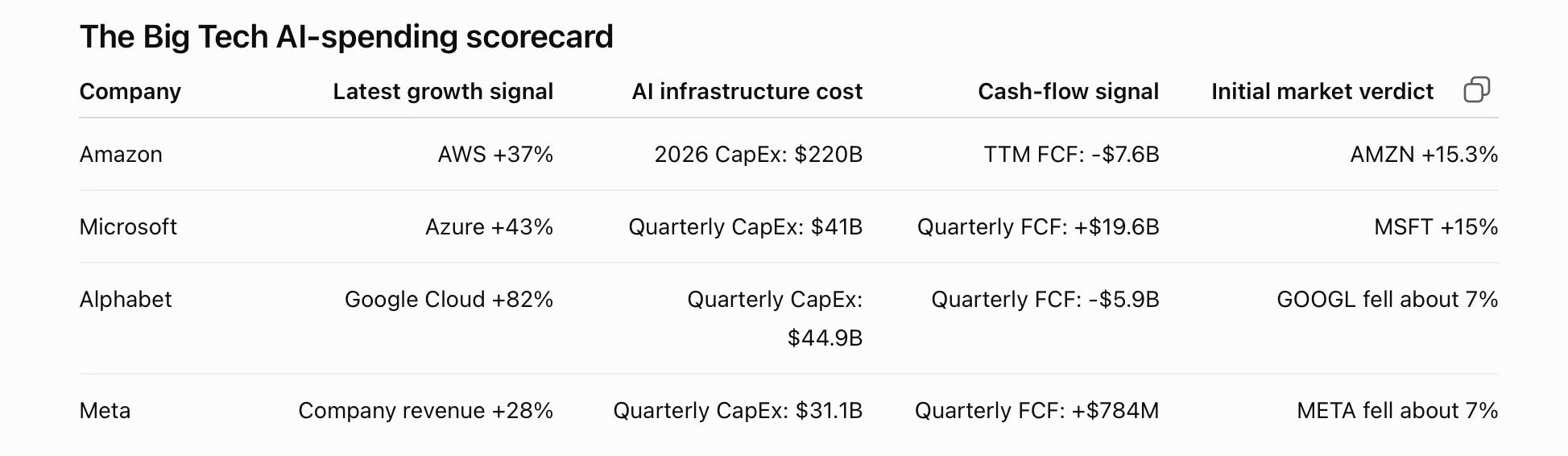
The cash-flow periods above are not identical, so they should not be treated as perfect like-for-like comparisons.
They are useful because they show what investors emphasized in each report
AMZN closed at $271.58 on July 31, up 15.32%.
Approximately 129.1 million shares traded—roughly 2.5 times the stock’s 65-day average volume.
That indicates the move involved unusually broad participation rather than thin trading.
At least 15 brokerages raised their price targets after the report, according to Reuters.
Reliable post-earnings data confirming specific unusual-options trades, changes in open interest, or a material short-interest shift could not be confirmed from a primary exchange source by publication time.
The broader market reaction was more complicated.
The S&P 500 gained 0.70% and the Nasdaq rose 1%, but declining S&P 500 stocks outnumbered gainers by approximately 1.3 to one.
Index strength was concentrated in large technology winners.
The Federal Reserve had also maintained its policy rate at 3.50%–3.75%, with three officials favoring an increase. Markets priced roughly a 65% probability of a September rate increase, raising the valuation hurdle for growth stocks.
Bull case
The bullish thesis depends on AWS remaining the clearest proof that Amazon’s AI investments are generating measurable returns.
AWS growth accelerated to 37%.
AWS operating margin reached approximately 39.4%.
Backlog reached $496 billion.
Future AWS capacity is reportedly heavily reserved.
Amazon’s AI and custom-chip businesses each exceeded $25 billion annual revenue run rates.
The bull case strengthens if AWS growth and margins hold, backlog continues expanding, and AMZN confirms above $278.56.
After a 15% earnings gap, future upside requires continued execution—not simply more AI announcements.
Bear case
The bear case starts with cash flow.
Amazon’s trailing-12-month purchases of property and equipment increased 64% to $169 billion, pushing free cash flow to negative $7.6 billion.
If AWS growth slows before new data centers become productive, Amazon could face heavy spending, rising depreciation, and weaker returns.
Additional risks include:
The $53.4 billion Anthropic-related gain inflated reported net income and could be volatile.
Memory-chip inflation may make infrastructure more expensive.
Backlog may take years to become recognized revenue.
Higher interest rates can compress technology valuations.
Competition from Microsoft Azure and Google Cloud remains intense.
A breakdown below $262.01 could turn the earnings gap into a short-term exhaustion move.
My focus is not on chasing AMZN after a 15% earnings gap or trying to predict every move.
I am watching how buyers and sellers react around the key levels.
The immediate structure remains strong while buyers defend $262.01.
A break and hold above $273.23 would bring the $278.56 high into focus. A loss of $262.01 would increase the probability of a deeper gap retracement toward $239.82.
The bigger market lesson is more important than one stock.
AI is no longer a simple theme where every company rises because it announces higher spending.
Investors are now separating companies that can show direct revenue, margins, backlog, and cash generation from companies asking the market to wait for future returns.
This setup becomes more interesting only after confirmation.
A major slowdown in AWS growth or a confirmed break below the earnings gap would change the thesis.
Amazon reported a strong quarter, but the real story was not its headline EPS.
The company increased its 2026 capital-spending plan to $220 billion and allowed free cash flow to turn negative.
Investors accepted that trade-off because AWS growth accelerated to 37%, AWS operating profit climbed 64%, backlog reached $496 billion, and much of the company’s future capacity was already reserved.
Stay Ahead of the Next Major Market Move
Markets rarely warn everyone before the biggest opportunities appear.
Follow EagleTradesX on Instagram for:
📊 Daily market watchlists
📈 Technical chart analysis
🌍 Major macroeconomic updates
🦅 Clean setups with risk management first
Follow EagleTradesX — link in bio.
Disclaimer: This article is provided for educational and informational purposes only. It is not financial advice or a recommendation to buy or sell, securities or any financial instrument. Markets involve substantial risk. Always conduct your own research and manage risk according to your personal financial circumstances.
No posts
Comments
Nothing yet. Say the first thing.
Sign in to join the conversation.