
It’s been a while since I’ve posted on my Substack. I plan on rebooting it soon with a whole new regular feature, stay tuned. But for now, something more important.
It’s always strange to feel deeply sad over the death of someone you didn’t personally know. When you get to the point in your life when several people close to you die, it feels even stranger when the death of someone you’ve never met hits you like a Nicolas Tractomas TR 10x10 D100 (the world’s largest semi-truck).
I spit my thoughts into the now AI-possessed internet and it spits back what I’m going through: parasocial grief. The pain one feels over the death of a public figure.
Except that Sam Kieth was far too private for me to consider him a public figure. After the turmoil of feeling constrained by expectations over The Maxx, Kieth kept a low profile, only emerging for the occasional project or appearance. His blog was his only line to his audience. But then his last post was in 2023.
When posting Kieth’s art to social media, I would often get the inevitable question along the lines of, “What has Sam Kieth been up to, anyway?” I’d answer that he was likely living the reclusive artist’s dream, having enough resources to leave self-promotion behind, just making the art he wanted to make. The same path as Bill Watterson and Steve Ditko.
The news of his death cracked that idyllic view. For about seven years he had been suffering from Lewy body dementia, a degenerative disease so horrific that hearing details of it fills one with existential dread over the nature of the universe (why doctors want their names attached to such diseases I’ll never know, recognition isn’t everything). My heart truly goes out to Sam’s wife and loved ones.
Living in a world without a human being like Sam Kieth is especially sad because by all accounts he was a very gentle and empathetic person. It’s an important point, because a lot of artists are assholes. Some of my biggest artistic influences are assholes, and I don’t care to meet ‘em. No need to name names, if you enjoy art there’s a good chance some percentage of it is made by assholes.
But Kieth was the opposite of an asshole, dispelling any delusion that artists who create bold, innovative, id-driven work have to be assholes. He was known for being especially generous at conventions, going beyond the call of duty to interact with fans. This took a toll on his introverted nature, he took long breaks after such events, but he never took his audience for granted. He was notoriously humble, the most publicly combative he got was when he was given compliments on his art.
The art Kieth felt so insecure about is exactly why so many are feeling what the internet calls parasocial grief over his passing. That’s because his art was all of him, he didn’t stick around long once a project no longer resonated. The Maxx dealt with trauma, depression, being an outsider … all of the stuff many of his readers connected with.
I discovered The Maxx when I was ‘growing out’ of superheroes. I skipped the more sophisticated superheroes of Moore, etc. (that came later when Moore himself made it clear how much he hated the genre), going straight from the big two and Image to Fantagraphics fare by the likes of Ware and Clowes. I was more interested in formal experimentation and slice of life stories, really offbeat slice of life stories.
But The Maxx existed in some bizarre space neither mainstream or alt-comix. It served as a bridge for me, but also a destination, because there was no other comic like it. It was marketed as a superhero book but in the end Kieth made sure that it wasn’t. But it still had too much aesthetic DNA of Image era superheroes to make The Comics Journal’s Top 100 Comics Of The Century, where it belonged.
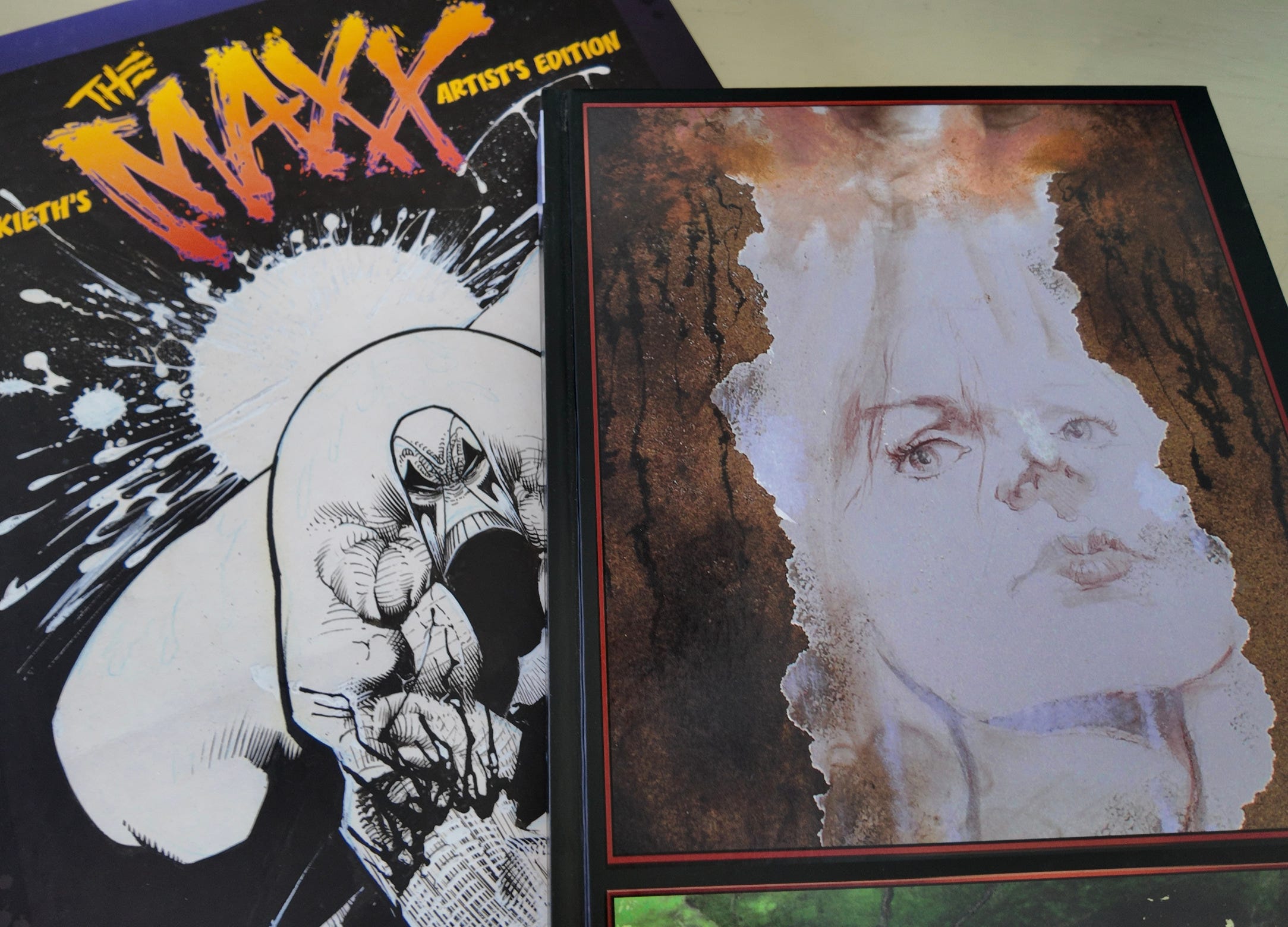
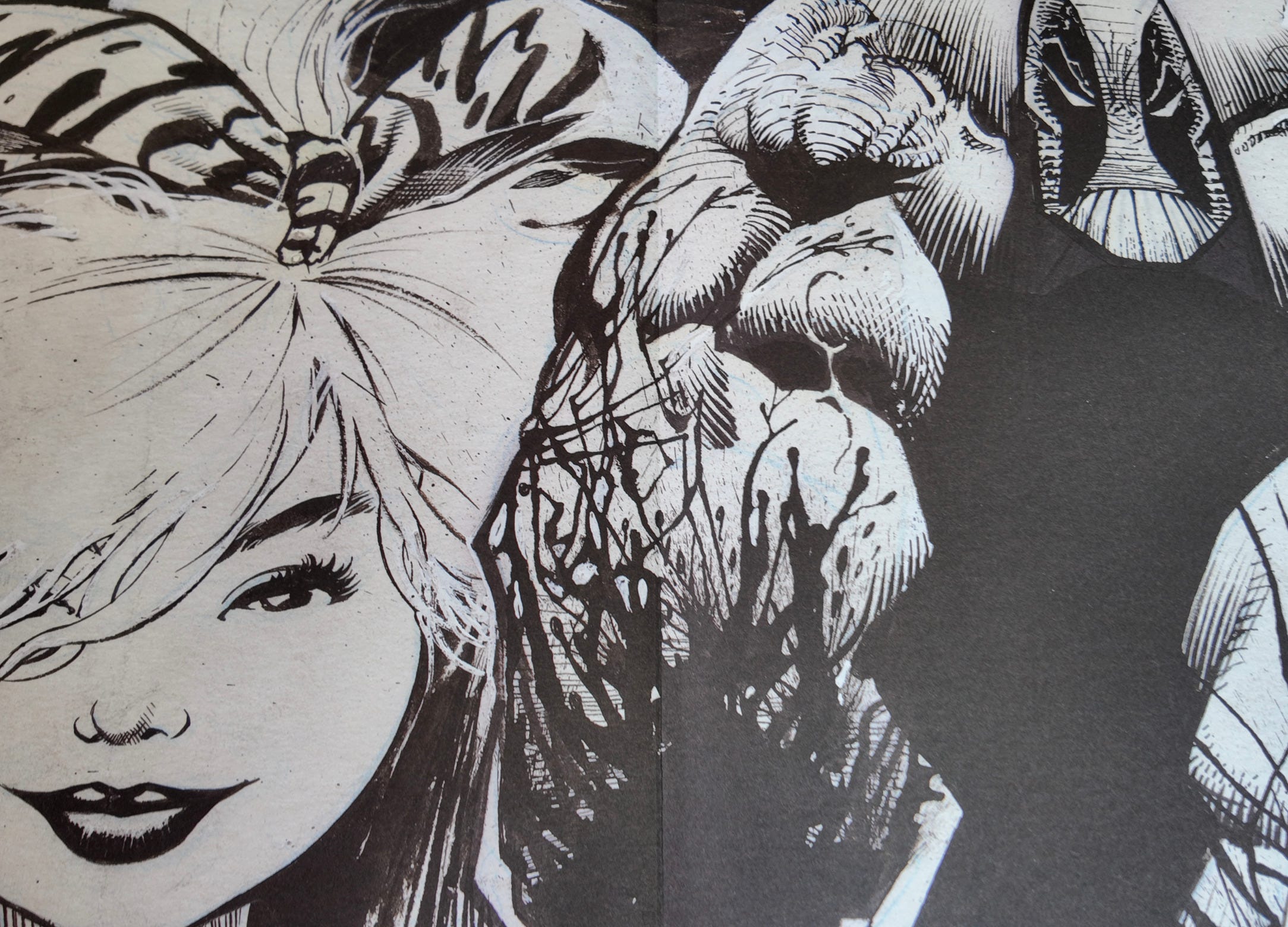
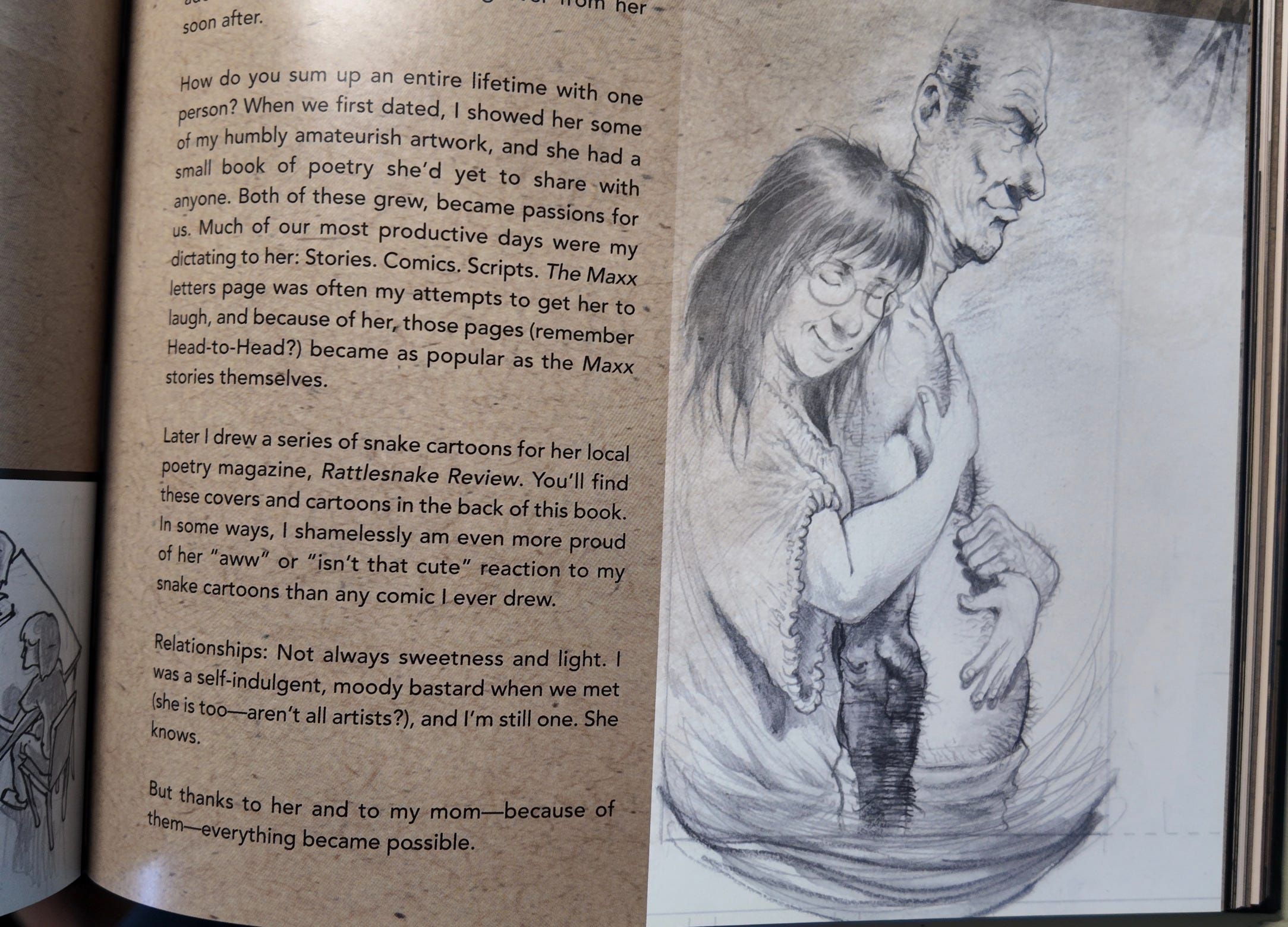
I went through a comics dry spell, losing interest in comics during college. Graduated, worked some shitty jobs, eventually came back around. I splurged on some books, mostly Artist’s Editions of EC greats like Wallace Wood and Jack Davis, and some 70s Kirby. Sam Kieth is the one artist that I came back to, one that I came of age with in the ‘90s. I managed to track down The Maxx Artist’s Edition and Worlds of Sam Kieth, which showcases his sketches, paintings, and thoughts. Images from those two books are featured here.
Sam Kieth reminds me of George Herriman, both gentle souls riddled with complex insecurities, yet still managed to take wildly brave creative risks. Visionaries.
Kieth constantly experimented with techniques and media, broke rules and changed direction, worked in cartooniness and whimsy into the darkness of his stories. Most importantly the core of his work was formed from his life and psyche, the sources of all great art. What will always separate us from the machines.
Sam Kieth. A true individual, a true artist, a true loss. Rest in peace.
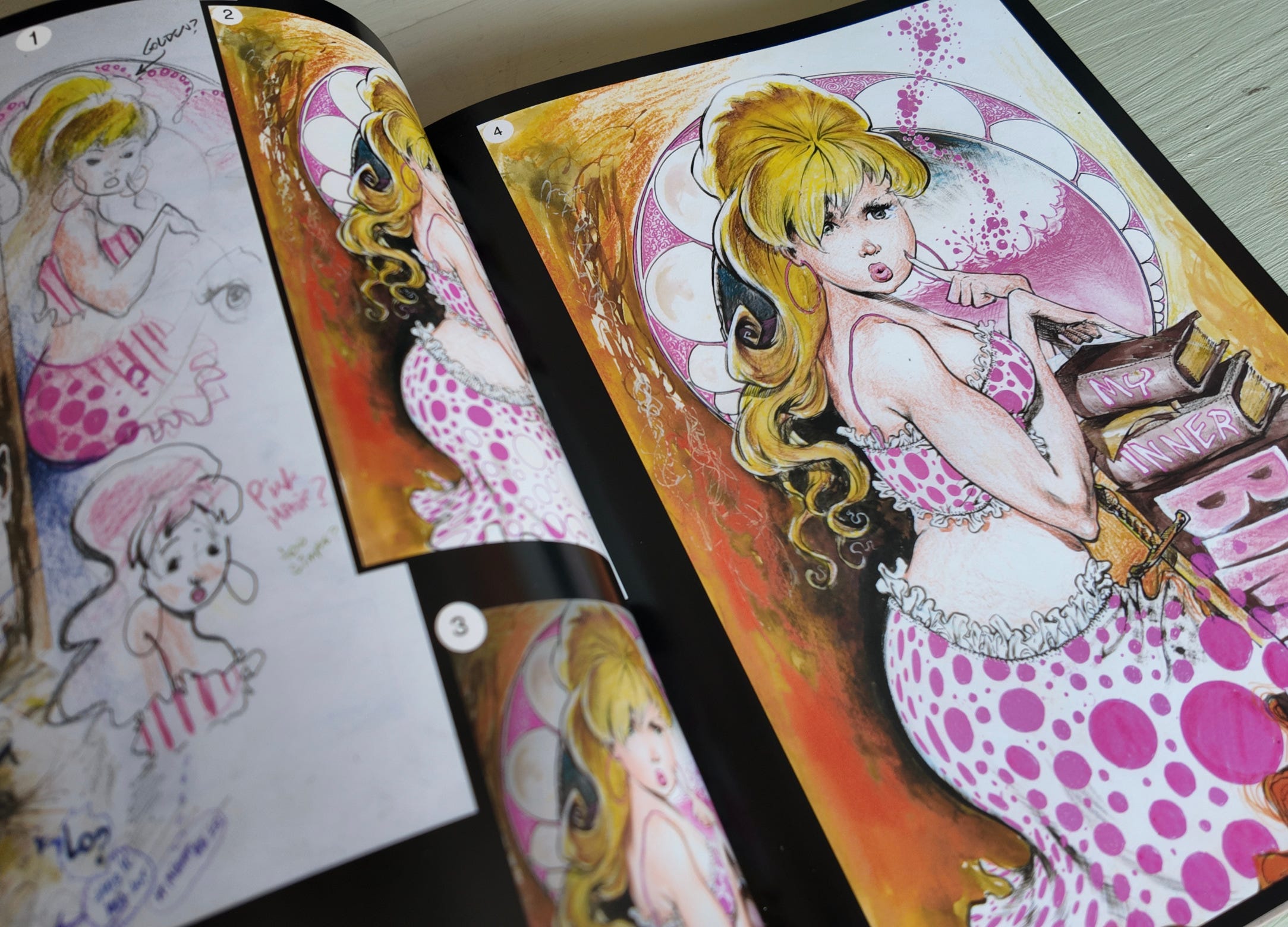
Besides The Maxx I recommend Kieth’s other personal works: Zero Girl, Four Women, and My Inner Bimbo. But there’s more, I haven’t read everything in his bibliography, something I need to remedy as soon as possible.
There are a lot of good videos about Sam Kieth on YouTube, but the most extensive deep dive on The Maxx I’ve come across is JerkComic’s five part (!) documentary How The Maxx Broke Sam Kieth.
No posts
Comments
Nothing yet. Say the first thing.
Sign in to join the conversation.