
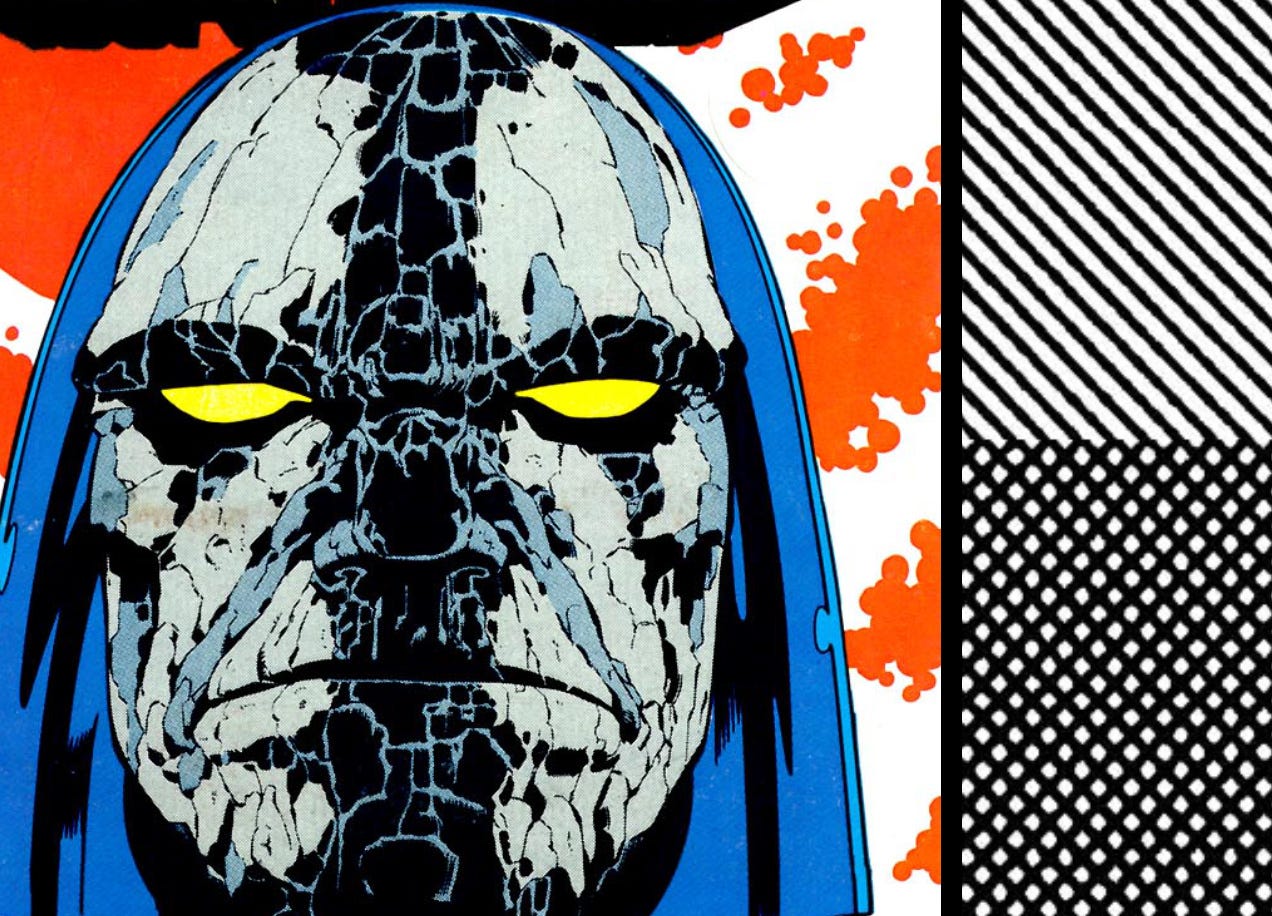
Divebin is a roundup of inspiration, discoveries, back issue finds, etc. If you like what you read here subscribe to BCKOMIX!
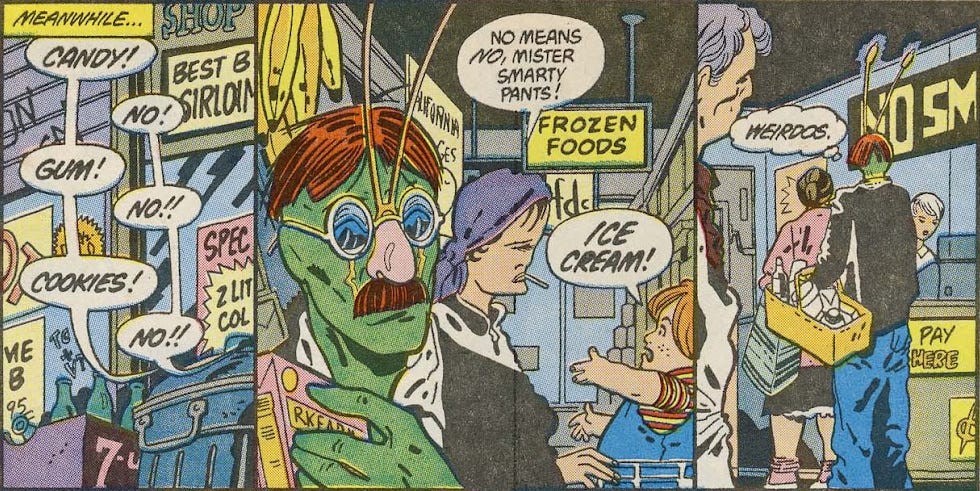
I first saw Keith Giffen’s work before I could barely even read. It was a ragged out issue from the Ambush Bug mini series (#2, I vividly remember The Koala Who Walks Like a Man!). It had an immediate impact on my young mind because it held the manic energy of Looney Tunes rather than the typical superhero fare. I then picked up dribs and drabs of Giffen’s other work over the years. Since he often worked in a collaborative capacity his name was sometimes lost in the shuffle. But even when he was co-penciling, doing loose layouts, or plotting, his distinctive voice still came through. He came to develop his own vocabulary: oddly cropped close-ups, profile shots, dense, borderless layouts (often 9-grid), content that switched from light to darkness, frenetic dialogue. And of course, the first thing that sold me on his work: a quirky sense of humor which he held himself until the end.
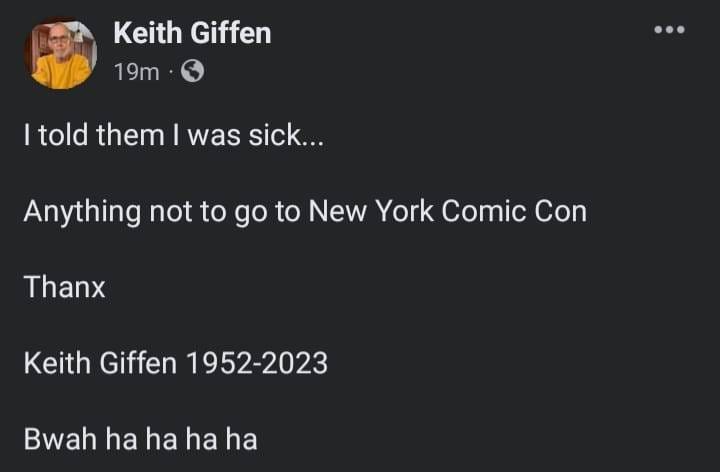
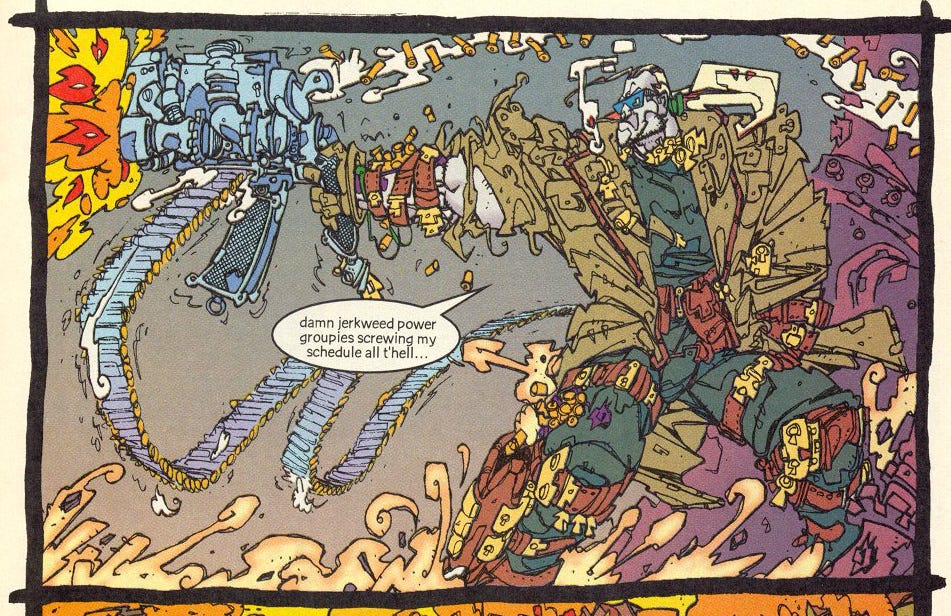
Despite all that, some find it hard to pin down what exactly makes Giffen Giffen. This enigmatic quality came up in eulogies for the man. There’s no Giffen graphic novel opus like Sin City or From Hell, he was more at home finding ways to tell engaging stories and formally innovate in the floppy trenches. He was an industry workhorse with punk-indie sensibilities. Left to his own devices he developed a penchant for abstraction that culminated in the wild contour-line stylization of Trencher (which he also used in Images of Shadowhawk). That would be the closest to pure, uncut Giffen in my book.
His career is long and winding, with a bit of controversy involving how he adapted his influences (in my estimation overblown). His early days in comics were disrupted when he ran off for a couple of years to sell vacuum cleaners (fittingly, the Kirby brand). It’s all a lot to track. So in short: Giffen needs a field guide.
Enter Michel Fiffe. His recent video Fiffe Files · Keith Giffen Part 1 (released on Giffen’s birthday) begins what’s lined up to be a six part (!) retrospective on the man himself. Fiffe begins the first installment with Giffen’s early 70s college work (he satirizes Vaughn Bode) and ends with a massive Legion of Super-Heroes poster that burned him out. Along the way there’s the first appearances of Rocky Raccoon, Ambush Bug (the cold-blooded murderer), and Lobo. It’s almost two-and-a-half hours of densely-packed unadulterated Giffen-appreciation, along with biographical details and formal analysis.
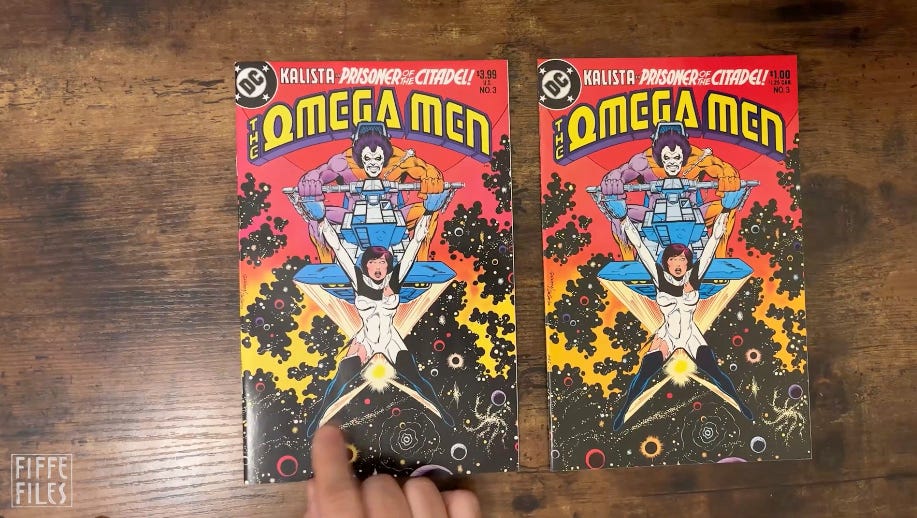
Fiffe presents it all in a variation of the tried-and-true Cartoonist Kayfabe format. That comic flip-through model has widely caught on across YouTube after CK’s unfortunate end, but I find few that can compete with the OG. Fiffe comes the closest here, and it’s because he has the chops to pull it off, just like Piskor and Rugg (and in their Trencher episode they revealed Fiffe is the one in their circle who really knows Giffen). The hard-won experience of being a working pro (who’s also a knowledgable uber-fan) typically makes for more insightful commentary about other working pros and their work. And Fiffe’s walked the walk, as his guide Creating Copra documents every step of the way (recommended to any aspiring cartoonist who needs a good kick over a creative slump). I’m grateful for Giffen getting his due, and here’s also to more Fiffe Files in the future.
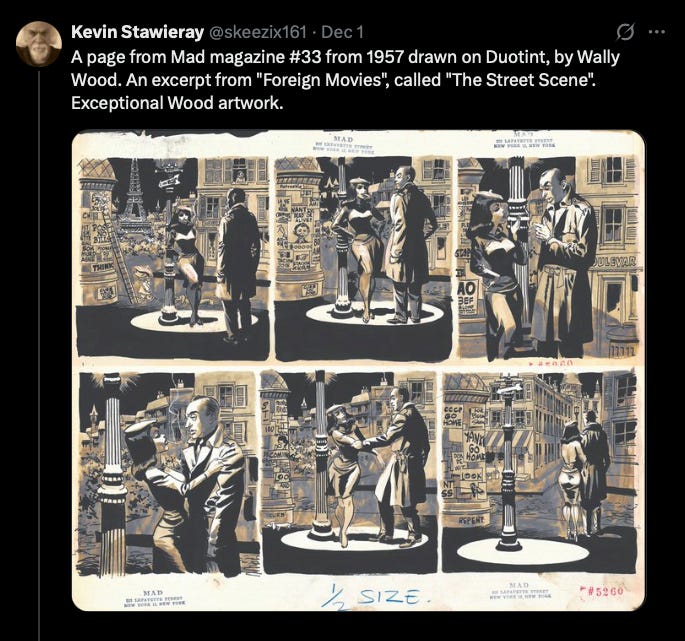
Fellow comics poster Kevin Stawieray (@skeezix161) recently posted this beautiful Wallace Wood piece on X (from MAD #33, 1957). It opened up conversation between me an another poster (@sinderinister) about the use of Duoshade (also called Doubletone).
For the uninitiated, Duoshade (and its single-toned cousin, Unishade) was one pre-digital way to emulate gray tones in black and white artwork (the other commonly used method were Zipatone dot screens). It was originally offered by Craftint Manufacturing Company in 1929 and eventually Grafix before being discontinued in 2009 due to the omnipresence of digital. It involved using paper with ‘hidden’ patterns that would be revealed when the developer fluids were applied. Unlike zips the Duoshade process would allow precision and painterly effects. It was commonly used in commercial art and illustration.
Wallace Wood was the Duoshade master, but many other cartoonists also used it to great effect: Roy Crane, Alex Toth, Howard Chaykin, Jack Davis, Eastman and Laird. One of the most notable later uses was by John Byrne in ’91 for his Omac limited series.
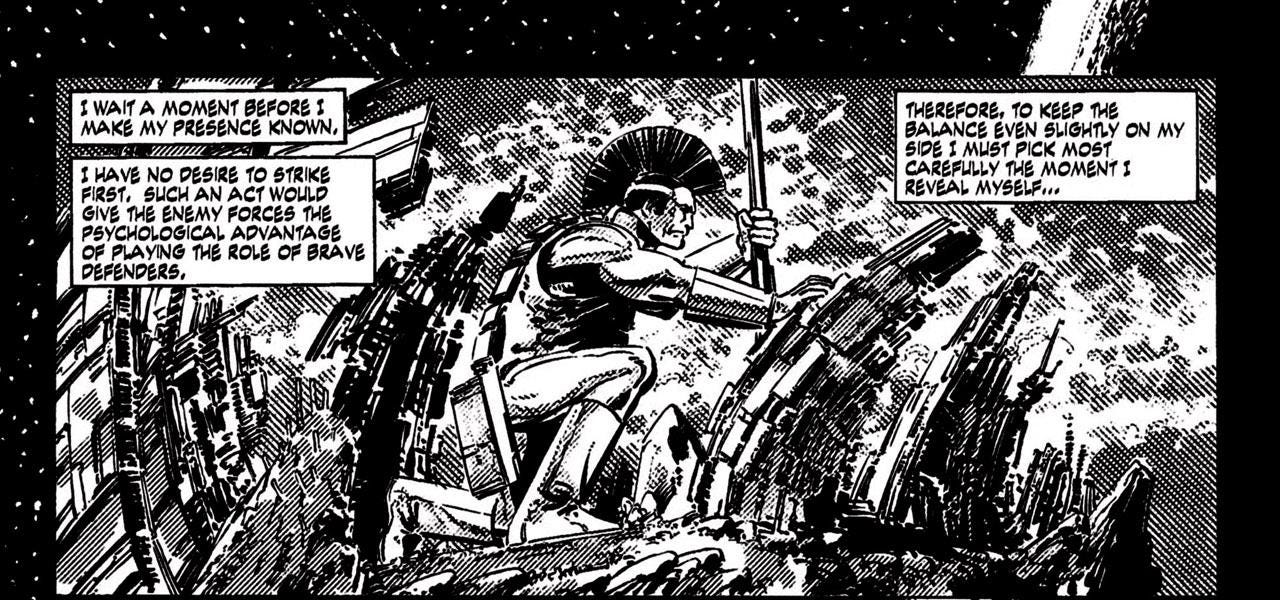
Since I’ve gone down the Duoshade rabbit hole, I thought I’d collect valuable links here for anyone else interested:
Craftint Doubletone: 20th Century Time-Saver (a short history of Doubletone)
Craftint Duo-Shade emulation technique (A blog post that describes Duoshade, shows examples, and describes a method to emulate it in Photoshop).
Cartoonist Kayfabe looks at some uses of Duoshade in comics:
Cartoonist Kayfabe gives a Duoshade drawing demo:
Flippin’ Through looks at Duoshade and its use in MAD Magazine:
Also, for those who want a digital facsimile of Duoshade without futzing around, I recommend Retrosupply’s Duplitone brushes, which offer a similar effect. I’m not getting paid for that plug (even though maybe I should!), I just find Retrosupply comes the closest in my experience to emulating vintage media. And they offer brushes for all of the major drawing programs, not just Photoshop (I shitcanned the Adobe Suite long ago).
Until next time, ciao.
No posts
Comments
Nothing yet. Say the first thing.
Sign in to join the conversation.