
One of the first “biketivism” projects I got involved with in the Bay was a push to install protected bike lanes on El Camino Real (ECR) between Palo Alto and Mountain View. This project would be a small piece towards Silicon Valley Bicycle Coalition’s (SVBC) vision of a continuous and direct protected bikeway between San Jose and San Francisco.
El Camino Real is the longest continuous non-freeway road between San Jose and San Francisco. As it stands today, in some parts ECR is a classic wide stroad — A road that tries to be both high-speed and a hub for gathering and commercial activity. Think multi-lane suburban streets near strip-malls and big-box stores; in others ECR is smaller, resembling more a main street for the town.
Thanks for reading Bay By Brompton! Subscribe for free to receive new posts and support my work.
However, in the future ECR is the site of many housing and commercial opportunities. Transit and road agencies should be grasping this opportunity to add new high quality transit and bike infrastructure before these new residents move in so that they do not need to depend on their car to get around.
Caltrans (California Department of Transportation) has to repave most of ECR in the next 10 years as part of road renewal. It also new design guidelines (in particular, Design Information Bulletin 94: Complete Streets) that prioritize all road users in a complete streets approach. SVBC and other local advocates are using this fact that to push for the bikeways at the same time as the repaving is done.
How Palo Alto got the massive increase in protected bike lanes
The first of these repaving projects is “SR-82 – Pavement Rehabilitation and ADA Improvements” which runs through Palo Alto, Mountain View and Los Altos in Santa Clara County. The quality of this project would set the bar for nearby communities. For example, Menlo Park decided to defer bike lanes until it’s neighbours, Palo Alto and Atherton decided to install bike lanes on ECR. Well that time has come, Palo Alto has bike lanes today and Atherton will soon.
Since the City of Palo Alto is in the middle of revising it’s bike master plan, most new projects are either paused or cancelled. This means that progress on active transportation in Palo Alto is stalled for at least 2-3 years until the new plan, designs and funding comes through.
On the flip side, ECR is owned by Caltrans, who made it clear that the bikeway had to be implemented because their crash statistics showed that the road warranted some sort of bike lane.
The proposed project included quick build bike lanes protected by QwickKurb separators. Intersections were not to be protected in this project. Instead, near intersections and driveways the protection would disappear to allow right turns but marked clearly using green paint. A few intersections would be marked with no right turn on red signs.
The plan was by no means “perfect” or in line with what you’d expect from Dutch standards, but Caltrans promised that this was a first step towards a larger overhaul. In my mind this was an unquestionable improvement to a street that I tried to avoid but had to frequent.
The debate
Caltrans planned to remove street parking from the entire stretch of ECR to make way for quick build bike lanes. Caltrans argued that to preserve both parking and bike lanes, a travel lane reduction would need to occur which triggers a traffic study. This was out-of-scope for a road repaving and would be deferred to a future timeframe. A bikes vs parking debate was sure to follow.
Caltrans decided it would approach the Council to request a motion to remove parking from ECR to make way for the bike lane. This motion created the space for debate within the community.
Within the local bike community, there were disagreements about the merits of cycling on ECR. Palo Alto has a series of signed bike boulevards that parallel ECR and many advocates felt that it was safer than promoting cycling on ECR. Some advocates on the Safe Routes to School program wanted better crossings on ECR, citing many students who cross ECR instead of riding along it and at least one fatality of a middle school student in 2020. Businesses spoke out about the loss of parking. Some advocates were worried about the loss of safe RV parking along ECR.
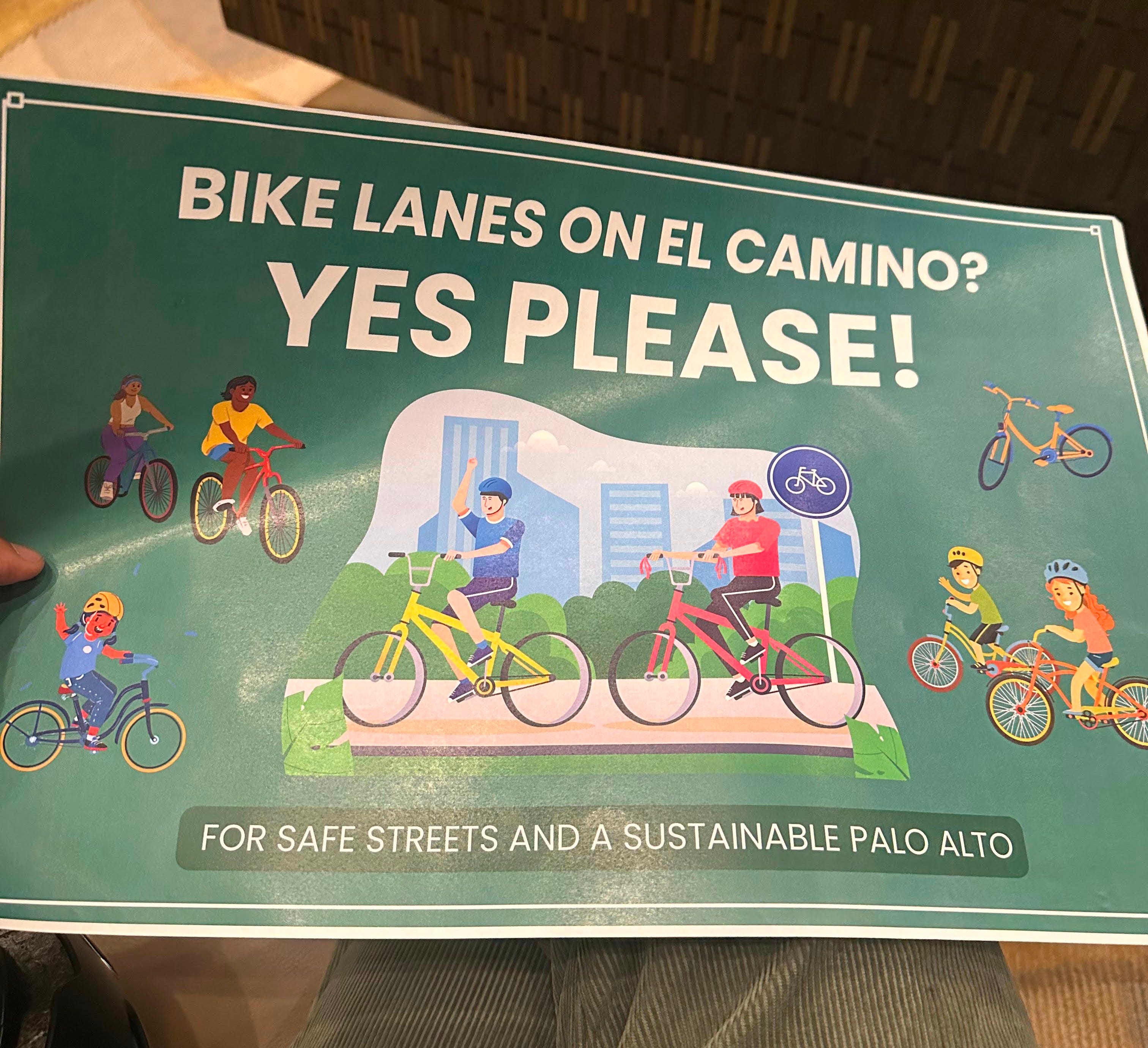
Technically, none of this needed to go through City Council, but Caltrans wanted to play nice. A few times, the Caltrans rep made it clear that the bike lanes were coming whether we agreed with the design or not. Therefore, the City, Council, businesses and local bike advocates would all have to either cooperate to get their improvements and mitigations in the plan or let Caltrans do as it pleases. This resulted in a last minute ad-hoc committee to improve the bike lanes and mitigate parking issues resulting from it.
Wins
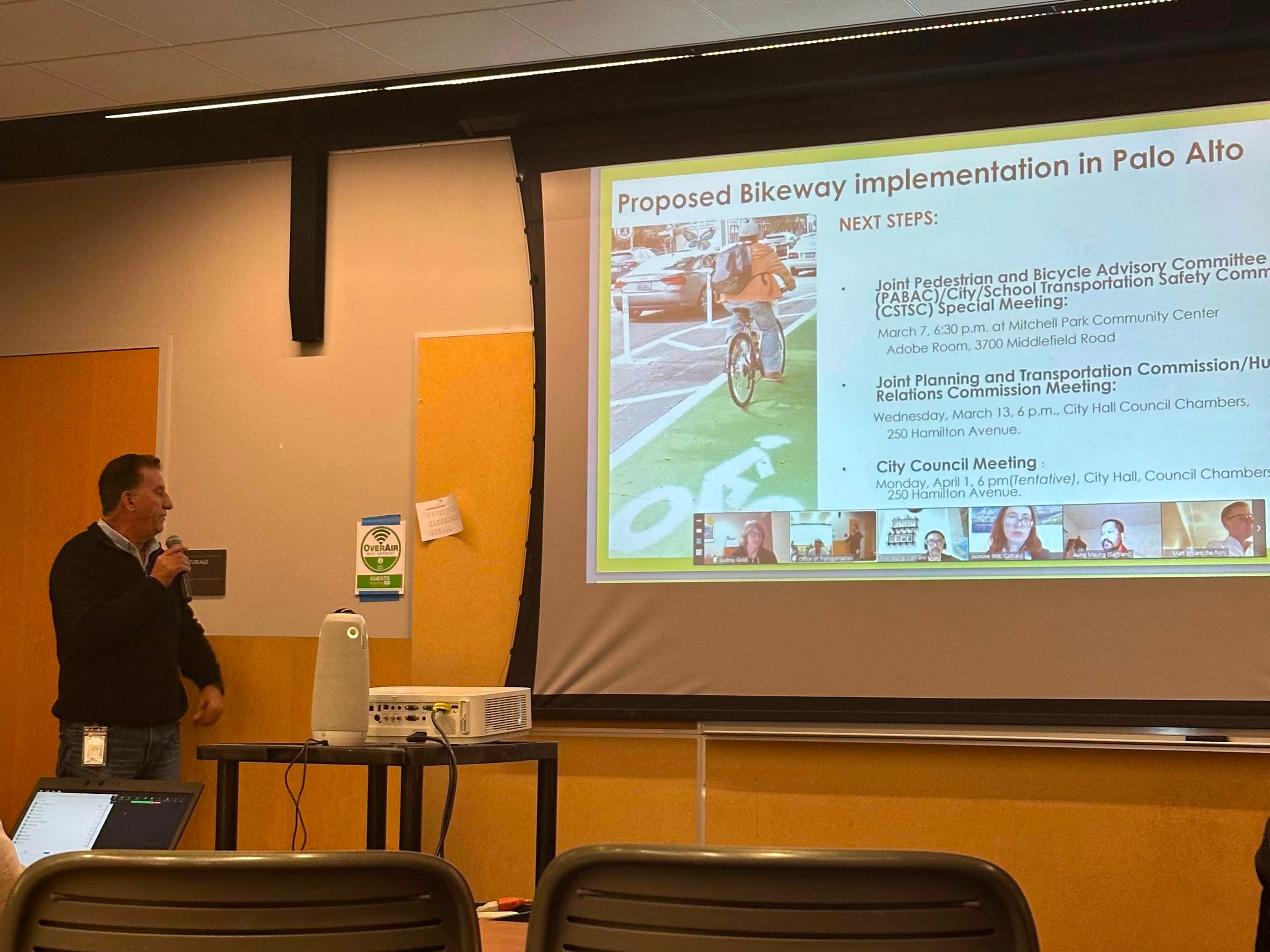
Approving the changes amongst the stakeholders took a long time, with many months of delays, discussions and iterative improvements from all the stakeholders.
As a result of everyone working together, Palo Alto quickly passed several solutions to mitigate the loss of parking for employees and RV homes. In particular, it was an opportunity for Palo Alto TMA to promote its free transit pass program. Several bike advocates actually did occupancy counts for both on and off-street parking lots to make the case that there was enough parking capacity for businesses
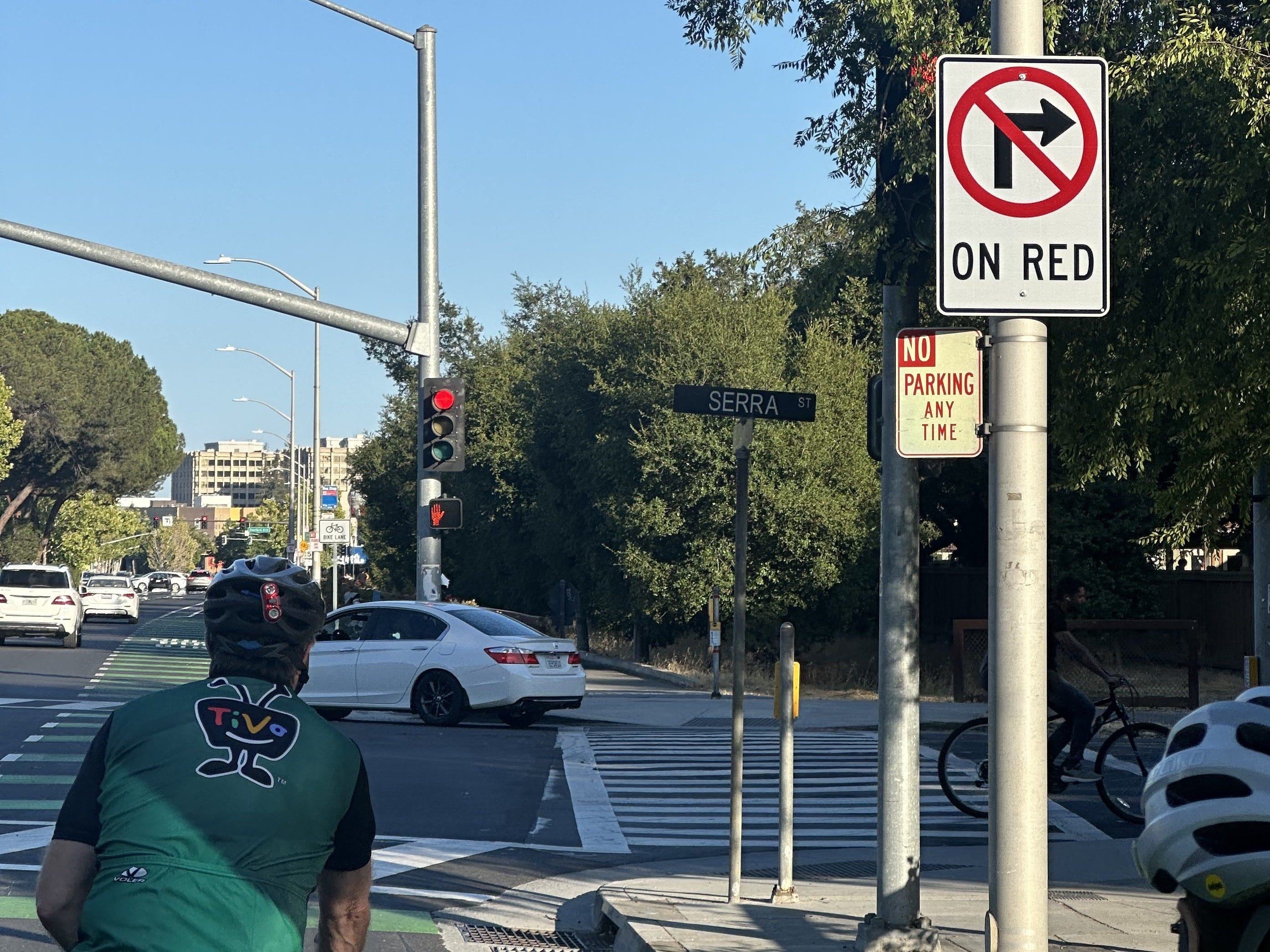
As a result of the engagement of bike advocates and the City, several more segments of the plan got the protected treatment, meaning less mixing zones for bikes and cars. The big win for the Safe Routes to School group was an increased number of new No-Right-On-Red restrictions at several intersections frequented by students during the school year.
My Review
Once approved, I was surprised at how quickly they were implemented. I started using them even before the bollards were installed to visit the local grocery store. The bike lanes are easy to use making the direct route more comfortable than the side streets.
This was particularly apparent when I was biking from Mountain View to Stanford. I day got caught in an unexpected rain shower, and I got lost in the side streets. Struggling to manage looking up directions on my phone while keeping dry, I decided to cut through to El Camino and ride directly to my destination. The bike lanes were glorious. Traffic was not too fast and drivers respected my space.
Objectively, the lanes are spacious: wide enough for two people to ride side-by-side.
No plan is perfect though, there are still a lot of mixing zones and unprotected areas, I saw cars frequently parked in these areas but I have heard that they have started ticketing these people.
This plan unfortunately did not include protected intersections. Such projects are deferred and cities need to plan for them. For example, Mountain View has designed and planned protected intersections (for example at El Camino and Castro St) to be installed in the next few years when funding is secured.
There are several small businesses and restaurants on ECR that lack bike parking. I was able to open 311 tickets with the city to get bike racks installed at several locations on ECR:
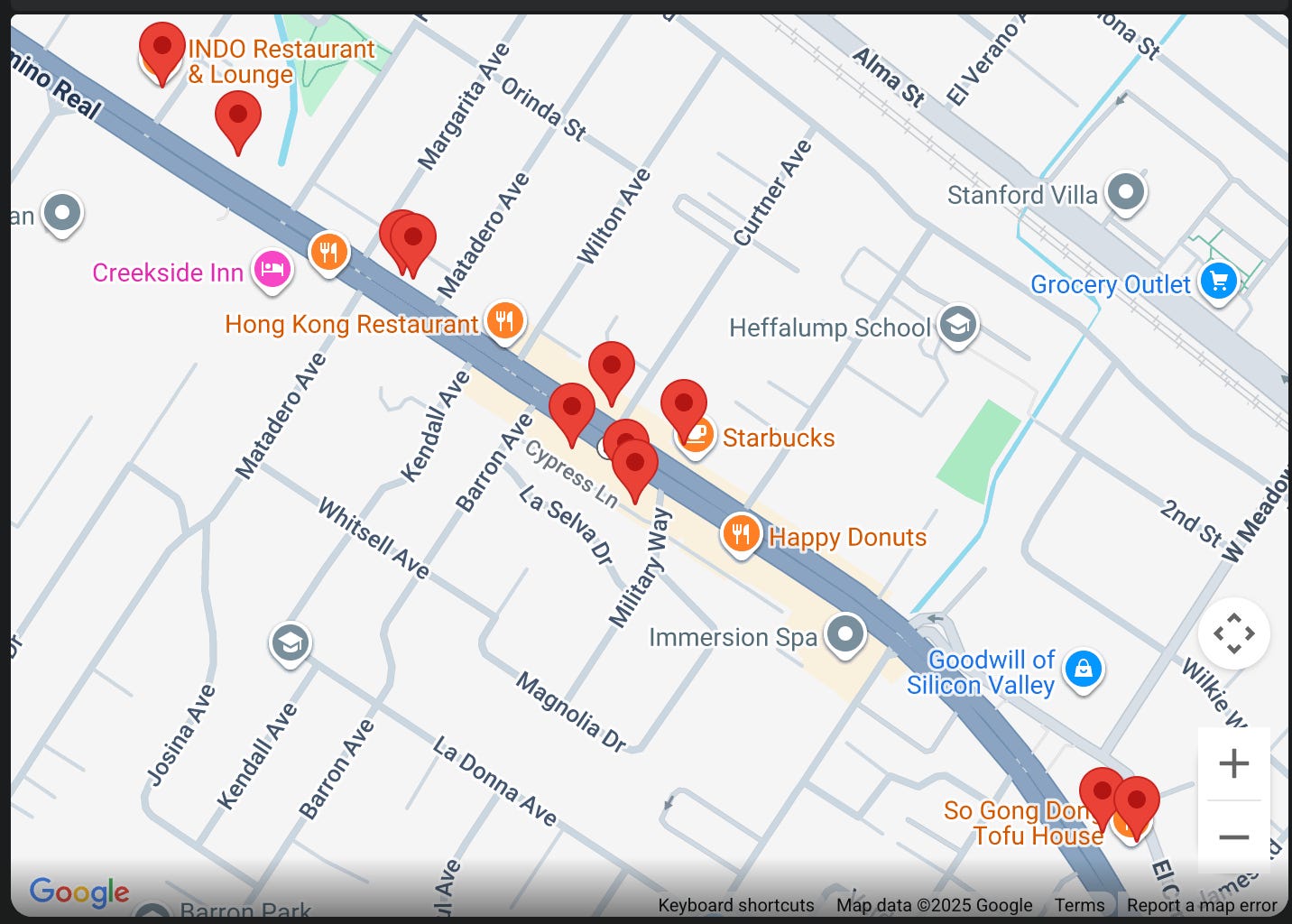
I actually biked by my requested locations and was pleased to the find the racks installed! I ended up patronizing a store that had the rack I requested.
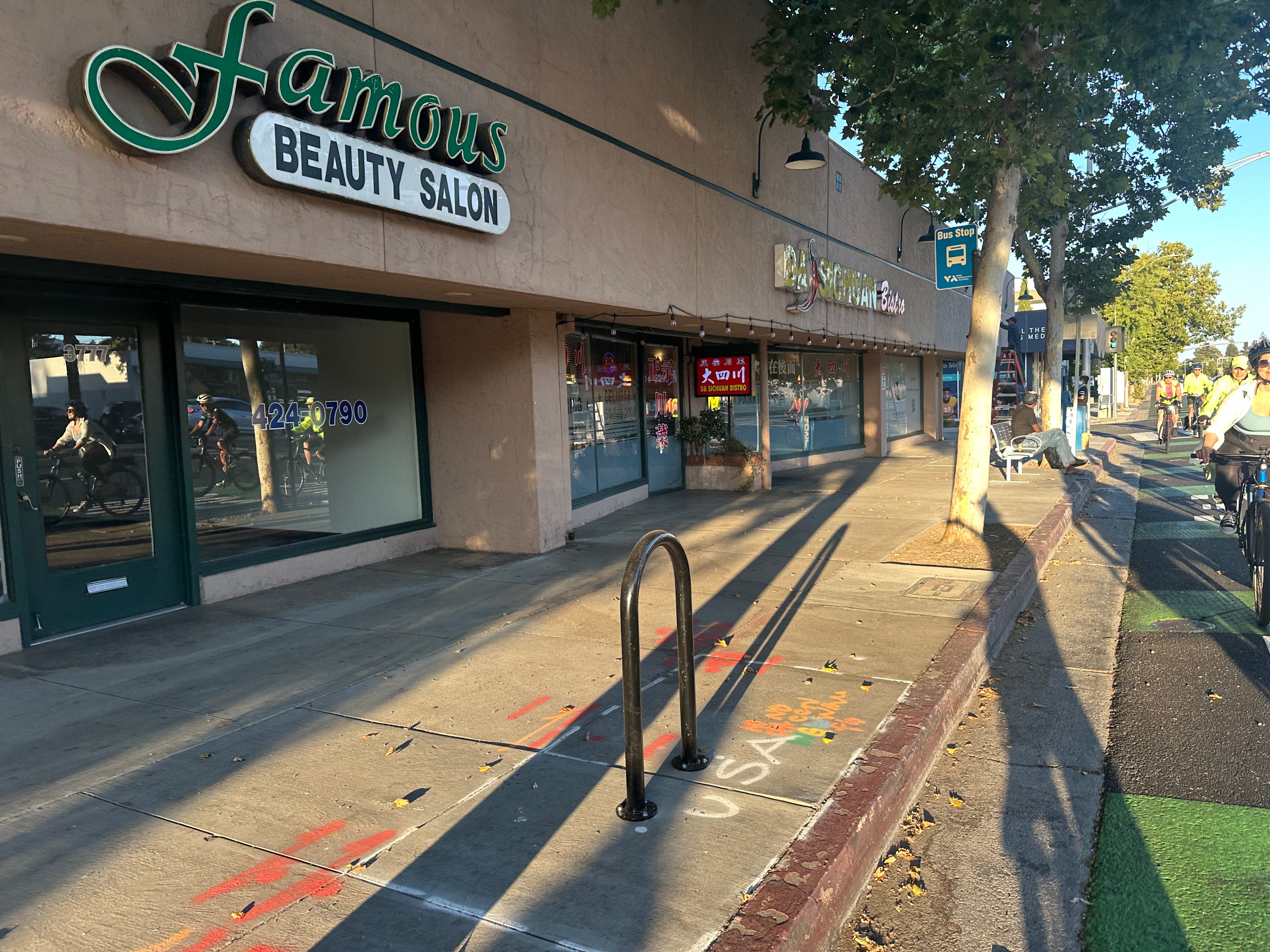
My experience with the lanes has been overall positive. I am glad that the lanes were added, improving the safety for the many folks already cycling along ECR for and enabling new trips along the road. I hope it is the first step to a more multimodal and lively ECR full of new homes and businesses.
Thanks for reading Bay By Brompton! Subscribe for free to receive new posts and support my work.
Comments
Nothing yet. Say the first thing.
Sign in to join the conversation.