
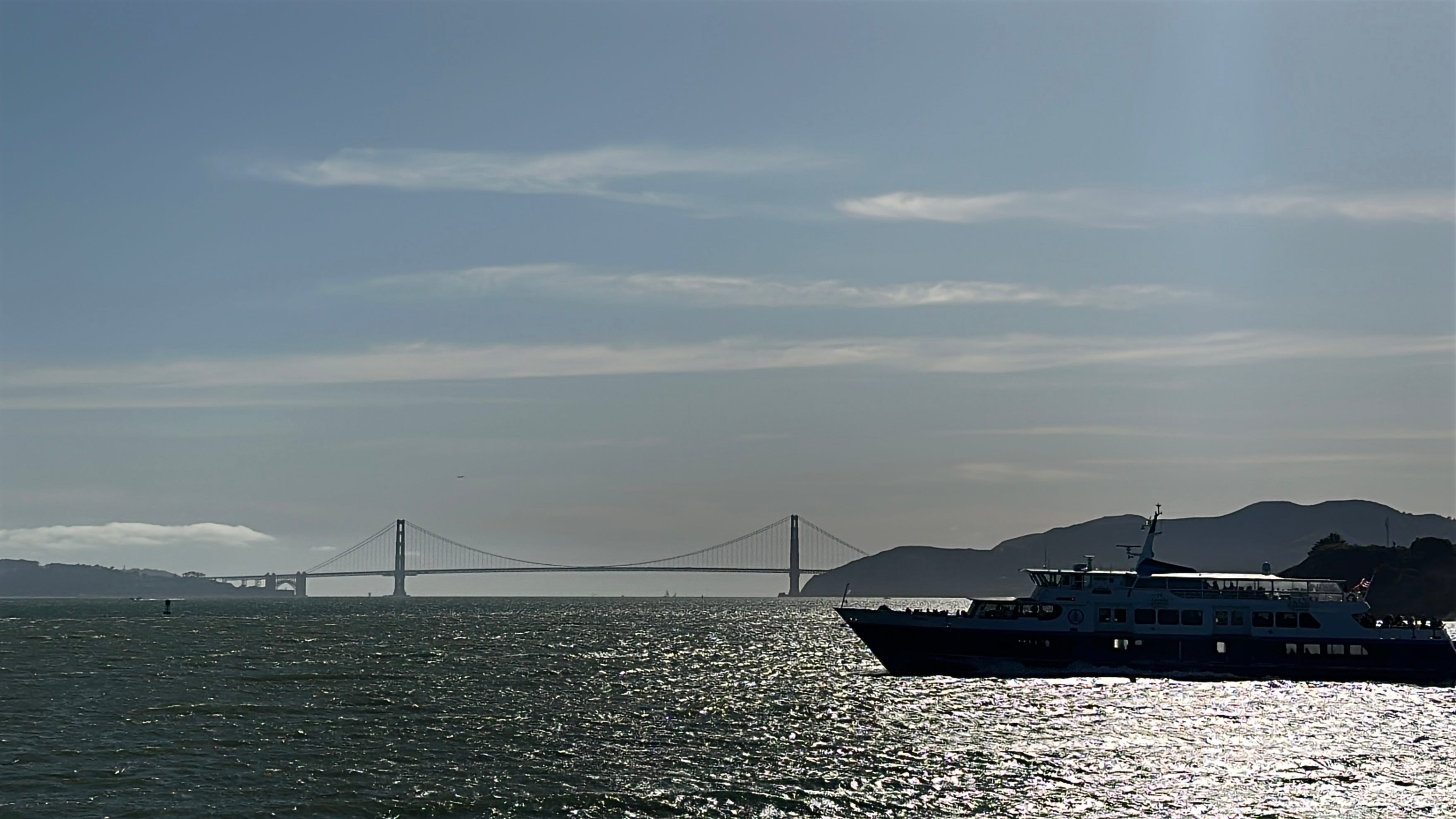
Last year, I wanted to experience “road-trip energy”. The grand plan was an overnight trip from Palo Alto to San Rafael. I was going to see some sights, eat great food and enjoy the sunny weekend. Unlike a road trip, I was going to do this without a car: looking forward to cycling, riding ferries and trains to explore Marin and Sonoma Counties.
The plan was relatively straightforward: take the Caltrain up to San Francisco and then catch a ferry to Sausalito. From here on, I would cycle along the Sausalito-Mill Valley bike path to spend an afternoon in Mill Valley before making my way to San Rafael where I wanted to check out the Museum of International Propaganda. The next day I would ride the SMART train to Petaluma and spend some time exploring! Finally, I would make my way back down to the peninsula via the SMART and the Larkspur Ferry.
The trip was full of what I am calling missed connections: transfers between transit that are juuussstttt close enough, but juuussstttt too far to be seamless. It’s a result of poor planning decisions and creates a high-friction transit experience. Luckily, I had my trusty Brompton to make those connections more feasible.
The first missed connection was at the 4th and King Caltrain station in San Francisco. This station is 1.3 miles from Ferry Building. Therefore, if you’re on foot, it requires transferring to the Muni light rail at the Caltrain Station. Despite being a major transfer between the Muni T and N and Caltrain lines, the experience is unpleasant if not dangerous. The Muni stations are in the median of the adjacent streets which requires pedestrians to cross 6 lanes of high-speed, loud, traffic getting off the I280 freeway. The transfer is not seamless but still doable by foot.
Yet, the light rail is really slow, covering the distance in 21 minutes. It’s less than 5mph, which is much much slower than me on my bike at a leisurely pace. What makes this rail connection even more frustrating is that it doesn’t actually drop you at the Ferry Building. From my estimates, Embarcadero station is about 10-minute walk from the actual walkway into any ferry.
So not only do you have to cross the street to access Muni, then wait for a train that comes every 12 minutes, but the ride itself is slow and doesn’t provide a smooth transfer to the Ferry itself! All in all, this transfer could easily take half an hour or more.
The Brompton helped me make this transfer quick: bridging the gap between the station and the ferry terminal in just 12 minutes. The benefits of a speedy transfer cannot be overstated. By reducing the amount of time I needed to make transfer between train and ferry, I could take a later Caltrain and catch an earlier ferry.
I was now happily on my Ferry with the wind and fresh air on my face heading to Sausalito. In classic California style, the weather could not be more perfect… I felt alive!
Upon arriving in Sausalito by Ferry, I was dropped off at what would eventually become a more “Blutiful” plaza. However, at that time it was just a parking lot. I could’ve spent more time in the town itself but at the time I took this trip they charged $5 to park a bike in a designated bike parking area rather than encourage mobility around the town by providing simple bike racks in front of businesses anywhere in the town. Not very inviting to spend some time and money!
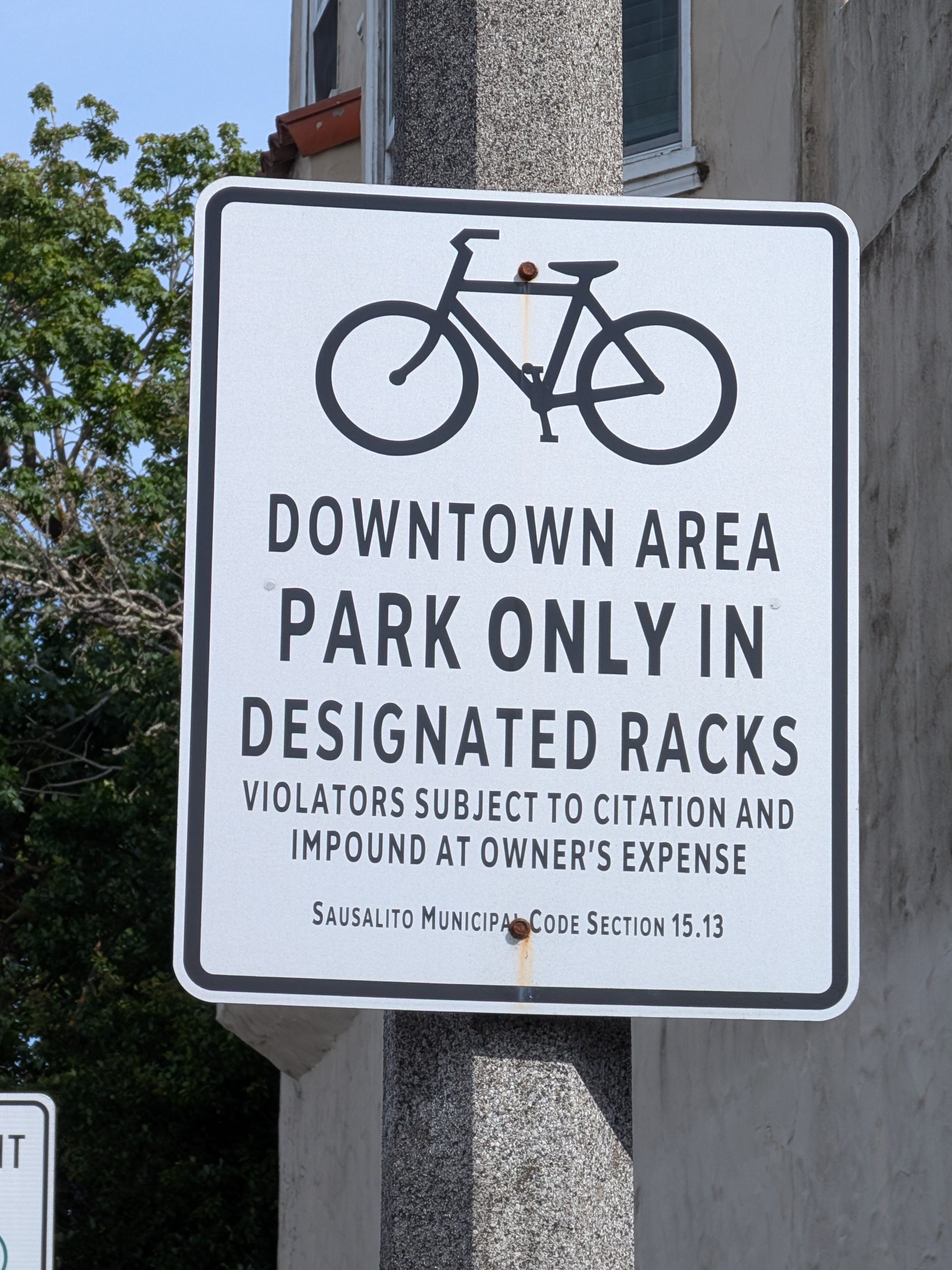
During my trip prep I noticed a missed connection between the Ferry terminal and the bike path. The Mill Valley-Sausalito bike path is a mile and a half from the ferry terminal along Bridgeway, a four lane road with not much protection with a few off street paths.
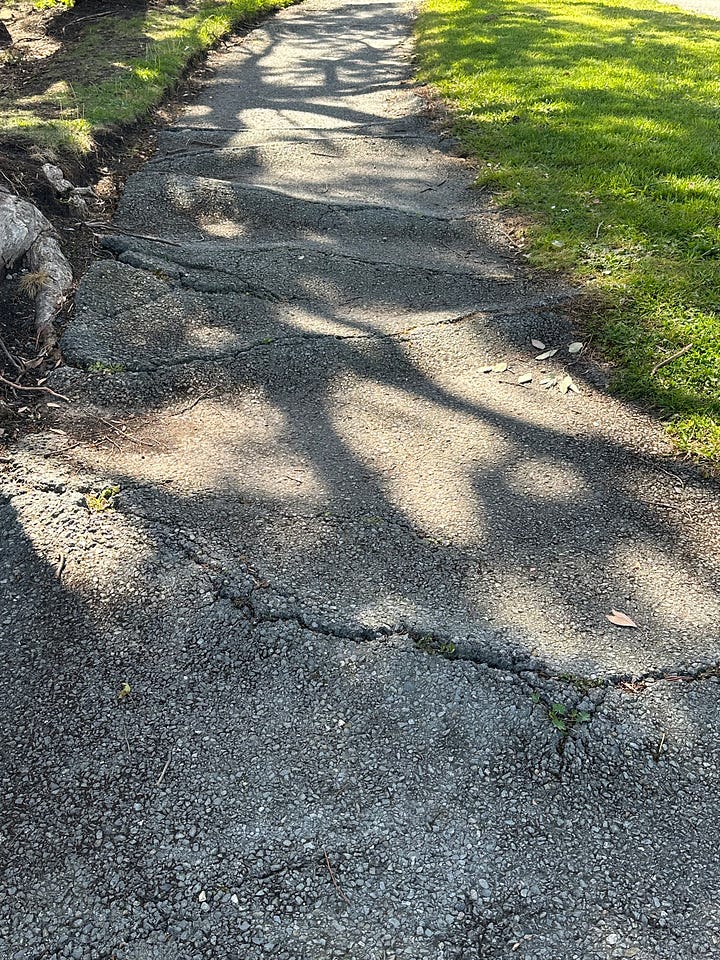
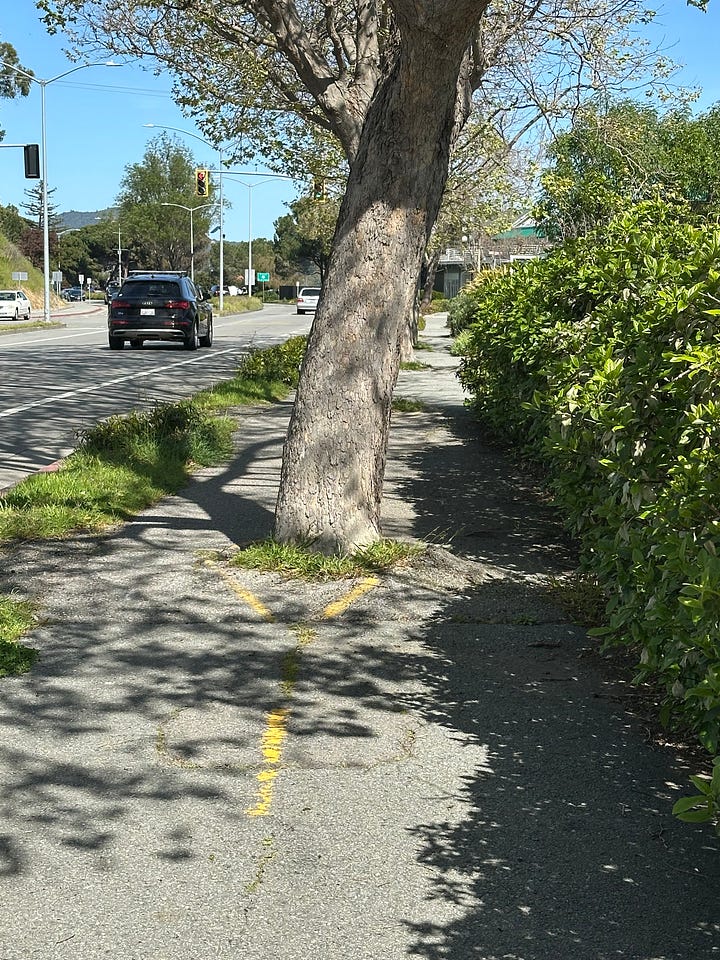
When there was an opportunity to ride off-street, I found the quality of the pavement really horrid. Recently, Sausalito City Council rejected bike improvements on a different part of Bridgeway causing the entire voluntary Pedestrian and Bicycle committee to resign. Thus unfortunately, I don’t think the state of affairs on Bridgeway is going to improve anytime soon.
Sausalito is a hot spot for cyclists of all levels, road cyclists heading to the Paradise loop, bike campers in the headlands and tourists riding over the Golden Gate Bridge. Sausalito should really try to encourage safer routes to, from and through their town instead of being hostile to them.
Luckily the bumpy part of the ride itself is not too long, and within no time I was on the ACTUAL Mill Valley-Sausalito Path. The first bit of the path runs along the 101, but very soon you get under the highway and find yourself on a flat path, a quieter ride.
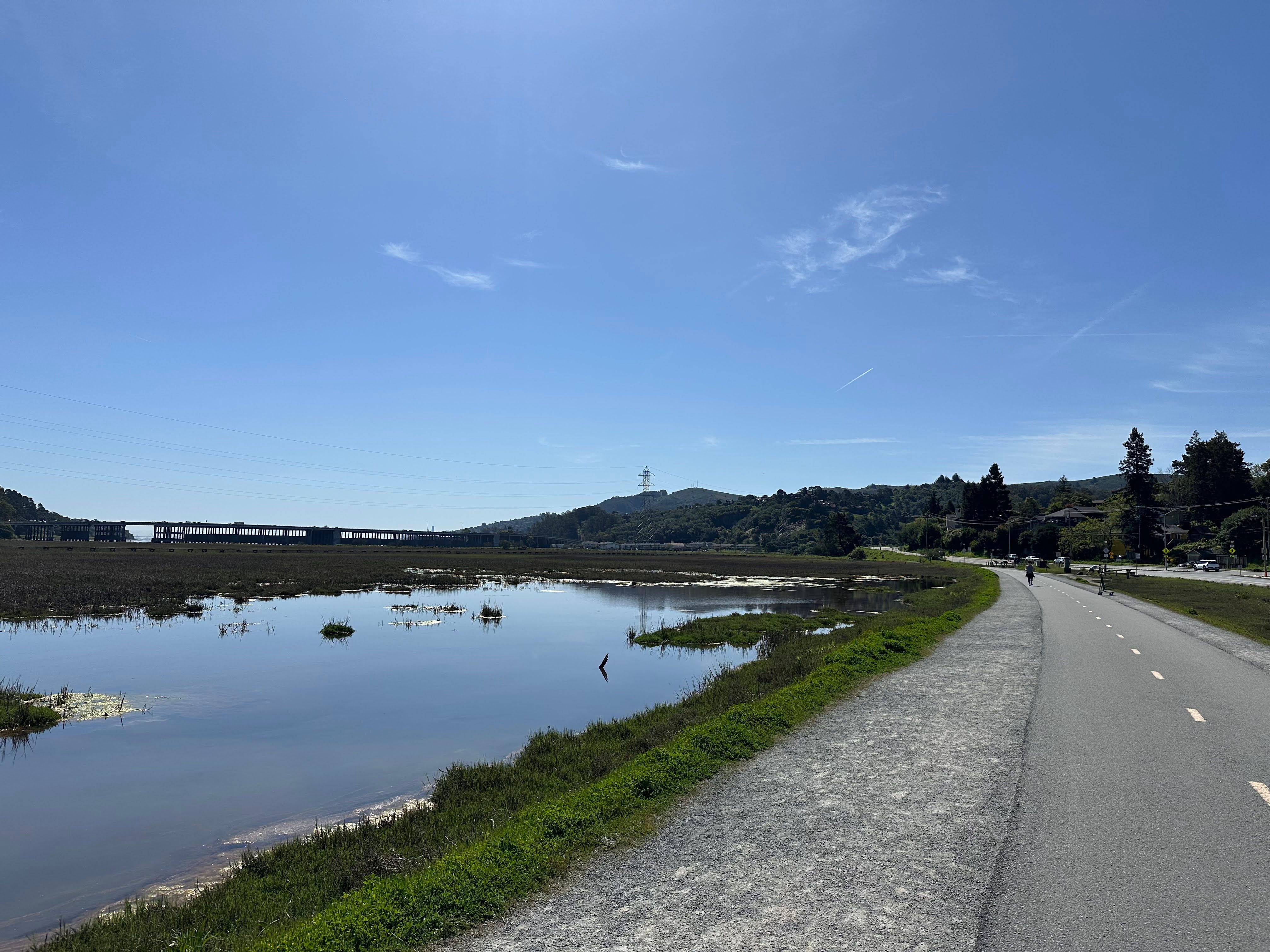
After the bike path, I turned off at Sycamore Avenue to start my journey into downtown Mill Valley. This was such a beautiful neighbourhood street, narrow and shaded by gorgeous trees. The narrow street meant less space for street parking, less speeding and more shade! I genuinely enjoyed this part and the annoyances of my last two “missed connections” faded away.
In Mill Valley, I committed a “Brompton sin” and parked my bike outside in front of the Equator Coffee Shop at the corner of Throckmorton and Miller Ave. I wanted to be free while I strolled around this small town.
Before I did my exploration, I grabbed a coffee and sat down at the window seat, do some reading and people watching. I was compelled to sketch the scene I saw.
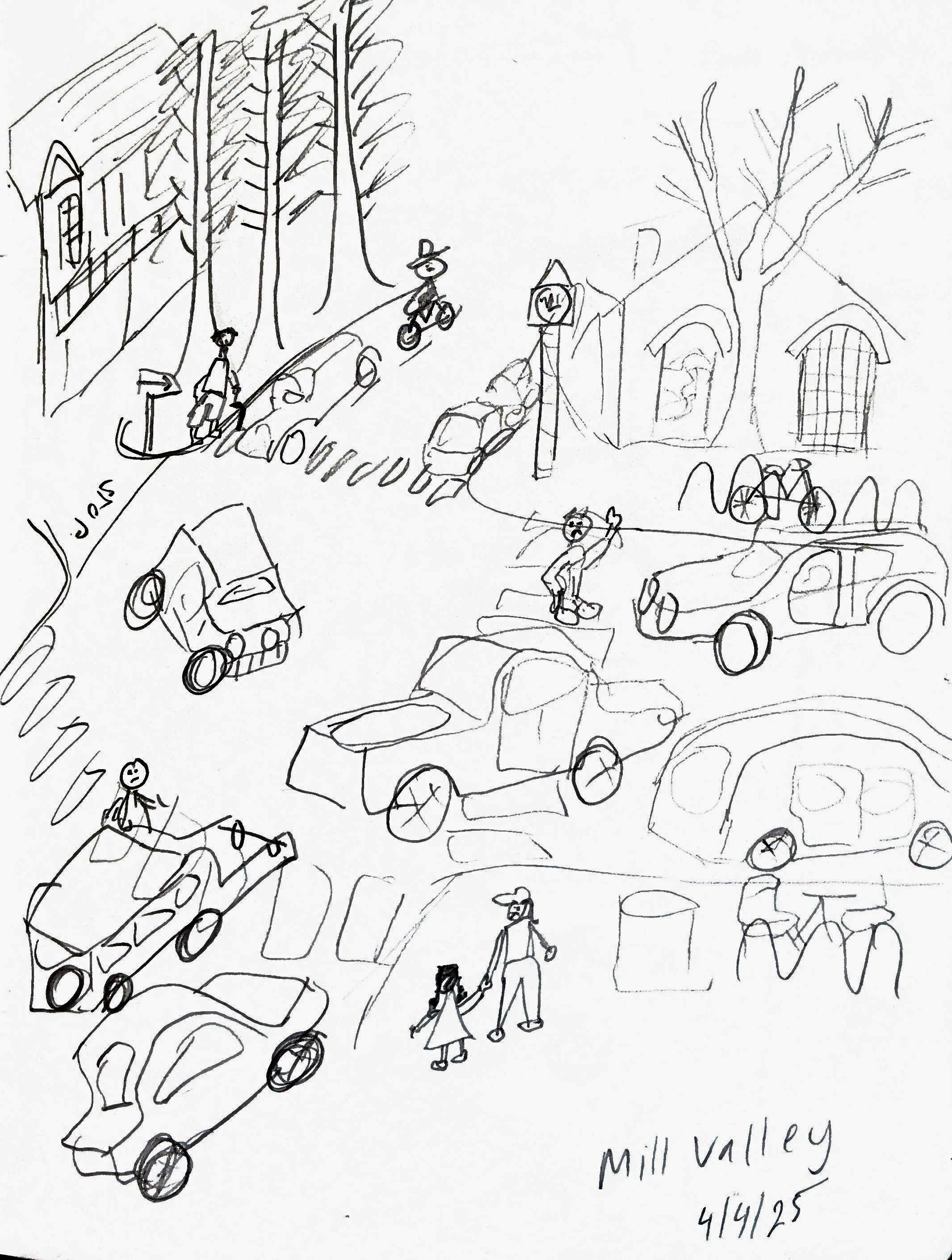
What I saw was the busy intersection of two main streets full of pedestrians dominated by relentless motor vehicles. I saw several close calls between drivers and of drivers not yielding to pedestrians. The intersection was really wide with 4 lanes in some directions and made me think how hostile this space was for humans, in the middle of this beautiful and scenic town.
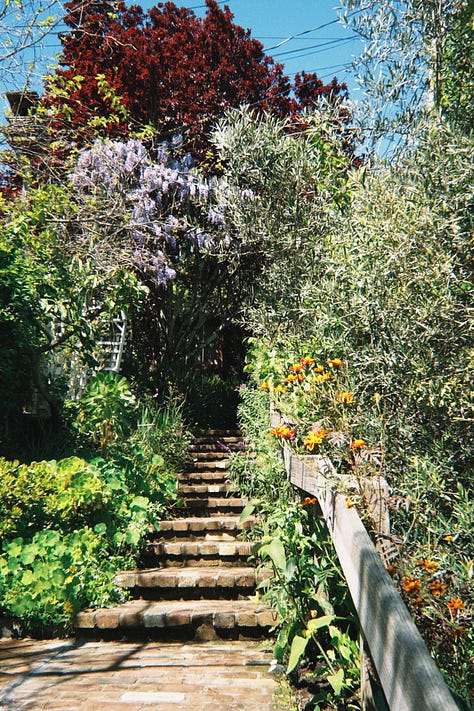
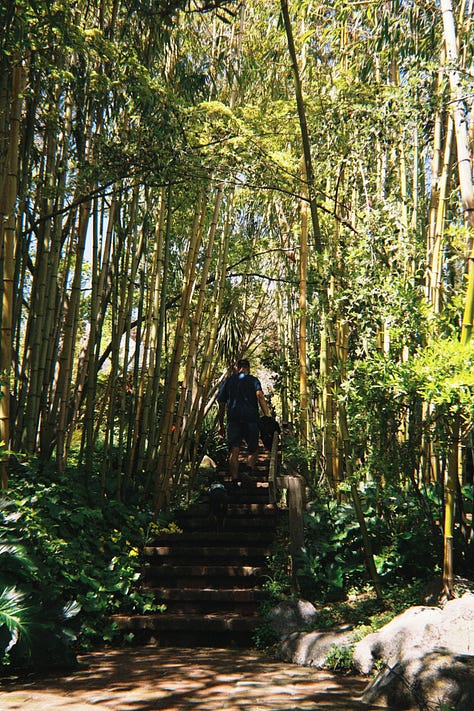
After my sketching, I started exploring the town. I was pleasantly surprised at the number of things in walking distance. There were several scenic staircases that I climbed to get a good view of the city. I grabbed some food at Avatar’s Punjabi Burritos and then headed back to pick up my bike before riding to check out the Mill Valley Library. Here I parked my bike and did some more reading. It was a stunning library, perfect for an afternoon.

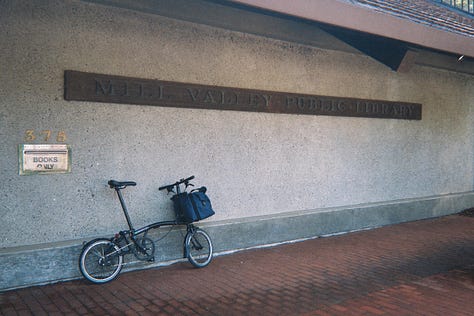


The day was wrapping up and I was tired: I weighed my options for how to get to my hotel in San Rafael. Originally, I had planned to continue my ride on the bike path and some back roads that would lead me into downtown San Rafael. The ride itself would only take me an hour but I was tired and I wanted to save my energy so I could visit a museum in San Rafael.
Thanks to the Brompton’s folding flexibility, I ended up taking the Marin Transit 17 Bus to San Rafael. This took as long as it would’ve taken me to do the bike ride because of traffic on the 101 but I was pleasantly surprised that some parts of this route had bus lanes to keep us moving. Very satisfying!
The bus dropped us off between 2nd and 3rd Street, two big four-lane, one-way roads in San Rafael that were choked with rush hour traffic. Not having the guts to face this mess of cars in an unfamiliar place, I walked a few blocks over to my hotel. I picked the AC Hotel right in downtown San Rafael within walking distance of the restaurants and sights I wanted to see!
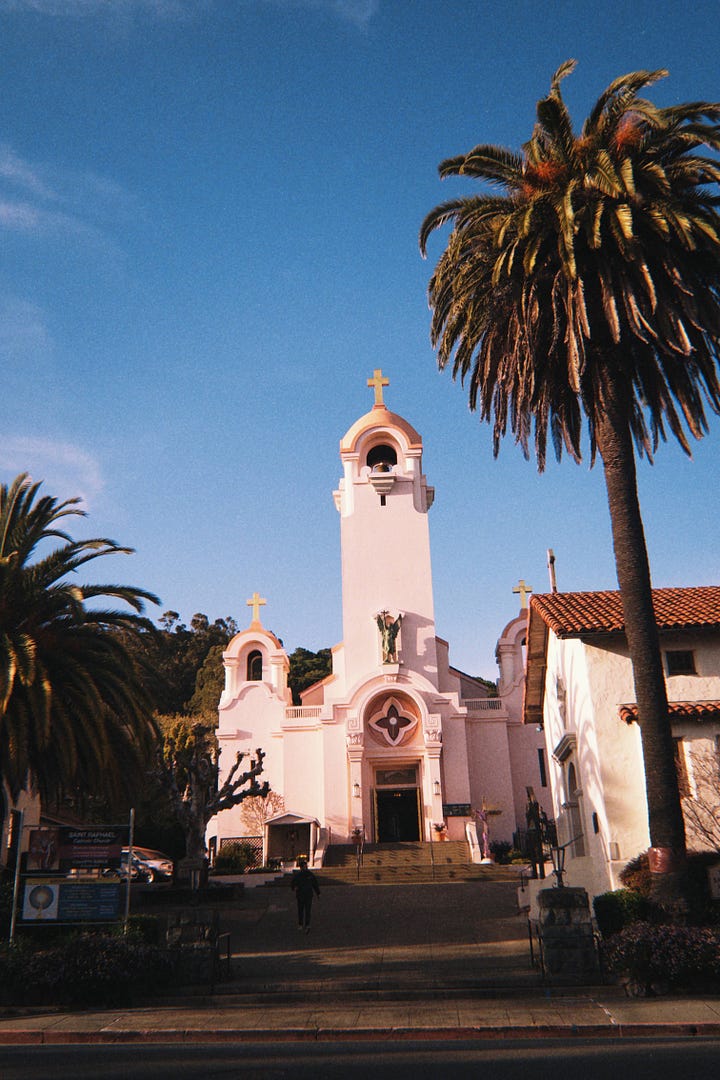


San Rafael felt fairly dense, with many shops closeby and several new higher-rise developments. You could see which streets were at the cusp of being transformed by the density yet biking there felt treacherous. I chose to walk around at night.
Happy to report, the International Museum of Propaganda in San Rafael is legit! I’ve been to a similar propaganda museum before in China and found the underground nature and curation of San Rafael’s museum similarly fantastic.After some quiet reflection at the museum, I grabbed dinner at Laos Kitchen before calling it a night!
The next day, before heading back to Palo Alto, I wanted to experience Rails+Trains in Sonoma. The North Bay has several bike trails easily accessible from SMART stations. This trip was a scouting trip of sorts, to see if I could come more frequently and explore the Bay.
Petaluma North station had just opened so I would head there to check out the new station and bike through the outer edges of the town eventually making my way to the downtown station.
This was my first time taking the SMART train and I was quite pleasantly surprised. The train was really well used, comfortable, and more importantly, it had a workable schedule and it was fast.
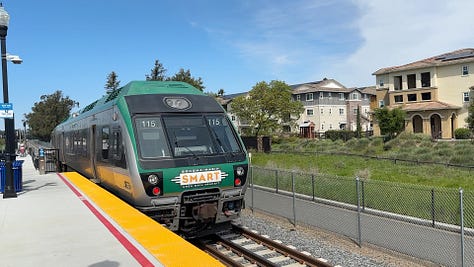


After getting off, I biked around Petaluma and got to see many different neighbourhoods and bike infrastructure. The ride was quite suburban and generally I didn’t see too many people out on the trail. Despite this I enjoyed the feeling of being somewhere new place and seeing the rolling hills. I enjoyed the exploring paths that are meant to connect neighbourhoods together and rode by quite a few nice amenities like sports fields and schools.
When I finally arrived at downtown Petaluma I was thirsty and hungry! This is when I faced my next missed connection.
The Downtown Petaluma station is located to the north of a massive parking lot. This separates the station from the bus transfer which is located an 5-minute walk away along an exposed road.
Furthermore, the station is located an 11-minute walk away from many shops and parks. A 11-minute walk is not too bad at all, but the ground conditions were not good. The walk was desolate and industrial. The road was a rural highway, with lots of cars and a tiny sidewalk. I was so distraught that I even considered cutting my trip short and just taking the bus back to SF.
Petaluma is squandering its chance to create a continuous commercial area with other parts of the more historical downtown area, similar to what one would experience in Sunnyvale. Sunnyvale station is connected to the historic downtown adjacent to brand new developments with new housing and stores. This makes it more convenient to transfer between train and the bus, and gives people places to refresh and relax while waiting.
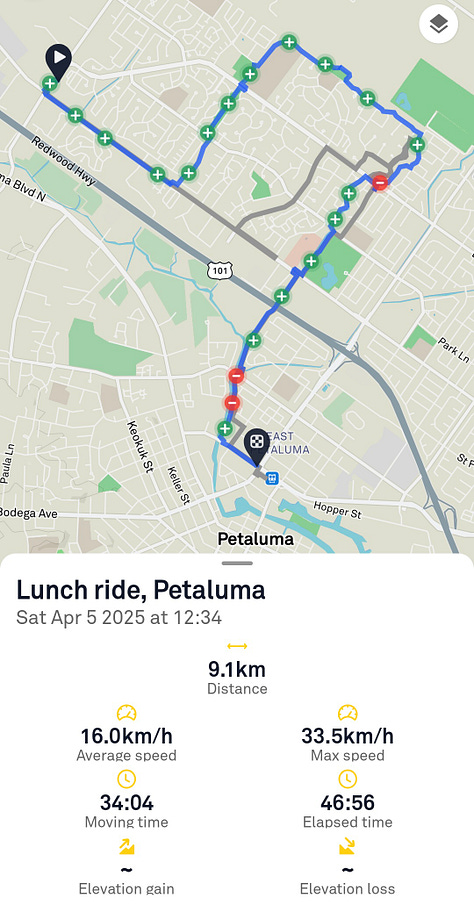


Luckily, a 11-minute walk is a 2-minute bike ride along the sidewalk. I managed to grab a meal and find a place to refresh before heading back to the station to wait for the next train to Larkspur.
The final, and most infamous, missed connection was at Larkspur, the terminal station of the SMART train.
In an ideal world, the SMART train would’ve dropped us off steps from a ferry-bus terminal with busses and ferries timed perfectly to whisk its riders to their next destinations. There should be seating and shade, and food and refreshments that people can buy while enjoying views of the Bay. The terminal should be buzzing rivaling the energy for the SF ferry terminal.
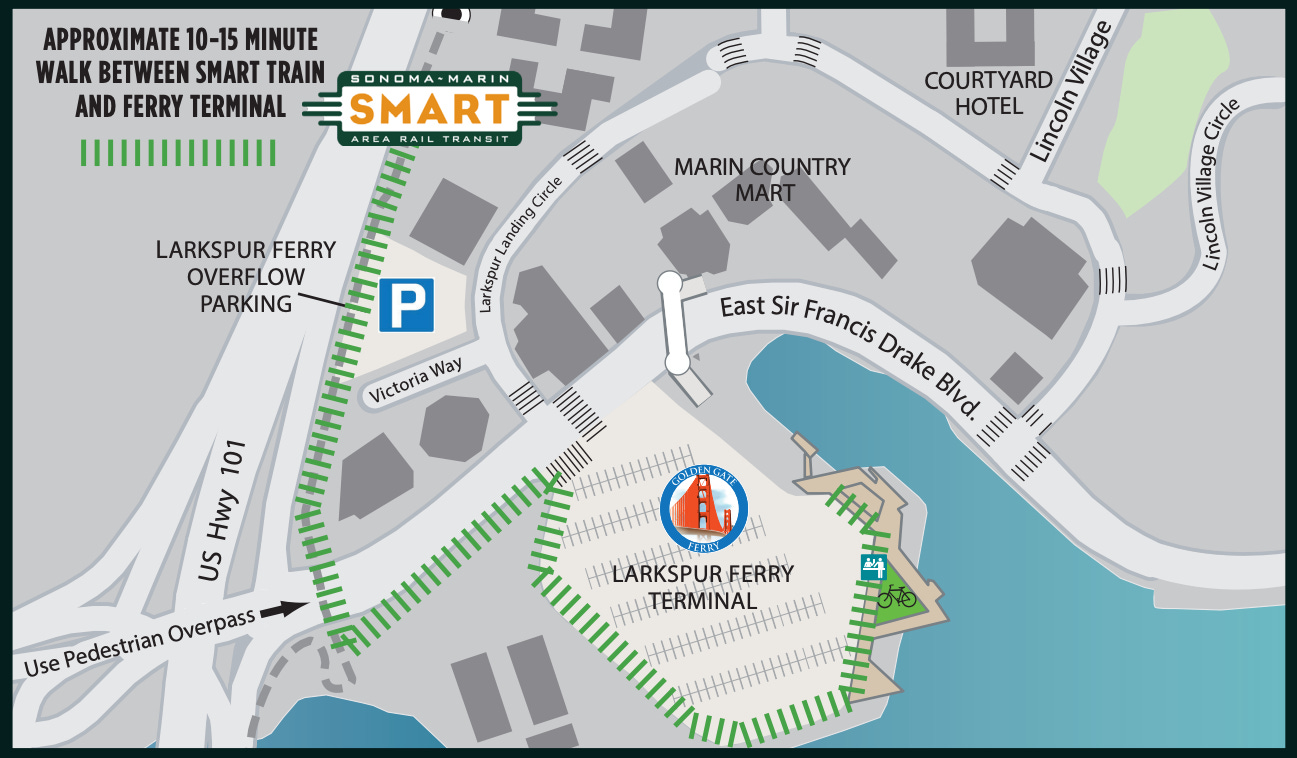
Instead... a 10-15-minute walk separates the train station and the ferry terminal. Despite the walk being physically separated from cars, you never forget their presence. The walk is unshaded, and takes you near 8 lanes of US 101, the highway interchange and a long walk through a massive parking lot.
The poor ferry-train transfer is a result of Larkspur City Council voting against integrating the train station into the ferry terminal because it would require modifying the shopping malls parking lot and could’ve hindered views of the Bay (not even considering that view is subjective and I think Bay view from the train would be absolutely gorgeous!). Seamless Bay Area wrote about and video documented this connection in 2019 and the article has more historical context on the decisions.
In 2025, SMART is trying band-aid solutions to improve the transfer. Today there is a shuttle to move people between both systems for 1.50$. However, due to the bad decisions of 2003, the system essentially penalizes riders with time or money.
In the future, the representatives and officials making decisions on transit projects should be reminded of these compromises leading to a handicapped transit system. Seamless transit connections are as important as frequency and reliability.
Despite having a great time, this whole trip was neither seamless nor convenient. The missed connections, both in terms disconnected transit systems like in Larkspur and separation of transit from destinations like in Petaluma, leave the entire system at a significant disadvantage when compared to driving. I was lucky to have my Brompton (and patience) to make the transfers and to convert this experience into an adventure. The system that made this trip an adventure for me though should have instead been an ordinary way of getting around, and that’s the biggest loss.
I was finally on my way back home from my road trip. My head was buzzing full of ideas for where my next crazy adventure would take me. Stay tuned, it might be sooner than you think!
Extra notes:
In the future… The Portal/DTX project will take Caltrain closer to the heart of the downtown SF. The terminus is set to be the Salesforce Transit Center (SFTC) which is a 10-15 minute walk from the Ferry building. This is certainly better because it eliminates a Muni transfer, but it remains to be seen how good the walking experience will be after the pedestrian connections between Embarcadero BART and the SFTC were cancelled to save some money (Section 6.1 of 2021 Phasing Study).
No posts
Comments
Nothing yet. Say the first thing.
Sign in to join the conversation.