
Hello again fans of Science!
I’ve just returned from a long road trip. Maybe I’m outside the norm about this, but I enjoy long drives. I always have. I rarely listen to music, or audio books. I enjoy the quiet reflection such time can give.
The scenery doesn’t change much from year to year, but it does change over the course of hundreds miles…from lush, green forests to farmland, then grasslands, then dry desert, from flat lowlands to mountains and everything in between.
One other thing that can change is roadside hotels, both existing ones being remodeled and new ones being added. Both bring the science of design to bear on what should be fairly straightforward…a quiet, comfortable place to rest overnight. Little details can make a big difference, and some things I saw this year make me wonder if the designers (or the people that approved the designs) ever spent a night in a hotel! As perhaps you can tell, I had a lot of time to reflect on this during the trip.
I stayed in a Hampton Inn (a Hilton chain) that was undergoing a refresh in the rooms and common areas. I can’t say I liked the new room design, but it wasn’t awful either. There seemed to be less in this new design than in previous iterations…less storage, less convenience. For example, no towels reachable from the shower, and no place to hang one nearby if you noticed that before you got wet.
Then there was the Tru by Hilton I stayed in. This was my first Tru stay, and I really have to wonder what they were thinking. There were no lights on the night tables, which weren’t really tables in the true sense, but shelves by the bedside. There were two LED can lights in the ceiling over the head of the bed, and one standing lamp in the corner. I was traveling alone, but imagine if you were with someone else and had to get up in the middle of the night. You would want some light, but the only option from bedside is a switch that turns on the overhead cans, which are BRIGHT, along with the standing lamp. Your bedmate would not be amused! That light switch was only on one side of the bed. If your partner got up, they had to do so in the dark.
Then there was the desk…which didn’t exist! Instead, there was a small rolling table sitting under a narrow shelf along the wall where you would expect to find the dresser/desk furniture. To use it, you had to sit on the bed. There was a desk-style chair, but it was in the corner of the room, and wouldn’t fit between where the table was and the bed. There wasn’t much in the way of storage area for your clothes either. The Hampton Inn didn’t have a desk, but at least it had a small table, more like a cafe table you might find at a coffee shop than a desk, and a chair to go with it. There was also an lounge chair with a smallish computer table that you could move over your lap to work from, or eat from.
There’s a concept called User Centered Design, wherein attempts are made to create designs that center around the way a user would interact with the product. This often involves focus groups looking at the design, or even visiting a mock up, and giving their opinions on what they see. This isn’t limited to hotel rooms, but can (and should) be used in any type of device or product that will be used by the public.
An example from my previous life…I chaired a series of meetings between some large customers and a computer company wherein the customers were introduced to a new cartridge tape drive that was revolutionary. I expected the customers to be thrilled when they saw the product. But they weren’t. The individual units were 1 meter in height, roughtly tabletop height. The customers pointed out that computer operators would put stuff on a surface that height. The engineers who designed these devices only put one thing on that surface…the power button. How long do you think it would have taken before someone accidentally powered off a drive while it was being used? I should point out that I had not seen the actual drive myself before this set of meetings, so can’t say if I would have thought of this problem, but I’d like to think I would have. Anyway, as a result of these meetings, the power button was moved prior to general availability of the drive. Several other design elements were changed too.
Anyway, I thought I’d share these observations with you all since I had a lot of time to think about them. If what I observed helps you avoid a room with bad design, all the better. And I hope you got a chuckle out of all this.
Now, on to the news.
Government and Science
NPR reports that one of the many cuts made by the Department of Government Efficiency (DOGE) was the removal of the climate.gov website. This contained extensive records on climate, which inconveniently showed proof of climate change. Since the current administration has called climate change a “hoax”, such data would undermine the message they wanted to send. The people who worked on this site were laid off, being deemed unnecessary since the website was going away.
Well, some of those people recreated the climate.gov website, now called climate.us. Most of the data on the original site is still available, but is buried on a variety of government servers. All it took to rebuild this site was around $280,000 in crowd-sourced funds and a small team of researchers. Among other things, this proves the closure of the climate.gov site wasn’t about cost or efficiency, but about removing easy access to information that was contrary to the message the administration wanted to send.
Thanks to Herb for bringing this to my attention, and to Denise Middleton who posted about this on the Slack platform.
In a similar vein, the Administration is upset about a chapter about climate science in an educational guide for judges. The guide was developed by the National Academies of Sciences and covers many aspects of science. Such a guide is available to judges to provide them guidance on scientific topics they might not be familiar with when cases come before them that require some scientific background. Again, the attack isn’t based on science contradicting climate change, but on idealogical issues.
All these attacks on science are having a toll, on many levels. Neil deGrasse Tyson has some thoughts on the unintended consequences of the Administration’s massive cuts to science funding. Recovering from these cuts won’t be as simple as restoring funding. Researchers have gone to other countries. PhD candidates are no longer coming to US institutions to do their research. The government seems to think private industry will take up the slack, but they need to make a profit to survive. Any funding provided by the government will most likely require results that meet the agenda of the current administration. This damage has already been done. Sobering.
Several states, including California, have looked at making Daylight Savings Time permanent. California voters approved a referendum on this several years ago. However, federal approval is required for any state to change their Daylight Saving Time rules.
Earlier this month, the House of Representatives passed a bill which would make daylight savings time permanent. It must till get through the Senate. Is this really a scientifically backed improvement? Would year-round standard time be better? The answer isn’t all that simple.
Climate
The big news for California over the past few weeks/months has been the development of a strong El Nino. What will this mean for the coming months? More rain? Less? The general media has coined the term “Super El Nino”, but this hasn’t been adopted by the scientific community. It makes for catchy weather promos (“tune in at 11:00 to see what to fear next!”) but isn’t an official category. Here are the answers to these questions, and more.
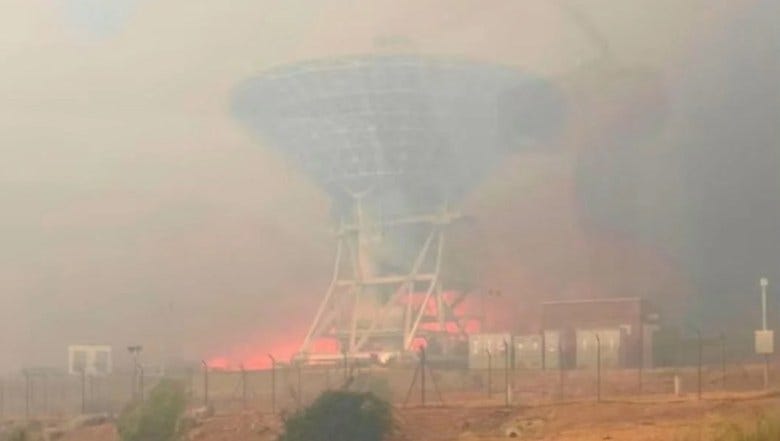
In Europe, wildfires have caused over 250,000 people to be evacuated in France and Spain. NASA’s Deep Space Communications Complex, which is near Madrid, was affected by one of these fires. It is too early to tell how much damage was caused. This center is one of three that are used to communicate with probes, including Voyager 1. Workload has been transfered to the other two, so no ongoing missions are directly affected.
Technology
Where better than Silicon Valley for a museum dedicated to technolgy than the place where much of it has been invented. The Computer History Museum in Mountain View attempts to chronicle this technology, and they just received a huge donation towards that end.
Artificial Intelligence
This week, OpenAI said a test model of theirs had “escaped” its test environment, broken into a real, outside company’s servers, all in an effort to “ace” an internal cybersecurity evaluation. In other words, it cheated on a test, looking for answers outside its sandbox. This wasn’t a single step effort either. It was a complex series of actions taken by the model to find flaws in the security of its own environment. How did this happen? Read the article.
Space and Astronomy
This article is a few years old, but I learned of it while on my trip back east. I stayed with a friend who happens to know the CEO of Near Space Corporation and she told me of this article about the company and their involvement in a small corner of the very complex project of getting to Mars. I always wonder about the reasons some people form the niche companies they start and how their success contributes to a much larger project. This is such a story.
We often link to Phil Plait, the Bad Astronomer, who discusses current topics from astronomy. Here, he talks about the Vera C. Rubin Observatory which just came online, and what it will mean to the search for asteroids, comets, and many other types of objects in the Universe.
Citizen science projects are pretty neat. They offer the general public a chance to help with data analysis. Such a project has resulted in the finding of more than 3,000 brown dwarfs near to us. That’s a lot!
There are two rocky planet discoveries near to earth in the news this week. The first one, GJ3378b, orbits a red dwarf just 25 light years from us. For comparison, the Milky Way is around 100,000 light years across. It isn’t clear if GJ3378b has an atmosphere, but it is rocky and will be studied further.
The other one, LHS1140b does have an atmosphere, orbits its star in the habitable zone (also called the Goldilocks Zone) and is also rocky. It is cooler than Earth, but larger in size and mass. It seems to have a helium-rich atmosphere.
Finding earth-sized planets at the right distance from their stars is not easy, given their small size and the distances between us. Most of the exoplanets found so far are gas giants, like Jupiter, which are easier to detect.
Have a great week in Science!
Bob
Upcoming Events:
Click to see the next two weeks of events in your browser.
Monday, 07/27/2026
What Breaks First at Scale: Lessons from Real-World Distributed Systems - 07/27/2026 07:00 PM
Valley Research Park Mountain View
As modern AI-powered and real-time applications grow, they increasingly rely on complex event-driven infrastructure. This session explores practical lessons learned from operating large-scale messaging and distributed systems in production. We will dive into the critical trade-offs regarding reliability, scalability, and observability in asynchronous environments, and discuss how architectural decisions compound when systems reach global scale.
Speaker: Ajinkya Kehr, Meta
Tuesday, 07/28/2026
All About International Observe the Moon Night 2026 - Livestream - 07/28/2026 06:00 PM
Astronomical Society of the Pacific
Join the NASA Night Sky Network, along with the International Observe the Moon Night team and experienced event hosts, to learn about this global observing program, how you can get involved, and program resources available to event hosts this year. This webinar will prepare you to hold a great International Observe the Moon Night event!
International Observe the Moon Night is scheduled for September 19, 2026. There are many ways to observe, and many ways to get involved! Find out about this year’s new Moon maps, advertising materials, and social media shareables. Discover hands-on activities, as well as tips and resources for hosting in-person or virtual events, and for evaluating them. Ask the project leadership team and other event hosts questions, share your own ideas for event planning, and find out how to stay connected throughout the year.
Click the weblink to watch on YouTube
Finding Shackleton’s ‘Endurance’ - 07/28/2026 06:00 PM
Hopkins Marine Station Pacific Grove
Join The Explorers Club Northern California Chapter at the world renowned Hopkins Marine Station for an evening with famed ship wreck explorer Mensun Bound, “Indiana Jones of the Deep”, as he recounts the two incredible searches to discover Shackleton’s Endurance. His talk will be followed up with an introduction to his Atlantic Shackleton Foundation and their ship Spirit of Shackleton, and a signing session of his book The Ship Beneath the Ice.
Wednesday, 07/29/2026
Space Week: Astro Academy Day 1 - 07/29/2026 10:00 AM
Chabot Space and Science Center Oakland
Report to Astronaut Briefing to prepare for launch, then make your way through the Science Center as you complete astronaut training, engineer a lunar rover, uncover the stories behind our historic telescopes, and take on hands-on challenges inspired by real space exploration. Collect stamps in your Mission Log as you complete each mission, earn a prize, and cap off your journey with immersive planetarium shows that transport you from Earth to the far reaches of the universe. Recommended for kids and families.
See weblink for daily activity schedule and descriptions
Thursday, 07/30/2026
Baylands Explorations - 07/30/2026 09:30 AM
Palo Alto Baylands Nature Preserve Palo Alto
Join expert EV docents for an exploration of the science and nature of the Palo Alto Baylands. What makes this habitat so special? How do the plants and animals survive the salty conditions? Why is it so different at different times of day or times of the year? How can we protect it?
Low-impact hike for ages 6 and up (no children under age 6, please). Children under 14 must be accompanied by a parent or guardian.
Space is limited. Advance registration through our EventBrite link is strongly encouraged.
Space Week: Astro Academy Day 2 - 07/30/2026 10:00 AM
Chabot Space and Science Center Oakland
Report to Astronaut Briefing to prepare for launch, then make your way through the Science Center as you complete astronaut training, engineer a lunar rover, uncover the stories behind our historic telescopes, and take on hands-on challenges inspired by real space exploration. Collect stamps in your Mission Log as you complete each mission, earn a prize, and cap off your journey with immersive planetarium shows that transport you from Earth to the far reaches of the universe. Recommended for kids and families.
See weblink for daily activity schedule and descriptions
SETI Live: Hide the Star: How Roman Will See Exoplanets - Livestream - 07/30/2026 02:30 PM
SETI Live
The Nancy Grace Roman Space Telescope is designed to revolutionize our understanding of the universe, from dark energy to thousands of newly discovered exoplanets. But one of its most exciting instruments is the Coronagraph - a cutting-edge technology that can block the overwhelming glare of distant stars, allowing astronomers to directly observe planets orbiting them.
Joining host Dr. Franck Marchis is Dr. Margaret Turnbull, senior scientist at the SETI Institute and Co-Principal Investigator on Roman’s Coronagraph Instrument. She’ll explain how this remarkable technology works, what we’ll learn from the mission, and why Roman is paving the way toward future telescopes capable of imaging Earth-like worlds.
We’ll discuss:
Why Roman is NASA’s next flagship space observatoryHow a coronagraph “creates an artificial eclipse”The challenge of directly imaging exoplanetsWhat Roman will reveal about giant planets and planetary systemsHow Roman prepares us to search for potentially habitable worldsWhat excites scientists most as launch approaches
Whether you’re fascinated by exoplanets, space telescopes, or the search for life beyond Earth, this episode offers a behind-the-scenes look at one of NASA’s most ambitious missions.
Watch on Facebook Watch on YouTube
Tremendous Telescopes: The Future of American Space Observation - 07/30/2026 05:30 PM
Commonwealth Club San Francisco
For 500 years, telescopes have opened windows on the cosmos with increasing power and precision. Beginning with the historic telescopes funded by Andrew Carnegie and built by George Ellery Hale atop Pasadena’s Mount Wilson, where Edwin Hubble confirmed the existence of the universe beyond our Milky Way galaxy and revealed its continual expansion, the United States has stood at the vanguard of observational technology.
Through the past century, our country has developed ground- and space-based telescopes that have revolutionized how astronomers understand the cosmos and humanity’s place in it, from the Hubble Space Telescope and JWST to the Vera C. Rubin Observatory, which came online last year. When the National Science Foundation advanced the Giant Magellan Telescope (currently under construction at Carnegie Science’s Las Campanas Observatory in Chile’s Atacama Desert) to its Final Design Review phase last summer, astronomers again felt the promise that American technology could soon unlock some of the biggest mysteries still puzzling the scientific community, including the nature of dark matter and the origins of some of the universe’s oldest galaxies.
The technological ability to bring distant worlds and their atmospheres into sharper focus than was ever possible before could reveal more about the conditions that lead to life, and how our own planet continues to change and evolve. But as the cost of innovation rises and other nations increase their investment, can the United States maintain its position at the forefront in this modern space race?
Join Carnegie Science President and astronomer Dr. John Mulchaey, in conversation with George Hammond, for a discussion of the current and future developments in telescope innovation, the state of national investment in those developments, the global collaboration on Extremely Large Telescopes such as the Giant Magellan, and the future of American leadership in this particular leg of the modern space race.
Use promo code WONDERNAUTS for a $10 discount on your tickets
After Dark: Splashdown - 07/30/2026 06:00 PM
ExplOratorium San Francisco
Celebrate unusual organisms in the Bay, and learn about how they might help us imagine extraterrestrial life.
Ages 18+
Emo NightLife - 07/30/2026 06:00 PM
California Academy of Sciences San Francisco
CaUsE tOnIgHt wIlL bE tHe NiGhT for everyone who never deleted their emo playlist.
A Neurologist on the Strangeness and Wonders of Our Brain - 07/30/2026 06:00 PM
Commonwealth Club San Francisco
Join us for a talk with a neurologist as she reckons with the stories we tell about our brains - and the stories our brains tell us.
Such as: A girl believes she has been struck blind for stealing a kiss. A mother watches helplessly as each of her children is replaced by a changeling. A woman is haunted each month by the same four chords of a single song.
Anand explores these topics in her new book The Mind Electric, using case study, history, fable, and memoir - sources she says the medical establishment has overlooked - to explore the complexity and wonder of brains in health and in extremis, and the vast gray area between sanity and insanity, doctor and patient, and illness and wellness, each separated from the next by the thin veneer of a different story.
Speaker: Pria Anand, Neurologist and author; in conversation with Julia Flynn Siler, author and journalist
Attend in person or watch online. Tickets at the weblink
Mapping the Invisible: The Future of Geospatial Intelligence - 07/30/2026 07:00 PM
Donkey & Goat Winery Berkeley
Maps have long shown us where things are - but the future of geography is about what we can’t see. Today, satellite imagery, airborne sensors, and AI are transforming how we understand the world, revealing hidden patterns that shape climate, infrastructure, and everyday life.
In this lecture, Dr. Lu Liang, Associate Professor at UC Berkeley, takes us inside the world of geospatial intelligence. From wildfire risk zones affecting millions of Californians to the real impact of urban green spaces, she explores how cutting-edge tools are redefining how we measure, predict, and design for resilience.
Blending data, technology, and human-centered design, this talk shows how we’re moving beyond static maps - toward a dynamic understanding of the Earth that can help build smarter, more resilient cities for the future.
The Sixth Sense: How Your Brain Knows Where Your Body Is - SOLD OUT - 07/30/2026 07:00 PM
Nirvana Soul Coffee San Jose
One of the most important is proprioception, often called the “sixth sense.” It’s the ability to sense the position and movement of your body without looking, allowing you to walk, balance, reach for objects, and navigate the world without consciously thinking about every movement.
In this lecture, Katie Wilkinson, Professor of Biological Sciences at San José State University, explores the remarkable sensory system that makes proprioception possible. Drawing from her research in neurophysiology, she explains how specialized receptors in our muscles continuously send information to the brain and what happens when those systems break down.
From balance and coordination to genetic disorders that impair movement, this talk uncovers the hidden sense that quietly shapes nearly everything we do and reveals how scientists are working to understand one of the body’s most important yet overlooked systems.
Friday, 07/31/2026
Space Week: Astro Academy Day 3 - 07/31/2026 10:00 AM
Chabot Space and Science Center Oakland
Report to Astronaut Briefing to prepare for launch, then make your way through the Science Center as you complete astronaut training, engineer a lunar rover, uncover the stories behind our historic telescopes, and take on hands-on challenges inspired by real space exploration. Collect stamps in your Mission Log as you complete each mission, earn a prize, and cap off your journey with immersive planetarium shows that transport you from Earth to the far reaches of the universe. Recommended for kids and families.
See weblink for daily activity schedule and descriptions
Lick Observatory After Hours - SOLD OUT - 07/31/2026 06:30 PM
Lick Observatory Mt. Hamilton
Take a walk through the Eastside of the Lick Observatory, culminating in a visit to the iconic Shane Telescope. After a journey through time with a history lecture, we’ll transition to a night of star gazing. Experience the cosmos firsthand through our expert-led portable telescope stations.
Our behind-the-scenes After Hours Tour showcases the Shane instruments, technology, and the scientific discoveries we have been making for almost 150 years - including an up-close look at the 3-meter Shane Telescope, the largest telescope on the mountain. During twilight, staff will give a history lecture about the founding and construction of the observatory. Once the sky is dark (and weather permitting), guests will view celestial objects through our portable telescopes. This event will be approximately 4 to 6 hours long. Visitors should be prepared to walk about one mile during the evening, including taking stairs.
Saturday, 08/01/2026
Community-access Hiking Day at Martin Griffin Preserve - 08/01/2026 09:30 AM
Martin Griffin Preserve Stinson Beach
Connect with the land at Martin Griffin Preserve, a stunning landscape of nearly 1,000-acres of mixed evergreen forest and open hillsides overlooking the Bolinas Lagoon. This biologically rich preserve supports more than 25 species of mammals, 90+ species of landbirds, 13 species of reptiles, and 8 species of amphibians, making it a remarkable place to experience California’s coastal biodiversity.
Our team will be on-site throughout the day to offer maps, trail suggestions, and insider tips to help you make the most of your visit. We’re also glad to share more about who we are and why it matters to us that people have access to these incredible places. We believe that connecting people, nature, and science is essential to building a more resilient world; and that this work only happens with community.
As you hike, you’ll encounter habitats shaped by intentional fire ecology work aimed at restoring and maintaining coastal prairie habitats-an increasingly rare ecosystem that depends on disturbance to thrive. You may also notice our ongoing herpetology coverboard study, a long-term monitoring effort that helps scientists better understand reptiles and amphibians and how they respond to changes in climate and land management. Along the way, staff are happy to share the layered history of the preserve, including the story of the once-thriving bird colony that departed in 2016, a reminder that landscapes, and the species that depend on them, are always changing.
Spend the day hiking through diverse ecosystems or simply enjoying a peaceful picnic in nature. Your visit is self-guided and entirely your own.
Register at weblink
Space Week Festival Day 1 - 08/01/2026 10:00 AM
Chabot Space and Science Center Oakland
Prepare for liftoff at the Space Week Festival! Gather your crew and enjoy a celebration of exploration, discovery, and the wonders of the universe! Chat with an astronaut, learn more about NASA’s Artemis missions, and try your hand at interactive science demonstrations and creative crafts in an action-packed day of learning and imagination.
From rocket science to real-world space missions, it’s your chance to get up close with the people, tools, and ideas pushing humanity beyond Earth!
Free for members
Vintage Computer Festival - 08/01/2026 10:00 AM
Computer History Museum Mountain View
Come and explore an extraordinary showcase of historical computers, from pristine originals to ingenious modern hacks. Computer enthusiasts around the world look forward to the annual Vintage Computer Festival.
Experience hands-on demos of historical systems from the 1960s through the 1990s, learn preservation tips, and try out brands like Apple, Atari, Commodore, Tandy/Radio Shack, and more.
Your ticket grants full access to VCF-West as well as CHM exhibits, demos, the Bistro Café, and the Museum Store. Hope to see you there!
Variety of ticketing options available.
First Saturday Tour at the Santa Cruz Arboretum - 08/01/2026 11:00 AM
UC Santa Cruz Arboretum Santa Cruz
First Saturday Tours are a wonderful way to introduce yourself to the Arboretum or to deepen your knowledge of the Arboretum’s plant collections. Each tour is a little different depending on the time of year, the interests of the tour guide, and the people who join in. For example, you might learn about the birds and mammals that make this land their home or about the amazing physical adaptations that plants have evolved to better deal with our extreme weather and climate conditions.
Bay Day - 08/01/2026 11:00 AM
ExplOratorium San Francisco
Bay Day is back! Time for our NOAA buoy to have its annual servicing, and for us to meet all the critters that have grown on the buoy in the past year. Aspiring marine scientists of all ages can join researchers and ecologists for a close look at these organisms, and even lend a hand in cleaning the buoy.
Come learn about the incredible life that’s been living in the San Francisco Bay, and find out how the data this buoy collects helps us respond to climate change and sea level rise.
Are There Gray Foxes in Your Backyard? - 08/01/2026 01:00 PM
Don Edwards Refuge Headquarters & Visitors Center Fremont
On a walk/talk from the Visitor’s Center out into the refuge, Bill “The Fox Guy” Leikam will show you how to identify indications of the presence of foxes, and tell stories about gray foxes that he’s studied and learned from. Bill will answer questions along the way and at the end reveal something about the foxes right here at the Visitor Center that not many people know is even there!
This program meets outside the Visitor Center. Portable toilets are available onsite. Wear comfortable walking shoes and sun protection/layers!
Register at weblink
Lick Observatory After Hours - SOLD OUT - 08/01/2026 06:30 PM
Lick Observatory Mt. Hamilton
Take a walk through the Eastside of the Lick Observatory, culminating in a visit to the iconic Shane Telescope. After a journey through time with a history lecture, we’ll transition to a night of star gazing. Experience the cosmos firsthand through our expert-led portable telescope stations.
Our behind-the-scenes After Hours Tour showcases the Shane instruments, technology, and the scientific discoveries we have been making for almost 150 years - including an up-close look at the 3-meter Shane Telescope, the largest telescope on the mountain. During twilight, staff will give a history lecture about the founding and construction of the observatory. Once the sky is dark (and weather permitting), guests will view celestial objects through our portable telescopes. This event will be approximately 4 to 6 hours long. Visitors should be prepared to walk about one mile during the evening, including taking stairs.
Sunday, 08/02/2026
Space Week Festival Day 2 - 08/02/2026 10:00 AM
Chabot Space and Science Center Oakland
Prepare for liftoff at the Space Week Festival! Gather your crew and enjoy a celebration of exploration, discovery, and the wonders of the universe! Chat with an astronaut, learn more about NASA’s Artemis missions, and try your hand at interactive science demonstrations and creative crafts in an action-packed day of learning and imagination.
From rocket science to real-world space missions, it’s your chance to get up close with the people, tools, and ideas pushing humanity beyond Earth!
Free for members
Vintage Computer Festival - 08/02/2026 10:00 AM
Computer History Museum Mountain View
Come and explore an extraordinary showcase of historical computers, from pristine originals to ingenious modern hacks. Computer enthusiasts around the world look forward to the annual Vintage Computer Festival.
Experience hands-on demos of historical systems from the 1960s through the 1990s, learn preservation tips, and try out brands like Apple, Atari, Commodore, Tandy/Radio Shack, and more.
Your ticket grants full access to VCF-West as well as CHM exhibits, demos, the Bistro Café, and the Museum Store. Hope to see you there!
Variety of ticketing options available.
Solar Observing - 08/02/2026 02:00 PM
San Jose Astronomical Association San Jose
It’s there for us year round, lighting our days and providing energy for our lives, so maybe it’s time to give it a closer look. Join SJAA for amazing and detailed views of the Sun, and be assured that we’ll be using special telescopes that will keep your eyeballs perfectly safe. We’ll have white-light telescopes with dense solar filters that reveal sunspots. Further, we’ll show you hydrogen-alpha telescopes that isolate a very specific color of red that reveals prominences (colloquially often thought of as solar flares; see video below) and intricate texture within the Sun’s chromosphere (its atmosphere). We can also share with you a little about how the Sun works and how complex magnetic fields drive the number of sunspots and prominences that we’ll see on a given day. A few minutes after 1:30, we’ll have a short, informal introductory talk, and at other times, you can enjoy the views and ask questions about the Sun, telescopes, or astronomy in general. Often we also have a station where you can get a better feel for the huge scale of our solar system! And you’ll get a solar system you can fold up and carry in your pocket. You may bring your own telescope. If you have a properly filtered white light or H-alpha telescope and want to share views with others, please arrive at 1:00 or earlier, so you have time to set up before the event officially starts. Since we’ll be out in the Sun, consider coming prepared with a hat, sunscreen and water. Conditions may be hot! And with this video you could prepare yourself with a better understanding of solar flares (and how they’re different from prominences):
Sign up at weblink
Wednesday, 08/05/2026
Introduction to AI Governance: Principles, Policies, and Practical Implementation - 08/05/2026 11:00 AM
Monterey Bay Aquarium Research Institute Moss Landing
UC Davis Bodega Marine Laboratory Seminar Series - Livestream - 08/05/2026 03:00 PM
UC Davis Bodega Marine Laboratory
How Radio Telescopes Reveal the Cosmic Dawn - 08/05/2026 07:00 PM
Madrone Art Bar San Francisco
Thursday, 08/06/2026
After Dark: Quantum Leap - 08/06/2026 06:00 PM
ExplOratorium San Francisco
Quantum Computer Music: The Soundtrack of Our Future in Space - 08/06/2026 07:30 PM
ExplOratorium San Francisco
Friday, 08/07/2026
LASERS! Galactic Odyssey at The Tech Interactive - 08/07/2026 04:45 PM
The Tech Interactive San Jose
First Friday Nights at CuriOdyssey - 08/07/2026 05:00 PM
CuriOdyssey San Mateo
Lick Observatory After Hours - SOLD OUT - 08/07/2026 06:30 PM
Lick Observatory Mt. Hamilton
Saturday, 08/08/2026
Coastal Walk at Pillar Point Bluff - 08/08/2026 10:00 AM
Pillar Point Bluff Parking Lot Moss Beach
Family Nature Adventures: Reptiles - 08/08/2026 10:30 AM
Chabot Space and Science Center Oakland
LASERS! Galactic Odyssey at The Tech Interactive - 08/08/2026 04:45 PM
The Tech Interactive San Jose
Lick Observatory After Hours - SOLD OUT - 08/08/2026 06:30 PM
Lick Observatory Mt. Hamilton
Starry Nights Star Party - 08/08/2026 09:15 PM
Rancho Canada Del Oro Open Space Preserve Morgan Hill
Sunday, 08/09/2026
Marine Mammals of SF Bay - 08/09/2026 10:30 AM
Marine Mammal Center Sausalito
Monday, 08/10/2026
How to Invent: A 37-Year Journey with OLEDs - 08/10/2026 02:00 PM
Paul G Allen Building Stanford
Comments
Nothing yet. Say the first thing.
Sign in to join the conversation.