

Gloria Alexandra Bravo Cedeño was gunned down in Manta, Ecuador, on June 14, 2026.
An armed assailant shot Bravo dead as she was walking to her car.
Her sister Olinda tried to protect her and confronted the attacker, but she was also shot and killed.
Bravo was a prosecutor who had been investigating organized crime and drone attacks on regional fishing boats.
Her death marks the third targeted killing of a prosecutor in Manta.
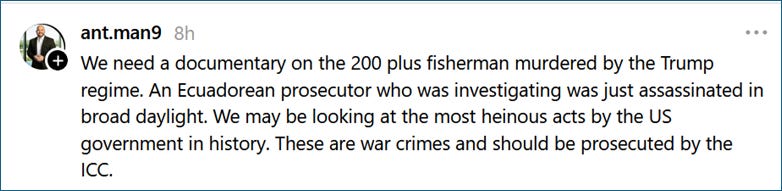
This is obviously a coordinated campaign to silence those who raise the alarm about Trump’s illicit war against so-called drug smuggling in regional fishing boats.
Let me tell you what those boats are like, as I’ve spent months at sea working on them.
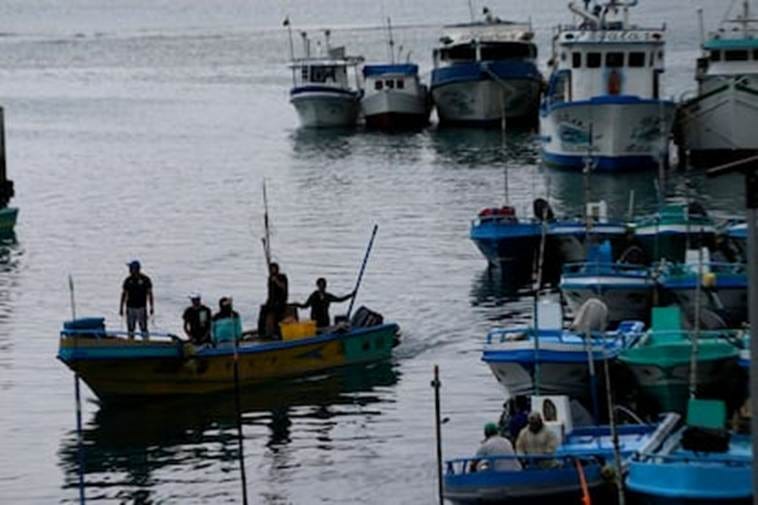
The Fiorella was a long-liner, which meant it pulled a line with hundreds of hooks on it. We would call it a troller. While fishing nets are often more efficient, the beauty of the line is that the fish are not marked by a net, so they are more valuable.
The work starts before dawn, with the lines rolled out and the bait set. It takes hours of care to get it into the ocean. Harvesting the catch is easier, because a motor pulls in the line, but you have to remove all the fish and store them in the ice hold.
On the fourth day of its fishing trip for marlin and tuna, the Ecuadorean vessel Fiorella reported that it was being subjected to sustained monitoring by aircraft, patrol boats and drones bearing US markings.
Juan Carlos Valencia, the fishing boat’s captain, sent daily satellite messages to his family expressing his growing concern. He was born by the sea and started out in the trade as a child. It was the only thing to do in his small town, one of Ecuador’s dozens of fishing ports.
On the fifth day skiffs from the boat headed out to lay out baited hooks; they heard cries on the radio and saw a large column of smoke in the distance. The two crew members in one of the skiffs were the only ones to return from the fishing trip alive.
Nothing more was heard from the Fiorella or the second skiff.
No one boarded the fishing boat to see if there were any drugs; no one gave the fishermen a chance to explain their work.
They were just blown up like a target in a video game.
They had families: wives and children who depended on them for food and expenses.
A fisherman in Ecuador makes between $130 to $450 a month.
A military drone operator in the American forces makes about $10,000 a month.
Stephen Miller, the US Deputy Chief of Staff for Policy, and Homeland Security Advisor, makes about $16,000/month. Not counting the benefits. He has a net worth of between $1-2-million.
Trump himself took $13-billion from Venezuela and no one can find the money.
Miller has been the chief advocate of the boat-burning policy in the White house. He got Trump to go along with it by showing him exciting videos of boats exploding to justify blowing up speedboats in the Caribbean as self-defense.
These boats were by no plausible definition “armed combatants” threatening the United States; the Trump team just needed to adapt words like “terrorist” and “mass destruction.”
The administration produced no evidence that Latin American gangs had committed or planned terrorist attacks inside the U.S; they simply asserted that these gangs and cartels were terrorists.
Congress had authorized no such war against cocaine smugglers.
But Trump signed a secret directive for the U.S. military to commence using lethal force against designated drug cartels and gangs.
Trump, who had publicly celebrated such strikes as awesome displays of American military power, loved the videos and sometimes posted them on social media.
The administration refused to release its detailed legal rationale for the strikes and said little beyond broad assertions that these were “narco-traffickers”.
It soon emerged that the administration was hiding something.
In the first attack on a fishing boat, the American strike had not killed everyone on board.
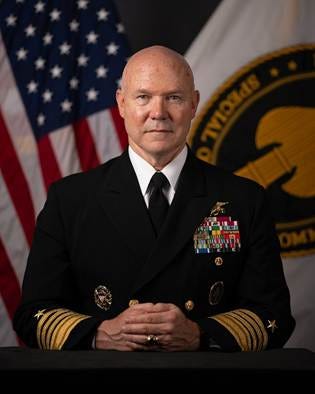
Two men climbed onto the overturned hull and waved for help, a signal that they were not a threat. Then Frank M. Bradley, the three-star commander of the Joint Special Operations Command running the mission, ordered additional strikes, which killed them.
In the weeks and months that followed, the strikes expanded to include other groups, including Colombians suspected of ferrying cocaine in the Eastern Pacific Ocean.
By early November, the U.S. had a larger military deployment in the Caribbean than at any time since the Cuban Missile Crisis of 1962.
Strikes by the United States under Trump’s pretext that they are transporting drugs are considered extrajudicial executions - deliberate and illegal killings – by international law and organizations like Amnesty International.
The strikes have had no effect on the flow of drugs into America. In fact, the price of drugs has gone down, which indicates that the supply has increased.
There have been more than 60 strikes that have been acknowledged to date, with other cases where the boat just disappeared.
The Fiorella hit was not announced by Trump, nor were the strike against other vessels like the Negra Francisca Duarte II and the Don Maca.
“It’s as if the ship simply vanished and no one cares how it happened,” said Ana Piquer, Amnesty International’s Americas Director.
The investigations have taken place in a climate of increasing violence against justice operators by organized crime in the country. It was in this context that Gloria Alexandra Bravo Cedeño, the prosecutor in charge of the case, was murdered in the city of Manta on 14 June.
Ecuador is a savage place to search for justice. Its State’s Office of the Attorney General has publicly reported on evidence that criminal structures have bribed judicial officers to allegedly obtain favorable decisions, changes in court make-up, unjustified procedural delays, and penitentiary benefits. At least 19 judges in various regions and at various levels of the judiciary are involved in allegations of corruption.
Which makes it obvious that the killing of Gloria Alexandra Bravo Cedeño was not your normal ‘legal corruption’ killing.
It was planned from afar, by an agency that had an altogether different view of killing.
Killing as normal.
Under a president who loves to push for death, be it among prisoners, innocent arrestees, or ‘labelled’ terrorists.
Or fishermen trying to bring home a few hundred dollars to his wife and children.
Juan Carlos Valencia was 36 years old.
Just FYI, the deadly US airstrikes against alleged drug smugglers in the Caribbean and Pacific Ocean have not reduced the quantity or purity of the cocaine reaching the United States, according to analysis by the DEA and the Pentagon.
Also worth noting: Trump issued a full presidential pardon to former Honduran President Juan Orlando Hernández, who had been convicted in a U.S. federal court for conspiring to traffic over 400 tons (hundreds of thousands of kilograms) of cocaine into the US. He stepped off a private plane wearing a crisp white shirt onto the airport runway in Honduras.
Trump did not do it from the goodness of his heart or his sense of justice. He was Motivated at the behest of his longtime friend Roger Stone.
Connections matter.
Unless you are at sea.
On a longliner.
Or trying to prosecute people who kill fishermen at sea.
Like lady doing a noble job, with honor.
Something Trump would never understand.
Some day, there will be an accounting.
It’s the only thought that keeps me sane.
Thank you for following Barry’s Substack, focusing on the meaning behind the headlines. A regular summary of a topical book will provide more depth to enable full subscribers to stay ahead of the conversation.
In the coming weeks we will look at WHAT IF THE PRESIDENT IS AN IDIOT – Trump, power and the death of serious politics – How a reality show became a presidency.

PS - If you have enjoyed this article, please consider buying me a Coffee!
Comments
Nothing yet. Say the first thing.
Sign in to join the conversation.