
Ukraine has just made another breakthrough in military flexibility.
The country has extended their brilliant use of innovation in drone warfare to the front lines.
Any soldier in a Ukrainian army unit who needs an improved kind of weapon to fight the Russians in front of them, can now go to an online catalogue, place their order and receive the specific weapon(s) within a week.
All the latest, newest gear is there. Need an interceptor drones, an unmanned ground vehicle or some electronic warfare equipment? Just check your catalogue and press ‘order’.
This is defence procurement on steroids.
This is Amazon for the Amazonian warriors.
In traditional armies, like the American army in WW2, units went in to fight with specific weapons that they had received months before. Generally, there would be no changes until after the war was over. Then the defence department would spend years approving the designs of any new weapons.
In the new Ukrainian system, the army units generate their own demand, manufacturers compete on field performance, and delivery data pinpoints any places where the delivery system slows down.
Each army unit gets what it needs, right away.
This is the world of ‘fight-flex’, Ukrainian style.
And for the Russian attackers, it means that if they have come to a standstill, their world will come to a horrible end within a week.
This is the flexibility brought to the Ukrainian front line by Brave1 Market, a government institution that acts as a hub for defence innovations.
It is an inclusive platform; Brave1 and NATO have a joint innovation programme, for example, called UNITE. It is the first joint innovation grant program designed to bring together Ukrainian defense companies and companies from NATO member states to develop cutting-edge technologies for the battlefield.
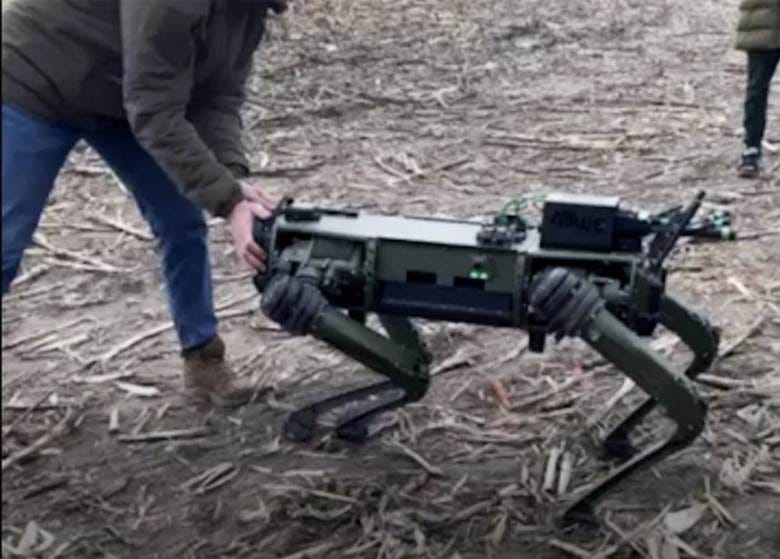
As an example, Brave1 defense technology cluster engineers have developed a ground robot featuring an AI-powered automated turret. This innovative complex can autonomously detect and destroy enemy drones thanks to the built-in artificial intelligence system. The AI turret analyzes targets, recognizes threats, and instantly responds to them, all without human intervention.
It can also transport cargo, evacuate the wounded, or conduct engineering operations, including minelaying.
Brave 1 is administered through Ukraine’s online public procurement platform, Prozorro. To apply, go here; application deadline is August 7th for the UNITE-NATO program. You need to be part of a joint teams consisting of one Ukrainian company and one company from a NATO member state. So far, that includes the US, though there is no telling what Trump might have done in the past two or three hours.
Ukrainian military units earn e-points through the “Army of Drones Bonus” program by recording and verifying combat successes—such as eliminating enemy personnel or destroying equipment—and uploading video proof to the DELTA Ukraine situational awareness system. These points act as a digital currency to order equipment directly through the Brave1 Market.
The 3rd Separate Assault Brigade is the first unit to receive drones via this Brave1 Market, part of the upgraded Army of Drones Bonus program. The brigade is considered one of Ukraine’s most elite military units, and is mostly composed of combat veteran volunteers from other Ukrainian units.
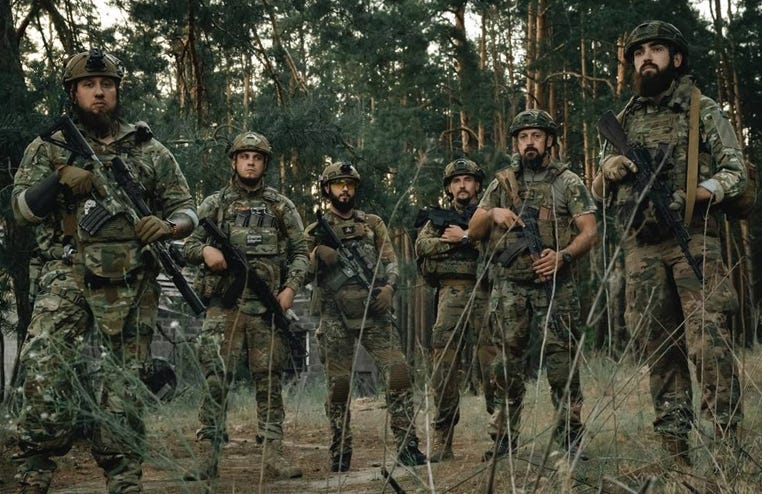
It took only 6 days from placing the order to the brigade’s reception of the equipment on the front line.
This is like a “rewards” system, only you get points for confirmed enemy hits instead of purchases.
The ePoints can be exchanged for drones and electronic warfare equipment via Brave1 Market. The platform offers over 150 drone models alone from 40+ Ukrainian defense tech manufacturers, with direct delivery enabled by DOT-Chain Defence — reducing average delivery time to about a week.
The system ensures that the most effective units on the battlefield are rewarded quickly and transparently.
And each unit is treated as if it were a worthy and unique part of a larger system, with ownership of its own opinions and needs.
More than 700 Ukrainian manufacturers have listed 4,000 products, with 400 products then available for ePoints.
Access is divided between public and restricted catalogs. Verified military personnel can use Ukraine’s DELTA system to enter the closed catalog, where sensitive equipment is listed. Units can also place orders using their own purchasing budgets through a buyer account, giving manufacturers a digital sales channel for decentralized procurement.
Instead of sending a request through layers of military administration and waiting for a centrally selected product, units choose the equipment and specifications needed for their missions.
That structure gives smaller defense developers a direct route into military purchasing - one that does not depend on relationships with a traditional big contractor.
Brave1 has signed its first strategic industrial partnership with a Western defense contractor, bringing Airbus Defence and Space into its Test in Ukraine framework. Airbus and Ukrainian units plan to co-test systems and return operational data directly to engineering teams.
The United States is also studying Ukraine’s experience in this area, particularly the Brave1 Market for defence technologies. The new platform aims to foster competition within the industry and shorten the time needed to select and purchase equipment. The initial number of systems available has not yet been announced, but the US has pledged to prioritise proven suppliers and solutions.
In other words, they will give privilege and seniority a front-row seat – totally unlike Ukraine’s system.
In just a few years, Ukraine has become an international benchmark for digital government, rising to the top of global rankings even amid a full-scale war.
Ukraine’s digital transformation advisor, Valeriya Ionan, helped direct that transformation.

In 2018, the country ranked 102nd in international digital development comparisons; by 2024, it had climbed to 5th place. According to Ionan, the turning point occurred in 2019 with the creation of the Ministry of Digital Transformation and the introduction of Chief Digital Transformation Officers (CDTOs) at both national and regional levels.
Ionan has a long-range vision: Ukraine is already moving toward the next phase of digital evolution: the Agentic State. [see her post] Instead of merely digitizing services, the government aims to proactively anticipate citizens’ needs. Ukraine is building its own AI Factory and developing a national large language model (LLM) named “Siaivo.” The next step is Diia.AI, an AI agent within the app that will deliver public services directly, minimizing bureaucratic friction. The goal is not just operational efficiency, but a state that acts proactively before problems escalate.
The big question for everyone in the future will be whether they are comfortable with autonomous AI systems that can manage complex public administration, workflows, and crisis responses with minimal human intervention.
But that is not Ukraine’s problem at the moment. Its problem is; ‘how to squeeze every possible advantage out of brainpower to overcome hordes?”
‘Social governments’ like those in Europe and Canada require close cooperation with businesses and civil society. Technology is never be treated as an end in itself—it is simply a means to support citizens and ensure that society continues to function, even – in fact, especially - when nothing goes according to plan. Ukraine certainly fits that bill.
Ukraine’s units have spent points on cameras, receivers, navigation equipment, controllers, software and other components, letting soldiers modify systems for specific operating conditions.
The system treats the soldiers as if they were valued member of society, with a brain capable of selecting their own defences. It is very far removed from the centralized ordering chain used by most militaries, which (often unintentionally) end up treating their soldiers as valueless robots.
Suppliers can see how products rank, how many missions they have completed and which units use them most.
This creates a feedback loop between battlefield performance and purchasing.
Manufacturers get evidence of performance without waiting for a years-long procurement review. The process boosts local manufacturing; 95% of the gear sold is Ukrainian-made.
The state collects information that can shape larger centralized contracts.
Already more than $700-million worth of equipment have been shipped in the first part of 2026.
Brave1 is led by former banking CIO Andrii Hrytseniuk; trust the digital world to bring innovation to the front line. While Trump in the US is using digital approaches to enrich himself, Ukraine has tapped its philosophies to save the state.
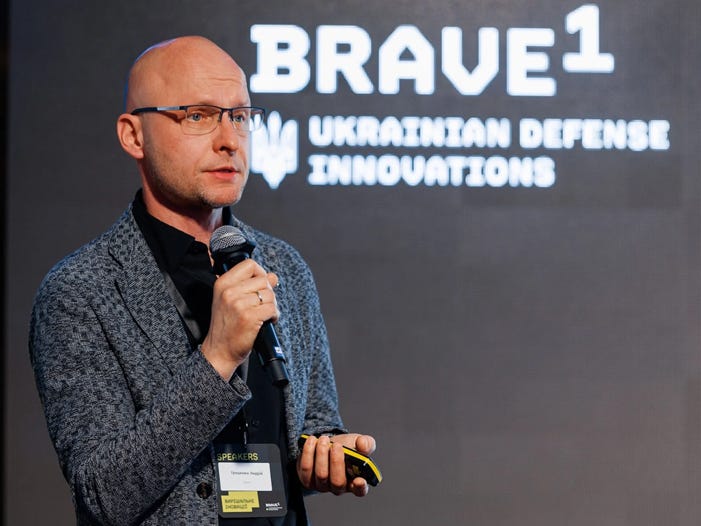
Before taking over Brave1 in 2025, Hrytseniuk served as CIO and board member at PrivatBank and Sense Bank.
He specializes in digital transformation and product development.
And now battlefield prowess.
Amazon for the Amazons!
Ironically, Russia’s own version of “Amazon”, a distributor called Wildberries, has suffered from some unfortunate product loss when their warehouses blew up during Ukrainian drone strikes. Some 15% of their capacity disappeared in a day.
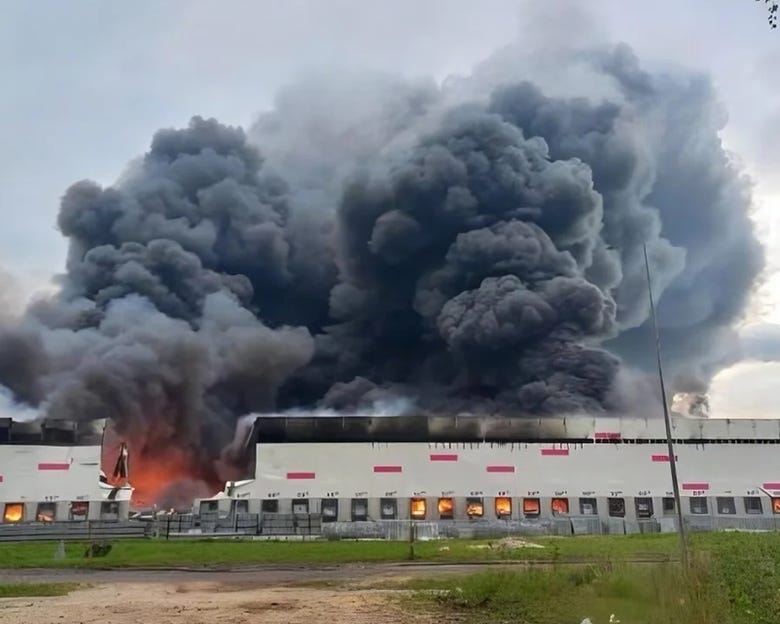
There was no word on whether those drones had been ordered from a Market1 catalogue, but I don’t see why not.
It looks like you could order anything there.
It’s innovation to save a nation.
Slava Ukraini!
Thank you for following Barry’s Substack, focusing on the meaning behind the headlines. A regular summary of a topical book will provide more depth to enable full subscribers to stay ahead of the conversation.
In the coming weeks we will look at WHAT IF THE PRESIDENT IS AN IDIOT – Trump, power and the death of serious politics – How a reality show became a presidency.

PS - If you have enjoyed this article, please consider buying me a Coffee!
No posts
Comments
Nothing yet. Say the first thing.
Sign in to join the conversation.