
Text within this block will maintain its original spacing when published
I cannot worry
about what lies beneath the surface,
so I walk into the fragile dusk,
breaking the backs of field mice
still asleep under the snow.
The sunlight that does not reach me
illuminates the distance
between this world and God’s,
where winter is simply the white
of perfect concentration.
I would like to believe in God,
just as I would like to believe there is an angel
weeping beneath the Chinese elms,
but He is an abstraction, like forgetfulness
or mathematics. In the mind of God,
winter can be summarized as one dark tree!
And yet, as I walk out over the frozen pond,
the pure white of this winter
enters my mind, and I become more open,
like a clearing in the woods
where light accentuates the dead underbrush
without emphasizing its ugliness.
And so I can live with my faults.
I can be touched
and not feel like a passing shadow.
As promised, I return to talk a bit about Robert Pinsky’s Sounds of Poetry and the influence it had on my particular brand of reading. I don’t know when I came across Pinsky’s book, but I do remember referencing his sequence of it → ought → awed and the way small changes so significantly impact the “feel” of a word with reverence. Recognizing the importance of individual sounds changed my view of English. I also suddenly felt vindicated for being frustrated during poetry readings when a speaker would pause at the end of the poetic line rather than reading the sentence as logic or punctuation dictates. Pinsky encouraged (and I agree) reading a poem aloud straight through, and noticing that the line breaks (what he called “rhythmical units”) will naturally find their way into your reading. They are a tool that the poet uses to visually emphasize what your voice would naturally do.
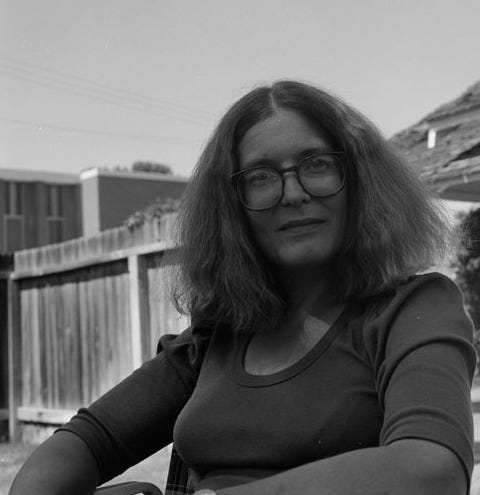
With that, we can transition to Marcia Southwick’s piece from her 1980 banger The Night Won’t Save Anyone. This book happens to be hard as all fucking hell to get hands on so if you stumble across it in a used bookstore somewhere, do yourself a favor and snatch it up immediately.
The title piece from the collection is honestly probably my favorite but it’s a bit long for this place. “Dusk” is the perfect length and honestly has the perfect lines to highlight Pinsky’s point.
I love the opening of “I cannot worry/ about what lies beneath the surface” not only because it is clearly the sort of thing that would be said by someone who is at least partly worried about what lies beneath the surface (otherwise why mention it) but also because it has this sort of rhythmic rise and fall that is highlighted by the sibilance of “lies” and “surface”. The isolation of the first three words almost makes up for the lack of sibilance and helps to mimic the rhythm coming down the line. I cannot worry - about what lies - beneath the surface.
“Fragile dusk” pairs softness with threat, particularly with the heavy f/d/k sounds that cause the voice to linger longer on the words. Southwick slips some horrific violence in with such ease that you have to go back and let your brain really absorb what the line is actually describing. “breaking the backs of field mice/ still asleep under the snow.” The b/k plosives provide literal popping that still somehow gets washed away by the smooth, flowing “s” sounds that continue to dominate the sentence.
In the next lines, Southwick creates both physical and conceptual distance by delaying the verb and fracturing the meaning of the sentence, and in the process she creates an image of an abstraction. “The sunlight that does not reach me/ illuminates the distance/ between this world and God’s,/ where winter is simply the white of perfect concentration.” The central prepositional phrase is dense with alveolars, which helps mark the divide between our world and the divine.
The poem takes a slightly confessional and plainspoken turn in the middle, while still keeping the vertical logic that has been built. This is a world where things are found beneath, including an angel. A crying angel is a tragedy like those broken mouse backs. The specificity of “Chinese elm” both grounds what would otherwise be a really ethereal image and also makes it sadder. Chinese elms are deciduous trees and are pretty wispy. Anything crying under one in the middle of a snowfield is going to look pretty damn pathetic. “but He is an abstraction, like forgetfulness/ or mathematics” pivots slightly by comparing the loss of structure in forgetfulness to the formalization of structure in mathematics. There’s a bit of contradiction there that probably fits the speaker’s feelings about God.
"In the mind of God,/ winter can be summarized as one dark tree!” This exclamation feels playful and epiphanic (I can honestly say I have never used that word in conversation, so it was fun to bust it out here). But it also brings this image of a dark silhouette against the whiteness that we were just told was perfect concentration. So winter is both the concentration and the distraction. Goddamned contradictions abound.
The hinge of the poem happens with the “And yet,” where the speaker suddenly acknowledges what is under her feet. The unknowable white is replaced with a frozen pond. There’s an argumentative quality to it, as if she’s pushing back against everything she’s stated about winter and God and the world so far. The poem opened with the speaker avoiding thinking about what was under the surface, and now she is well aware of the danger and goes anyway. She is free, but she isn’t suddenly delusional. Those long-O rounds in “out over the frozen pond” slow the breath, which is how the poem teaches acceptance. There’s an importance to pacing. The light accentuates the dead underbrush, it doesn’t beautify anything. Something here to be said about embracing the ugly truth. Not like a myopic focus on the awful (“without emphasizing its ugliness”), just a healthy dose of realism and acceptance that spill beyond the metaphysical into the psychological. “And so I can live with my faults./ I can be touched/ and not feel like a passing shadow.” Acceptance is some strong shit. The layering is gone. We’re on the surface now, where ephemerality and avoidance are exchanged for realness.
No posts
Comments
Nothing yet. Say the first thing.
Sign in to join the conversation.