
There’s a certain kind of conversation I love having about movies. The kind that goes sideways, lingers over details, changes your mind mid-sentence. The kind where someone says something you disagree with and you spend twenty minutes working out why instead of just instantly trying to prove them wrong. Those types of conversation are dying, and a combination of social media and Star Wars fans (deep sigh) are to blame.
The Loudest Voice in the Room Wins
The internet gave everyone a microphone, and the first thing we figured out is that nuance doesn’t travel well. Nuance doesn’t get clicks. Nuance doesn’t get shared. Nuance sits on places like Substack all while the hot takes set TikTok, Twitter, and YouTube on fire.
We’ve built an entire media ecosystem for politics, culture, sports, and yes cinema, around rewarding the most extreme possible reading of any given thing.
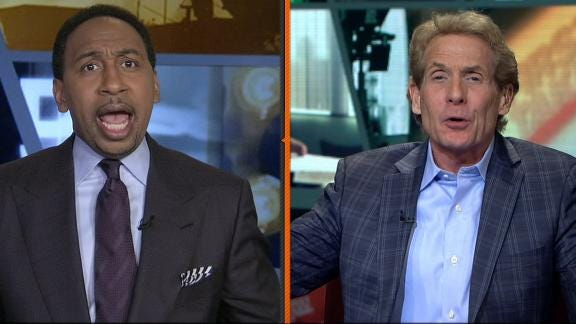
If you follow the NBA, just think of Skip Bayless, Stephen A. Smith, and all the clones they’ve inspired… these guys didn’t just poison sports discourse, they built a template for how to get attention, regardless of the topic. There’s zero analysis: just pick a side, dig in, and get as loud as possible. Volume looks like conviction and conviction looks like authority… whereas nuance reads as weakness.
We Don't Talk About Movies Anymore
Anytime I meet someone who’s into movies, there’s a brief window of genuine curiosity: what do you love, what have you seen, how did you get into cinema?And then, almost immediately, the qualifiers begin and my warning signals go off.
I found out one of my coworker was a Star Wars fan shortly after the Disney sequels came out. I was excited at first but within five minutes of this guy opening up, I already knew we were on different planets. Not because we disagreed, but because every point he made left no room for conversation:
‘Wow, I can’t believe you actually liked the prequels.’
‘The sequels are woke.’
‘Rey is a Mary Sue.’
‘Kathleen Kennedy should be prosecuted for crimes against humanity.’
All his points were just regurgitations of my Twitter feed, and any chance for a real conversation got replaced by his condescending tone.
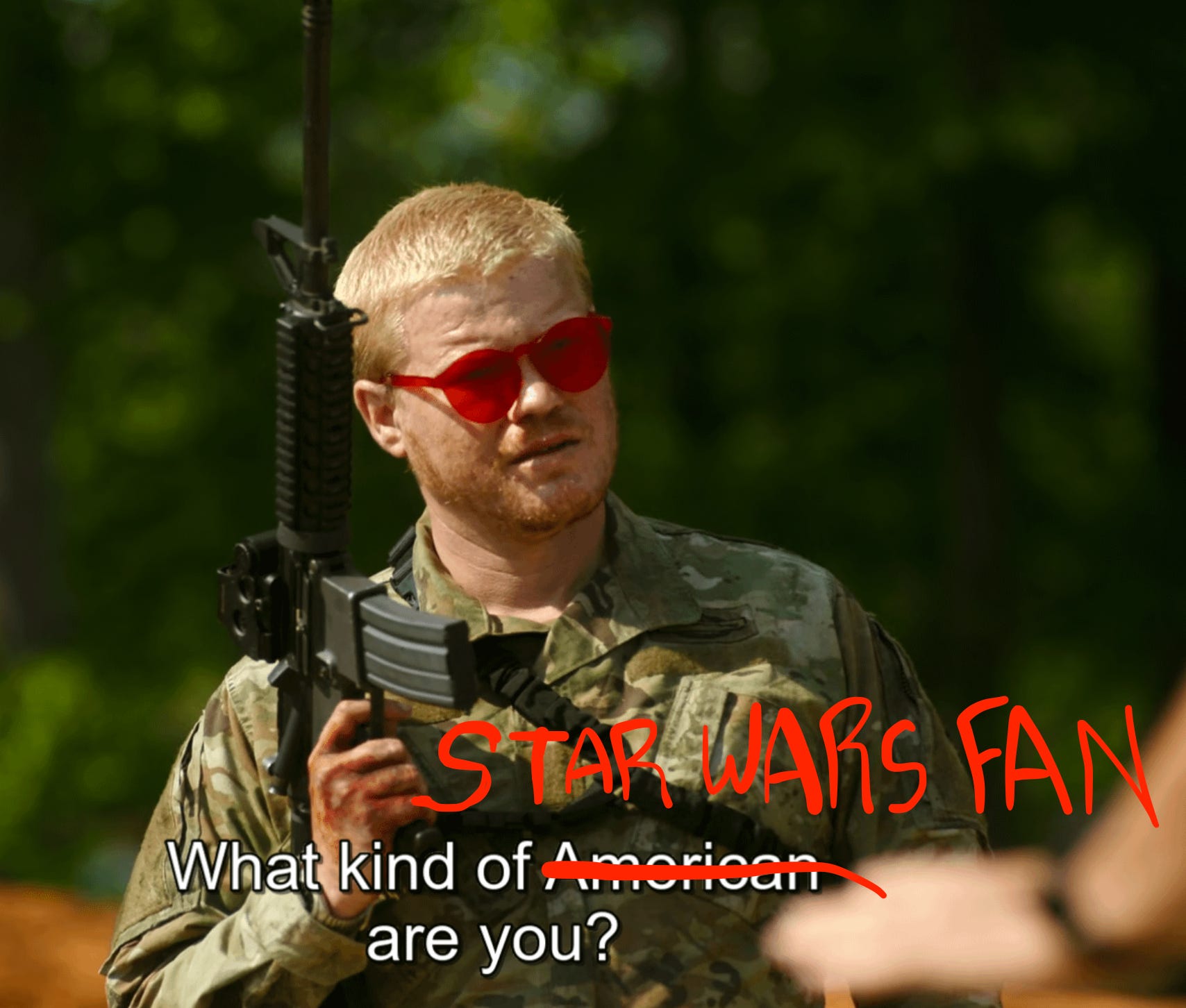
He didn’t want to talk about Star Wars, he only wanted to deliver his verdict and judge my opinion. That’s what the internet has done to us, we just monologue instead of dialogue.
This might seem like a Star Wars problem, but anything that gets big and popular eventually attracts this kind of braindead toxicity: DC and the SnyderBros, Harry Potter with everything surrounding the Snape casting, and yes, you can also see it with the people who think A24 is a movie director and the NolanBros who are quick to judge when they find out you still watch Marvel movies.
A lot of this pretentious elitism traces back to the Star Wars prequels. I was a teenager when Phantom Menace came out. I loved it. The crowd I watched it with was buzzing. Most of the kids in my grade liked it. And then came the hot takes from the message boards, our first version of social networks, and suddenly there was this authoritative chorus telling us dummies that the prequels were objectively bad and that we were idiots for liking them.
I watched people reverse-engineer their own opinions in real time. Friends who enjoyed the prequels going back to say they hadn’t. Not because they rewatched them and changed their minds, but because the consensus had shifted online and they’d shifted with it.
I blame Red Letter Media for how we got to this point, they essentially built an audience on this nitpicky mode of criticism. Their infamous Phantom Menace breakdown identified the absence of a clear protagonist as a structural flaw amongst many other ‘plot holes’. But here’s the thing: I’ve watched over a 2,000 movies and never once asked myself who is the protagonist here? Because that’s not how most people watch movies. We’re not robots going through a checklist… loving a movie is like falling in love, it’s all feeling. RLM’s cold procedural approach towards criticism can identify plot holes, but it can’t account for why something still works despite apparent weaknesses, and the best conversations about movies live in that exact contradiction.
What grew out of Red Letter Media was CinemaSins. And CinemaSins is where film discourse went to die. The entire premise of: here are seventeen things that don’t make sense in The Last Jedi, treats the act of watching a movie like submitting an engineering report… I can’t believe it, your telling me the SPACE WIZARDS movie isn’t realistic?! 😮 😮 🤯
These types of critics (a stretch to even call them that) trained an entire generation of moviegoers to approach cinema adversarially, hunting for errors rather than opening themselves to an experience.
No Room for Nuance
What’s most broken about how we talk about movies today is the complete collapse of the middle.
The algorithm needs a verdict. Letterboxd needs its rating and punchy one-liner. TikTok needs a hook. And it’s always this is the greatest thing ever or this is the worst movie ever made… There’s no space for nuance because complicated feelings don’t get engagement.
The best piece of film criticism doesn’t just tell me whether a movie is good or bad. It tells me why, and it reveals something I missed: an angle, a metaphor, a connection that makes the experience richer. That’s what criticism is supposed to do, it’s not here just to deliver a verdict… Movies are worth more than that, and the conversation around them should be too.
Thanks for reading! As always, Deleted Scenes is a 100% free publication. You can support me by subscribing or sharing this article.
Comments
Nothing yet. Say the first thing.
Sign in to join the conversation.