
Charlie Chaplin’s films were some of the first live-action movies I ever watched. They would randomly come on TV and I remember catching parts with my parents. That’s the thing about silent films, there’s no dialogue so they’re pretty easy to follow when you’re a little kid. Especially his Tramp character, it’s just a guy in a bowler hat, a unique mustache, and a funny walk.
Then you get older and Chaplin just becomes an idea, like a memory from the past. Maybe you see him again in a clip from a documentary or he gets name dropped in film class. At some point I realized I hadn’t actually sat down and watched one of his movies since I was a little kid.
So this past week I fixed that and revisited City Lights, Modern Times, and The Great Dictator. Three of his best films, three films that are about a hundred years old… and surprise, they still hold up! Not just in the comedy but in their themes as well.
City Lights is Chaplin at his most soulful. Released deep into the Great Depression, the message couldn’t be more clear: a blind flower girl mistakes the Tramp for a millionaire, and an actual millionaire only remembers the Tramp when he’s drunk. The film’s point on wealth and status is still relevant today: the flower girl, who can’t see at all, treats the Tramp better than the millionaire who can see him just fine.
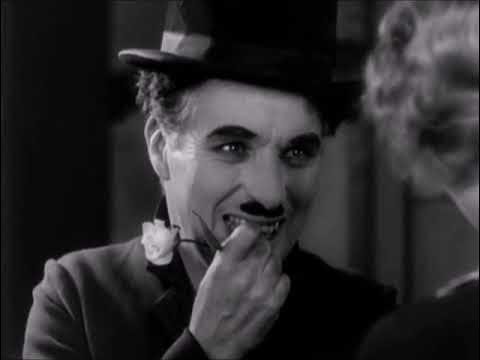
The ending is really special here… Orson Welles called it the greatest closing shot put on film: the flower girl finally sees the Tramp for who he is and the camera just sits on his face. There’s no dialogue, no swelling score, just one sweet moment of recognition that brings more emotions than most movies manage in their entire runtime.
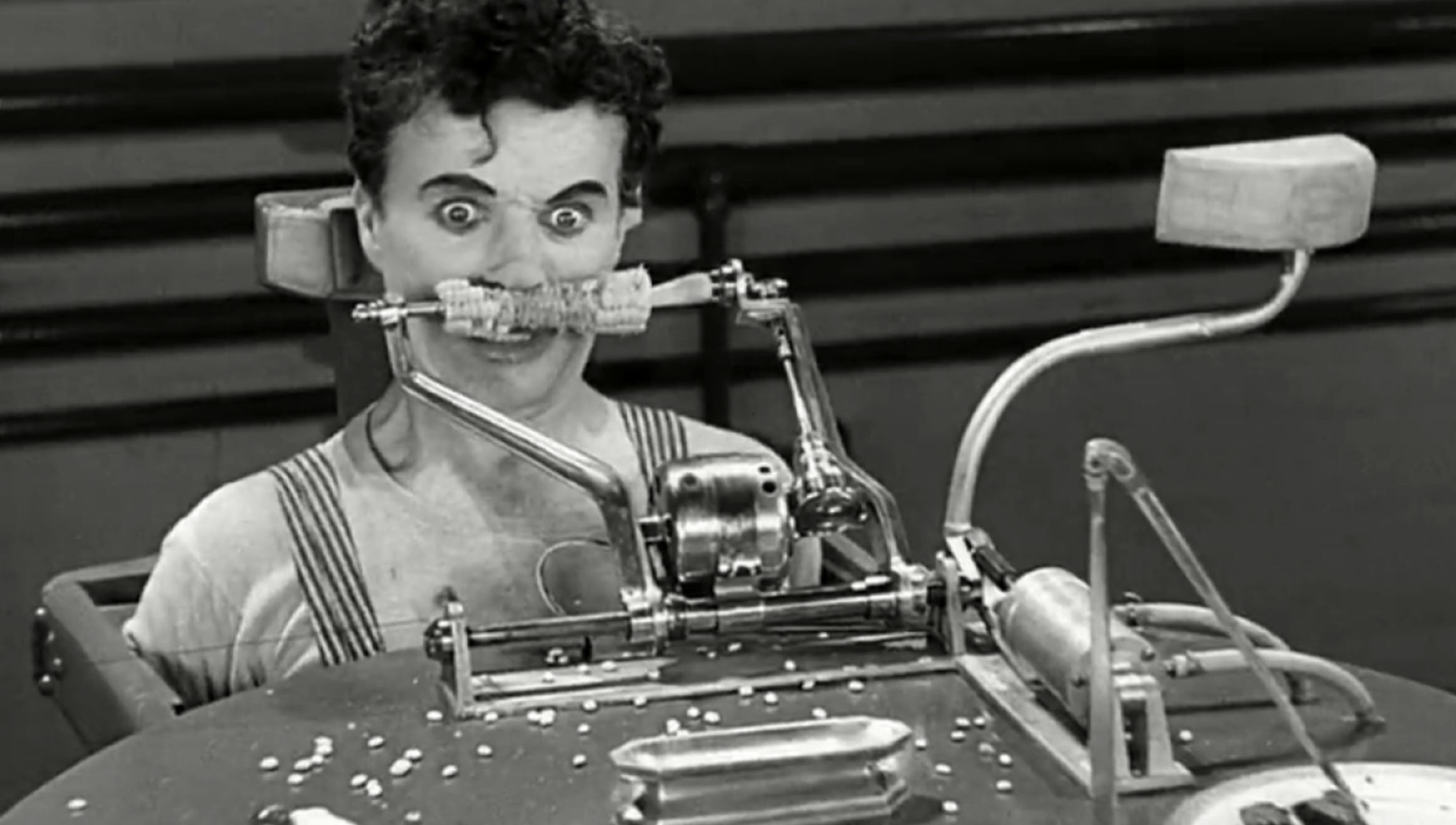
If City Lights is Chaplin’s heart, Modern Times is him at his funniest. This is the one I consider his masterpiece. It’s kind of nuts that a 90-year old movie can get real laughs out of me but everything with the assembly line and the auto-feeder plays like scenes pulled from your favorite sketch comedy show.
Chaplin’s performance is a lot more physical here… it’s all in the expressions he makes with his face and the way he moves his body, it’s the inspiration for so many future comedians, like Jim Carrey, Eddie Murphy, and Rowan Atkinson. Pay attention to how he reacts to the chaos that he often causes and you can even see a little bit of Jackie Chan in his performance.
This is also the film where Chaplin finally lets sound in, but it’s very much on his own terms. Near the end he gives us his actual voice for the first time ever, singing a completely nonsensical song. He’d held off for so long on giving the Tramp real dialogue because he didn’t want to tie the character down to one language, so instead of an actual song we get gibberish and it still works, because even his voice plays like a gag.
Modern Times is about a man getting chewed up by industrial automation, it’s the fear of getting replaced by a machine and a society that can’t figure out how a regular person is supposed to hold onto a job, a home, or whatever the “American dream” meant back in 1936. Watching it today you can’t not think about AI. People were scared of machines taking jobs back then for the same reasons people are scared today. Chaplin wasn’t predicting anything, he just told a story about mankind’s fears around technological advancement.
The Great Dictator might be Chaplin’s most important film, but it’s also his most bloated. The dual narrative with the Jewish barber and dictator Hynkel plot takes too long to pay off, so even though the Hitler parody is hilarious, you spend most of the runtime waiting for the two stories to cross paths.
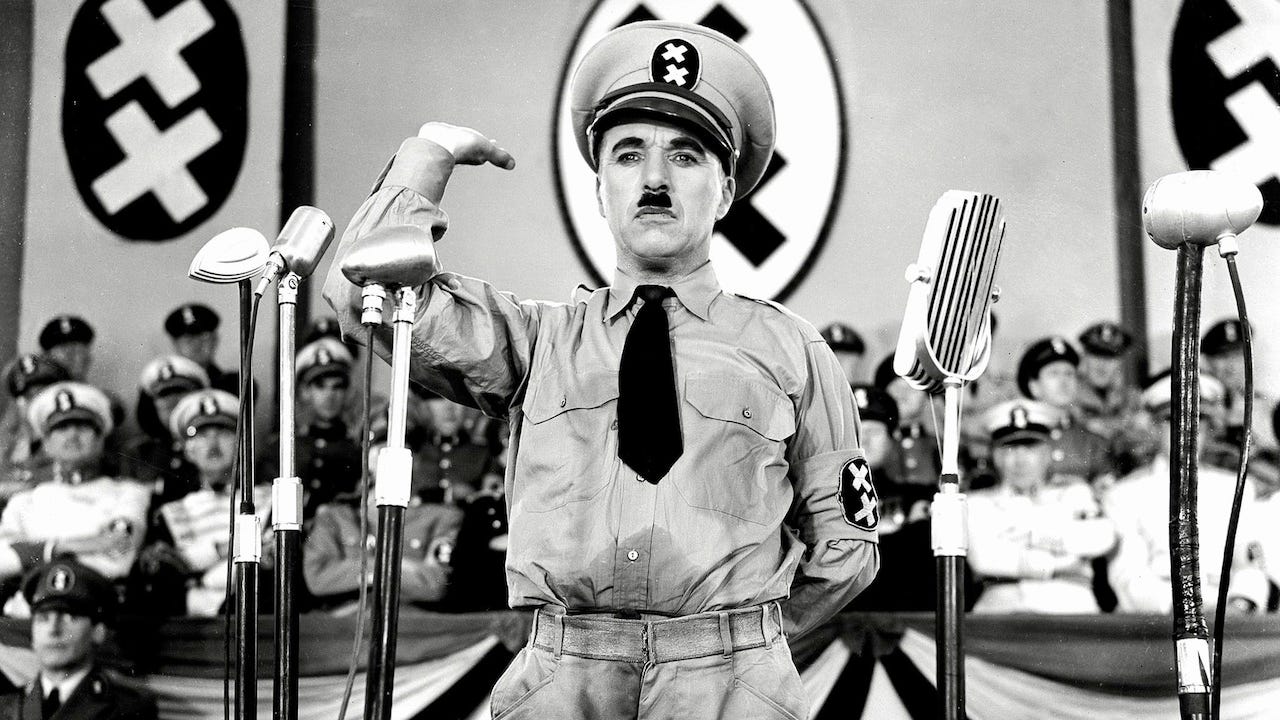
But then you get to the last scene where Chaplin drops character and just talks directly into the camera about greed, hatred, fascism, and humanity.
This final note shouldn’t work, it breaks every “show don’t tell” rule of cinema… the actor who defined the silent era is suddenly using his voice to make his point, but that’s exactly why it’s effective, it grabs your attention because Chaplin rarely used his voice up to this point.
The Great Dictator came out in 1940, a full year before Pearl Harbor, while the U.S. was still neutral in the war and most of Hollywood was busy not pissing off Hitler. Chaplin bankrolled a huge chunk of this film himself because United Artists was afraid of the obvious political message… Anyone can be righteous with hindsight but Chaplin chose to be righteous while it still cost him something. Revisiting it today, you don’t need too much imagination to picture this movie getting made about someone like Trump.
After this rewatch, it’s clear why Chaplin is still relevant a hundred years later, his movies still hold up: the gags are funny and these three films in particular all have something different to say about class inequality, work, technology, and fascism.
The world has changed a lot since Chaplin made these films but what he cared about hasn’t and that’s why his movies are timeless.
No posts
Comments
Nothing yet. Say the first thing.
Sign in to join the conversation.