
Across the Spider-Verse is one of the best films of the decade. And the reason isn’t the multiverse concept or even the animation, as incredible as both are, it’s because it’s one of the best movies about growing up.
It’s about the moment when the people who raised you can no longer completely protect you. It’s realizing that your parents’ idea of who you are may not match with the person you’re becoming… it’s about the things you hide from them, not because you don’t love or trust them, but because you’re terrified that them knowing the truth might change the way they see you.
That’s what makes Across the Spider-Verse so much more than a great superhero movie.
Fathers and Sons
Let’s start with Miles and his dad trying to navigate the complicated expectations between fathers and sons… it’s all the things that never gets said out loud because we don’t have the language for it. It’s never a shouting match between the two. It’s just two people who love and respect each other but can’t bridge the gap between who Miles actually is and who his dad thinks he should be.
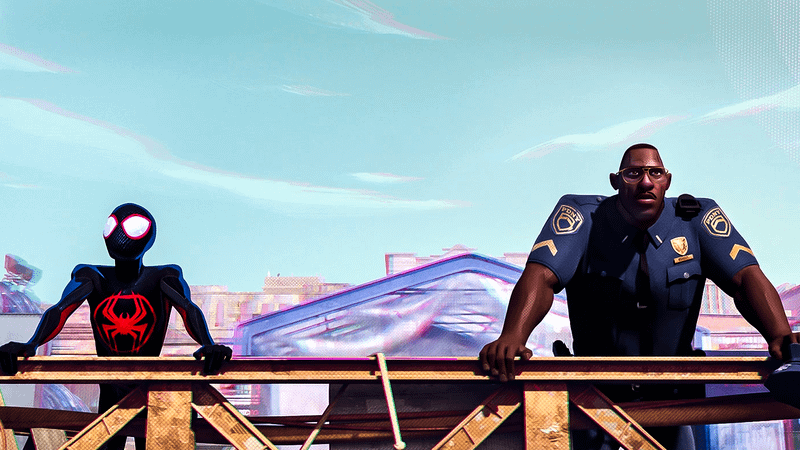
It’s instantly relatable to anyone who has ever felt the weight of a parent’s hopes, dreams, and expectations.
Jefferson has no idea he’s hunting his own son, so he talks to Spidey about his son with a mix of pride and worry…. and Miles has to sit there and absorb his dad’s opinion about who he is without being able to say a word back.
Their relationship is the father-son dynamic broken down to its rawest form: a parent forming a judgment of his son from only half the picture because the son decided, out of love, to not to give him the other half.
Jefferson isn’t a bad dad for not knowing Miles, and Miles isn’t a bad son for not telling him who he really is is.
That’s what makes their relationship so much more complicated than a simple secret-identity plot. Jefferson isn’t asking Miles to follow in his footsteps, he just wants to actually know his son. And Miles desperately wants to be known, but he can’t figure out how to do that without destroying his dad’s image of him… And that fear of being fully seen might cost him the relationship instead of deepening it.
This is something we all navigate as we grow up, whether we’re hiding behind a superhero mask or something much more personal.
Maternal Love
That same fear shows up differently in Miles’ relationship with his mom. Rio explains that she will love him more matter what, but it’s in her nature as a mother to always worry about Miles, no matter how big or strong he gets. Because nobody out there is going to take care of him the way she did.
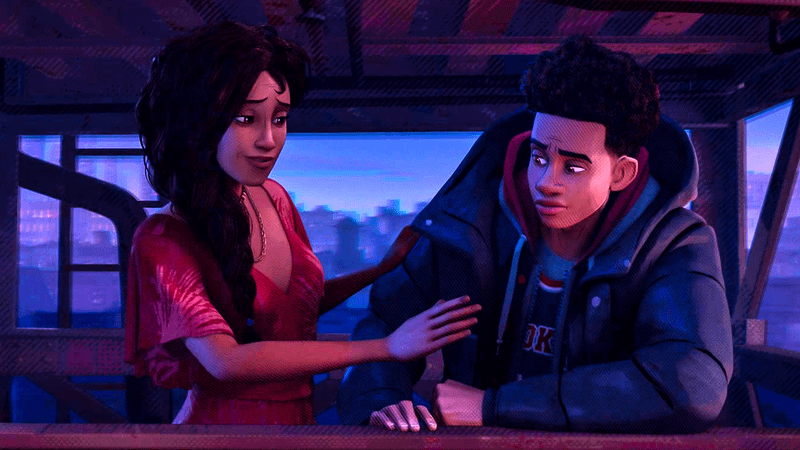
But what makes Rio so great is that she does trust Miles. She knows she raised him right. She knows who her son is at his core. What she doesn’t trust is everyone and everything else out there in the city.
Trust in your kid and trust in the world are two completely different things.
That’s what makes the rooftop scene between Miles and his mom so crushing. Miles has to sit there and receive all of that love and worry from his mom without saying a word, because correcting her means telling her everything about his super-powers… that’s the irony of the relationship, the safer he lets her feel, the further away he drifts from telling her the truth.
When you’re little, you tell your parents everything, the good and the bad, but at some point, you start doing a little mental math before you speak. You ask yourself whether telling them what’s actually bothering you is worth all the worrying they’ll do.
We start holding things back not because we don’t trust our parents, but because we love them enough to carry certain things ourselves. We know there are problems they can’t fix, and we don’t want to stress them over something they have no power to change.
That’s real love, but it’s also the moment the relationship with our parents change shape: your parents are still taking care of you, but for the first time, you’re also taking care of them. That’s growing up.
Mask Off
Which is why Miles and Gwen’s secret identities work so beautifully as a coming-out metaphor. Across the Spider-Verse understands something about coming out that a lot of stories get wrong: the fear isn’t that your parents will stop loving you, it’s that they won’t fully understand you.
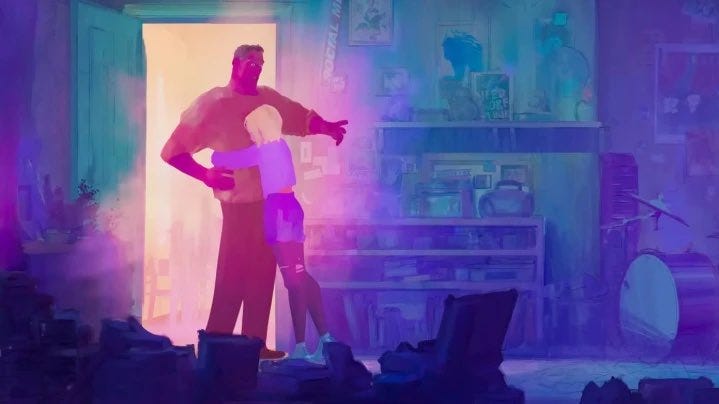
Miles and Gwen find their community through the Spider-Society and they finally feel comfortable in their own skin. And yet telling their parents who they really are feels impossible.
From the moment you’re born, your parents build up an idea of who you are in their heads. And when you reveal something they didn’t know, you’re not just revealing a secret, you’re asking them to redraw the picture they’ve had of you for years.
That’s what makes Miles and Gwen’s masks so powerful. They aren’t hiding because there’s something wrong with who they are. They’re hiding because they’re afraid of what the truth might do to the people they love.
The movie understands that growing up isn’t simply about discovering who you are. It’s about realizing that the people who love you the most will have to discover you all over again.
Break the Canon
Which brings us to the series’ central idea: anyone can wear the mask, meaning you have the power to be whoever you want to be, regardless of the expectations from your parents (or anyone else!).
In the movie, the Spider-Society calls these expectations the canon. Miles defies the expectations from his parents as well as the ones imposed by Miguel and his army… so he calls bullshit and breaks the canon. The message is simple: take charge of your life, fuck the expectations, tell your own story (Last Jedi gang represent!). This theme is also in Gwen’s arc as she rebels against her dad’s version of who she should become.
Growing up is realizing that YOU get to write your story. It’s not your parents, it’s not your mentors, it’s not your friends. At some point, you have to pick up the pen yourself.
And Across the Spider-Verse makes that idea feel exhilarating because the entire movie is built around it.
Style Becomes Story
The movie’s themes tie directly into its dynamic visual language. Across the Spider-Verse is pure candy… an inter-dimensional explosion of comic-book panels, watercolor paintings, sketchbooks, psychedelic action sequences, graffitis, and halftones.
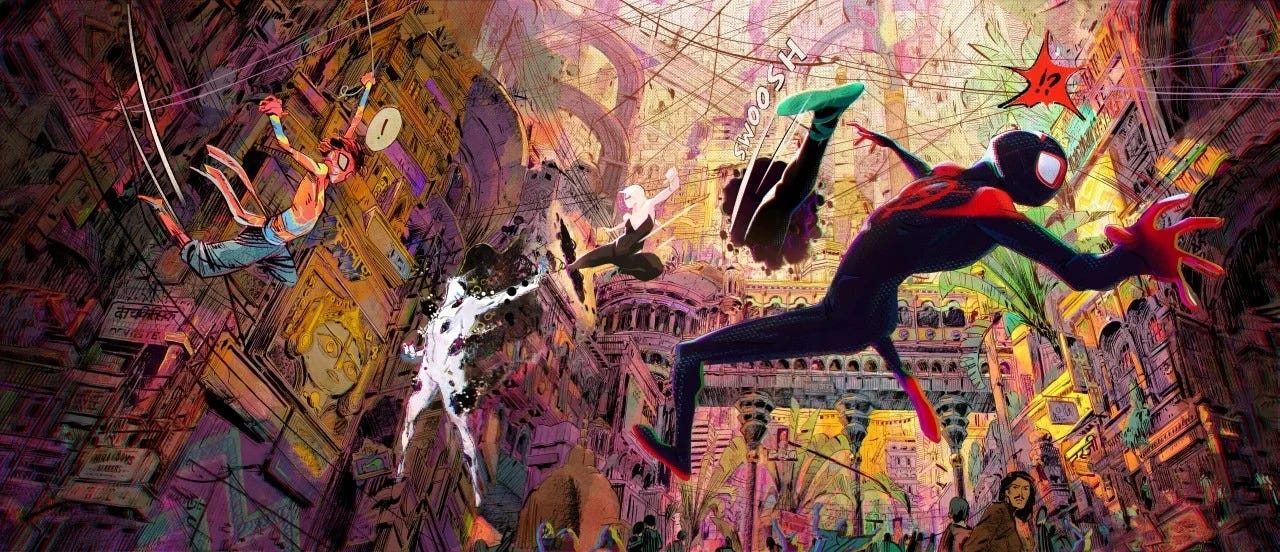
It’s an astounding technical achievement, but the animation isn’t just there to make the movie look cool and pretty. It’s the movie’s thesis expressed visually. Every character has their own visual language. Every universe has its own identity. The movie constantly changes its style depending on the character that’s on screen.
Even the music works this way. Daniel Pemberton’s score gives every characters their own rhythm, sound, and emotion.
That’s why the films feels so uniquely alive, it’s a story about finding your own identity, made by a group of artists who refused to accept that a Spider-Man movie had to look or feel a certain way. They made a movie about breaking the canon by refusing to stay inside the lines, breaking the rules of filmmaking itself.
This is our generation’s defining Spider-Man, and if they stick the landing with the third film, we might be looking at one of the greatest trilogies ever made.
Thanks for reading! As always, Deleted Scenes is a 100% free publication. You can support me by subscribing or sharing this article.
Comments
Nothing yet. Say the first thing.
Sign in to join the conversation.