
This newsletter focuses on how using English as the global language affects the way we see the world. I’m a journalist with more than 20 years’ experience in both Western and non-Western TV News. As a second-language English speaker, I believe language is culture, and I look for the hidden angles and cultural mistranslations within mainstream stories. One of the topics I focus on is Fascism, where I use my own family history of Italian fascism to see what impact that ideology still has in today’s world.
I have made a documentary, written a book and several Substack articles about the fact that my grandfather was a fascist. I have given lectures on the subject and countless book presentations. But when it comes to being a fascist’s granddaughter, I will always walk in the shadow of Alessandra Mussolini. She is, after all, the grandaughter of the man who imprinted himself onto Fascism: Benito Mussolini.
You would think, rightly, that hers is quite a difficult family history to live with. And you might then think, wrongly, that it’s pretty astounding that the granddaughter of one of Italy’s (and Europe’s) most infamous dictators has just won Italy’s version of Celebrity Big Brother, with 56% of the TV public vote and collecting a €100,000 reward in the process.
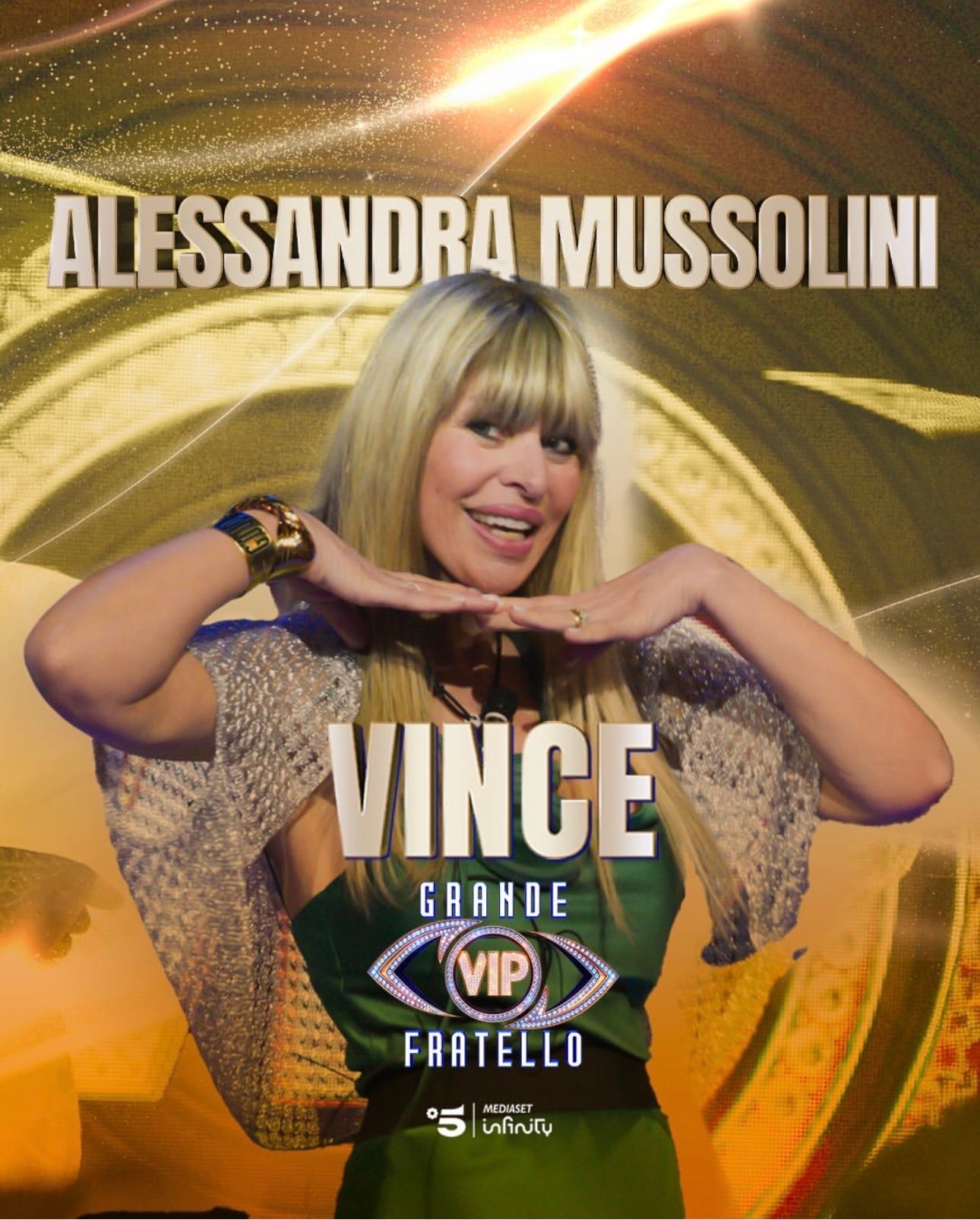
When I try to explain the enduring hold that Fascism has on Italy, I often use the example of Alessandra Mussolini. The Big Brother win is far from her first succesful foray as a contestant on Italian reality TV. Back in 2020, she came third in Italy’s version of Stricly Come Dancing/Dancing with the Stars. I have been using that example for years to explain to non-Italians the strange relationship my native country still has with fascism. The Big Brother victory deserves an upgrade on that chat.
Alessandra Mussolini is far more than a celebrity show contestant. She has been an actress, model, singer and - crucially - a politician for decades. She’s not just famous for her last name, though it certainly shone attention on her every project. Born in Rome in 1962, Alessandra is the daughter of Romano Mussolini, Benito’s youngest son, and Maria Scicolone, who just so happens to be Sophia Loren’s sister. Yes. THAT Sophia Loren.
Historical film nerds (I mean this as a compliment) who have watched my documentary Fascism in the Family , will know that in it is a clip from a film called “A Special Day” where Sophia Loren was joined by fellow Italian silver screen legend Marcello Mastroianni. The special day in question is May 6th 1938, the date of Hitler’s historic visit to Rome and Mussolini. The film has a deeply anti-fascist stance, but guess who plays the role of Sophia Loren’s daughter? Her actual niece, Alessandra Mussolini herself.
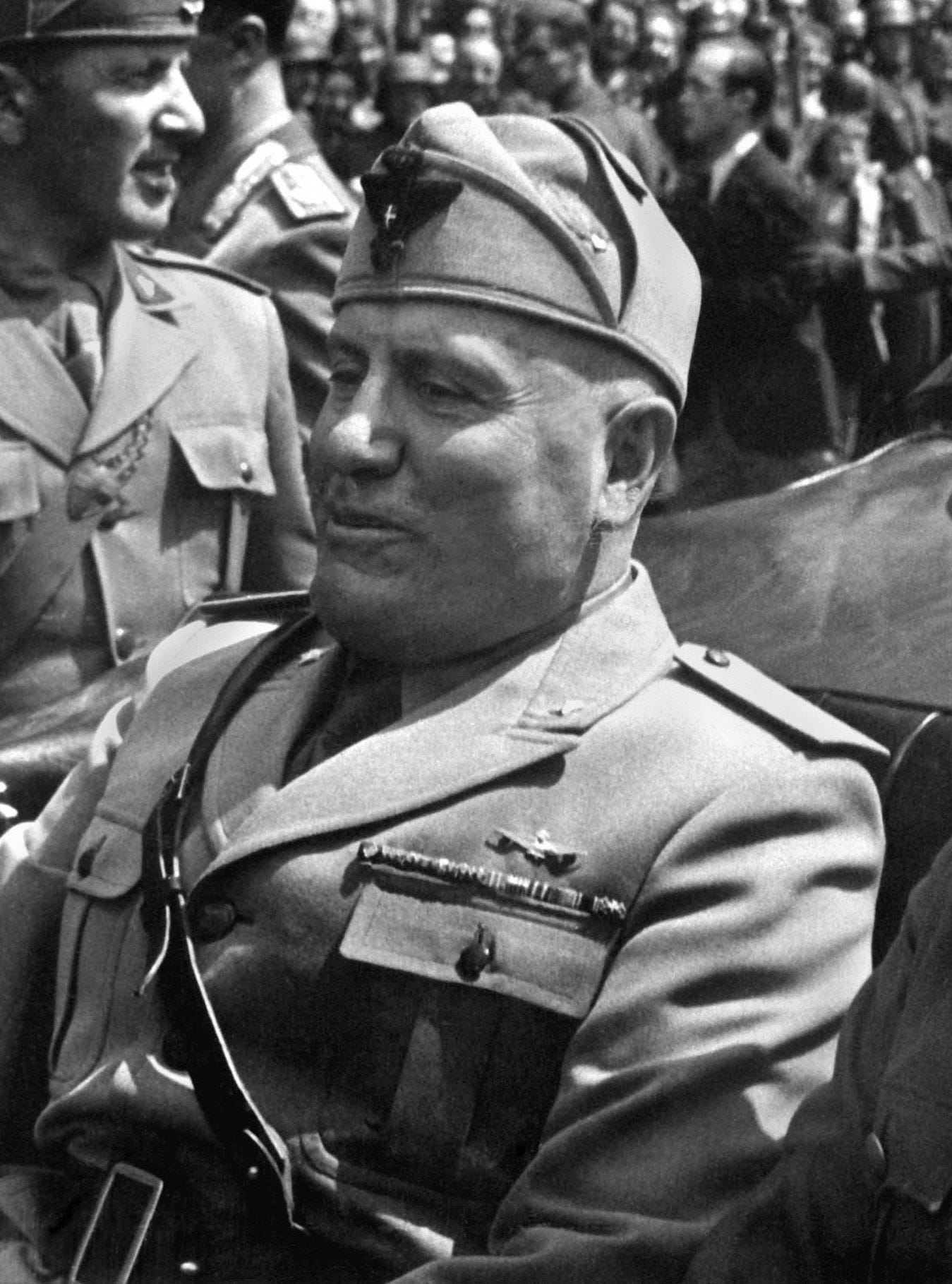
Alessandra Mussolini has never hidden the weight that her last name carries. She has talked openly about how a film producer tried to convince her to change it when she was working as a young actress, saying it might interfere with her international career. After all, her Oscar-winning aunt traded her native Sofia Scicolone for the much more anglo-friendly Sophia Loren. Just as well. I can’t see American audiences in the 1960s wrapping their tongues around ‘Scicolone’. (Shee-koh-low- neh FYI )
But the name Mussolini is different. Even if Alessandra had changed it, there would have been no hiding her heritage once she hit the spotlight.
As a fascist’s granddaughter myself ( not quite in Mussolini’s league, though it’s a strange field to get competitive about) I’ll be the first to say that you shouldn’t judge people according to the actions of their forebears. I feel strongly about this, and always bristle when someone implies I’m somehow to blame or that it’s a weight I must carry. I don’t. I talk about my grandfather and accept the discomfort and sadness that often comes with the territory, but I just do not feel guilty for something I played no part in. I’ve felt conflicted over many issues about my grandfather but never that point.
However, I’ve always been conscious that my relationship towards my grandfather and his role within fascism might have been very different had I actually grown up in Italy as opposed to Denmark. I might then have felt that his life and actions somehow reflected on my life and actions, and even if I didn’t, those around me might have. I genuinely don’t know. Alessandra didn’t have that luxury. She was born 17 years after her grandfather was executed at the end of WW2 and it must have had an overwhelming influence on her life. In the Big Brother house she spoke about a childhood incident when other children wanted to drown her in a pool because of her name was Mussolini.
She first entered Parliament in 1992, as a member of the MSI, Movimento Sociale Italiano, a party founded just after WW2 by former officials in Mussolini’s regime and which was explicitly neo-fascist in origin. The MSI then mutated into Alleanza Nazionale, an attempt by the Far Right to enter mainstream politics. To facilitate that shift, AN’s leader, Gianfranco Fini said that “Fascism was part of the absolute evil” during a visit to Jerusalem’s Yad Vashem Holocaust memorial in 2003. Alessandra was outraged and left to form her own far-right party, to stay loyal to her grandfather’s legacy. She eventually moved into Berlusconi’s centre-right coalition and is currently in the nationalist right Lega party led by Matteo Salvini, part of Giorgia Meloni’s governing coalition.
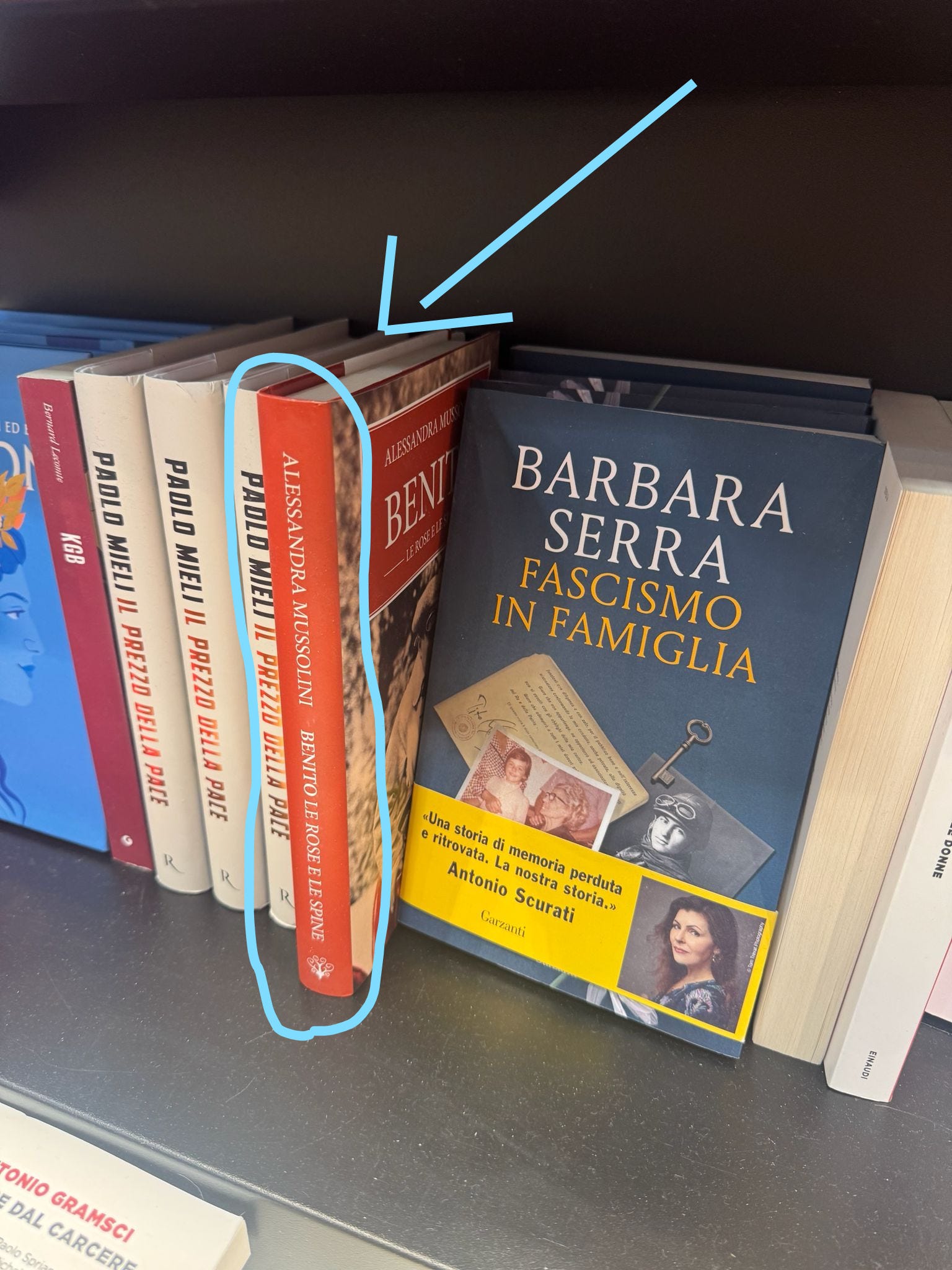
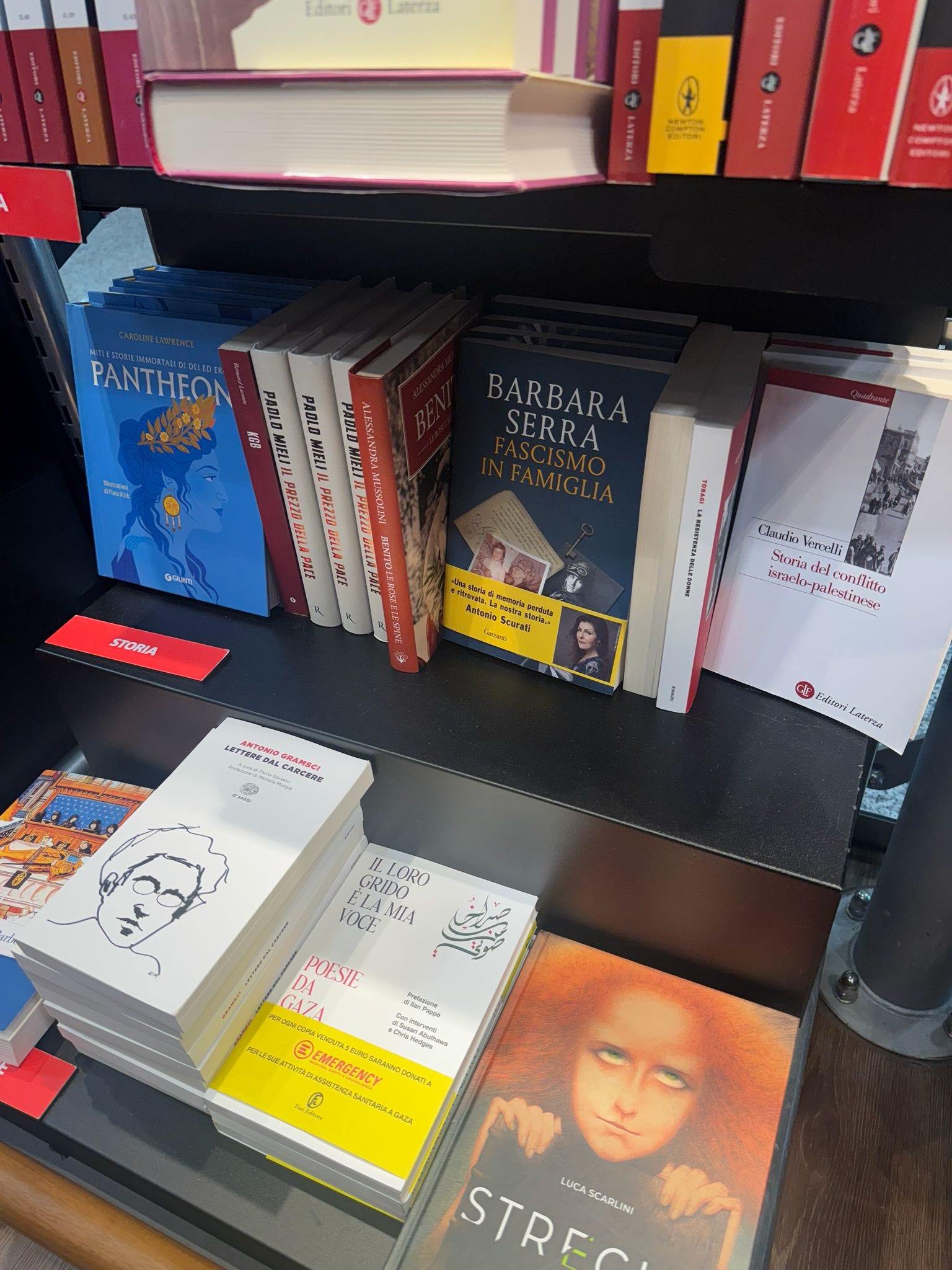
Her support for her grandfather crossed national borders too. In 2019 Alessandra had a widely publicised Twitter spat with Jim Carrey of all people (the actor from The Truman Show and Ace Ventura Pet Detective is quite a vocal progressive activist) after he posted a picture of Benito Mussolini’s execution with the caption “If you’re wondering what fascism leads to, just ask Benito Mussolini and his mistress Claretta.”. Alessandra replied on then-Twitter calling Jim Carrey a bastard.
Yes, she’s been a staple of Italian media for decades. And sure, celebrity culture and reality TV often platform controversial figures. But the real reason lies behind Italy’s complex relationship with its fascist history and the fact that the country never had a clean break with Fascism like Germany did with Nazism. In fairness, the dynamics around the fall of the two dictatorhips and the way the war ended in both countries are very different. But whereas Germany went through a process of de-nazification right after World War 2 while the Allies were occupying it, in Italy former members of Mussolini’s regime were able to form their own political party in 1946, the MSI, which Alessandra Mussolini joined decades later and which Prime Minister Giorgia Meloni’s own party can also trace its lineage to.
Only a very few Italians (thankfully) are truly nostalgic for a return to dictatorship. But it is much more common for people to make a distinction between Mussolini’s early regime (which some historians have referred to as the ‘years of consensus’) and his subsequent alliance with Germany. And because so many Italians also come from fascist families, moral condemnation is harder.
Alessandra Mussolini’s enduring role in Italian public life is in part a symptom of that. And considering that Alessandra’s son Romano Floriani Mussolini, Benito’s great-grandson, a professional footballer in Italy’s Serie B who in 2024 had a stadium erupt into fascist salutes after he scored a goal, it seems that the fascination with the surname Mussolini will endure for generations to come.
If you enjoyed reading this post, please share it with your network
No posts
Comments
Nothing yet. Say the first thing.
Sign in to join the conversation.