
News Analysis
As the Southern Baptist Convention (SBC) approaches its June 9-10 annual meeting in Orlando, the denomination finds itself embroiled in one of the most consequential internal debates in decades.
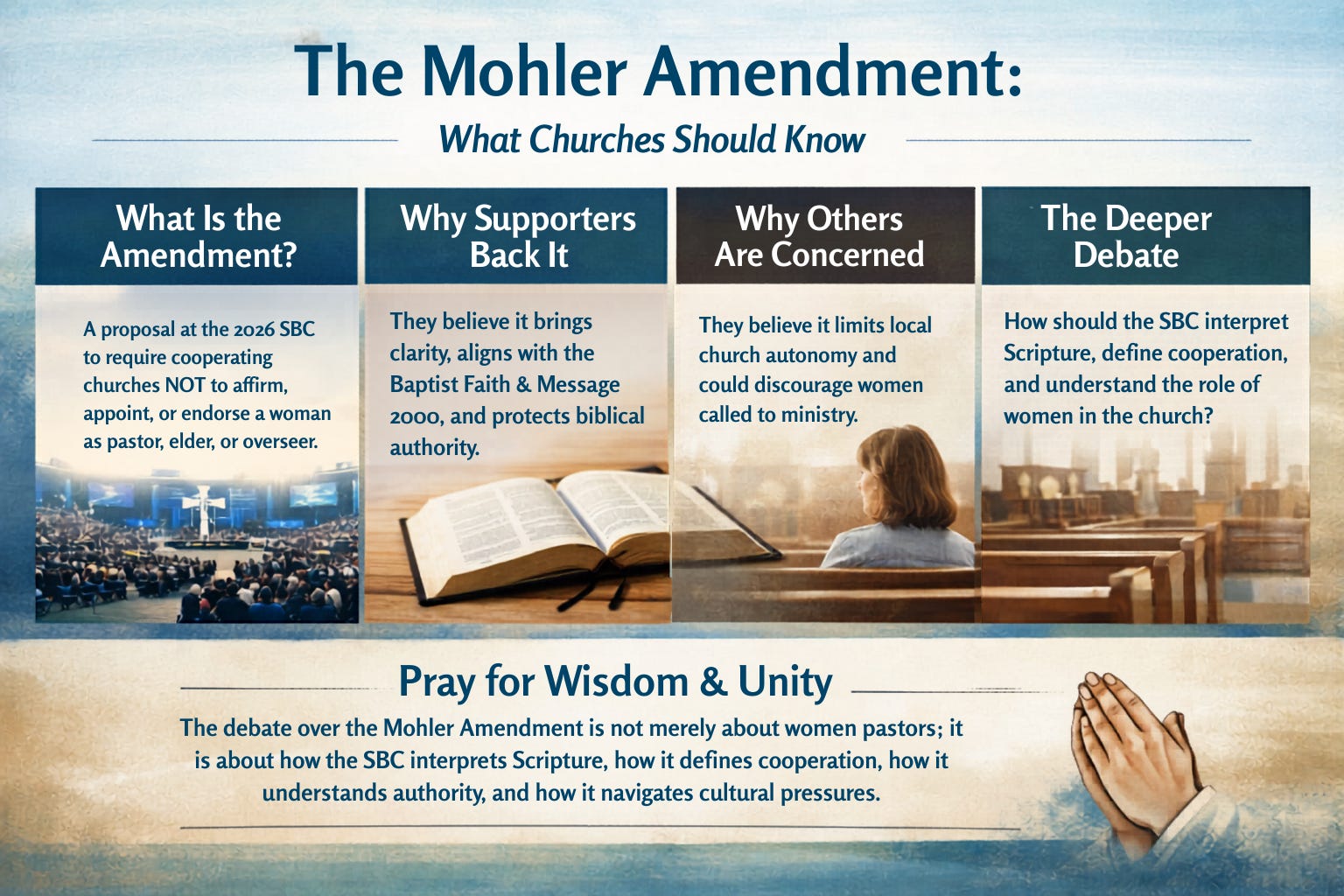
At the center of the controversy is Southern Seminary President Albert Mohler Jr.’s proposed constitutional change—widely known as the “Truth & Unity Amendment”—which would bar any cooperating church from affirming, appointing, or endorsing a woman serving in the office or function of pastor, elder, or overseer, including preaching.
The amendment represents the most direct attempt yet to codify a strict complementarian interpretation into the SBC’s governing documents, and it has triggered an intense clash over biblical interpretation, denominational identity, and the limits of Baptist autonomy.
Mohler has previewed his intention not only to introduce the amendment but also to suspend Standing Rule 6, which normally requires constitutional amendments to be referred to the Executive Committee for a year before debate. If messengers agree to suspend the rule, the amendment could be debated and voted on immediately.
The seminary president argues that the SBC has spent too many years revisiting the same issue and that the time has come for decisive clarity. Supporters of the amendment—including both announced 2026 SBC presidential candidates, Josh Powell and Willy Rice—frame the proposal as a necessary reaffirmation of biblical authority and denominational consistency.
Powell and Rice point to the Baptist Faith & Message 2000, which already states that the office of pastor is limited to men as qualified by Scripture, and argue that allowing churches with female pastors to remain in friendly cooperation undermines the SBC’s doctrinal integrity. They also contend that inconsistency in enforcement has created confusion among churches that give sacrificially through the Cooperative Program, weakening trust and potentially harming missions. For supporters, the amendment is a safeguard against what they describe as “functional egalitarianism,” a drift they believe has historically preceded broader theological liberalization in other denominations.
Vocal Opposition Emerges
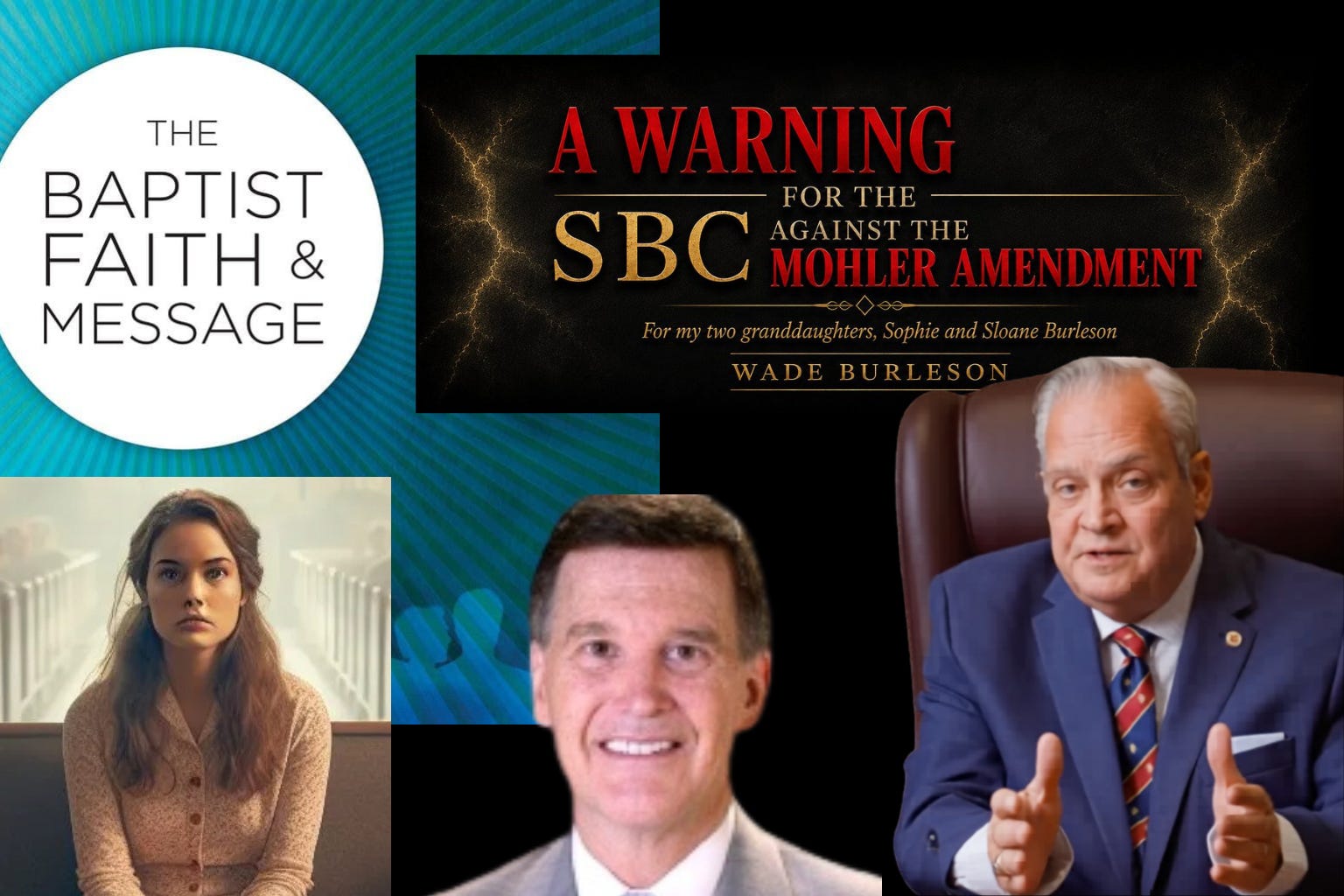
Opposition to the amendment, however, is equally forceful and diverse. Wade Burleson, longtime SBC pastor and former Oklahoma Baptist Convention president, has emerged as one of the most outspoken critics.
In a detailed critique posted on X/Twitter, Burleson argues that the amendment contradicts both the New Testament and historic Baptist principles such as soul competency, local church autonomy, liberty of conscience, and the priesthood of all believers. He insists that the New Testament never qualifies spiritual gifts by gender and that the modern evangelical tendency to treat “pastor” as a status title rather than a function of service distorts the biblical witness.
Burleson also highlights what he sees as a glaring inconsistency: SBC leaders invoked church autonomy to avoid creating a sexual‑abuse database in 2007, yet now seek to dictate whom local churches may call as pastors. For him, the amendment is not about biblical authority but about institutionalizing male spiritual authority over women—something he calls a “fraudulent authority” foreign to the New Covenant in Scripture.
International Attention
The debate has also drawn international attention. Australian Anglican theologian Michael Bird, whose comments have circulated widely in SBC circles, argues that the amendment reflects misplaced priorities at a time when the church faces far more pressing challenges.
Bird contends that the proposal equates “pastor” with “patriarch,” excluding women from ministries they already perform in many churches. He also suggests that the amendment reflects a psychology within SBC leadership in which figures feel compelled to appear “the most conservative person in the room,” creating a cycle of escalating restrictions. Bird notes in his critique that Mohler himself once stated that the SBC would “never presume to tell another church whom they may call as pastor,” and he questions what has changed. He also cites emails from SBC women who feel devalued, marginalized, or driven out simply for being gifted—an experience he describes as “Beth Moore Syndrome.”
Social Media Reaction
Social media reactions reveal the polarized nature of the debate. Some critics accuse Burleson of embarrassing argumentation, while others thank him for articulating what they see as a longstanding pattern of treating women as spiritually suspect or perpetually in need of male oversight. One commenter even warns that the SBC is “accelerating into transgenderism,” illustrating how the debate has become entangled with broader cultural anxieties. Meanwhile, others express gratitude for Burleson’s willingness to speak publicly, suggesting that many feel silenced or discouraged from raising concerns.
The broader context underscores the significance of the 2026 vote. A similar proposal—the Law Amendment—passed by majority vote in both 2023 and 2024 but failed to reach the required two‑thirds threshold. Last year’s attempt received just more than 60 percent, short of the supermajority needed.
Mohler’s recent comments on his podcast, in which he argued that women should not interpret Scripture publicly—even on a church Q&A podcast—because doing so constitutes “functioning as a pastor,” have intensified scrutiny and heightened concerns among moderates and egalitarians that the amendment would extend far beyond prohibiting women from holding the title “pastor.” For many, the debate is not simply about women preaching but about the future shape of SBC life and the boundaries of cooperation.
The Bottom Line
At the heart of the dispute lies a fundamental tension between Baptist autonomy and denominational identity. Supporters of the amendment argue that the SBC is not telling churches what to do; it is merely defining who can be considered in friendly cooperation. Opponents counter that the amendment effectively polices internal church staffing and intrudes into matters historically left to local congregations. The outcome of the vote will determine whether the SBC enshrines a strict definition of pastoral function into its constitution or rejects the amendment as an unnecessary and divisive step.
The vote in Orlando will require a two‑thirds majority in 2026 and a second two‑thirds majority in 2027 for the amendment to become part of the SBC Constitution. The decision will shape the denomination’s identity, its relationship to local church autonomy, its public witness amid cultural debates over gender, and its internal unity. Supporters believe the amendment will strengthen the SBC by reaffirming biblical authority and doctrinal clarity. Opponents fear it will fracture the Convention, alienate gifted women, and undermine core Baptist distinctives.
As the SBC gathers in Orlando, the Convention stands at a defining moment. The debate over the Mohler Amendment is not merely about women pastors; it is about how the SBC interprets Scripture, how it defines cooperation, how it understands authority, and how it navigates cultural pressures. Whatever the outcome, the 2026 Annual Meeting is poised to become one of the most consequential in recent Southern Baptist history.
Related:
Why the SBC Must Pass Dr. Mohler’s Truth & Unity Amendment (Center for Baptist Leadership)
Truth & Unity Amendment (Al Mohler, YouTube)
Thanks for reading! This post is public, so feel free to share it.
No posts
Comments
Nothing yet. Say the first thing.
Sign in to join the conversation.