
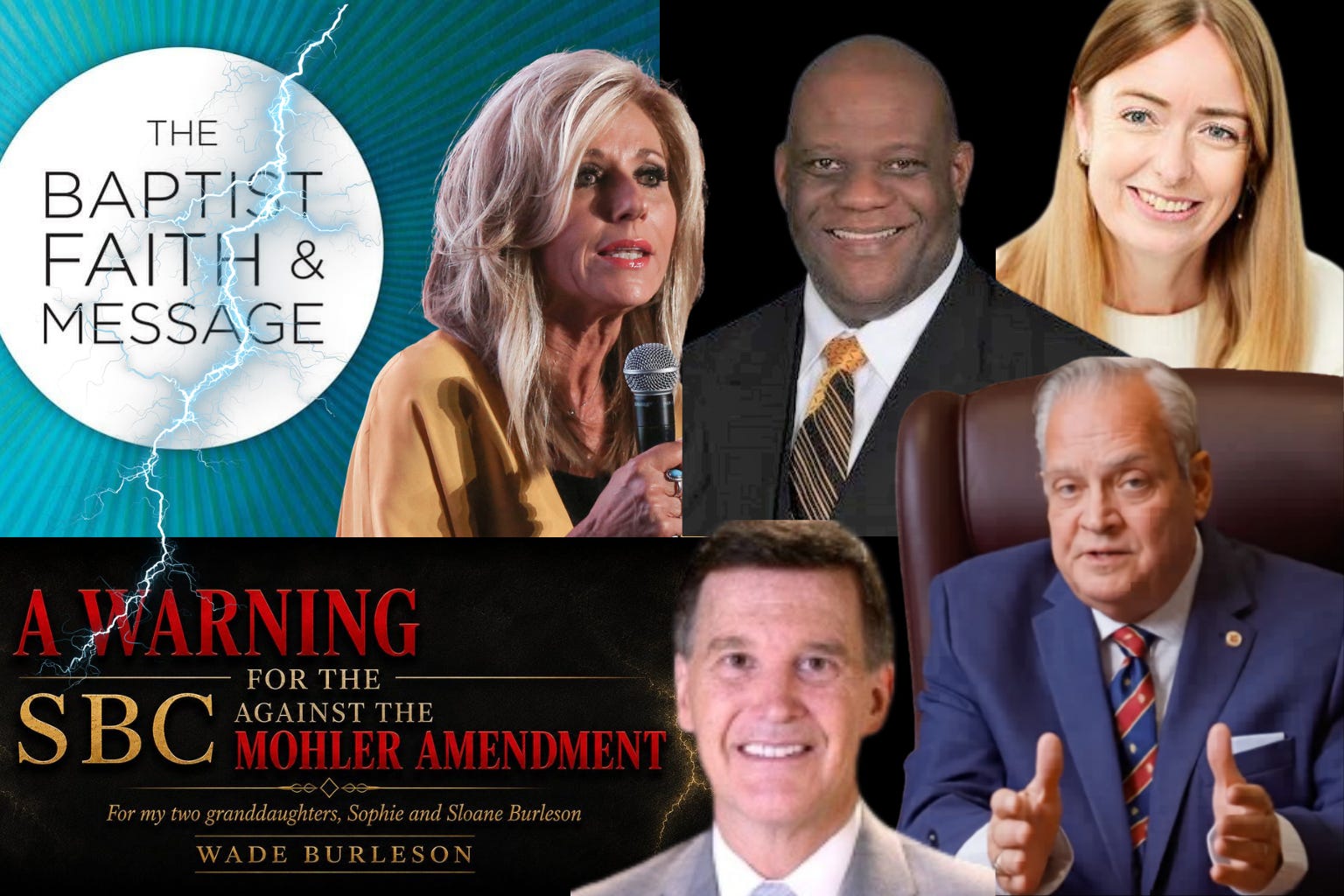
As Southern Baptists prepare to gather in Orlando on June 9–10, author, Bible teacher and former Southern Baptist turned Anglican Beth Moore is publicly criticizing Albert Mohler Jr.’s updated Truth & Unity Amendment, arguing that his tightening of restrictions on women’s roles goes “beyond Scripture” and reflects a pattern of creeping extremism within the denomination.
Moore: Amendment ‘Beyond Scripture’
Moore’s comments on X/Twitter May 26 were sparked by Mohler’s recent statement on “The Briefing” podcast that a woman who discusses sermon content on a church podcast is “functioning as a pastor”—a role he believes Scripture reserves for men.
“How in heaven’s name a woman discussing a sermon on a podcast could be objectionable to some is beyond me and what I believe to be beyond scripture,” said Moore.
She emphasized that she has never served as a pastor and has no desire to, but said she is alarmed by what she sees as a pattern of escalating gatekeeping: “Extremism…is never satisfied. It will always inch a little bit further. It’s a constant test of the purists.”
Moore said her concern is not personal, but generational.
“I care what happens to women followers of Jesus with their whole serving lives ahead of them.”
Mohler’s Amendment: New Language, Same Aim
In a June 2 YouTube video, Mohler unveiled updated wording for the Truth & Unity Amendment, which he intends to introduce in Orlando.
The revised language states that an Southern Baptist church in “friendly cooperation” when it “Does not act to affirm, appoint, or endorse a woman serving in the office or function of a pastor/elder/overseer, specifically preaching to the assembled congregation.”
Mohler said the change from “such as” to “specifically” is meant to sharpen clarity and ensure denominational unity around the definition of the pastoral office.
He argued that the Southern Baptist Convention (SBC) must speak with “convictional unity” on this issue, just as it did a generation ago on LGBTQ (lesbian, gay, bisexual, transgender, queer) matters.
Critics: Amendment Overreaches, Misunderstands Ecclesiology
Moore is not alone in her critique. Other high-profile critics are quoted in a ChurchLeaders.com article listing a range of objections:
Danielle Treweek, a complementarian theologian, argued that discussing a sermon on a podcast is not equivalent to preaching to the gathered church. She warned that Mohler’s logic would require “locking female staff in a closed room after church” to prevent them from offering spiritual reflections to men.
Texas pastor Dwight McKissic, who led his church, Cornerstone Baptist Church in Arlington, Texas, to withdraw from the SBC in 2023, called Mohler’s position “lunacy on steroids” and urged messengers to “stop the madness” by voting down the amendment. He said denying women the ability to comment on sermons is “unadorned sexism.”
Wade Burleson, longtime SBC pastor and former Oklahoma Baptist Convention president, has emerged as one of the most outspoken critics.
In a detailed critique posted on X/Twitter, Burleson argues that the amendment contradicts both the New Testament and historic Baptist principles such as soul competency, local church autonomy, liberty of conscience, and the priesthood of all believers. He insists that the New Testament never qualifies spiritual gifts by gender and that the modern evangelical tendency to treat “pastor” as a status title rather than a function of service distorts the biblical witness.
Other critics noted that if Mohler’s interpretation is correct, Christians should avoid listening to any female Bible teacher or commentator in any format.
Supporters: Amendment Reaffirms Biblical Authority
Conversely, both announced 2026 SBC presidential candidates, Josh Powell and Willy Rice—frame the proposal as a necessary reaffirmation of biblical authority and denominational consistency.
Powell and Rice point to the Baptist Faith & Message 2000, which already states that the office of pastor is limited to men as qualified by Scripture, and argue that allowing churches with female pastors to remain in friendly cooperation undermines the SBC’s doctrinal integrity.
They also contend that inconsistency in enforcement has created confusion among churches that give sacrificially through the Cooperative Program, weakening trust and potentially harming missions. Supporters on social media generally agree the amendment is a safeguard against what they describe as “functional egalitarianism,” a drift they believe has historically preceded broader theological liberalization in other denominations.
What’s at Stake in Orlando
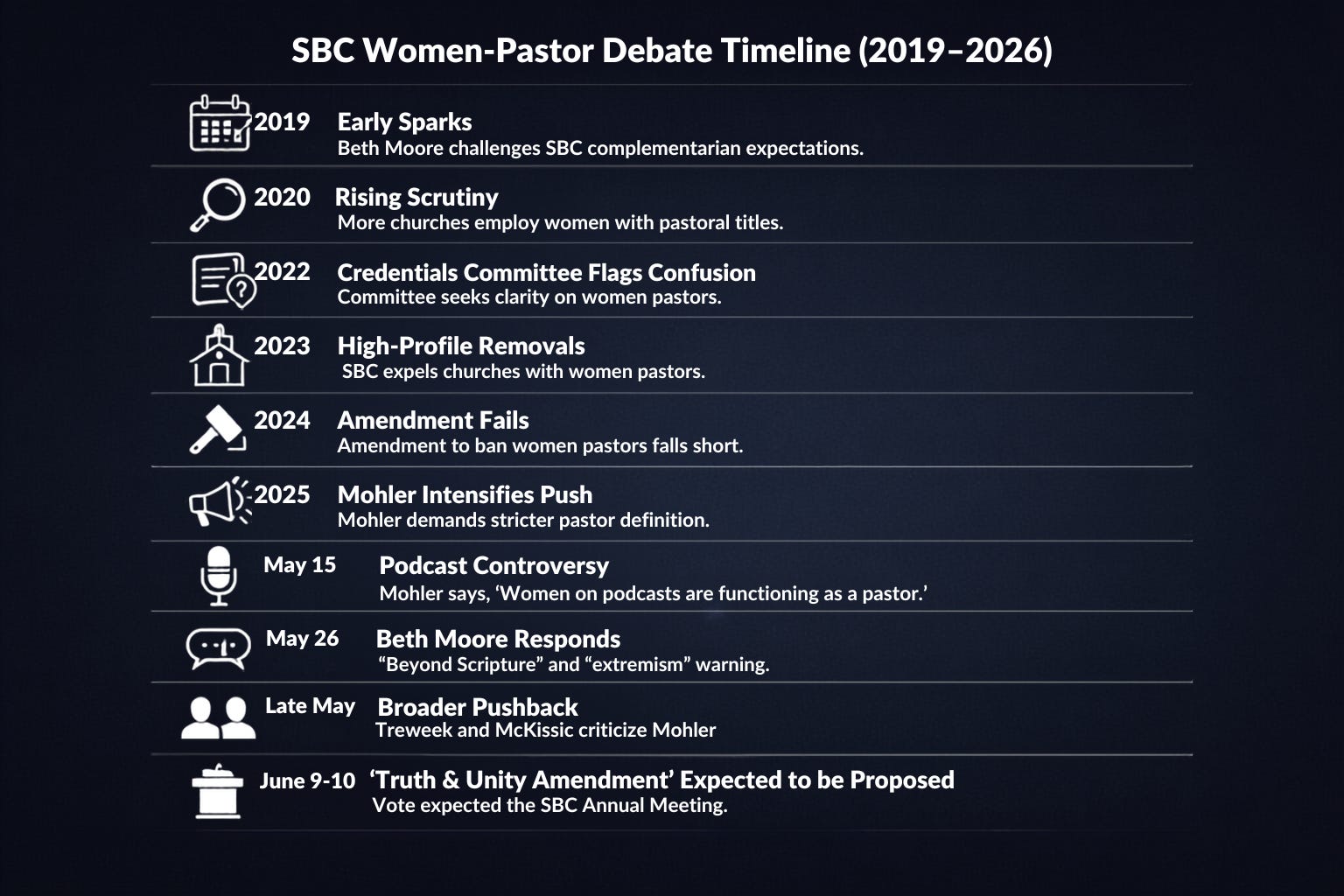
The amendment represents the latest flashpoint in a multi‑year struggle within the SBC over women serving in pastoral roles. Previous attempts to amend the constitution have failed, but Mohler insists the new language reflects “consensus” and will help the SBC “move forward.”
Moore, however, sees the amendment—and the logic behind it—as part of a broader drift toward rigid boundary‑setting that harms women and narrows the scope of permissible ministry.
With thousands of messengers heading to Orlando, the debate is poised to be one of the most closely watched—and emotionally charged—issues at the 2026 annual meeting.
Related:
Why the SBC Must Pass Dr. Mohler’s Truth & Unity Amendment (Center for Baptist Leadership)
Revised Truth & Unity Amendment (Al Mohler, YouTube)
Thanks for reading! This post is public, so feel free to share it.
No posts
Comments
Nothing yet. Say the first thing.
Sign in to join the conversation.