
“Not Sherlock Holmes. Holmes acted on hunches and hunches play no part in my crime lab.”
Oscar Heinrich
Along with the establishment of first laboratories, the 1910s saw the emergence of a new player in law enforcement: the forensic scientist.
These men were different than what had come before. They were not physicians nor were they toxicologists. They were not academics consulted on specific cases before returning to their profession. Neither were they specialists such as Albert Osborn (documents) or Calvin Goddard (ballistics). They were generalists, and men of science. Men who created modern forensics.
The first forensic scientists of North America were a motley bunch, and not one of them chose it as their first profession. Some even stumbled into it. They existed in an era where most of the population didn’t have a high school degree.
David Cowles, the leading force of Cleveland’s Scientific Bureau in the 1930s, left school at 13 to help support his eleven siblings. He used what spare time he had to teach himself science and lab techniques. He was hired at the city’s Health Department at 21 after becoming the first person to pass the civil service exam without a college degree.
John F. C. B. Vance in Vancouver, British Columbia, worked in the mining industry as an assayer before accepting a position as assistant chemist for the city; a job which was offered while he was between jobs. His duties included ensuring milk, municipal water, and food ere fit for human consumption. His first involvement with law enforcement came in 1914 with a missing person’s case. His assistance secured a conviction which led to more evidence being brought to him. By 1917, half his work at the city lab was given to assisting the police. He later became a chemical and metallurgical engineer while employed by the police.
Lucas May joined his father’s construction business as a teenager. There’s record of him graduating eighth grade, but no record of him obtaining a high school degree or his GED, despite attending the Gordon Academy for two years. He taught himself science opened his own private investigation business before he was twenty.
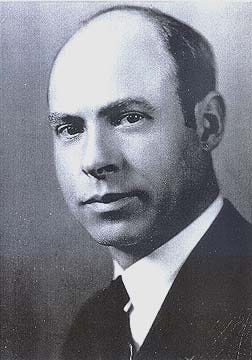
Oscar Heinrich went to university and became a pharmacist at the age of 18, after which he enrolled to become a civil engineer. He worked for the city of Tacoma as a chemist. He founded his own lab (the first private forensic lab in the world) after finding work with the police far more interesting and rewarding. And, when he knew there was enough work available for him to raise a family.
Not all police officers appreciated the inclusion of forensic specialists in their cases. Forensic scientists were outsiders; independent businessmen brought in on “contract.” Some officers argued that they were trusting cases to individuals with no police training. For others, it was professional jealousy, and resentment that scientists were idolized while their work was ignored. Scientists replaced detectives in headlines in newspapers, and it was science, not police work, which put the criminals behind bars.
Police resentment was not the only possible downside to success and fame. Criminals were resentful of their success. One told a reporter, “The police held better cards than I did, and I could not make a bluff stand up.” (Lazarus, Blood, Sweat and Fear). And, in Canada, some of them took it upon themselves to eliminate the physical evidence by eliminating the forensic specialist.
In one year alone, there were seven attempts on Vance’s life by people he was scheduled to testify against. More than one they broke into his house. Two attempts to blow him up were made; one bomb was sent to his home through the mail while the other was fixed to his engine and rigged so a fuse in the exhaust pipe would be lit when he started the car.
In response, an iron grill was put at the top of the staircase leading to his lb which was closed and locked between 6pm and 7am. He was given a police driver, a bodyguard, and a police officer in his home 24-hours a day.
To add a sinister element, Vance believed Police Chief Cameron was behind at least one attempted bombing or knew who the person was.
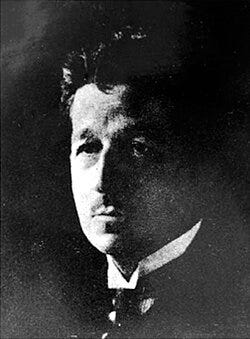
These men taught themselves the science that would become forensics. They were voracious readers of literature from other scientists from around the world. They set the standards of procedure both in collection and storing of evidence. What they learned on the job became the basis for the first forensic schools.
May, Heinrich, and Vance were consulted by various institutions, organizations, and police forces to create the curriculum for future forensic scientists. They worked to ensure that graduates and employees were competent, educated, and conscientious; creating the first professional standards. This influence of North American forensic scientists was global. The global director of the Scientific Academy of Supreme Police of Jugo Slavia in Belgrade wrote to May for advice and guidance setting up their curriculum.
Perhaps their greatest contribution to forensics was their success. Repeatedly providing the evidence which led to convictions made them famous. They wrote articles for detective magazines and featured in columns which answered questions about forensics from crime enthusiasts and authors of crime fiction. People wrote to them grom around the world asking details about how they solved a crime. They gave talks for a wide variety of organizations about forensics.
This exposure brought forensics to the attention of the general public who, in turn, put pressure on institutions and municipalities to invest in forensics specialists on all cases; not just the difficult ones. As well, their success provided the data which demonstrated that science significantly increased conviction rates. This led to the creation of institutes which trained the next generation of forensic scientists.
For more historical crime tidbits, go to my Linktree.
No posts
Comments
Nothing yet. Say the first thing.
Sign in to join the conversation.