
“Consciousness was an unsteady entity: it could be led astray or even abolished under the sway of a more powerful individual...”
Lisa Appignanesi, Trials of Passion
...and the fear of hypnotism.
The question of hypnotism in nineteenth-century legal circles is the question of criminal responsibility; it challenged mens rea by suggesting that conscious intention could be removed entirely from a criminal act. Part of the answer was supplied by the legal system and how it defined insanity, but a bulk of it was determined by mind doctors, or psychiatrists.
There are one aspect and two schools of thought involved. Let’s look at aspect first. After, we take a look at hypnotism.
It became a popular topic in medical journals and popular magazines in the 1880s and ’90s. They discussed how it was to be defined, what its uses were, what the dangers were to both the individual and to society. It wasn’t just the law that was fearful of hypnotism. It was a diagnostic and therapeutic tool for individuals suffering physical and mental conditions. But it was also used as entertainment in theatres and stately homes. Though doctors were considered immune from the temptation of abusing their influence over hypnotized individuals, charlatans were believed to be motivated by it.
Let’s move to that aspect I mentioned. One of the great debates about hypnotism was the extent of the practitioner’s power over the patient. This had significant legal implications. If the power was absolute, there could be no criminal intent. Could someone in a hypnotic trance be made to do something immoral or illegal which they would not commit if they were conscious? This is where the two schools of thought enter the picture. The first was Salpêtrière Hospital in Paris led by Jean-Martin Charcot; the second the University in provincial Nancy led by Hippolyte Bernheim. Salpêtrière insisted that hypnotism was a psychological condition and was closely related to hysteria. This meant there was a percentage of the population who could not be hypnotized.
The Nancy school argued that hypnotism was not linked to any other pathology, including hysteria. They considered it a physical condition. They believed that some individuals were more suggestible (more easily hypnotized), and the depth of the trance varied. Most significantly, they believed everyone could be hypnotized.
The differences went deeper. Jules Liégeois, a law professor from Nancy University, claimed, in 1884, that once put into a trance, an individual became an automaton, physically and psychologically. This meant they were not in control of their actions and they would commit any act the hypnotist commanded.
The Salpêtrière disagreed, insisting that hypnotized individuals would not do nothing in their trance that they would not do when fully conscious. If the Nancy school was correct, then no one could be held responsible for criminal activity, and good, decent people could be compelled to commit the most heinous of acts. Not surprising that juries and legal systems sided with Salpêtrière.
Hypnotism was viewed as a danger to the foundations of society as well. Women were considered especially vulnerable to hypnotism, because they were believed to have a fragile hold on reason and logic. This was of particular concern because bourgeois women were considered the bastion of virtue. If they could be seduced through mesmerism and have their virtue stolen, then the foundations of the family would crumble and society would follow soon afterwards.
The fear was so great that demands were brought to the French parliament that the Nancy school should cease to teach their theories about hypnotism. Though this did not happen, in November 1892, France outlawed performances of hypnotism in an attempt to restrict its use to trained medical practitioners. Other European countries followed their lead.
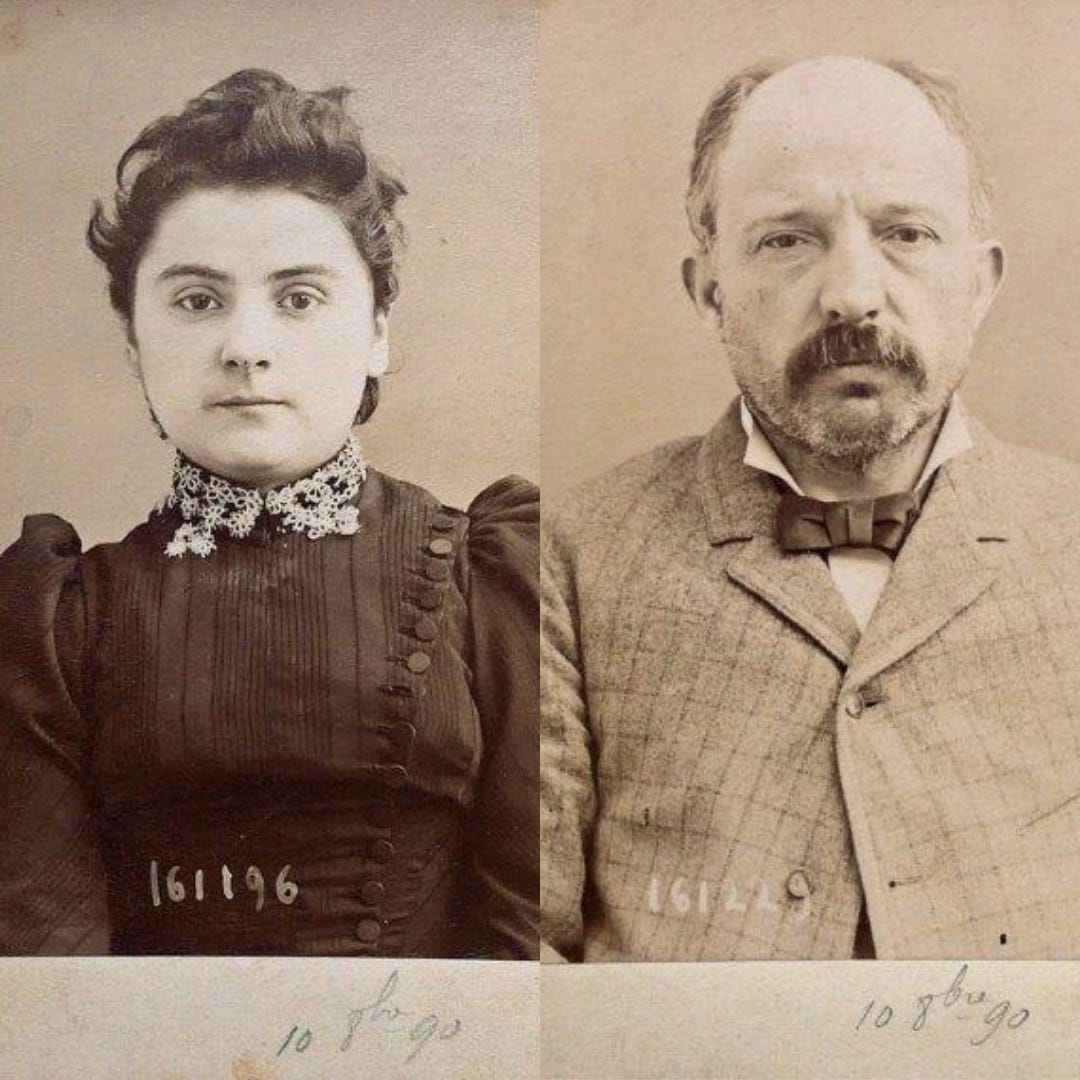
The Gouffé Case
Bailiff Toussaint-Augustin Gouffé of Montmartre, Paris was reported missing on July 26, 1889. His corpse was found two weeks later in a suburb of Lyon (300 miles/480km away). He had been strangled, sewn into a burlap sack, stuffed into a trunk, and driven to the disposal site. After a lengthy investigation Gabrielle Bompard and Michel Eyraud were arrested and brought to trial. This was the first case where hypnosis was employed as a defense strategy in a criminal trial. Bompard’s lawyer portrayed her as a vulnerable twenty-one-year-old who had been “enslaved” in a hypnotic trance by her lover; a man who was twice her age. Though testimony was given to prove (and to dispute) Bompard’s ability to be hypnotized, that was not what lay at the centre of the case.
Along with the debate regarding the power of the hypnotist over their patient, there was another, equally important and dangerous, question brought before the court: Was a young woman, of a bourgeois family, capable of murder? Society insisted she wasn’t; she must have been under a hypnotic influence. But the jury did not find her entirely innocent.
Eyraud, acting as his own defence, claimed that it was Bompard who was the hypnotist, and he who was under her control.
In the end, Eyraud was sentenced to death and went to the guillotine on February 3, 1891. Bompard was sentenced to twenty years hard labour, but was paroled in 1903.
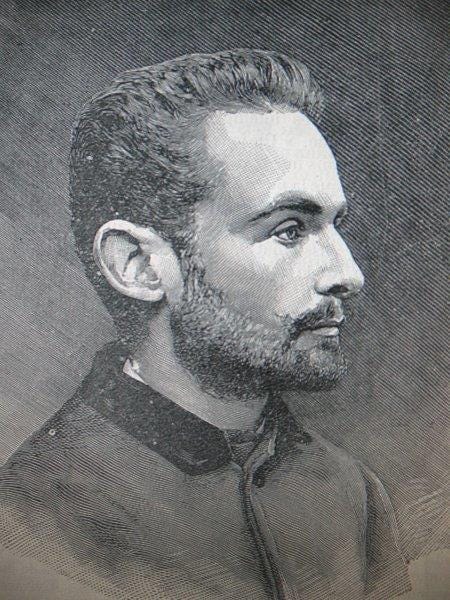
The Chambige Affair
This is a twist on the hypnotism and criminal responsibility. Rather than determining whether Henri Chambige was guilty or innocent, the question debated was whether a crime had been committed at all.
On January 25, 1888, twenty-two-year-old psychology student, Henri Chambige was found injured in his family’s stately home. He had shot himself in the mouth and had two bullets lodged in his cheek. On the bed, in gentle repose, was thirty-year-old Magdeleine Grille, dead from two gunshots to the head.
Chambige claimed the two were in love and had engaged in a passionate affair. Since they could not be together and discovery would mean dishonour, Grille suggested a suicide pact. Madame Grille’s family disputed the claim, insisting that Chambige had used mesmerism to rape her twice and then murder her. Grille’s doctor claimed that her expression in death was more akin to someone who had been “magnetized” than someone who had committed suicide.
Much of this has to do with society’s beliefs of what bourgeois women were and were not capable of. Grille’s family argued she was incapable of engaging in an affair. Prominent jurist, Gabriel Tarde, diagnosed Grille as a ‘doublement de la vie’ or split personality (a derivation of hysteria). In other words, the only way she could engage in a love affair was if she were insane.
Chambige was given seven years labour in the penal colony of Cayenne, which was lowered to seven years in an Algerian prison. (The crime took place in Algiers.) He was also required to pay the Grille family one franc as compensation for besmirching Magdeleine’s honour.
Of Particular Interest:
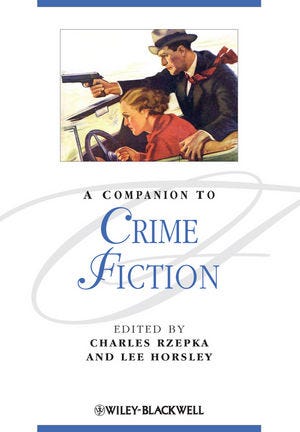
A Companion to Crime Fiction, edited by Charles J. Rzepka and Lee Horsley.
I am a firm believer that, to understand a society, you look to its fiction. It’s that writing adage “show, don’t tell.” History books will tell you; studies of fiction/literature will show you how those prejudices, fears, trends, and social norms manifested themselves in the general “psyche” of a culture. For fiction writing, this is invaluable because it allows you to understand the social context.
I was going to recommend The Victorian Gothic: An Edinburgh Companion, edited by Andrew Smith and William Hughes, because it had two excellent articles relevant to this month’s topic. Unfortunately, it’s fairly expensive and, from what I can see, not available on Amazon (but from Blackwells for over $100). I will give it a shout out in case you are able to find it in your library, and you want to include hypnotism in your plot.
If so, this book should be read. There is a nice mixture of science and literature. Among other things, Kelly Hurley’s article, “Science and the Gothic,” put into context Dracula’s ability to control humans just by looking at them. It’s mesmerism, and, as noted, the fear of being placed in a trance and made to do things against your will was very real in the late 1800s when Bram Stoker wrote Dracula. The article is an excellent review of how the two schools of thought influenced public perception about hypnotism, and puts on display the nature of those fears by examining its portrayal in fiction.
The other book, whose picture is at the top, is A Companion to Crime Fiction. I’ve read a few books about the history of crime in fiction, and found this one the most informative. Topics range from the Newgate novels of the early 1800s, to Sherlock Holmes, to the golden age, to modern-day thrillers. Its scope includes English, French, and American fiction. In contrast to The Victorian Gothic, Companion’s focus falls more heavily upon the literature. This doesn’t lessen its value as a source for history, though. After reading the articles, you come away with a clear understanding of how crime, law enforcement, culture, and social hierarchy impacted each other.
It makes clear why we have stories of detectives (either professional or men of independent means) and not stories about constables. That, even after the establishment of professional police forces, the upper classes continued to believe that breaches of the law should be handled within the family. (Murderers in fiction were sent to an asylum, or died; none went to prison.) It shows ow early American crime was intended to discourage delinquency by showing it consequences, and how the French allowed their detectives and cases to be grittier and less gentile than the English did.
In all of these discussions, social context takes the lead. The articles offer views of the fiction and how it develops, but also the society in which it is written and read. You are not only learning the what, you are also learning the why.
Having this context helps create a richer environment for your own fiction.
Pet Peeves
Regional accents creeping in. I’ve noticed a recent tendency in film and TV of bourgeois characters speaking with a regional accent. Most often Scottish. Accents indicated more than where you were from; they indicated which rung on the ladder of hierarchy you occupied, or wanted to portray yourself as occupying.
The accent we would refer to as “Queen’s proper English” was the mark of status, education, and intelligence. If your character holds social standing, either by birth or professional rank, this is what they must speak. That includes your detective.
A friend’s husband, who was from Essex, was told he would have to take elocution lessons before he would be allowed to teach.
I was introduced to a professor of Pictish studies (whose name I cannot recall). When he took a lecturer’s position at Edinburgh University in the 1970s or 80s, he caused quite a kerfuffle in academia. Why? Because this gentleman, who was born, raised, and educated in Scotland, had the audacity to keep his regional Scottish accent. That made him a social radical.
It did not matter where you were from, if you were to occupy the upper echelons of British society, you had to speak with the correct accent.
To flog a dead horse, think about the importance placed upon Liza Doolittle’s accent in My Fair Lady.
This Edition’s Slang
Not so much slang this month as terminology.
Mesmerism: The process or practice of inducing a hypnotic state by the influence of an operator over the will and nervous system of the patient. (Oxford Canadian Dictionary) First appeared in 1784, but not in general use until the mid-nineteenth century. Originally the phenomenon was referred to as animal magnetism and its practitioners as “magnetizers.” Terminology changed soon after its arrival in England and became mesmerism and mesmerists. (Though doctors would never refer to themselves as mesmerists.).
Derived from its “creator,” Austrian physician Franz Anton Mesmer (1734-1815), it swept across Europe, arriving n England last, in the 1830s. He believed an invisible, natural force existed in all living things, referred to as “magnetic fluid.” (Yes, Luke, the Force is real.) The transfer of this energy (or ethereal fluid) between patient and magnetizer allowed the latter to heal, and command, the former.
Automaton: A person who behaves without active intelligence or mechanically in a set pattern or routine. (Oxford Canadian Dictionary) First appearance in writing: 1639 with reference to one of those creepy mechanical contraptions that mimic a human activity.
In the nineteenth century it was also used to refer to individuals in a somnambulistic (sleepwalking) or trance-like state. Hypnotism was believed to create such a mental state.
Comments
Nothing yet. Say the first thing.
Sign in to join the conversation.