
“A friend to honesty and a foe to crime.”
Allan Pinkerton
...perhaps they can.
In 1833, Eugène François Vidocq founded Le Bureau des Renseignments, (Office of Information), the world’s first private detective agency. It was part detective agency, part private police force. He started with eleven detectives, a secretary, and two clerks. He employed both men and women and most were former convicts; likely associates from his days as a police informant, or during his own stint on the wrong side of the law.
He described the agency as defending citizens against fraudsters, imposters, and other criminals (faiseurs). Though quite successful, there were no spectacular cases or scandal-worthy encounters. The “jobs” seem mundane, especially when compared with the adventures depicted in his Mémoirs (first published in 1828). Many of his clients were fathers and mothers concerned about bachelors of unknown pedigree paying too much particular attention to their daughters.
While fiction fills the private detective’s cases with murders and intriguing mysteries, the reality was very different. (Quite different as you’ll see in the discussion of the Pinkertons.) In the early years of Vidoq’s agency (and others that followed) they were hired to act as de facto police in matters that official law enforcement were neither willing nor equipped to do.
Vidocq had a habit of making enemies. This led to the eventual demise of the Bureau. His opponents claimed that the methods used to resolve the “cases” were morally questionable and many suspected that some were illegal. It is reasonable to believe that these accusations were genuine rather than fabrications meant to damage Vidocq’s reputation and business. On more than one occasion, while in the service of the police, he engaged in immoral and, by today’s standards, illegal activity to procure confessions and evidence. (Many of them involved profuse amounts of alcohol.) In 1843, his Bureau was accused of forcibly transporting women to nunneries at the request, and payment, of their families. In other words, forcible confinement.
Compounding his unpopularity was the Bureau’s habit of coming into conflict with Paris’s police force. There were influential individuals uncomfortable with his close connections with the War Department who worried it was not just the work of French citizens he was engaged in. Numerous raids upon his officers were conducted and an attempt was made by officials to have Vidocq exiled from the city using his status as an ex-convict to bolster their demand. During a raid on the offices on November 28, 1837, over 3,500 files and documents were seized and Vidocq was arrested a few days later. He was charged with corruption of civil servants, “the pretension of public functions,” and acquisition of money by deception. He was released in February 1838 after a judge dismissed the charges.
Despite the animosity with police and his knack for making enemies, the Bureau flourished, but, in the end, could not survive the scandals and accusations. Vidocq thought about selling the agency but could not find a buyer. After a final, brief trip to prison for fraud in 1849 (again, the case was dropped), Vidocq settled into a private life. He took a few cases after his release from prison, but did not continue with the Bureau.
Though the first, the Bureau was not the most famous private detective agency. That honor goes to Pinkerton National Detective Agency, founded around 1850 (under the name North-Western Police Agency). At the height of their success, the Pinkerton Agency was the largest private law enforcement organization in the world. It has survived unto this day (rebranded as a personal security and risk management firm).
The Agency was involved in some famous cases, escorting president-elect Abraham Lincoln to his inauguration (see below) and the assassination of Frank Steunenberg (a former governor of Ohio) in 1905. Harry Orchard confessed to the murder to James McParland, a Pinkerton agent. They were involved in the hunts for Jesse James, the Reno Gang, the James-Younger Gang, and the Wild Bunch whose members included the famous Butch Cassidy and the Sundance Kid.
They were also hired for protection. Businesses employed them to transport money and high-value merchandise between cities. The agents were said to be well paid and well armed.
We think of them as private detectives, but during the American Civil War, Pinkerton agents were hired by President Lincoln for espionage and as his personal security. History has a dim view of the intelligence Pinkerton and his agents provided, pointing out that often it was false (especially estimates of Confederate troop sizes which were grossly exaggerated).
The Agency was not limited to assisting the police solve crimes and hunt down convicts. In the late nineteenth century (into the twentieth) they were employed as strike breakers. Companies hired them to infiltrate unions and provide information of their activities and members. They were also used to form “goon squads” to intimidate workers to prevent them from striking or joining unions. In 1892, during the Homestead Strike, three Pinkerton agents were killed when violence broke out.
This involvement in strikebreaking became public knowledge. Public pressure and their enthusiasm during the riots resulted in the Anti-Pinkerton Act of 1893. Their contracts with the federal government were severely curtailed; as stated in the act an “individual employed by the Pinkerton Detective Agency, or similar organization, may not be employed by the Government of the United States or the government of the District of Columbia.”
Their role in strikebreaking has followed them into the present day and, in many areas of the States, the name Pinkerton is associated with anti-labor and antiunion more than it is with tracking down criminals and solving crimes.
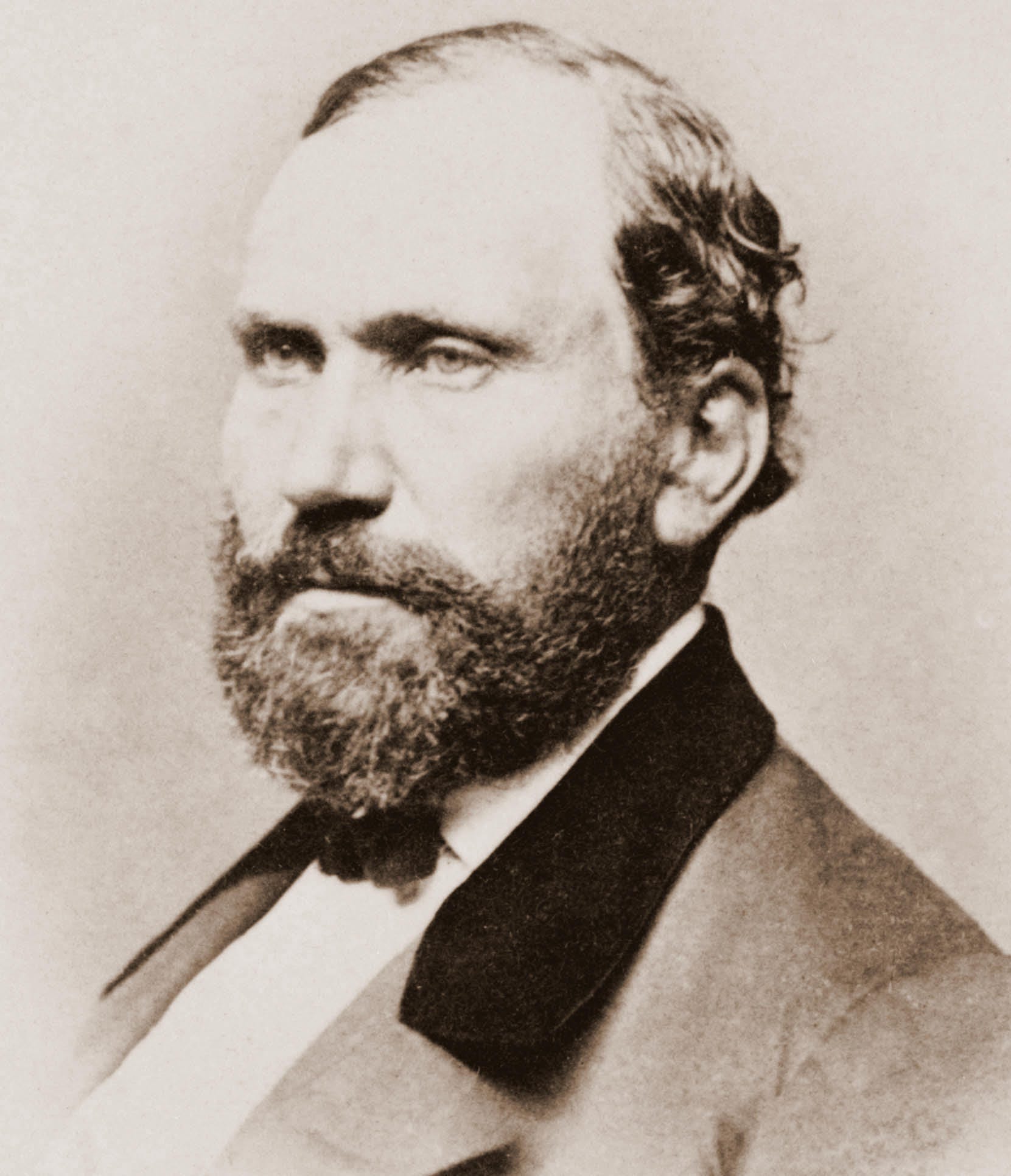
Perhaps the most famous (real life) private detective is Allan Pinkerton (1819-1884). Born in the Gorbels area of Glasgow, Scotland, he emigrated to the United States in 1842.
He dropped out of school at the age of 10, after his father’s death, and worked as a cooper (maker/repairer of casks or barrels), an abolitionist (his house was a stop on the Underground Railway), a detective, and a spy (providing military intelligence to General George B. McClellan of the Army of the Potomac.)
He settled in Dundee Township, near Chicago, and took up his trade as a cooper, building his own house and bringing his wife out from Chicago when it was done.
His first foray into law enforcement occurred when he was wandering the forest near his home looking for trees to make barrel staves. He stumbled across counterfeiters (maybe associated with the Banditti of the Prairie) and informed the local sheriff who arrested them. In 1849, Pinkerton became Chicago’s first police detective. He partnered with attorney Edward Rucker in 1850 to form the North-Western Police Agency which became the Pinkerton & Co, and then, Pinkerton National Detective Agency. His company exists today as Pinkerton Consulting and Investigations (as a subsidiary of Securitas AB). He used an eye as his logo with the caption “We never sleep.”
Along with many movies, Pinkerton detectives made appearances in novels by Arthur Conan Doyle (The Valley of Fear), Dashiell Hammett (Continental Op), and many Louis L’Amour books.
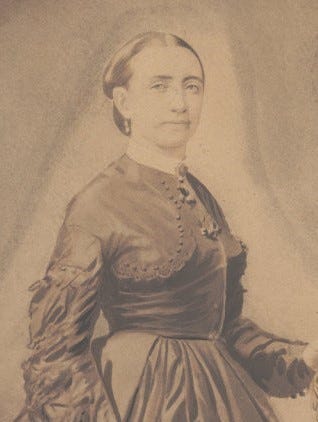
Kate Warne (1833-1868) was a spy, a female superintendent of detectives, and a supervisor of women agents. She is most famous for being America’s first female private detective.
In 1856, Warne walked into the Pinkerton National Detective in response to an ad the agency had placed indicating they were looking for new hires. Pinkerton thought she wanted secretarial work, but Warne corrected him and stated that she was interested in detective work. She pointed
out what his agency was lacking an important source of information: women. That oversight deprived his agency of an essential avenue of information: the role of a woman’s confidante. She argued that she would have access to information through wives, mothers, and sisters that men would not. And, pointed out that men tended to boast when women were around.
He was convinced and she was hired. He would identify her as one of his five best agents, ever.
Pinkerton described her as a “commanding person, with clear cut, expressive features ... a slender, brown-haired woman, graceful in her movements and selfpossessed. Her features, although not what could be called handsome [beautiful], were decidedly of an intellectual cast ... her face was honest, which would cause one in distress instinctly [sic] to select her as a confidante.” (Allan Pinkerton, The Spy of the Rebellion, 1883).
Warne became a valuable member of the Agency and in 1860 she was made head of the new Female Detective Bureau. She was instrumental in the Adams Express Company embezzlement. She befriended the lead suspect’s wife and collected enough evidence to convict Nathan Maroney and recover the majority of the stolen money.
Her greatest achievement was uncovering a secessionist plot (the Baltimore Plot) to assassinate president-elect Abraham Lincoln in 1861. Accompanied by three men, Warne met Mr. Lincoln at the train station in Philadelphia and joined him for the remainder of the journey to Washington D.C. If approached, Warne did the talking, explaining that her brother was ill and needed his privacy. They went to the sleeper car where she paid the conductor so he wouldn’t place anyone near them at the rear. They arrived safely.
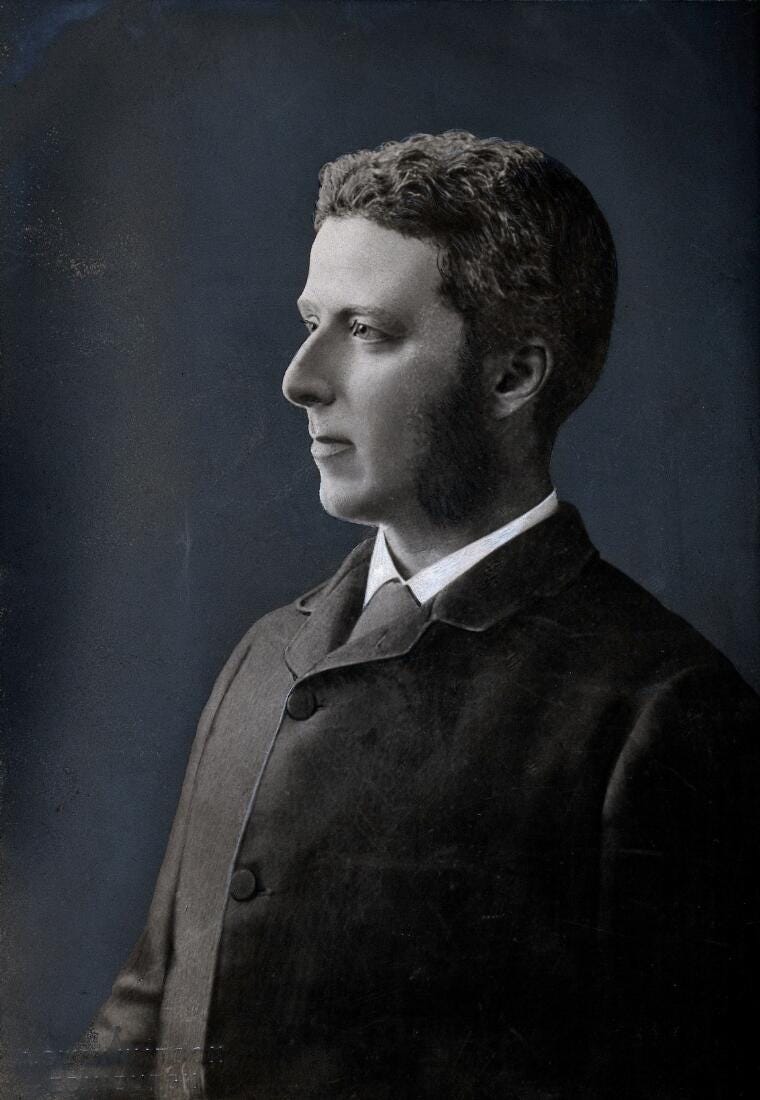
Not a private detective himself, Dr. Joseph Bell was the “literary embodiment” of one of the most famous fictional detectives, Sherlock Holmes. Bell (1837-1911) was a Scottish surgeon and lectured at the University of Edinburgh (though he was never a member of the university’s faculty). He stressed the necessity of close observation when diagnosing patients. “Clothing revealed lives of hardship or good fortune. Hands screamed occupation. ‘The scars of the miner differ from those of the quarryman,’ [Bell] pointed out, just as the calluses build up on a carpenter’s hands ‘are not those of the mason.’ Soldiers and sailors walked in different ways. Tattoos recorded voyages to distant lands. Details such as these were telling and mattered. Never forget ‘the vast importance of little distinctions,’ [Bell] urged his students, ‘the endless significance of the trifles.’” (Dean Jobb, The Case of the Murderous Dr. Cream)
His deductive abilities went beyond a person’s medical condition. Students, and the patient’s themselves, marvelled at Bell’s ability to identify their occupations, where they lived, and how they had travelled to the clinic. On one occasion (witnessed by Conan Doyle) he was able to determine that a patient was a non-commissioned officer from a Highland regiment stationed in Barbados before asking a single question.
Like all the other medical students, Doyle paid to attend the outpatient clinic which Bell held at the infirmary. As Bell’s clerk in the Edinburgh Royal Infirmary, Doyle was able to observe the surgeon often and up close. He was responsible for preparing Bell’s case notes and interviewing patients before they were examined.
On occasion, Bell assisted Dr. Henry Littlejohn, Edinburgh’s police surgeon with criminal inquiries and is credited with cracking at least one murder. In 1877 he alone noticed that Eugene Chantrelle had murdered his wife by loosening a gas pipe fitting.
How did he know about the soldier? “[T]hough the man was respectful, he did not remove his hat. They didn’t remove hats in the army, but had he been long discharged, he would have adjusted to removing it. He had an air of authority, but not too strong an air; thus he was a non-commissioned officer. He was obviously Scottish and thus from a Highland regiment. And finally, his condition of elephantiasis was common in Barbados.” (James O’Brien, The Scientific Sherlock Holmes)
(Photo courtesy of the Wellcome Collection)
Of Particular Interest:
Post Mortem Examinations, by Rudolph Virchow
A little bit of a departure this month with the book review. Usually it is a reference book to help you learn about something, or to provide ideas. This month it is a source which won’t teach you much per se (unless you are planning on performing on autopsy yourself, which I wouldn’t recommend) but an example you can reference and use in the event you need one for your story. The other departure from the regular is that this book is available to download. There are copies to be purchased on Amazon (for .ca and .com) but you can have access to a copy of the original in electronic form if you prefer.
In terms of nineteenth-century medicine, Rudolph Virchow was a giant and he is considered the founding father of pathology. You might find his name familiar. He was discussed in the September 2022 issue. I won’t go into detail because it isn’t the man who is of relevance here, but the book he wrote.
Post-Mortem Examinations is a textbook which is helpful because it is succinct and devoid of extraneous explanation. It presents a methodical approach to post mortems. Virchow was a stickler for details and thoroughness, and this book reflects that. It is a step-by-step instructional guide about how to carry out a nineteenth-century autopsy.
The link is to the 1880 edition. His book was first published in German as Die Sektions-Technik im Leichenhouse des Charité-Krankenhauses, mit besonderer Rüchsicht auf die gerichtsaertzliche Praxis in 1875. It is one of only two of his works translated into English.
His book is the first published attempt to standardize autopsies. It was written with the intention of assisting in police investigations by creating a thorough, logical, and systematic examination of a corpse so that pathologists (and any other medical individual) could determine what damage was done, and, thereby, the cause of death.
A bonus is that he provides case studies of autopsies he performed. These are valuable because it provides the terminology and process your medical man would use. How would they describe the organs, the discoloration, the condition, the size of the organs? The corpse itself? It’s all contained within Virchow’s book. That helps build authenticity and credibility in your characters.
I talked previously about autopsies and how limited they were in terms of determining cause of death. The nineteenth century was the period when doctors were moving from the Galenic method (imbalance of the four humors) into modern medicine. As the century progressed, their understanding of how the body worked increased. What that means is the book is only relevant to stories occurring after 1880. But, since it won’t cost you anything to get hold of it, if you are presenting an autopsy, it contains excellent descriptions. Even though your medical man might not know the meaning of what they are looking at, you can accurately describe it.
Pet Peeves
Point-blank Range. More specifically, the seeming misuse of the phrase. Maybe it’s just me being ultra critical or creating an error where there is none. (I’m going to go with: Neither.) But more and more in TV shows and movies, it seems that they are portraying point-blank range as a shot fired when the gun is in contact with the victim, or very very close to them. It’s neither.
Point-blank range is not a specific or fixed distance; it’s different for each weapon. Bows and arrows and crossbows have a point-blank range. If I wanted to get really snippy, I’d say even a thrown stone has one. So, it’s not about the barrel of a gun being close to the unfortunate individual about to be shot.
In a popular fantasy TV series from years ago (not Game of Thrones, I never watched it) the writers/director decided to get “creative” and showed the flight of an arrow from bow to victim. Trouble was they didn’t do it right. To the dismay of the people around me, I commented on it. My feeling was: If you’re going to try to impress people, get it right. Especially when all they had to do was ask a marksman how an arrow flew. I knew, and I was a student who had only dipped her toes into the shallow end of the archery pool.
The origin of the phrase apparently is French from 1570; the English is derived from pointé à blanc (pointed at white). The blanc is thought to refer to a zero point, or empty space, of elevation when testing range. (Yeah, I’m not sure what that is either.) It comes from muzzle-loading canons whose barrels tapered from breech (back end) to muzzle. If the top of the canon was horizontal, its bore was slightly elevated and the canon ball would rise above the line of sight then drop below it. In marksman speak: it’s the distance they can fire a weapon and hit their target without adjusting their sights.
When you throw or shoot something, it doesn’t travel in a straight line. All projectiles fly in an arc; they rise, then they fall. Except when the distance between “shooter” and target is close enough that the projectile doesn’t get a chance to drop. Because of gravity, if you are beyond the weapon’s point-blank range, you have to aim above the point you want to hit to compensate for this drop. This distance is different for each weapon; a powerful rifle will have a different point-blank distance than a revolver. To complicate matters further, it also varies according to the firearm’s external ballistics and the size of the target.
You don’t have to be Einstein to use point-blank range in your story. You don’t even need to calculate what the range would be for your target and weapon; though you could if you really wanted to (there are equations to do so). You just need to remember it isn’t when the barrel touches the victim or when it’s really really close to the victim. If you have a large target and a flat trajectory it could be quite far away.
This Edition’s Slang
I’m returning to the old formula (actual slang) since there was nothing related to this topic that I could find that needed explaining. I thought about going into greater detail about the terminology around point-blank range, but reading various sites and explanations only left me more confused.
Bub and grub: British slang referring to food and drink; in this instance the drink is of the alcoholic sort. It was used in the later half of the nineteenth century and appeared in The Slang Dictionary in 1873.
Swag: (Not what you think.) From the seventeenth century to the twentieth it referred to money or goods taken by a thief or burglar. There are references to swag-shop (a shop selling goods) and a rum swag (full of rich goods). From the Willamette Farmer paper from Oregon, we are told that “Silverware in those days was the choicest swag known to burglars...” (October 14, 1989)
The modern version of the word, referring to freebies, did not appear until the 1960s. Its popularity increased in the 1990s.
Comments
Nothing yet. Say the first thing.
Sign in to join the conversation.