
“[We should] dissect in anatomy, experiment in physiology, follow the disease and make the necropsy in medicine; this is the three fold path, without which there can be no anatomist, no physiologist, no physician.”
Marie Francois Xavier Bichat, Father of Histology
Autopsy is derived from the Greek words autos (self) and opsis (eye), and has been loosely translated as “seeing for oneself.” Its history stretches back to Greek physicians, but it wasn’t until the nineteenth century that post-mortems could provide any enlightenment as to why someone died.
When you hear “autopsy” in historical texts or crime reports, don’t be fooled into thinking doctors were able to determine cause of death or that they knew much about what they were looking at once the body was opened. Even in the nineteenth century, there were many occasions when doctors listed cause of death as “by the visitation of God.” This is a carry-over from previous centuries when it was believed that the individual had died because they had “incurred the wrath of the Almighty.” In the nineteenth century, it was code for having no idea why the person died.
Autopsies had two major hurdles to overcome before they would be of use to doctors, or to the courts. The first was the limited understanding of how the body worked. In his lecture in 1843, American physician John Locke admitted that the functions of the pancreas and spleen were not known. The second was Galenic theory. For much of history, it had a stranglehold on medicine: the belief that illness was a result of the imbalance of the four humors, blood, phlegm, yellow bile, and black bile. It wasn’t until the nineteenth century and improvements in the microscope that micro-organisms were identified as the real source of illness. Of equal importance in the demise of Galenic medicine was the inability of anatomists and physicians to locate black bile in the body.
Much of the demise of Galenic theory was thanks to Giovanni Battista Morgagni. In 1769, he published his comprehensive textbook on pathological anatomy, On the Seats and Causes of Diseases Investigated by Anatomy. In it he described 640 autopsies that he had carried out and correlated the symptoms with the findings of the autopsy. He furthered the principle that disease had a biological cause thereby wiping away thousands of years of medical theory. The publication of text made all previous treatises on morbid anatomy obsolete.
Though he compared and contrasted effects of disease on various organs in a systematic fashion, his was not a pathology text. It was a description of anatomic changes, but because of the limited knowledge of physiology, there could be no significant links made between symptoms, autopsy observations, and cause of death.
Substantial progress came about half a century later and it is here that the empiric foundations for modern pathology were laid alongside the establishment of procedures and techniques of autopsy. Men such as Karl Von Rokitansky and Rudolph Virchow (below) revolutionized the study of the human body and our understanding of illness and death.
A third, often overlooked, individual who changed medicine and, by default, autopsies was Marie François Xavier Bichat, the father of histology. His short career marked a turning point in medicine. He experimented with tissue in various chemicals as well as subjecting it to boiling, freezing, putrefaction, and desiccation and observed the resulting changes. From his studies he distinguished 21 different tissues in the human body and moved pathology from the organs to these tissues.
Even with this knowledge, it wasn’t until the twentieth century that physicians and scientists were able to declare with confidence how a person died.
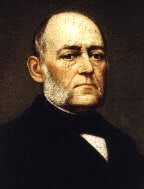
Karl/Carl von Rokitansky (1804–1878) was the most capable gross pathologist in medical history. He contributed to both pathology (its development as an independent discipline) and our understanding of disease. He was the first physician to approach the study of pathological changes in organs in a systematic way. He correlated autopsy findings with the symptoms experienced by the individual prior to death and his pioneering work established autopsies as the primary method for investigating the mechanisms of disease.
He is reported to have performed over 30,000 autopsies and supervised another 70,000.
What made his autopsies different from the previous standard was his insistence on inspecting every part of the body. Previously, the physician would decide where the “seat of the disease lay” and examine only those organs. Once an abnormality was identified, it was declared the cause of death, and the autopsy was considered finished.
As much as he contributed to both medical knowledge and pathology, he provided no theoretical interpretations of the diseases/symptoms encountered during the autopsy. His work was further limited by his failure to employ microscopy.
Fortunately, his leading rival didn’t. (I talk about him next.)
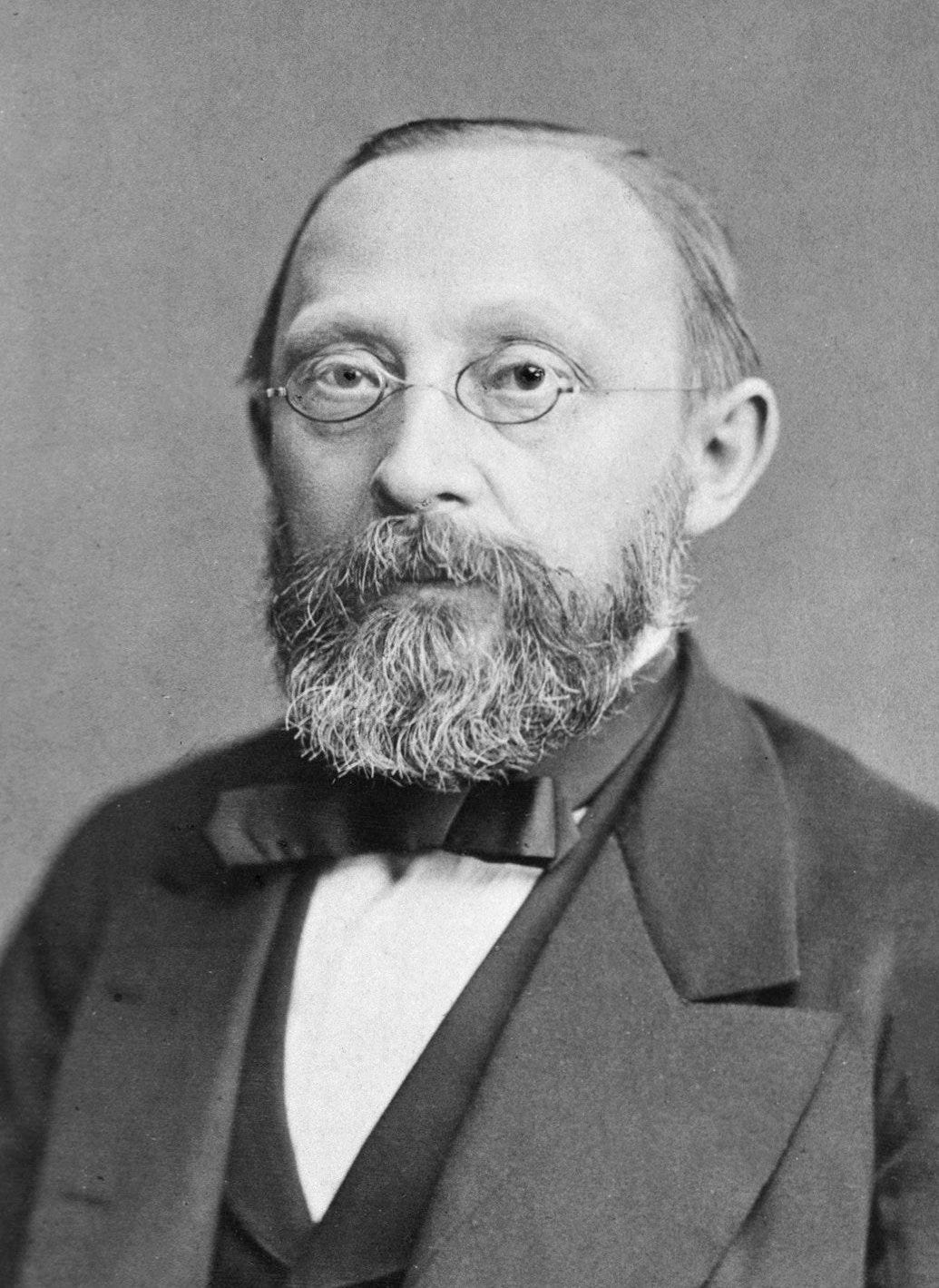
Rudolf Ludwig Karl Virchow (1821–1902) revolutionized medicine by embracing modern technology, exploiting the potential of microscopy, and demonstrating that cellular pathology was the basis and origin of disease. He is considered the father of modern pathology. He was one of the first to insist that the cell was the basic unit of the body and, if science was to understand disease, it had to do so by studying the body on the cellular level. His use of the microscope to determine cause of death laid the foundations for cellular pathology.
He created the procedure that all autopsies should follow.
When he became assistant to Robert Froriep, the Prosecutor at the Charité in 1844, he found the autopsies irregular, unmethodical, and performed by individuals who had not taken the State examination and who had no technical training. Believing that this lack of systematization hampered medical progress, he published what we would consider a procedural manual in 1876 outlining how an autopsy should be conducted. If autopsies were not approached with purpose and intent, how was anything to be learned? Like his rival Rokitansky, he believed that autopsies should be comprehensive, sometimes taking over three hours to complete his.
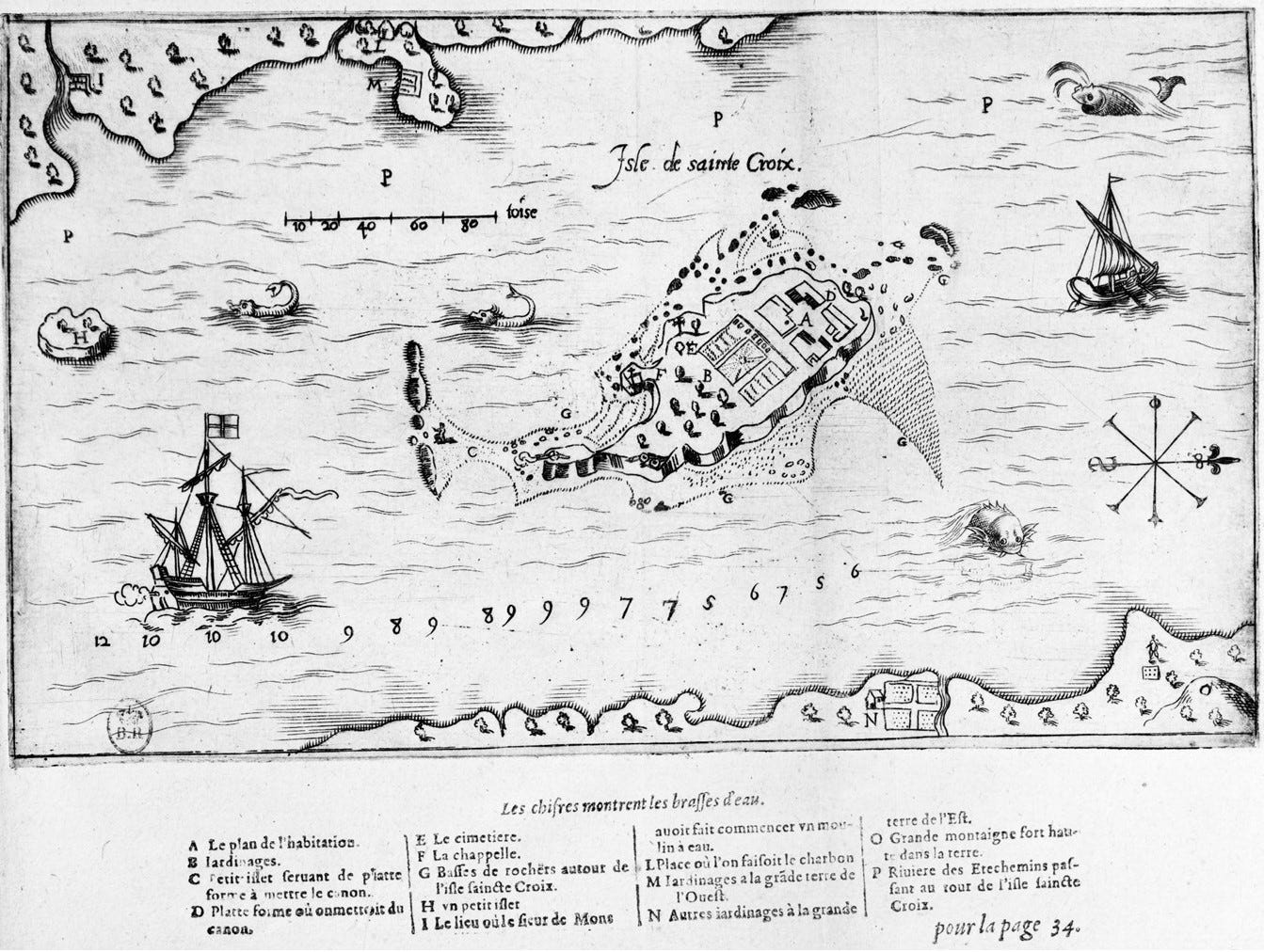
In 1603, King Henri IV of France granted a fur monopoly to Pierre du Gua, Sieur de Monts (a Huguenot noble). But there was a condition. He must transport 100 settlers to New France each year at his own expense. Du Gua set out the next year with Samuel de Champlain as his mapmaker and geographer. They were accompanied by 79 others and they settled on the small island of St. Croix which sits along the Canadian-American border in the St. Lawrence (between New Brunswick and Maine). They found themselves stranded there over the harsh winter of 1604/05 during which 35 men died. Scurvy was suspected, but at the time, the only way to diagnose the disease was by the presence of periosteal lesions on the leg bones. This could only be done post-mortem. Champlain ordered his surgeon (there were two on the voyage) to “open several of the men to determine the cause of their illness.”
This marks the first recorded instance of an autopsy conducted in North America. Confirmation that the autopsies had been carried out came in 2003 when the site was excavated and the bodies were analyzed. The individual in Burial 10 provided the most definitive evidence. He exhibited signs of a symmetrical, trans-verse cranial autopsy. The skull was opened and the brain removed and examined. When the 1604/05 autopsy had been finished, the cranium was replaced and the individual was buried.
We know much about this doomed venture because Champlain kept detailed journals (published in 1613). He documented the symptoms of the disease which he referred to as “mal de la terre” (land sickness). At the time, it was thought that there were two forms of scurvy: one you caught at sea, the other on land. His description of the autopsies included both the external and internal examinations. For example, he identified what might have been hematomas (purple spots) on the thighs which the surgeon incised with a razor to reveal clotted blood. His notes are the only known instance in historical literature in which we have an eyewitness account of scurvy alongside the paleopathological analysis of the bones.
Champlain and his surgeons determined that the men had died of scurvy, a diagnosis which was confirmed 398 years later.
Forensic Medicine in Western Society, by Katherine D. Watson
It is exceptionally difficult to separate a discussion on the progress of forensic medicine from advancements in medicine in general. You can’t know what is abnormal if you don’t know what healthy tissue looks like, and you can’t know what caused an illness or death if you don’t know how the body works. The latter fed directly into the former. Katherine Watson does an excellent job of separating the two, and firmly places medicine within the context of the law.
She provides a detailed history of the close association of medicine and the legal system beginning with the early Middle Ages and going through to the twentieth century. She presents the foundations of the Western legal system and shows how those origins directly impact what happens today.
Her book is comprehensive, discussing topics as diverse as witchcraft, the participation of experts (including how that definition changed), and the role of the midwife in medico-legal proceedings.
Rather than limiting herself to the physical aspects of medicine (what we think of as pathology), she discusses criminal responsibility and the insanity defence. She talks of how medicine was at loggerheads with the legal system and how the line between “insane” and “legally insane” was drawn and bickered over. She touches upon a subject I’ve not come across in other discussions of medicine and the law. She refers to it as the “medicalization of deviance” which includes instances of infanticide, homosexuality, and suicide, and shows how the notion of deviance, and its criminality, changed alongside societal attitudes. She shows the role medicine played in all of it.
Watson casts a wide geographic net including France, Germany, Australia, and England in her book. She shows how different countries contended with the establishment and enforcement of their legal systems; where they differed and where the “common ground” was.
Quick case studies are used to illustrate the points she makes which puts the “theory” into context.
It is a heavy read and academic in nature and is not something I would recommend taking to the beach or poolside on your holiday. Having said that, it is a fascinating read. By the end, you have a comprehensive understanding of medicine in the legal system of today (and the nineteenth century) through an understanding of its foundations. If you have an interest in the development of legal systems and the role of medicine in that development, this is your book.
Horses running everywhere all the time. (This extends to erroneous portrayals of cavalry charges, but that’s another annoyance entirely.) It seems that no matter what movie or TV show I watch, more often than not the horses are running, even when pulling a carriage. Probably done for dramatic effect. Watching a horse walk is only mildly more entertaining than watching grass grow.
It was rare for people to run their horses when travelling because horses can’t run full out over great distances any more than humans can. Racing, both organized and not, is a different story. The steeplechase was invented in Ireland when locals would race between church steeples in different villages.
The earliest system for delivering messages over long distances dates from Egypt (approx. 2000 BC), and there are similar references throughout history. There were times when these messages had to be delivered quickly which meant galloping. Even when they weren’t rushing, these were relay systems with posthouses located along the route where fresh horses were available. Nobody ran start to finish on the same horse.
My father grew up on a farm in south-western Ontario before machines replaced horses, and my grandfather kept a few “trotters.” (A style of racing where the horses trot and the driver is pulled behind on a two-wheeled cart called a sulky.) He told me the story of when they had to fetch the doctor quickly. They hitched the mare up to the cutter, raced into town, got the doctor, and returned. My father thinks the mare sensed the urgency because she went full tilt in both directions, faster than she had ever run before, surprising all involved (my father, grandfather, and the doctor). The heroic feat did not go without consequences. My father said the mare was never the same; the run had ruined her. There are instances in the historical documents where horses were run so hard they died or had to be put down. So, if you are going to have your characters ride somewhere, have some kindness for the horses carrying them, and have them walk, not run. Unless they’re being chased.
A bit misleading to call it slang. (Okay, it’s entirely misleading.) Instead, it’s vocabulary related to the topic of autopsies.
Animism: The belief that “what happens in the world around us is somehow controlled by personal beings or gods, or some sort of spiritual forces that stand above the merely “natural” order of things.” (van den Tweel, J.G., and C.R. Taylor, “The rise and fall of the autopsy,” Virchows Arch 462, 371–380). This meant that illness and disease had no biological basis, but were the result of divine displeasure. It has been around since the millennia before Hippocrates (468-377BC) and was eventually replaced by the view that disease had natural causes.
Necropsy: Another term for autopsy. During the seventeenth century it became the habit of medical men to carry out and record post-mortem examinations, or necropsies. These were put together in collections. The most famous and influential of these was Theophile Bonet who published his Sepulchretum sive anatomia practica ex cadaveribus morbo denatis in 1679. It became the foundation for future necropsies and anatomical studies, and played an important role in the development of modern medicine.
No posts
Comments
Nothing yet. Say the first thing.
Sign in to join the conversation.