
I spent a lot of time thinking about games last year.
One of my guides through that trip was Homo Ludens, in which Johan Huizinga makes a case for the necessity of a certain agonistic “play element” to the development and health of civilization. His somewhat grim conclusion is that the modern age can be characterized by an inauspicious commixture of seriousness with play:
The attempt to assess the play-content in the confusion of modern life is bound to lead us to contradictory conclusions. In the case of sport we have an activity nominally known as play but raised to such a pitch of technical organization and scientific thoroughness that the real play-spirit is threatened with extinction. Over against this tendency to over-seriousness, however, there are other phenomena pointing in the opposite direction. Certain activities whose whole raison d’être lies in the field of material interest, and which had nothing of play about them in their initial stages, develop what we can only call play-forms as a secondary characteristic. Sport and athletics showed us play stiffening into seriousness but still being felt as play; now we have serious business degenerating into play but still being called seriousness.
Huizinga approaches Marshall McLuhan in diagnosing a cause for the reversal of seriousness towards specious frivolity—but in making a distinction between technology and “culture proper,” he unwittingly confesses that he is under the Narcissus Trance:
The impetus given to this agonistic principle which seems to be carrying the world back in the direction of play derives, in the main, from external factors independent of culture proper—in a word, communications, which have made intercourse of every sort so extraordinarily easy for mankind as a whole. Technology, publicity and propaganda everywhere promote the competitive spirit and afford means of satisfying it on an unprecedented scale.
Still: how wonderfully observant and prescient of Huizinga.
I recently revisited Homo Ludens because I had another idea I wanted to bat around— but for now I’d like to spend a few moments peering at the collective psychosis fomented by Twitter in the 2010s.
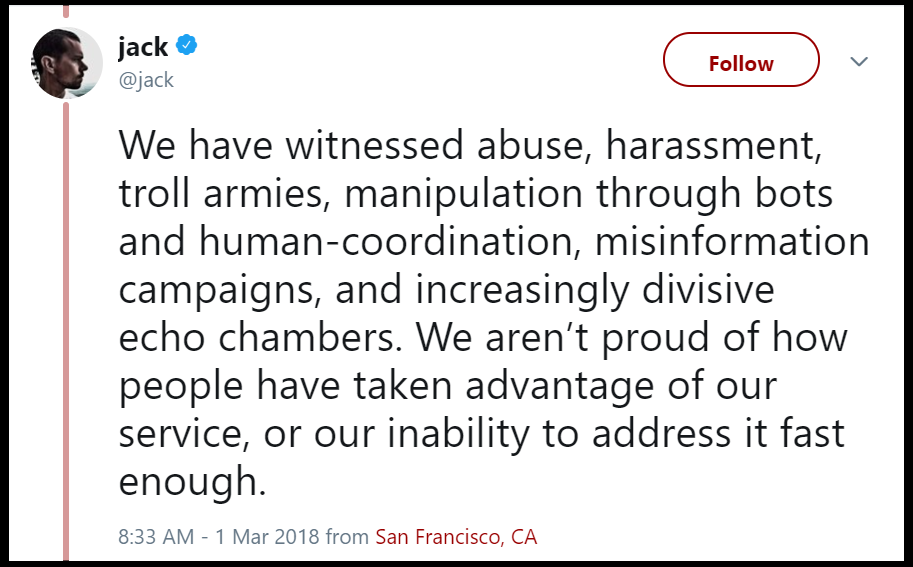
A partial explanation of what happened during that decade: a society with an ingrained notion of “the private individual” had to reckon with a mesmerizing new technology that made practically everyone a public entity and every act a (potential) political statement. There were growing pains. (Once again, McLuhan’s remarks about the global village as “a place of very arduous situations and very abrasive interactions” are lapidary.) While the fever appears to have broken, the conditions that caused it are just a part of life now—a settled feature of our environment.
I’d like to add a footnote to the accepted etiology.
So by now everyone is familiar with the effects of Twitter on the public sphere. (Enough time has passed now, and the culture of the platform is so greatly changed, that we can and should differentiate between X and Twitter, and talk about the latter in the past tense.) By the early 2010s, it had entrenched itself as the open forum. Journalists, politicians, and celebrities, were on Twitter, using their real names instead of pseudonyms. Minor characters in civic life could, theoretically, communicate with these figures directly—and vice versa. Though it had the smallest userbase of the major platforms, being the preferred site of the Media People gave Twitter a grossly disproportionate influence. No matter which side of the political aisle you were on, you felt unhappy with the platform’s politics: conservatives whinged about all the “social justice warriors,” and liberals complained that the platform was a cesspit of every retrograde -ism they could name. Moreover, the platform had a tendency to reward discourse that spoke to the R-complex rather than to the neocortex. Wittingly or unwittingly, it was engineered to foster conflict.
As the Blues got woke and the Reds marched to MAGA’s drumbeat, Twitter could aptly be called an “arena” in the United States’ culture war insofar as its discourse had the character of sport. There were teams (the SJWs and the Shitlords) with recognized champions (the blueticks and power users). It had a scoring system (likes, RTs, the ratio). It had rapt spectators and strongly encouraged audience participation. It celebrated and honored the sharpest wits, the spiciest takes, the most audacious callouts, the most devastating comebacks, and the most savage pile-ons. There were rules to be observed, and violating them meant the deletion of one’s tweets and disqualification from future play. Cancelled? Fired from your job, forced to delete your account? Call it a sporting injury. Call it losing so badly that you were forced into retirement.
Some time ago, we looked at how Twitter, in its latter-day iteration as X, has the aspect of divination ritual. (“Hey, Grok.”) But there’s another (and probably more obvious) archaic game that Twitter discourse evokes.
Homo Ludens’ third chapter contains a long section about the ancient institution of the “slanging-match:”
The nobleman demonstrates his “virtue” by feats of strength, skill, courage, wit, wisdom, wealth, or liberality. For want of these he may yet excel in a contest of words, that is to say, he may either himself praise the virtues in which he wishes to excel his rivals, or have them praised by a poet or herald. This boosting of one’s own virtue as a form of contest slips over quite naturally into contumely of one’s adversary, and this in its turn becomes a contest in its own right. It is remarkable how large a place these bragging and scoffing matches in the most diverse civilizations. Their play-character is beyond dispute: we have only to think of the doings of little boys to qualify such slanging-matches as a form of play. All the same, we must distinguish carefully between the formal boasting or scoffing tournament and the more spontaneous bravado which used to inaugurate or accompany a fight with weapons, although it is not at all easy to draw the line...
Beowulf, in the saga of that name, while staying at the court of the Danish king, is challenged by Unferd [sic] with taunts to recount his former exploits. The Old Germanic languages have a special word for this ceremony of mutual bragging and execration, be it the prelude to armed combat in connection with a tournament, or only part of the entertainment at a feast. They call it gelp, gelpan. The substantive, in Old English, means glory, pomp, arrogance, etc., and in Middle High German, clamour, mockery, scorn.
Over the last several years, more and more people have been noticing that ever since Web 2.0, culture and politics have not merely grown more tribal, but appear to be evoking a more oral mode of being. (McLuhan would call this statement redundant.) Twitter’s retrieval of pre-literate cultures’ slanging-matches is a specific and fascinating instance of the emergent neo-orality eliciting a delayed spasm of public shock. By the time Ezra Klein was writing about Gamergate and the politicization of everything and the chattering classes were observing that Candidate Trump was really good at Twitter (and could this have implications for his electoral prospects?), there was nothing to be done. The surgery was already over and the prosthetic had been grafted to the body politic’s ganglia. We were merely experiencing the anesthesia wearing off.
But to consider Twitter in its aspect of a mass-participatory sport in the vein of a public slanging-match, we ought to think of Huizinga’s overall assessment of the play-element as it lives or operates in the modern (post-1800) age, in which he observes games and sports have grown serious, while the activities of business and politics have taken on specious play-characteristics.
Was Twitter a game that got too serious—or an internecine cultural conflict that found expression in a gamified social media platform?1 Is there a difference?
As a form of recreation, as a pastime, as play, Twitter was often joyless. It was fun and frivolous very early on—before it evolved into The Hellsite.2 Towards the end, a major part of Twitter culture was complaining about how miserable it was to be a regular Twitter user. You checked the app thirty times a day, and got thirty separate firehose blasts of polemic and posturing, negativity and noise, occasionally interspersed with something that made you think and/or laugh. If you were a participant on any level, you submitted your glands and gray matter not only to the behavioral controls of the Notifications (How many Likes did I get?! How many new followers?? How do I get more Likes and followers???), but to the lure of agonistic competition that naturally occurs where there are publicly observed points, prizes, and prestige awarded on the basis of performance—as they are in any competitive sport or contest between “gentlemen.”
Though I am once again showing my age, I am reminded of people who had toxic relationships with the onerous second-job MMORPG Final Fantasy XI. Playing it wasn’t making them happy—quite the opposite—but for a very long time they were too invested and too habituated to uninstall the damn thing. What was happening on the screen wasn’t real to them in any materially efficacious sense, but I saw the panic attacks narrated on LiveJournal. And I saw people sharing (on Twitter) the depression and anxiety and misery downstream from bad interactions on Twitter, and putting it all behind them would have been as simple as deleting the app. And yet…
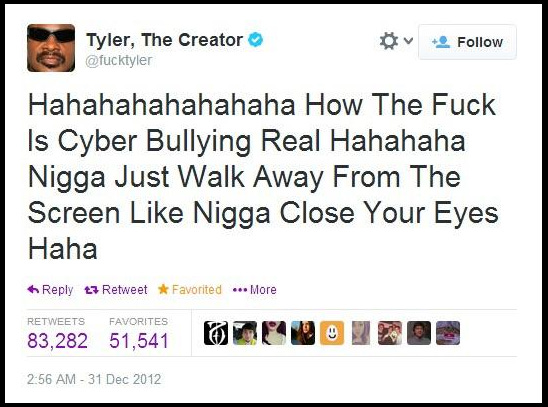
As Huizinga says, there’s a difference—not always clear—between flinging insults and calumny as part of a ritual or festive occasion, and instances where the slanging-match is the prelude to the most straightforward political act of all: coming at your foe(s), armed, with the intent of maiming or killing them to put them out of your way.
A sportive slanging-match assumes that once the competitors are done saying things about each other’s mother and manhood, they’ll behave civilly toward each other. Unferth more or less calls Beowulf a pussy who’s not up to the task of slaying Grendel; Beowulf boasts of his own deeds, tells Unferth that he’s never done anything worth talking about, and then heaps up some embarrassing dirt from his opponent’s past; everyone laughs, drinks, and makes merry. Unferth doesn’t go looking for Beowulf afterwards to smash in his skull; he later lends him his own sword when the hero goes to confront Grendel’s mother. Huizinga might say that their their rivalry is appropriately bounded within the sphere of fair play. Ultimately they’re on the same side.
Similarly, boxers and mixed-martial artists may go on camera and talk shit about their rivals before a fight, but they usually know better than to go looking for them on the street and take swings at them. Not for nothing are the “playgrounds” of pugilistic sports delineated by ropes or fencing material; Huizinga would liken these to the “magic circles” of archaic ritual spaces. On either side of the enclosure, different rules apply. You’d get arrested for beating me unconscious outside of a bar; you’d win prizes and adulation for beating me unconscious in a boxing ring. One is a serious thing that occurs in a “real world” where we are expected to behave civilly towards one another, while the other is sport, occurring in a place specially set aside for violent (but rule-governed) play.
Huizinga writes favorably—at times—about an agonistic (and often savage) form of fair play operating in democratic governments:
Not very long ago political life was full of unmistakable playfeatures [sic]. One of my pupils had recently worked up my observations on this subject into a thesis on parliamentary eloquence in France and England, showing how, ever since the end of the 18th century, debates in the House of Commons have been conducted very largely according to the rules of a game and in the true play-spirit. Personal rivalries are always at work, keeping up a continual match between the players whose object is to checkmate one another, but without prejudice to the interests of the country which they serve with all seriousness. The mood and manners of parliamentary democracy were, until recently, those of fair play both in England and in the countries that had adopted the English model with some felicity. The spirit of fellowship would allow the bitterest opponents a friendly chat even after the most virulent debate. It was in this style that the “Gentleman’s Agreement” arose. Unhappily certain parties to it were not always aware of the duties implicit in the word gentleman.
Well, then: how can this be expected to play out when the parliamentary floor is open to anyone with a smartphone?
To borrow some phrasing from Nick Carr’s recent post on the topic, “a well-informed citizenry capable of making reasoned judgments about national problems and plans” is the ideal on which Western-style liberal democracy is predicated. The old thinking goes: it’s not only good for a literate voting public to read the newspapers and stay abreast of national affairs, but to discuss and debate the issues with each other. Through civil but agonistic conversation—call it dialectic, if you want—parties with different viewpoints stress-test each other’s positions, uncover weaknesses in their arguments and proposals, and mutually arrive at more reasonable conclusions. It is indeed one’s civic duty to be intellectually engaged in this way. Elected officials, chosen and voted into office by this well-informed and reasonable citizenry, can expected to be enlightened, scrupulous, and capable of making wise decisions with regard to local, national, and foreign policy.
Cute, right?
Believers in the “well-informed citizenry” dogma who witnessed the conversation on Twitter—or any other social platform in the 2010s—and did not feel their worldview shaken must have had one hell of a friendly algorithm working in their favor.
It’s fair to say that political discourse on Twitter typically wasn’t conducted with persuasive arguments, consensus-building, and eventual compromise in mind. Exchanges between ideological opponents on Twitter was most often about publicly execrating and humiliating those with whom one disagreed. Sometimes a spirit of fair play prevailed. Depressingly often, it was conducted along the lines of calling someone a blasphemous pigfucker before lunging at him with an axe, or inciting a bloodthirsty crowd to tear an unpopular figure limb from limb. Between institutionally embedded bluetick types who were obliged to observe certain standards of decorum, it was sometimes more reminiscent of the bloodless, genteel violence which Martin Scorsese recognized in Edith Wharton’s Age of Innocence. People said shit to each other on Twitter that they would never say to a stranger face-to-face—not unless they were prepared to make a bitter personal enemy, or to risk a physical confrontation.
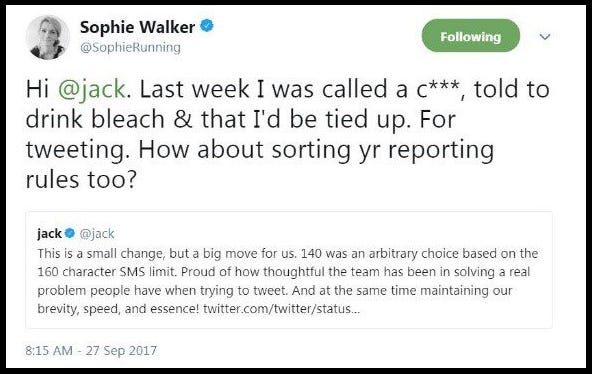
But at least in the political acts of armed combat, executive decision by way of a violent mob, or a maneuver to get somebody banished from the tribe, either you or your despised opponent gets somewhere. At the end of it, either you or he is rendered incapable of doing politics anymore. This isn’t how things are done in a society that has its shit together, of course—and it often doesn’t work very well—but it is a form of politicking.
On [Anglophonic] Twitter, what one routinely saw was a pair of opposed tribal confederations that seemed to really, really wish the other side would just fucking die (or otherwise go away forever)—but neither was willing or able to cross the Rubicon and follow Myanmar’s example. Thankfully. While there were incidents in meatspace, we never devolved to the variety of politics practiced in the late Roman Republic or Weimar Germany, where thuggish political gangs ran around threatening people and/or brutalizing each other. One possible explanatory factor—and it’s really just a hunch—is that participants and partisans were inhibited by some background awareness that what they were up to was basically just an online game that would be spoiled if it got too real.
A softer version of this hypothesis would be that most of the really scurrilous and opinionated tweeters were a whole lot less serious about their causes and the urgency of the situation than their online performances suggested, and that the drip-feed of updoots exerted more control over them than the prospect of actually beating up fascists or Standing Their Ground against Antifa people. But I guess this is still as much as saying they were playing make-believe.
By and large, the political discussions for which Twitter became increasingly notorious were pointless: neither productive exercises in civic debate, nor a resort (or a prelude) to “politics by other means,” as Carl von Clausewitz put it. It amounted to people behaving viciously towards one another in perpetuity for the sake of earning virtual social validation tokens (and maybe a writing gig here or there, or promoting a monetized YouTube channel), with no possibility of breaking the cycle through either some sort of reconciliatory process (how would that have even been possible?) or by actually disposing of the opposition. (None of those -phobes and -ists who got hounded off the platform actually went anywhere, and it’s doubtful they changed their minds about anything.) It was a gamified public forum that made for a shitty online game and exacerbated the toxicity of the United States’ political environment and further degraded the public conversation.
I think we can agree that Huizinga struck the lexical bullseye by identifying what 2010s Twitter exemplified:
Modern social life is being dominated to an ever-increasing extent by a qualify that has something in common with play and yields the illusion of a strongly developed play-factor. This quality I have ventured to call by the name of Puerilism, as being the most appropriate appellation for that blend of adolescence and barbarity which has been rampant all over the world for the last two or three decades.
Homo Ludens was first published in 1938. Huizinga lived in the Netherlands. The puerilism he’s thinking about largely pertains to the “rigamarole of collective voodoo and mumbo-jumbo” of nationalism, and especially of fascism. As Twitter became a contested field in the culture wars, the integration of memes, dunks, doxes, dogpiles, and invocations of violent acts into its everyday discourse certainly smacked of a not dissimilar flavor of “adolescence and barbarity.” In the mid-to-late-2010s, the prevailing attitude of the platform was nothing if not puerile.
X’s position in the zeitgeist isn’t nearly as prominent as Twitter’s was in its heyday. Though the platform has a long way to go before becoming altogether irrelevant, its decline is evident in the fact that the temperature seems to have significantly decreased. Nate Silver suggests that the Bluesky exodus was a major contributing factor; the incompatible tribespeople aren’t commingling with the same intensity as they did in the 2010s. Moreover, that iteration of the platform was a Millennial game—and as Gen Y ages, has more to do, and reconsiders its priorities, its members were/are apt to determine that maybe flyting with digital phantoms over culture-war issues (or gawking at such tussles) is something they can dispense with. How grown-up of us, I hope.
I punched this out several days ago, and when it gets posted, I will be in Death Valley with my spouse—decompressing and detoxing. Sweating it all out. May your games be fun, your play be fair, and your politics effective.
Though we use the terms “politics” and “culture war” somewhat interchangeably here, there is good reason to distinguish one from the other. There’s a good 2021 Politico interview with James Davison Hunter—who popularized the term “culture wars” with his 1991 book of that title—where he touches upon the difference and upon how social media exacerbated the conflict between cultural conservatism and cultural liberalism:
It feels like the universe of things that might be considered part of the “culture war” has grown considerably over the past 30 years, such that it seems to now envelop most of politics. In that situation, how does democracy work? Because when the stakes are existential, it would seem like compromise is impossible. Can you have a stable democracy without compromise?
No, I don’t think you can. Part of our problem is that we have politicized everything. And yet politics becomes a proxy for cultural positions that simply won’t brook any kind of dissent or argument.
You hear this all the time. The very idea of treating your opponents with civility is a betrayal. How can you be civil to people who threaten your very existence? It highlights the point that culture is hegemonic: You can compromise with politics and policy, but if politics and policy are a proxy for culture, there’s just no way.
In the original book, I had a short chapter about the technologies of communication and discourse, and the ways they’ve accentuated polarization. I argued that because of these technologies, our public culture is more polarized than we, as a people, are. And the technology I was talking about is just going to sound really funny nowadays: It was direct mail. This was [1991], before social media.
So, take the role of some of the extraordinary advances in social media and the ways in which these multiply the anonymity, the extremism of rhetoric, the absence of any kind of accountability in our public speech. They take what is already a shallow discourse—you know, the trading of slogans, and the like—and make it even more difficult to find any kind of depth.
How do you compromise when that becomes the dominant form of discourse? I think that there are ways in which serious and substantive democratic discourse is made difficult, if not impossible, by the democratization and proliferation of free speech. That seems like a strange thing to say, but...
Polling quant Nate Silver reminisces:
By the late 2010s, Twitter would “evolve” in a direction that was more partisan, less pluralistic, and dominated by quote-tweets and dunks. For lack of a better term, it also became much more woke. The enforcement of groupthink was rigid, not unlike what Bluesky has become today. There was always a “main character,” someone who was the subject of the pile-on or the struggle session of the day. Your goal was supposedly never to become the main character. I spectacularly failed at this. Without exaggeration, I was probably a “trending topic” on Twitter (also something you never wanted to be) more often than all but a half-dozen or so other writers and journalists.
Comments
Nothing yet. Say the first thing.
Sign in to join the conversation.