
I want to start off this morning’s newsletter by briefly talking about a story I missed while dealing with my mom’s passing last month. The Department of Homeland Security finalized a new rule in July that DHS says will “end foreign student visa abuse.” The new rule will become effective September 15. Per the DHS press release, the major changes that will result from this new rule are:
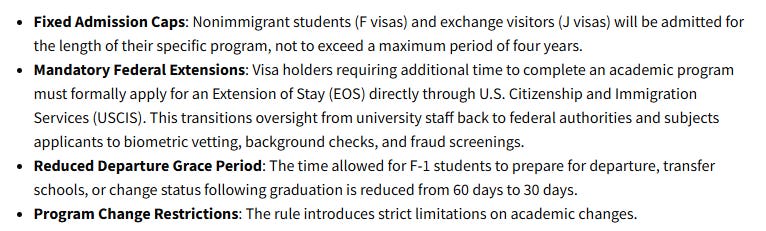
Student advocates, education experts and some universities have heavily criticized the new rule, particularly the time limits given that nearly all doctorate programs take more than 4 years to complete, and many students need more than 4 years to complete undergraduate programs. The University of Michigan pointed out that the rule did not align with average degree completion times.
I am bringing this story up in my newsletter because in my decade of work in NOAA Research I became very aware of the crucial role that foreign students play in scientific research, and specifically within the atmospheric science communities. Many important advances in recent decades in modeling, weather radar, social science and other areas were made by international researchers whose work was started or was still ongoing through research in support of a degree program. A significant number of these scientists went on to obtain their green cards or citizenship and became NOAA employees or affiliated with NOAA labs through university cooperative institutes. I am sure that other federal science agencies like NASA and NSF are similar.
Dealing with the student international visa program was already a major source of overhead and angst for students and universities alike — and it seems clear these rule changes will add serious additional obstacles for foreign students to pursue academic degrees here. While I think everyone would agree that visa abuse resulting in “forever students” would be something that we would want to curtail, DHS’ own statistics show that a total of 2,100 people who obtained student visas in the 2000 through 2010 are still in the US today on a student “F” visa, compared to 1.4M student “F” visa entrants into the country in 2024 alone.
I am seriously concerned about this being yet another self-inflicted wound to our nation’s scientific capacity with minimal tangible benefits. The US will almost certainly become a much less attractive location for these talented international early career scientists to conduct their research. The reality is that the United States does not have the pipeline of students to fill the void left by these international students going elsewhere. The result will almost certainly be that the US will be doing less cutting-edge research and will gradually fall behind other countries like China and India where these students will now be headed.
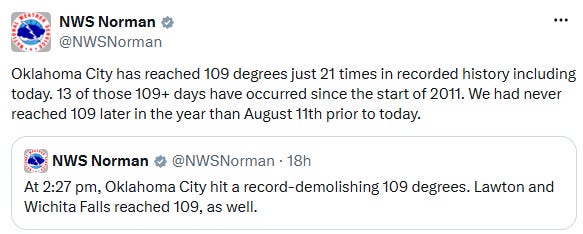
Tuesday was a day for some rather impressive heat records to fall across the country. Here in my backyard, NWS Norman pointed out the above statistics about the 109F high that was reached at Oklahoma City. The daily record high temperature was broken by 5F.
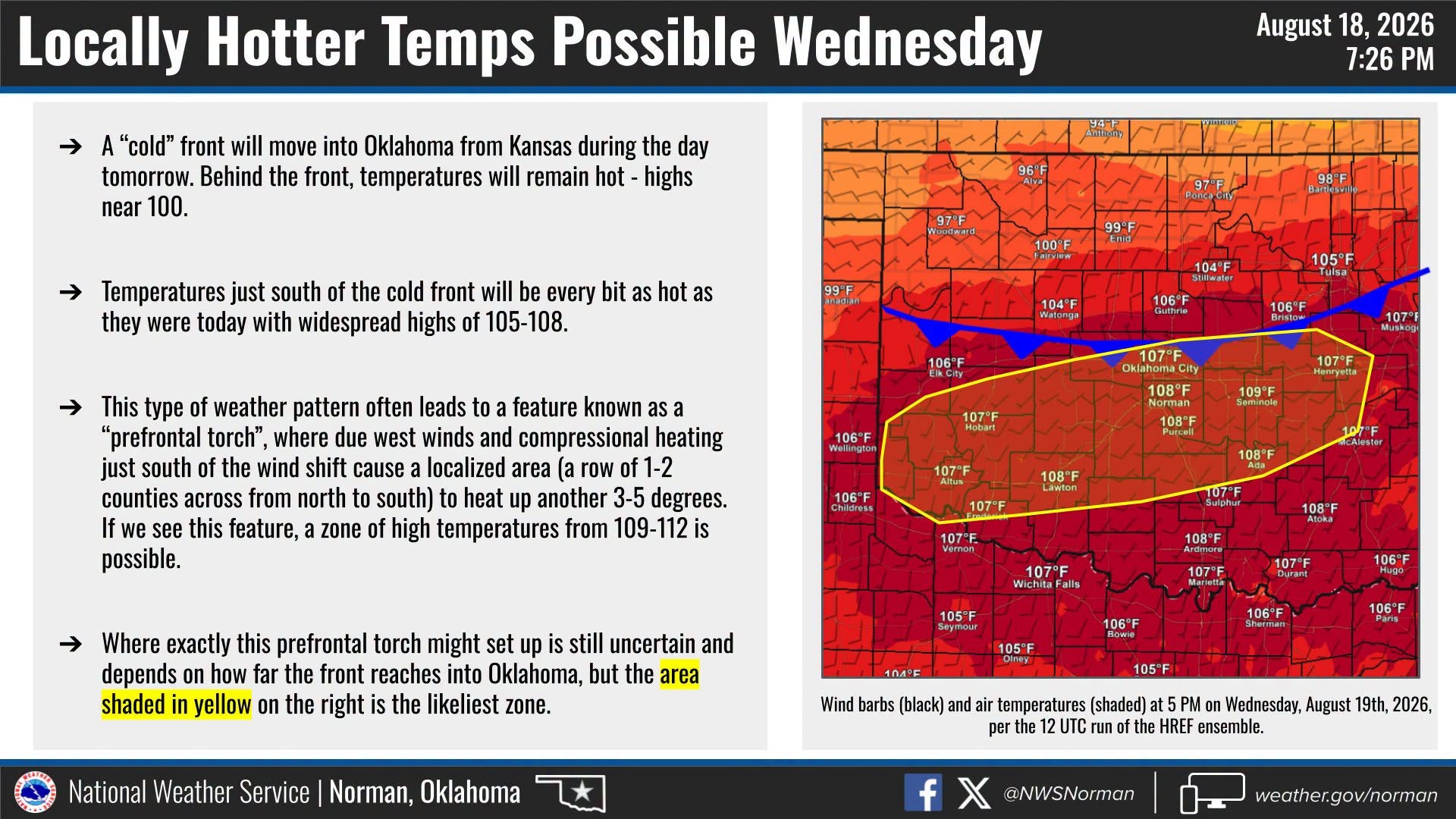
Amazingly, it could get even hotter today for some areas along and south of Interstate 40 ahead of a cold front which will bring slightly cooler (but more humid) conditions to northern Oklahoma.
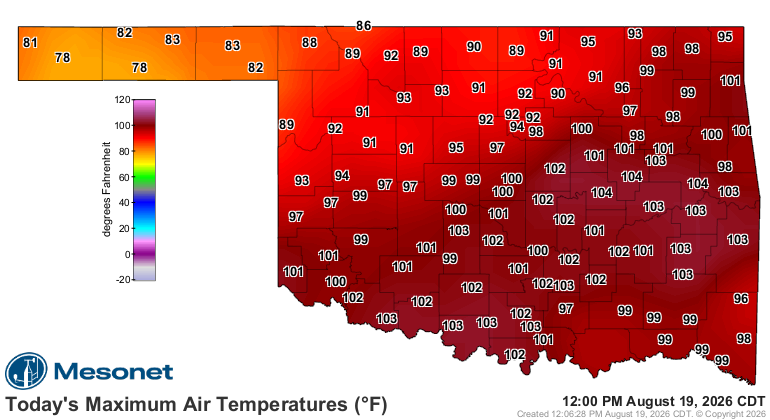
Temperatures at midday were already in the triple digits and as high as 104F to the south of the front.
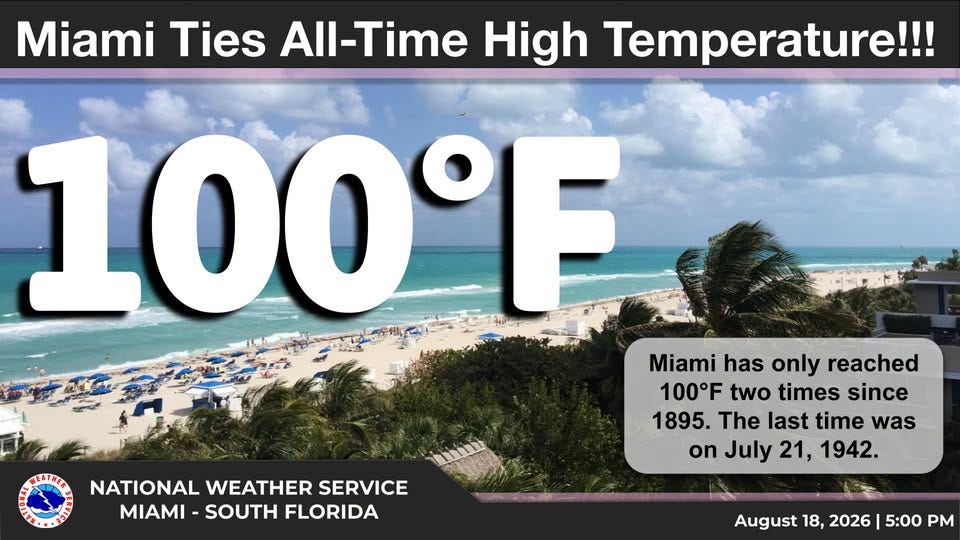
The heatwave extends east into the Southeast and Florida, where Miami tied its all-time record high temperature on Tuesday, reaching 100F for the only the second time in history and the first time in August. Combined with a morning low of 82F, the daily mean temperature of 91F set a record for the hottest day on record for Miami, where records date back to 1895.
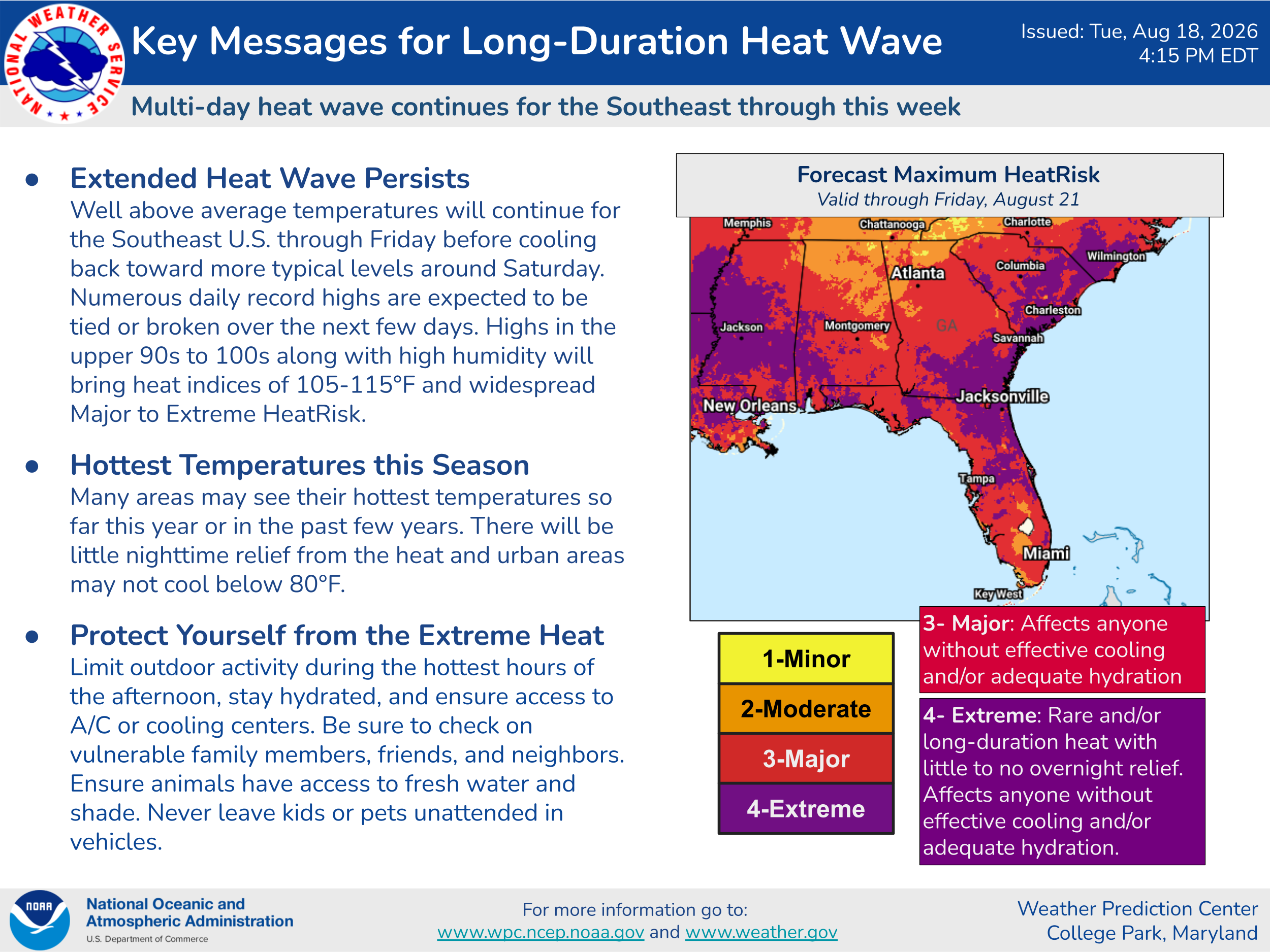
Humidity will be much higher in the Mid-South and Southeast than areas farther west, and extreme heat risk will continue to be common the next few days. The Southeast will finally see a bit of a cooling trend late this week as a developing upper level trough of low pressure along the East Coast will cause a cold front to drop south across the eastern US.
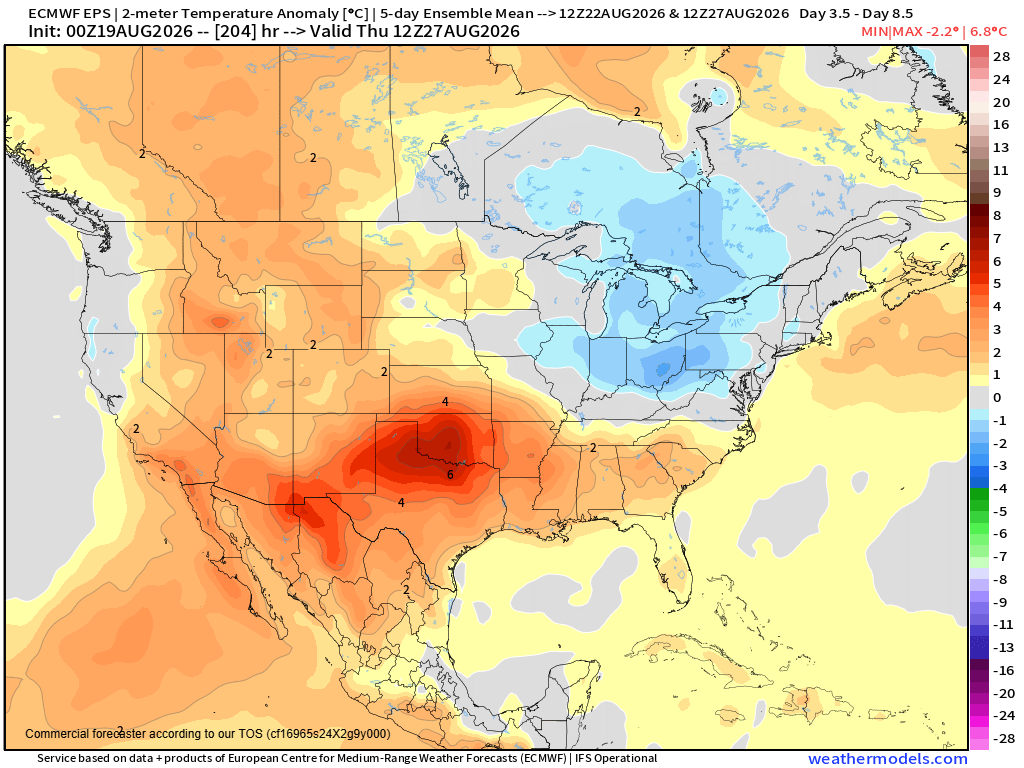
The “heat dome” will remain in firm control of the south-central US, with well above normal and at times record heat expected into next week. It will also expand across much of the western United States. While the Midwest and Northeast will somewhat cooler than normal temperatures, even with the reprieve from the extreme heat of recent days the Southeast looks as if it will experience above normal temperatures much of next week.
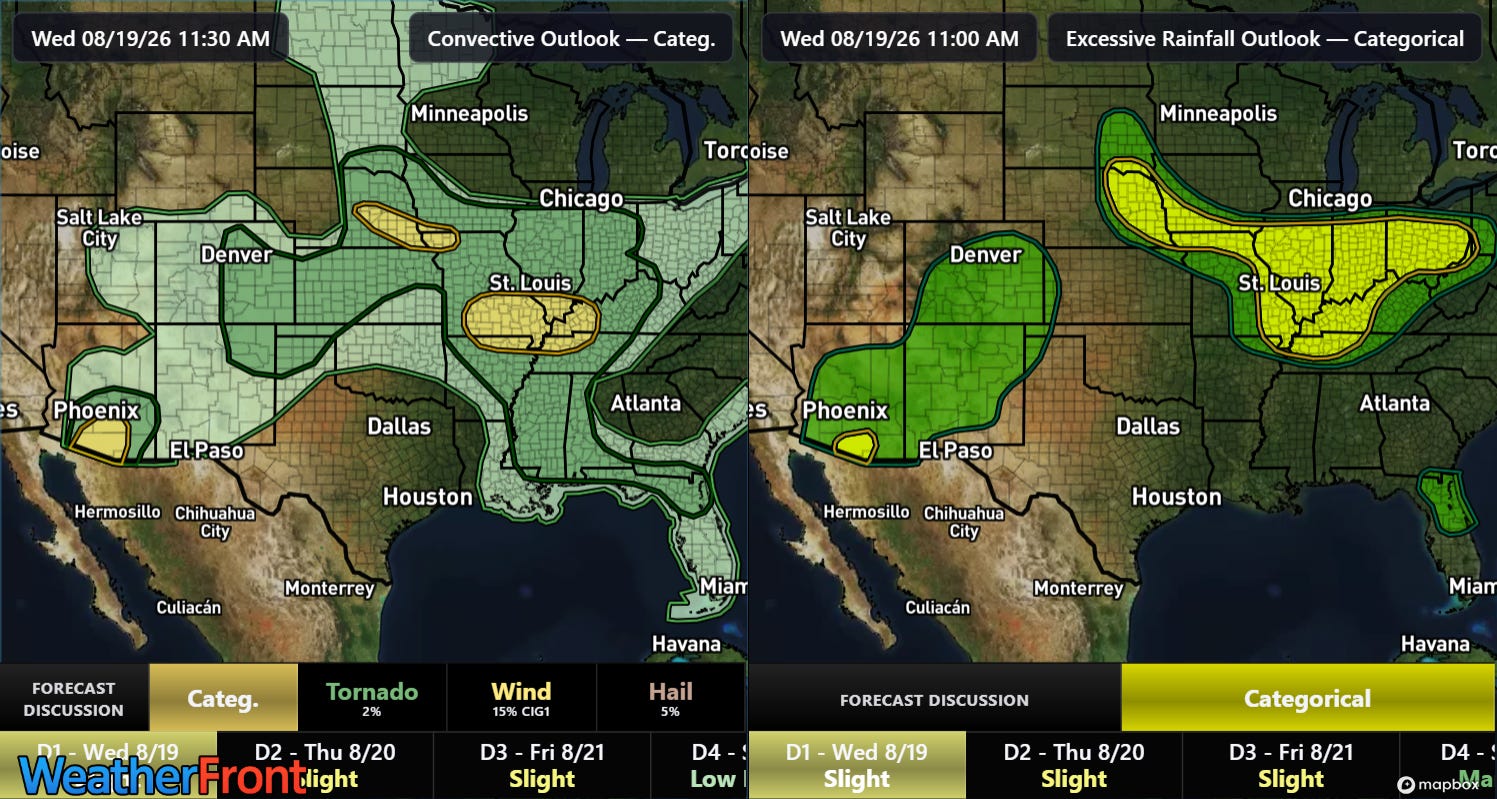
Clusters of thunderstorms moving around the periphery of the upper level area of high pressure will continue to bring some risk for severe weather and flash flooding this afternoon and tonight.
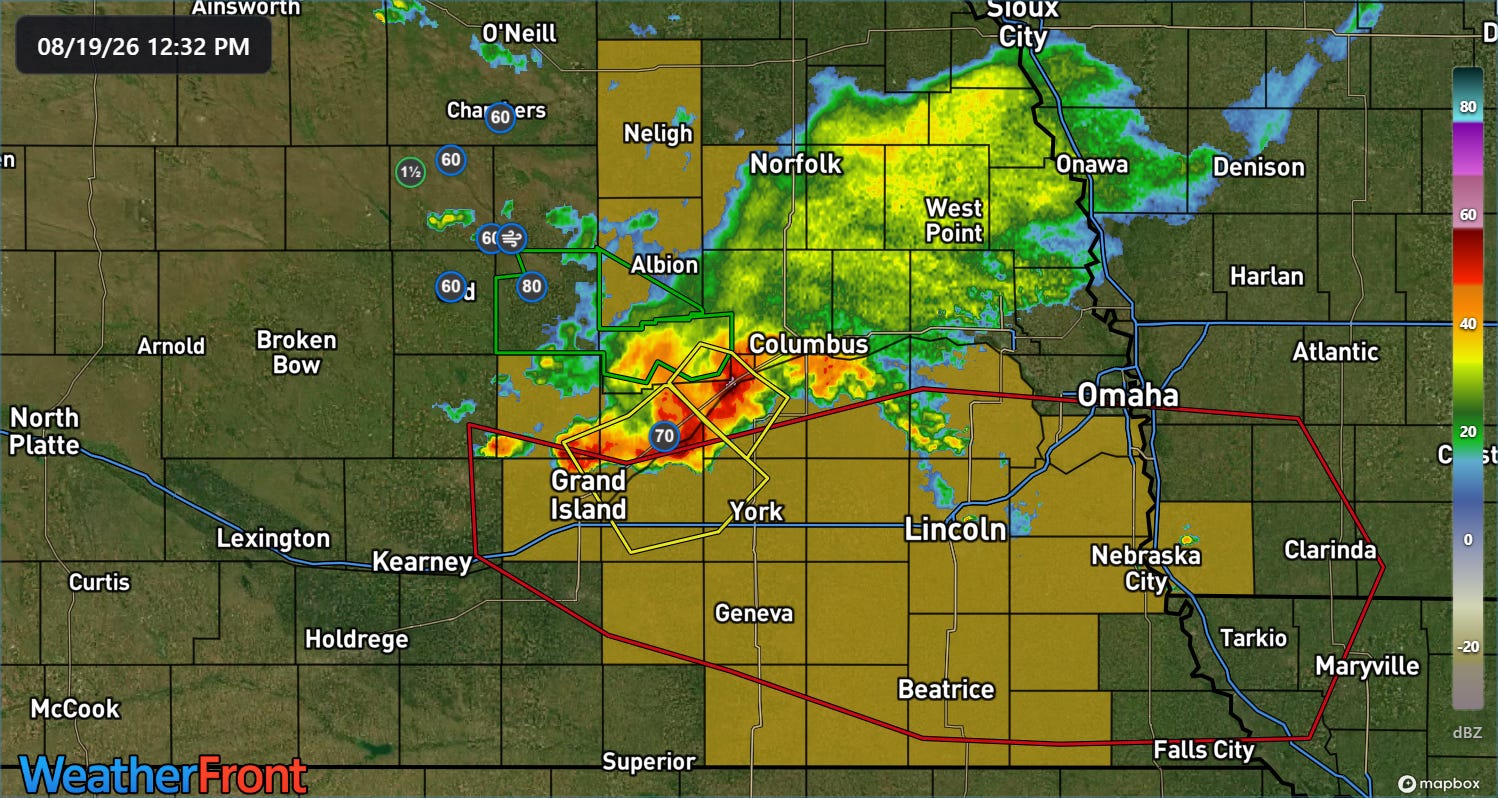
An ongoing cluster of severe thunderstorms moving southeast across Nebraska has already brought a number of incidences of severe weather today, including an 82 mph wind gust near Greeley. These storms will likely produce additional severe weather as they move across southeast Nebraska where a severe thunderstorm watch is in effect.
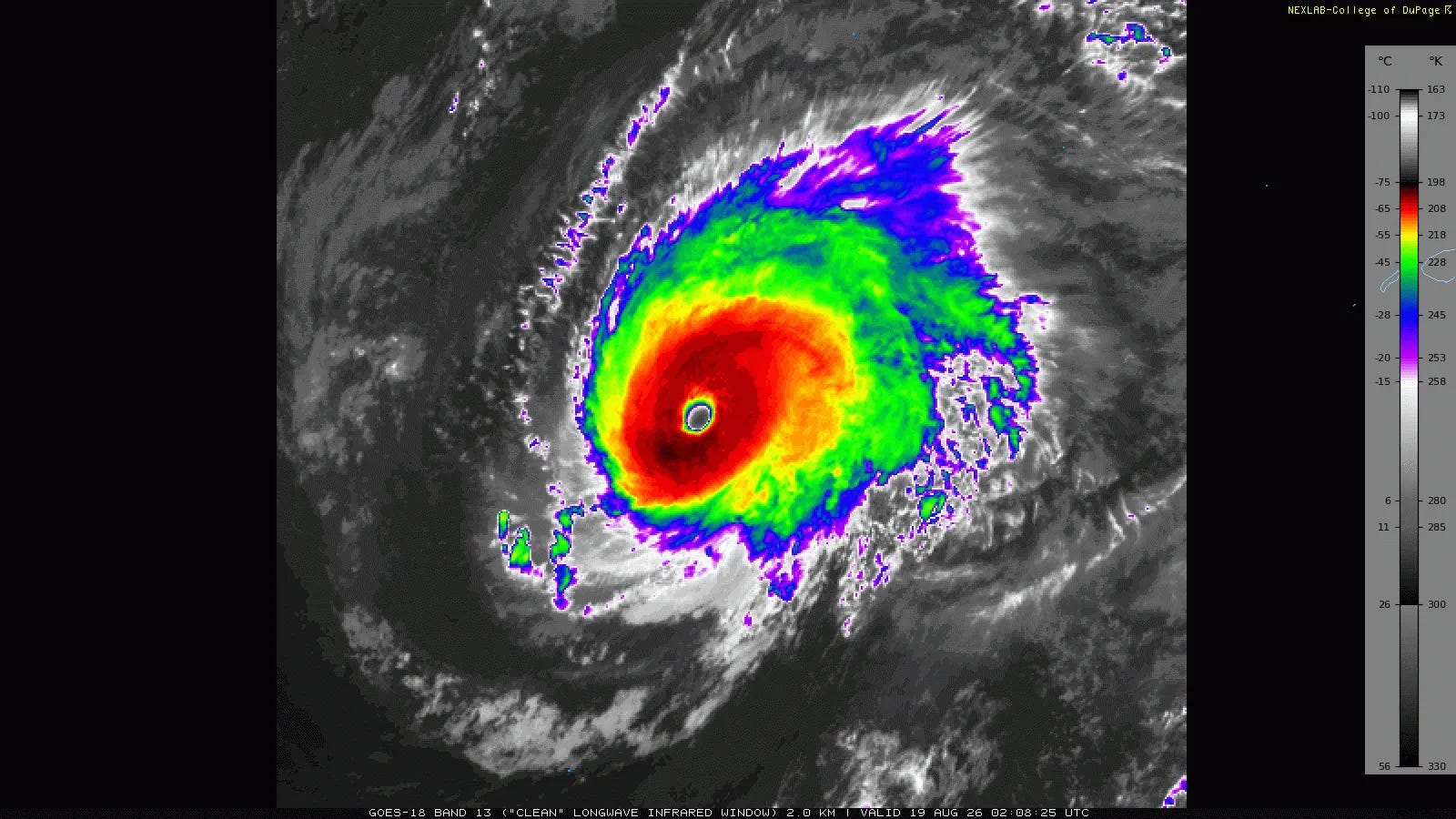
In the tropics, Hurricane Lala became a major hurricane yesterday, and actually briefly achieved category 4 intensity on the Saffir-Simpson Hurricane Wind Scale.
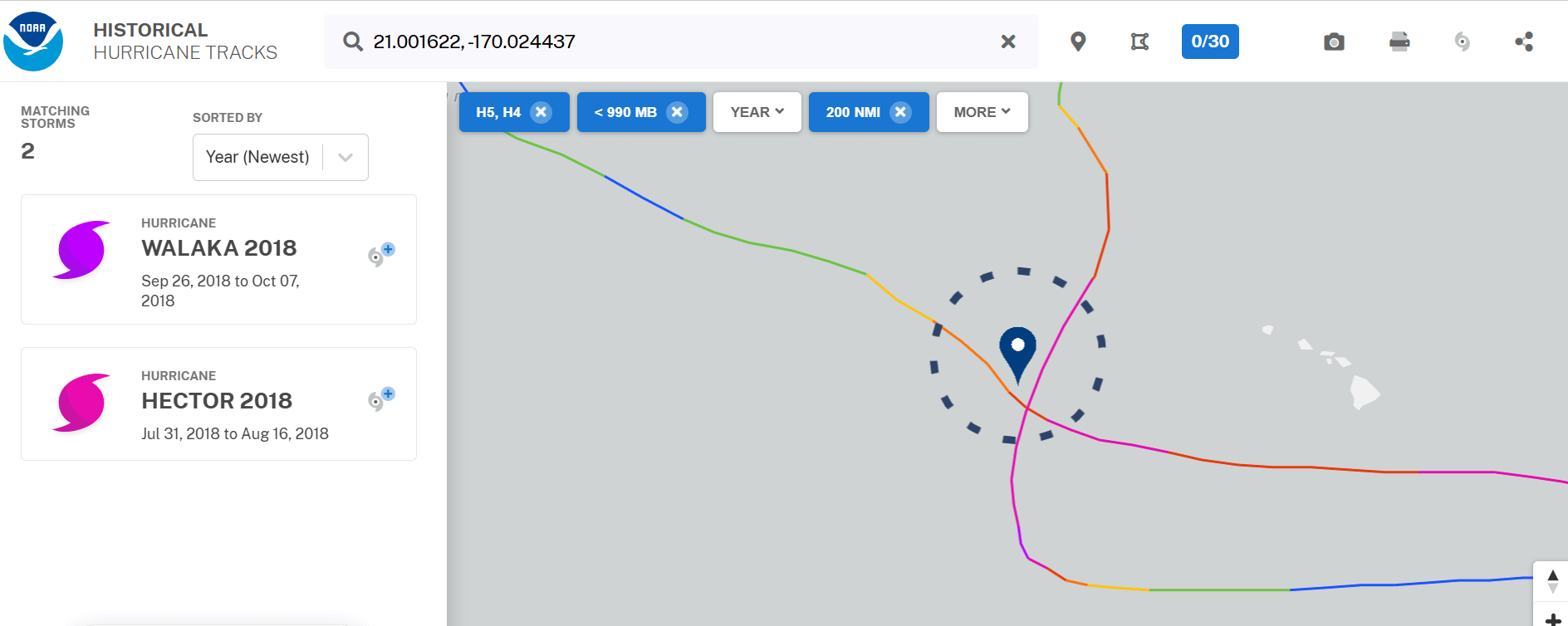
To give some perspective on the rarity of this, there have only been two other category 4 intensity hurricanes on record within 200 miles of Lala’s current position west of Hawaii. While Lala does not threaten any populated areas, it is expected to still be a large, powerful hurricane when it impacts the Papahanaumokuakea Marine National Monument in the Northwest Hawaiian Islands the next couple of days.
Balanced Weather is made possible by the generous support of paid subscribers, who as thanks get access to live Balanced Weather chats and videos as well as the ability to post comments and ask questions on posts. To become a paid subscriber or a free subscriber (also very much appreciated and you will automatically receive new posts in your email), please click below.
No posts
Comments
Nothing yet. Say the first thing.
Sign in to join the conversation.