
When I published my first book years ago, I wasn’t thinking about building a backlist. I was thinking, Holy shit, I published a book!
Like most authors, I poured everything into launch day: asking for reviews, posting on social media, sharing with friends, family, book bloggers, and running ads.
Waited for my life to change. It didn’t.
Now, eight books, a few anthologies, publishers come and gone, one agent, and hundreds of clients later, I understand something I wish someone had explained much sooner: A writing career is rarely built on one book. It’s built on what comes before and after it.
💥 Shout-out to my exclusive advertising sponsor, the always-free Booklinker (universal book links—so helpful!), and the paid tool, GeniusLink. I love both💥 (affiliate link).
One of the reasons I love books is they don’t care when they were published. A reader discovering your first book today doesn’t think, This came out years ago. They think, What’s next?
Give them an answer.
In trad publishing, you’ll often hear the terms frontlist, midlist, and backlist.
Frontlist: New or soon-to-be published titles
Backlist: All titles published prior to the current year. Titles are designated “backlist” one year after their on-sale date or publication date.
Midlist: Books that sell steadily and are commercially viable but are not major bestsellers.
The problem is that “backlist” sounds like the retirement community where older mature books go to ya know (I wouldn’t mind living there), but it’s the opposite.
Some of the most successful books in publishing are decades old, and readers discover them every single day. Nobody walks into a library or bookstore thinking, I’d love to read this, but unfortunately it came out in 1983, so I can’t. I mean, maybe they do, but weird.
Books don’t expire! They may become dated (think about all the books that mention Twitter or tweeting), but to someone discovering your work for the first time, every one of your books is new.
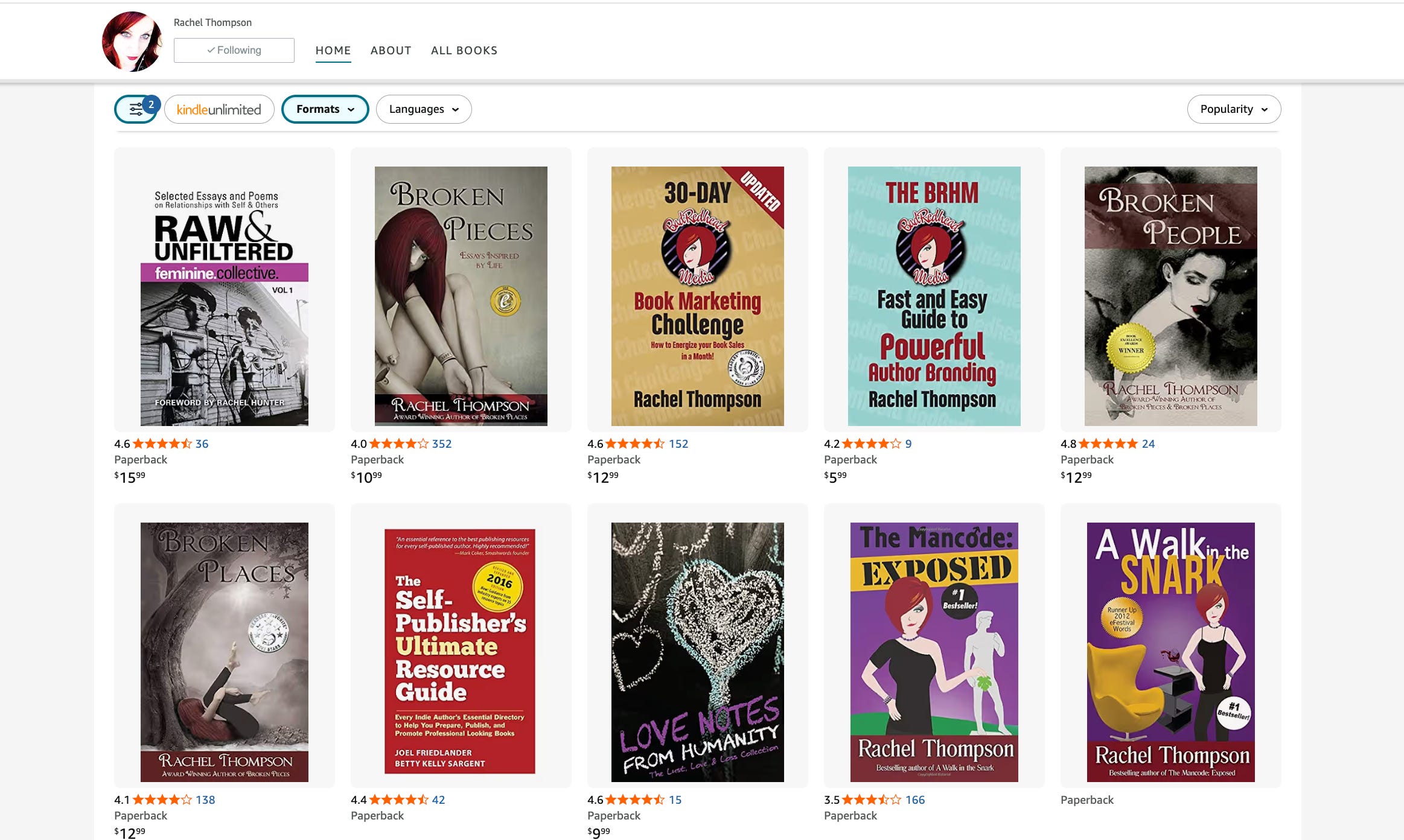
Example: Below is my backlist sorted by popularity on Amazon (where I sell 90% of my books), at least today as I write this. What does this tell us:
The first book is a wonderful anthology by Feminine Collective where I contributed an essay. My second most popular book is the first of my three Broken books, released in 2017. So, my most popular solo book is almost ten years old and still sells fairly well.
Broken Series
Feb 15
📚 My Substack publication is primarily about helping writers learn practical, strategic book marketing. That’s the focus here, and I’m genuinely thrilled you’re part of it.
One of the biggest marketing mistakes I see authors make is putting all of their energy only into the latest release, while the books they’ve already written quietly collect digital dust.
I get it. Launching a new book is exciting. Talking about the one you published ten years ago isn’t sexy, yet most readers don’t care when you wrote it. They care whether they’ll enjoy reading it.
Upside: The best book maybe isn’t the best book ever written. It’s the best book someone knows exists.
Downside: Sometimes, crappy books sell millions. We don’t control that. 🤷🏻♀️
Visibility comes before sales, before reviews, and before opportunities. Every additional book gives readers another chance to discover you.
You’ve probably heard that authors need ten books before things really take off. The truth is, there isn’t a magic number supported by industry research, though be sure to check out Jane Friedman and Allison K Williams.
Some authors break out with one book, while others didn’t begin seeing momentum until they’d published five, eight, or even ten books. Experienced authors, however they publish, often talk about the value of building a larger catalog.
Every additional book gives readers another opportunity to discover your work. One book gives readers one doorway into your world, but ten books give them ten.
If you write fiction, especially a series, we know readers often binge. They finish one book and immediately buy the next.
Nonfiction works differently. Your books may lead to book sales, but also perhaps to consulting, speaking gigs, interviews, coaching, or client work, so instead of readers buying and bingeing six books over a weekend, we NFs may see other benefits.
Regardless of genre, every book expands your footprint and creates another opportunity for someone to discover you.
Our older books don’t stop working just because we’ve moved on to the next shiny plot device. Someone might discover an interview you gave two years ago. Someone else finds one of your Substack posts through Google. Someone hears you on a podcast. Someone sees one of your social media posts that a friend shared.
Then they buy a book. Then another. Then another…
Visibility compounds over time. Every article, interview, podcast, newsletter, and social media post can point readers not just to your newest release, but to everything you’ve written and guess what? Your backlist becomes a library instead of one book on a lonely shelf.
One of the best things about being an author is that our books don’t have to stay exactly as they were on publication day.
You can update the back matter with links to your newest book, newsletter, website, Substack, audiobook, bonus resources, or upcoming release. You can refresh your author bio, correct typos, or update outdated information. You can add book club questions and request (politely) reviews.*
*There may be minor costs involved.
Every time someone buys one of our older books, they’re also introduced to everything we’ve created since that book was first published —a huge opportunity, and one many authors overlook.
Okay, so your first book isn’t even out yet, or you’ve barely just published one book; maybe you’re still writing your second, or ninth, like me. Wherever you are, don’t let the idea of a backlist discourage you. Every author starts in exactly the same place.
In the meantime, focus on building visibility.
Your Substack or newsletter, blog posts, podcast interviews, guest articles, website, and social media all contribute to your body of work, giving readers a chance to discover you before they discover your books.
When your first book comes out, those readers already know who you are; when your second book comes out, you’ve started building a backlist. One of the reasons I’m such a big believer in creating and sharing content before publication is that visibility doesn’t begin on launch day. It begins the day you decide to show up consistently.
Your backlist will come. Start building your audience now.
Publishing rarely rewards us overnight because it rewards consistency, which takes time. Patience, grasshopper.
One book becomes two becomes five, and now a new reader has an entire body of work to explore instead of one title. Your books begin helping each other, which is truly the real power of a backlist.
I’d love to hear from you. How many books are in your backlist? Have you ever gone back and updated an older book, or is this your sign to take another look? If you’re not pub’d yet, does this feel like a good idea or more pressure?
🌻 Happy you’re here! Paid subscribers receive discounts on my consulting services, Substack, and book-marketing packages. All my articles remain free for everyone. If that sounds useful, I’m offering 20% off an annual subscription only through August: https://badredheadmediallc.substack.com/perks.
No pressure, no guilt, and no mysterious bonus PDF you’ll forget to download. Just useful perks, my sincere thanks, and the warm glow of helping a solopreneur inch closer to 100 paid subs. Grateful you’re here, however you got here. Thank you for reading. 🙏
Comments
Nothing yet. Say the first thing.
Sign in to join the conversation.