
In my previous post about the early modern English aristocracy, I said it needed a follow up about the politics and government of early modern Britain. Well, here is it. We’ll learn about what Parliament and the cabinet looked like over this period, the major political developments, and finally about the Great Reform Act which ended this political-historical era.
The UK today is a mess of archaic idiosyncrasies, in particular in its government. Ultimately, unlike every other country in the entire world, we haven’t had a major upset to our government — of the type that would lead to its wholesale rewriting — since the 17th century. As I discussed in my last non-fiction post on the French Republican Calendar, societies suffer from a kind of inertia and, devoid of any subsequent revolutionary period, that inertia has been stronger in the UK than almost anywhere else. As a result, the UK is one of only two sovereign states to not have a formal written constitution (along with New Zealand) and retains the monarchy and the peerage and a whole host of odd sinecures. (I’ll be making reference here to positions like the Chancellor of the Duchy of Lancaster, Lord Privy Seal, and Earl Marshal. In your own time, you can look up the likes of Black Rod, the Lord Mayor of London — not the same thing as the Mayor of London, of course — and the Crown Steward and Bailiff of the Chiltern Hundreds.)
For the most part, these features are irrelevant today and, in practice, Britain is a liberal democracy and the archetypical parliamentary constitutional monarchy. Bagehot, in his The English Constitution (by far the most influential work on the topic), dismissed models from other countries like the three branches of government or checks-and-balances and instead laid out that, at least in Britain, the most important constitutional division is between the ‘dignified’ and the ‘effective’. That is, between the purely ceremonial parts of the constitution and those that actually do the governing. These old idiosyncrasies are dignified: they seek to impress and awe and, in doing so, grant legitimacy to the effective government.1 On the other hand, the actual way the country is governed is the effective element. The head of the dignified government is the monarch. The head of the effective government is the prime minister.
Bagehot was writing in the second half of the 19th century. (The English Constitution was published originally in serial between 1865 and 1867.) The distinction he draws is one that makes sense to this day yet, in his own time, was remarkably recent. Only a few decades earlier, the monarch was an active participant in politics, not merely a dignified figurehead. The House of Lords, which Bagehot identifies with the dignified, was just as powerful, if not more so, than the House of Commons. In other words, there was a time — not long before Bagehot was writing — when dignified and effective were one of the same. A time when these strange ‘dignified’ holdovers were integral parts of the functioning of the effective government, slowly losing their power.
In this post, we’ll be exploring and explaining the politics and government of that transition-time in British history.
I’m using the term ‘early modern’ but I’m going to discuss a more specific period than that.
In England, the end of the medieval era is usually dated to the reign of Henry VIII. If we want a year, we can take 1534: the year Henry was officially made head of the Church of England under the First Act of Supremacy. More generally, though, the end of the medieval era is often dated to 1492, the year of Columbus’s first crossing. With the end of the medieval era, we officially transition into the early modern. But this is the early-early-modern era, a period of transition out of the medieval, in which politics and government don’t look particularly modern at all.
The end of the period, when the ‘early’ part of ‘early modern’ gets dropped, is usually placed sometime in the late-18th or early-19th century. The beginning of the French Revolution in 1789, for example. In Britain, we can talk about the beginning of the industrial revolution — though then we have to reach for a date, which could be any year you like in the back-half of the 18th-century. If we want a more concrete date, maybe we can say that the Regency era was the first distinctly modern era in Britain. If so, we’ll again be scrambling for a specific year. The formal permanent regency on behalf of King George III began in 1811, but the wider period is usually dated to have begun around 1795.
Periodisation, as always, is a bit of a fool’s game. Useful in generalities, it loses that usefulness the moment it’s used prescriptively rather than descriptively, or when we attempt to solidify a period’s fuzzy boundaries.
Here, I want to talk about a more specific period which overlaps the early modern and the, well, modern-modern. In particular, the period we could call the ‘gentry oligarchy’ (my term), after the total rise of Parliament’s power (and thereby decline of royal power) but before the transition of that gentry oligarchy into something approaching a modern mass democracy. The last period in which we cannot divide the dignified from the effective; in which those now entirely dignified elements were slowly losing their effectivity.
When is that period? I’m going to take the specific years of 1660-1832, from Restoration to Reform. (It alliterates, so you know there’s something to it.) 1660 is the date of the restoration of the monarchy: the end of Britain’s republican experiment and the return of the Stuart royal house. Post-Civil Wars, Parliament had proven that it, not the monarch, ultimately called the shots. It would drive the message home soon after in the Glorious Revolution of 1688. This was, in all imaginable ways, the beginning of modern British government.
1832, on the other hand, is the date of the passing of the Great Reform Act. This act radically changed the makeup of the House of Commons (whose English constituencies hadn’t been altered since the Restoration), in particular eliminating the ‘rotten boroughs’ that made the gentry oligarchy possible and paving the way for mass democracy. It was also just five years later that Queen Victoria came to the throne: the first monarch to truly attain the ‘dignified’ ideal and take almost no part in the effective side of government.
This is, furthermore, the period in which British politics was defined by the rivalry of two factions: the Whigs and Tories, which initially emerged as the Country Party and Court Party respectively during the Restoration period. The Tories would be replaced by the modern Conservative Party in 1834, though the Whigs didn’t metamorphise into the Liberal Party until 1859.
The other issue we need to clear up is nomenclature. You see, in 1660, the area under the rule of the restored King Charles II was divided into three kingdoms: England (which included Wales), Scotland, and Ireland. England was dominant, Scotland largely free to govern itself domestically but required to follow English foreign policy, and Ireland not dissimilar from a colony, but nonetheless they were three legally different states.
This changed with the Act of Union 1707, which merged the Kingdom of England and Kingdom of Scotland into the Kingdom of Great Britain. Then it changed again with the Act of Union 1801, which merged Ireland into the union to create the United Kingdom of Great Britain and Ireland.
As a result, terminology will have to be used rather fluidly. In the early period, I’ll be mostly talking about England but noting the separate if related existence of Scotland and Ireland. Later, the term Britain can be introduced, though England and Scotland (and, after its inclusion in the union, Ireland), will still need to be occasionally discussed separately as they were often treated and governed very differently.
So, now that we know what we’re talking about and when we’re talking about, it might behoove us to start talking about it.
The heart of British politics was and is Parliament. I talked through the origins of Parliament and its two chambers during my English aristocracy post, so feel free to check back and jog your memory but, basically, it formed as a forum for discussion (Parliament coming from the French ‘parler’ meaning ‘to talk’) between the king and those major figures he relied on in the clergy, urban centres, and — most notably — amongst the landowners who would grow into the nobility and gentry. In other words, it emerged as the English version of the medieval ‘three estates’, similar to the French estates general.
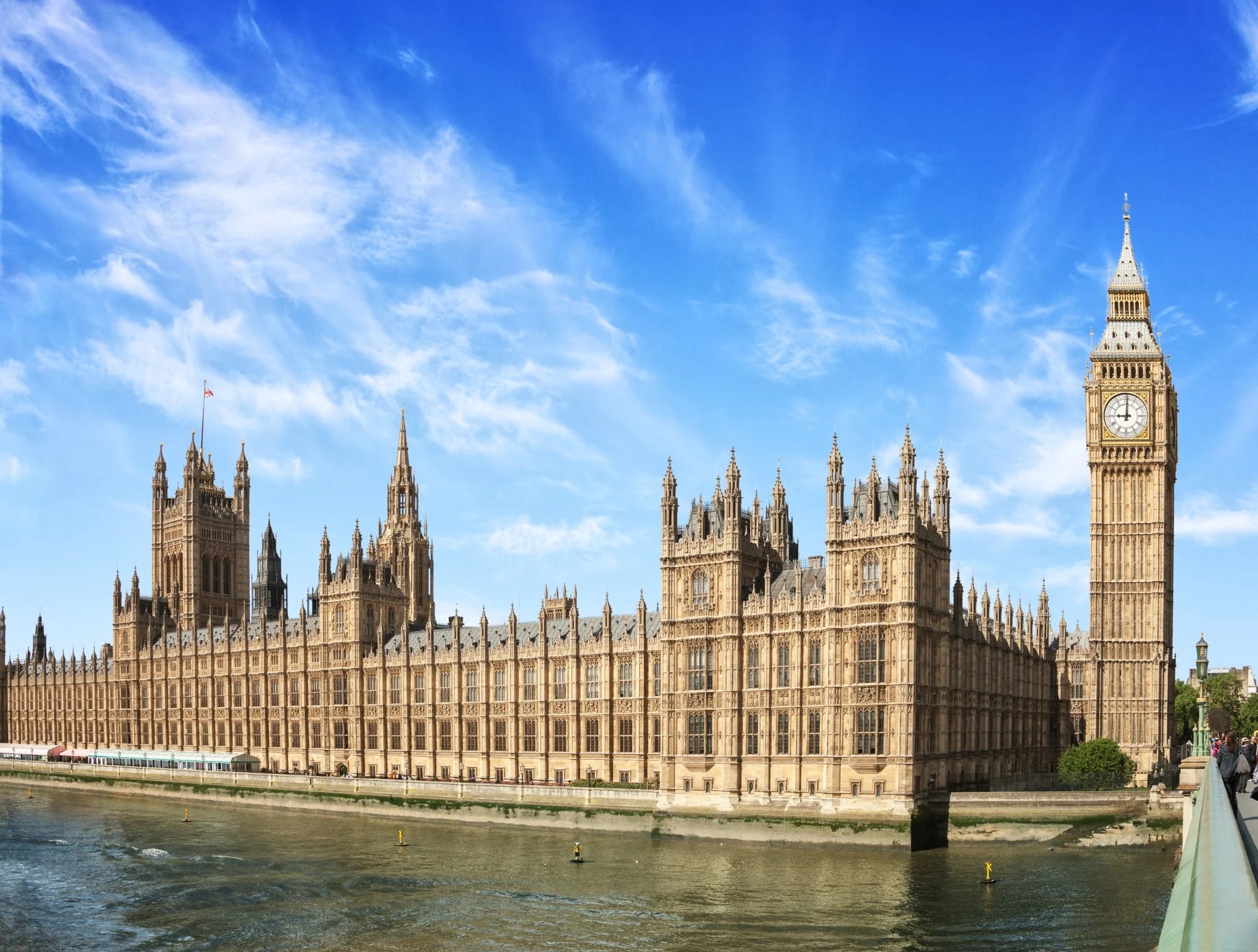
Where it differs from continental institutions of the same type is the power that Parliament amassed and retained. Where the French kings could entirely dismiss the estates general, leading to its effective dissolution for the entire 18th-century up until the beginning of the 1789 Revolution, Parliament in England, Scotland, and post-conquest Ireland became an integral part of the operation of the government. Laws were passed not by royal decree but by Act of Parliament. Taxes, in particular, were Parliament’s exclusive domain. And, when Charles I attempted to govern without Parliament, it led to the English Civil Wars and a decade-long experiment with republican government.
When the monarchy returned 1660, it was at Parliament’s invitation. The monarchy was not entirely cowed — we’ll discuss 1688 later — but it was clear that, when push came to shove, it was Parliament that did the shoving and the monarch who lay battered in the dirt. In most countries, ultimate sovereignty — the last constitutional appeal — lies in the document of the constitution itself. In Britain ever since this period (and, in particular, since the Glorious Revolution), ultimate sovereignty instead has lain with Parliament (the concept of Parliamentary Sovereignty). This means, when all is said and done, that what Parliament says goes and there are no constitutional limits on Parliamentary power. If Parliament passes a law to say that the moon is made of cheese then, from the perspective of British law, the only question remains what kind of crackers would be best to serve with it.
Parliament’s two chambers are called the House of Commons and House of Lords. Both must pass a bill for it to be presented to the monarch, at which point it receives royal assent and became an Act of Parliament. (And thereby law.) Royal assent is a technicality today, and has been since the Hanoverians came to the throne in 1714. However, before this, monarchs did occasionally refuse to grant their assent to bills. The last monarch to do so was Queen Anne who, in 1708, refused assent to the Scottish Militia Bill2. Another effective monarchical veto was the ability to entirely dismiss Parliament, but that power was set aside after 1688. Even before the monarchy as a whole became merely dignified, then, the monarchical veto was a power that had long stopped being ‘effective’, de facto removing the monarch’s main role in Parliament.
The House of Lords was made up of two groups called the Lords Temporal and Lords Spiritual. The Lords Temporal referred to everyone with a peerage title: all those barons, viscounts, earls, marquesses, and dukes I discussed at so much length in my earlier article. For the purposes of the Lords, the rank differences between the titles were meaningless: all got the same, single vote. This also means that all those royal dukes got a seat in the Lords, including the heir to the throne. Overtime, however, as the royal family shifted from effective to dignified, it became less and less common for them to actually attend and vote.
However, it wasn’t always as simple as that. Specifically, there were the special cases of representative peers and writs of acceleration. First, representative peers. You see, all English peers had the right to attend the House of Lords. After the acts of union, English peers feared being flooded by those of the other nations (in particular Scotland, which had roughly as many peers as England despite a much smaller population). So, instead of all the preexisting peers from Scotland and Ireland being allowed to attend, they had to select a subset of their number to attend the Lords on their behalf — 16 from Scotland and 28 from Ireland. The Scottish ones were newly elected each Parliament, while the Irish ones only got replaced when a previous representative peer died. This was, strangely, a semi-democratic element within the House of Lords, albeit reserved for the nobility. After the Acts of Union, newly created peers were British peers rather than English, Scottish, or Irish, with an automatic right to sit in the Lords just like the English peers.
Secondly, writs of acceleration were a mechanism to temporarily increase the size of the Lords by giving an English or British peer’s son and heir the right to attend as well. He would be allowed to attend one day, when his inherited his father’s titles, so this writ merely accelerated his right to do so. The formal mechanism was to issue a writ of summons to this heir apparent as if he actually held one of his father’s lower ranked titles (a baron title was almost always chosen, as the lowest ranked of the titles, so the accelerated heir wouldn’t take precedence over any higher ranked actual peers). Then, he got to sit in the Lords just as if he actually held that peerage title. Why do this? Mostly as a political move: if the government needed a bit more support in the Lords, but you didn’t want to permanently increase the number of lords by creating new peers, then you might use writs of acceleration to temporarily increase the number of government supporters. In my previous article, we briefly brought up the idea of ‘flooding the Lords’ — creating enough new Lords to pass legislation the existing Lords were hostile to. Well, this was a softer way of doing that.
The Lords Spiritual, on the other hand, were the 26 bishops of the Church of England. Even after the merger of England and Scotland in 1707, only English bishops sat in the Lords because the Presbyterian Kirk up in Scotland didn’t have bishops. On the other hand, the Church of Ireland (meaning the Anglican Church in Ireland, rather than the Catholic Church in Ireland to which most Irish belonged) did get to send four Lords Spiritual to the House of Lords after the merger of Ireland into the British state in 1801, making a total of 30. As you can imagine in the heavily class-based society of early modern Britain, these bishops were pretty much always drawn from the upper classes — not least because bishops were selected by the government, which was itself dominated by gentlemen.
The House of Lords, being where all the nobles and bishops got together, also had a number of other powers above and beyond the House of Commons, in particular of a legal nature. It was the highest court of law in the land (separation of powers being, at this point, a foreign concept to Britain — as Bagehot pointed out) except in Scotland, which had its own system. Nobles could only be tried before a jury of other nobles drawn from the Lords. If royal officials were impeached, they were tried by the Commons before the Lords. (Modern Britain has dropped this practice, but it continues as the inspiration for the very similar impeachment process in the United States.)3
The House of Commons was, on the other hand, the elected house. However, both the terms ‘elected’ and ‘commons’ should be taken with heaps of salt during this period. As mentioned in my previous article, ‘common’ in Britain merely means ‘not noble’ — i.e. anyone who doesn’t have a peerage title, which is all but a few hundred people. Rich landed gentry, even the children or siblings of nobles, are legally common. It was they who made up most of this more democratic house. Similarly, the ‘elected’ element should be heavily caveated. The modern House of Commons is split into 650 roughly equal-sized constituencies, each sending a single representative elected by universal adult suffrage. The House of Commons of this time, on the other hand, was very different.
First, there’s the constituencies. The right to send members of parliament (MPs) to the House of Commons was granted to different places and institutions over the course of the medieval and early modern era. Each of England’s traditional 39 counties got to send two representatives, called Knights of the Shire4. A number of boroughs (urban areas — towns or cities) also got to send (usually) two representatives called burgesses. (A few sent one representative instead, and two — the City of London and Weymouth & Melcombe Regis, which was originally two boroughs that got merged — got to send four.) However, these boroughs had mostly been named in the medieval era. Many large towns in the 18th-century didn’t have representation as a borough (instead merely forming part of a larger county) and many of the existing boroughs had overtime become depopulated. As time went on, the situation only got worse. These depopulated boroughs are what were called the ‘rotten boroughs’ — those with tiny electorates, often completely controlled by the main landowner who could tell the few residents how to vote. (Britain didn’t have the secret ballot until 1872.) The vast majority of English constituencies were boroughs, and many of them were rotten.
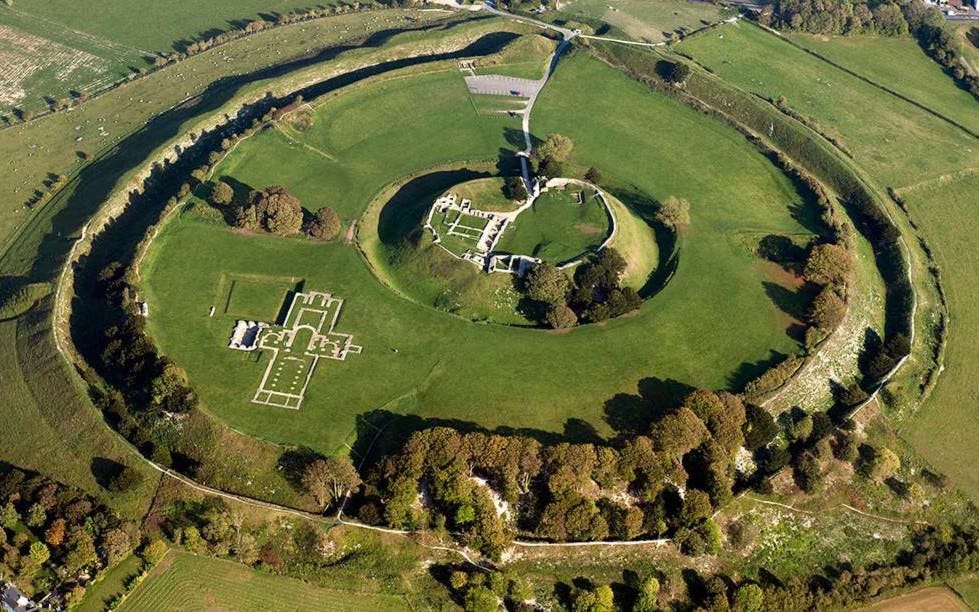
Next, the Cinque Ports (originally five and later eight towns on the south-east coast that during the medieval period had responsibility for defending against invasion) operated mostly like boroughs (all with two representatives) except they got to be special and call their representatives ‘barons’. Finally, the universities of Cambridge and Oxford also got to send two representatives.
In Wales, Scotland (after the Act of Union 1707), and Ireland (after the Act of Union 1801), a similar system of county and borough representation was used to send representatives to what was now no longer the English but the British Parliament. However, their counties and boroughs were usually only able to send one representative each. Irish counties sent two representatives, as did the Welsh county of Monmouthshire — which was sorta kinda considered both Welsh and English. Dublin and Cork were the only Irish boroughs allowed to send two representatives, while the University of Dublin was the only university outside of England allowed to send representatives, but it only got to send one of them. Scotland, though it only sent one representative for each of its boroughs and counties, actually had rather a lot of them: 30 Scottish counties compared to the 39 English ones and 32 Irish ones, despite Scotland’s much smaller population.
As we can see, then, representation was not equally distributed. Some boroughs were made up of fewer than a hundred voters, others many thousands. Some counties were many times larger than other counties. Some cities had no specific representation at all. And, comparing the four countries that eventually made up the United Kingdom of Great Britain and Ireland by the end of our period, England was by far the most overrepresented while Ireland was by far the most underrepresented. Even within England, representation was shifted south, leaving the rapidly growing and industrialising north comparatively underrepresented.
And then there’s the franchise. In each of these different kinds of constituency, the requirements for voting were different but usually amounted to some kind of property qualification. In the counties, for example, you had to own property worth forty shillings (two pounds). Over time, the franchise naturally increased due to inflation — as the buying power of the pound decreased, more and more properties would exceed that two pound threshold. The exception to this was Scotland, where the property qualification took inflation into account by saying that the property had to have been worth two pounds since the Middle Ages. Scotland had, therefore, by far the most restricted county franchise.
The boroughs used one of a number of different systems to determine who could vote. Freeman boroughs, the most numerous, gave a vote to every freeman of the borough, hence the name. What’s a freeman of the borough? Well, it depends on the borough. In general, most men of the property owning classes or in the guild system could expect to be freemen. Other methods looked at, for example, whether you paid certain taxes, owned certain types of property, or — in the famous ‘potwalloper’ boroughs — if you owned a pot and fireplace.
In the university constituencies, all graduates with master’s or higher degree got a vote. (Importantly, the actual students didn’t get a vote until they earnt a graduate degree, which many didn’t.) These were mostly wealthy gentlemen or men of the professional classes like lawyers, doctors, and clergymen. Also, they got to vote twice: once in their university and once where they lived. Actually, they may have got to vote even more than that, because you could vote in every constituency where you met the requirements. If you owned land worth forty shillings in multiple counties, you could vote in all of them.
Another important restriction to the franchise, in particular impacting Ireland, was the disenfranchisement of Catholics. In England, Wales and Ireland, the Anglican Church was the state religion throughout our period but, for the most part, nonconformists (also known as dissenters: non-Anglican protestants, such as Presbyterians, Congregationalists, Baptists, and Quakers) didn’t suffer too much in the way of overt discrimination. In Scotland, there was a similar system except that the established church was a Presbyterian one. But, across the country, Catholicism specifically was strongly legally discriminated against. Catholics couldn’t hold public office and weren’t even allowed to own property, meaning that they definitionally couldn’t meet the property qualification for voting. In majority-Catholic Ireland, then, only the small protestant minority (many of whom were the descendants of English and Scottish immigrants) actually got to participate in the electoral process.
This began to change in the late-18th century with the slow process called Catholic emancipation, which wasn’t completed until the early-19th century, right at the end of our period. Slowly, Catholics were allowed to own property, then hold public office, and restrictions on the activities of the Catholic church were lifted. This should have led to a huge increase in the franchise in Ireland but, to offset this, the property qualifications to vote in Ireland were raised (from two pounds to ten pounds) to keep the electorate limited and weighted towards the wealthy protestant landowning class.
Throughout this period, then, the House of Commons was anything but democratic. Its elections were largely managed by local magnates who often literally spoke about ‘owning’ certain constituencies. The franchise was, in most constituencies, tiny. And, in particular, voting power was skewed towards the rich, Anglican, and English. (And, it goes without saying, male.) However, the system also differed hugely constituency by constituency and some — in particular the larger boroughs — did frequently have contested elections that operated under a system approaching democracy. Yet, these exceptions merely proved the rule. This, more than anything else, is the key to why this period should best be understood, to again use my own term, as one of ‘gentry oligarchy’.
Putting aside Parliament, the other core part of the government was what under the three-branches model is called the ‘executive’. That is, the monarch’s ministers and the bureaucratic apparatus that supported them; that part of the wider government that is often colloquially referred to by itself merely as the government. In the UK, this is referred to as His or Her Majesty’s Government to emphasise that it is a government in the name of the monarch.
No-one governs alone, and so the monarch has always had people we can broadly call ministers who were responsible for different parts of the apparatus of government. Over the course of the medieval era, this developed into the Great Officers of State in both England and Scotland. Furthermore, there was the privy council (of which the great officers and others were members), to advise the monarch and collectively undertake some royal functions that the monarch wished to delegate.
Let’s take a look at the English system, which effectively transitioned into the British system after the Act of Union 1707. By the Restoration, some of these great officers were still ‘effective’. The Lord High Treasurer was the head of the treasury and equivalent of a finance minister. The Lord High Chancellor administered the judicial system — like a justice minister — and presided over the House of Lords. The Lord High Admiral ran the navy.
Other great officers were still used as political posts but had become sinecures used to give influential politicians a seat in the privy council. These were the Lord President of the Council (whose official duties were to chair meetings of the privy council) and Lord Privy Seal (officially the keeper of the royal seal). The Chancellor of the Duchy of Lancaster, despite not being a great officer, was an appointment that was used to exactly the same effect.
Still other great officers had fallen out of political utility altogether and become purely dignified offices. The Earl Marshal and Lord Great Chamberlain had already become a hereditary positions. The Lord High Steward and Lord High Constable were positions only filled temporarily at coronations.5
However, those few still effective great officers didn’t cover all the functions of government. Notably, the army lacked a single responsible minister. Command of the army was held either by the monarch personally, or by an appointed commander-in-chief, or by a council of generals, often assisted administratively by a ‘secretary at war’ along with figures like the paymaster of the forces and master-general of the ordinance (but, overall, the army lacked a single centralised bureaucracy at this time). Other functions of the government came under the personal remit of the monarch, assisted from the time of the Tudors by a ‘principal secretary’ or ‘secretary of state’, who became a more and more independent minister.
With the Restoration of 1660, and the beginning of our period, this role was cleft in twain and England got its first two modern government departments: the Northern Department and Southern Department, each led by their own separate secretary of state. That is to say, administration was divided not based on responsibility but based on geography. More baffling, so was foreign affairs. The Northern Department got to conduct foreign affairs with northern and eastern Europe, while the Southern Department got the rest of Europe and everything outside of Europe (including all the colonies). An absurd system, and yet it was kept for over a century.
The last important government position I should mention is that of Lord Lieutenant of Ireland, who governed that kingdom as a viceroy. The Lord Lieutenant was more than merely a minister: they exercised near all royal authority in Ireland on behalf of the monarch. The Lord Lieutenant ruled from Ireland itself, and so Irish affairs back in England were usually represented by a subordinate minister: the Secretary of State for Ireland and/or Chief Secretary for Ireland.
Scotland had its own system until the 1707 union, after which there was a Secretary of State for Scotland to match the Northern and Southern Secretaries down in England (You’re all southern to me!, the Scotts presumably cried). The position wasn’t always filled, however, and was abolished after the Jacobite Rising of 1745.
With most of the great officers and privy council becoming more dignified than effective, these ministers — the Lord Treasurer, Lord Chancellor, Lord Admiral, Northern Secretary, Southern Secretary, and whoever was leading the army at the time — began to form their own more informal council. Soon, this would be called the cabinet, though for a long time it had no official legal status. The Lord Lieutenant or Secretary for Ireland were sometimes considered part of this cabinet, as was, a little later, the Secretary of State for Scotland (if there was one).
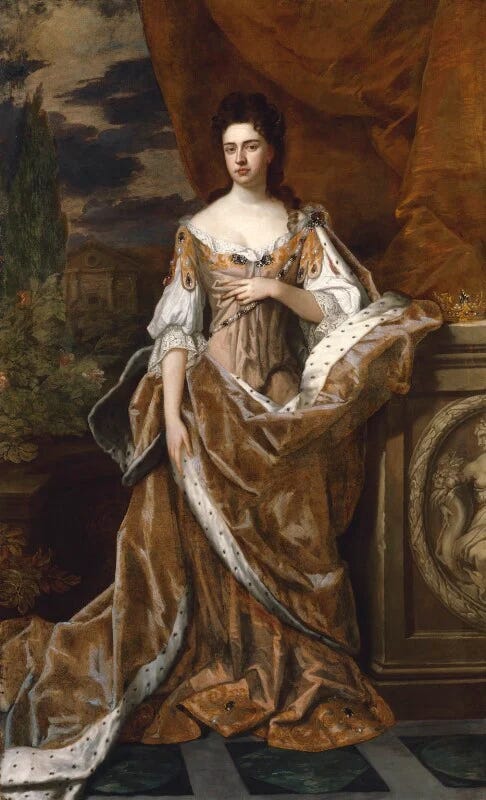
Coming to the throne in 1702 and presiding over the legal union of England and Scotland in 1707, Queen Anne made an important change to this system (at least in terms of what people got called) when she decided to put the positions of Lord Treasurer and Lord Admiral into commission. That is, she declined to appoint any single person to those positions and instead instituted a commission (of generally half a dozen people) to exercise them collectively, referred to as the Lords of the Treasury/Admiralty. This move was intended to prevent any one person from dominating those incredibly important functions of the government and challenging royal influence but, because too many cooks spoil the broth, the two commissions soon came to be dominated by just one person each, given precedence as ‘first lord’ over his fellows. Furthermore, the First Lord of the Treasury was often simultaneously the Chancellor of the Exchequer (the guy specifically in charge of the government’s balance sheet). And I have to mention that the First Lord of the Admiralty was also known as the Senior Naval Lord, a frankly wonderful title. Later, they would instead be called the First Sea Lord.
The biggest shakeup to this executive system in our period was, of course, the rise of the prime ministers. There had long been a generally recognised chief minister — often a royal favourite. (Thomas Cromwell to Henry VIII or the Duke of Buckingham to James I/VI and Charles I, for example.) However, with the emergence of the ‘prime minister’, this premier minister transitioned out of being the monarch’s chief underling into being, to all intents and purposes, the leader of the government in his own right. This was the beginning of the monarch’s transition into being a purely dignified role, though during this period the monarch still had a central role in choosing the PM and steering policy. Having said this, I should drive home that throughout our period the term ‘prime minister’ was still an entirely unofficial one. Generally recognised, yes. An actual formal role written into law, no.
The first of these prime ministers was Sir Robert Walpole, who dominated the government of Britain throughout the 1720s and ‘30s. How was it that Walpole managed to remove himself from the monarch’s shadow and become the driving force behind British government, setting the stage for all future prime ministers? Well, books have been written on the subject but broadly we can say this: first, this was the culmination of a slow (and far from complete) transition of power out of the monarch’s hands and, second, that the ascension to the throne of George I in 1714 was a major catalyst. George I was new to his realm, spoke little English, and was willing to be a very hands-off king: the perfect environment for a position like that of prime minister to emerge.
Now, as I said, ‘prime minister’ was not by an official position. Walpole’s actual role was as First Lord of the Treasury and Chancellor of the Exchequer. Control of the treasury, however, gave him purview over all government expenses. Walpole, while running the treasury, could therefore use its influence to ensure his central position in British government.
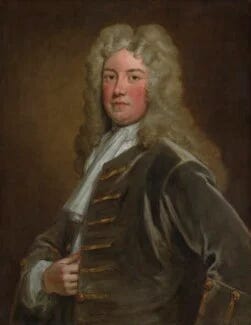
Walpole fell from grace in 1741, but the position he had created survived. From then on, whoever was appointed as First Lord of the Treasury was recognised as prime minister: the leader of the government. Furthermore, the position was usually held along with that of Chancellor of the Exchequer. However, by convention, the chancellor had to sit in the House of Commons. So, if the First Lord of the Treasury was a peer (i.e., sat in the House of Lords) then the Second Lord of the Treasury would be appointed as chancellor instead. Not wanting to give away this role actually motivated some prime ministers to remain in the Commons, even if it meant refusing a peerage. Pitt the Younger’s ministries6, for example, were almost entirely made up of peers with the singular exception of himself — long after he could have accepted a peerage if he wanted one — because he wished to remain chancellor so as not to dilute his power.
Nonetheless, as the prime minister took on more and more of the general responsibility for running the country, the specific responsibility for running the treasury was more and more delegated to that Second Lord of the Treasury. Around the end of our period, the two positions were completely separated. From then on, it was the chancellor / second lord who was the British equivalent of a ‘finance minister’, while the prime minister lost any real role in the treasury despite still being appointed as its first lord.
This gets at another important new principle. In earlier periods, the king could appoint who they liked to whatever positions they liked. However, in our period, the convention began that ministers had to be directly responsible to Parliament, and so had to be members of Parliament themselves. That way, they would be in Parliament to defend themselves and listen to criticism. Which furthermore means that, if you can’t secure election to the House of Commons or a peerage into the House of Lords, you can’t serve as a government minister. This principle creates a cosier relationship between legislative and executive called ‘monism’, as opposed to the ‘dualist’ system (used, for example, in Netherlands) which attempts to maintain separation of powers even under a parliamentary democracy by keeping ministers outside of the legislature. 7
Besides the creation of the PM, a few changes were made to the cabinet throughout the 18th century. The big shakeup came in 1782, when the Northern and Southern Departments were transformed into the Foreign Office (responsible for foreign policy and led by the Secretary of State for Foreign Affairs, or Foreign Secretary) and Home Office (responsible for domestic and colonial policy and led by the Secretary of State for the Home Department, or Home Secretary). ‘Domestic policy’ is a little vague, in particular because the government took on more and more responsibilities during and after our period. The modern Home Office, for example, is mostly responsible for policing, domestic security, immigration, and citizenship. When it was first created, public order was the main responsibility, which mostly meant managing the mess of militias and other forces that policed Britain at the time. Overseeing infrastructure and local officials were the other main competences. And, right at the end of our period, Britain began building a modern prison and policing system, which was also placed in the Home Office’s hands. Subsequently, when new departments were created, it was generally by splitting them off from the Home Office.
The other notable change was the army, which was put under a single administration in 1794 with the creation of the Secretary of State for War. In 1801, responsibility for the colonies was transferred from the Home Secretary to the War Secretary, who therefore became the Secretary of State for War and the Colonies.
Three other positions also deserve a mention as their holders were increasingly invited into the cabinet towards the end of our period. First, the President of the Board of Trade, who regulated — you guessed it — trade. Second, the confusingly similarly named President of the Board of Control, who oversaw the East India Company — the company that held Britain’s state-sanctioned monopoly on all trade to and from the Indian Ocean and which directly ruled an ever larger part of the Indian subcontinent as our period marched on. And, lastly, the Postmaster-General, who was responsible for the state-run postal system, which was the only public utility run by the government at the time.
To sum up, then, what did the cabinet look like at the very end of our period, in the early decades of the 19th century?
In the dominant position, the First Lord of the Treasury, informally known as the prime minister. The Second Lord of the Treasury / Chancellor of the Exchequer ran government finances. Then there was the Home Secretary, Foreign Secretary, Lord Chancellor, War and Colonies Secretary, and First Lord of the Admiralty. The positions of Lord President of the Council, Lord Privy Seal, and Chancellor of the Duchy of Lancaster were still always used to allow important figures a seat in cabinet without giving them a particular ministry. And finally there were those positions that were usually but not always allowed into cabinet: the three I just mentioned above along with someone representing Ireland. The Master-General of the Ordinance was also often invited, despite being subordinate to the War and Colonies Secretary.
But what about the people actually engaged in politics during this period? What ideologies motivated them and what factionalism divided them? In other words, let’s discuss the Whigs and Tories.
The origin of these two factions — along with their names — can be found in the English Civil Wars and the early division into Parliamentarians (or ‘Roundheads’) and Royalists (or ‘Cavaliers’). During that era, the major division was based on whether a person supported Parliament in its fight to retain and expand its role in government or King Charles I in his fight to cow Parliament into submission or govern without it entirely. Once the political fight became a military one, it referred to the two sides in the Civil Wars.
However, the division of Parliamentarian and Royalist touched on more than merely royal authority. Most notably, it also intersected very strongly with religious views. Charles I was tolerant of Catholics, wanted to force the Presbyterian Scottish Kirk into becoming more like the Episcopal Anglican Church, and to prevent further reforms to the Church of England itself. Naturally, then, people who supported his religious agenda tended to align with the king.
On the other hand, many of the king’s detractors were those who wished to further reform the Anglican Church into a more Calvinist Presbyterian direction, similar to the Scottish Kirk. Most famously, this is the group called the Puritans, so-called because they wished to ‘purify’ the Anglican Church of what they saw as continuing Catholic influence. Many Parliamentarians, then, weren’t merely fearful of royal authority generally but were specifically fearful of Charles I attempting a counter-reformation and rallied to the Parliamentarian cause after the king tried to force the Anglican Book of Common Prayer on Scotland (causing the Bishops’ War and setting off the whole Civil Wars era).
One of the big religious differences here was church governance. Naturally, those who supported Presbyterian church governance — a more horizontal system where congregation leaders (presbyters) come together to discuss policy in synods and councils — wanted a similarly horizontal and discursive political system. On the other hand, supporters of absolutist royal authority naturally favoured the more strictly hierarchical Episcopal structure, in which the king passed down decrees to the bishops, who passed it down to the parish congregations. Ultimately, in the 17th century, religious policy was inseparable from wider political policy.8
After the Restoration, this was no different: the division merely awaited a new national issue to rally around. The Exclusion Crisis was that issue.
After the Restoration, the new king was Charles II, son of the overthrown and executed Charles I. Charles II had lots of children but, unfortunately, none of them were by the woman he was legally married to. (Though not for lack of trying.) As such, his acknowledged heir was his brother James.
James, however, had converted to Catholicism sometime in the late 1660s, a fact that was formally acknowledged a few years later. Now, no matter what kind of Anglican (or nonconformist) you were, pretty much all British protestants hated Catholics with the burning intensity of a witch-pyre. Catholics, as mentioned, weren’t even allowed to own property. A Catholic monarch was, therefore, a problem. Furthermore, Charles II’s queen consort was a Catholic and the whole Stuart family were pretty friendly towards Catholics, in particular Catholic France, which further fed into a narrative that the post-Restoration monarchy was a little too Popish for comfort.9
Luckily, James had two properly Anglican daughters — Mary and Anne — by his late first wife. So, if James could somehow be passed over, the throne could next go to his daughter (or one of Charles II’s many illegitimate sons, such as the Duke of Monmouth) without ever needing to fall into Catholic hands.
In 1679, therefore, a bill was introduced to Parliament to ‘exclude’ James from the succession. To prevent the bill from passing, Charles dissolved Parliament. Then the same thing happened to the next Parliament, of 1680, and the one after that, of 1681. The exclusion efforts were spearheaded by the Earl of Shaftsbury, whose faction were known as the Country Party.
On the other hand were those who mostly hated Catholics just as much as the Country Party but nonetheless believed that Parliament was attempting to go far beyond its authority. The succession is determined by God, not Parliament, they argued. As such, they supported the royal brothers and were known as the Court Party. But God is an Anglican, so how could he ever want a Catholic on the throne?, the Country Party countered. As before, religious views were intrinsically interlinked with views on royal vs Parliamentary power.
That these factions mirrored those of the Civil War wasn’t lost on anyone, and so soon they were given nicknames inspired by groups from that bloody period, still well within living memory. The Country Party were called the Whigs, referring to a particularly radical kind of Scottish Presbyterian. The Court Party were called the Tories, referencing pro-royalist (and Catholic) Irish guerrilla fighters. Initially disparaging, both labels were eventually taken on as the main name for the factions, used even by their supporters.
And these weren’t mere political factions, but societal divisions in a kind of ‘culture war’. Your stereotypical Whig was, like the Puritans they had replaced, austere, frugal, moralising, of the middle classes or lower gentry, and of course of a more radically protestant persuasion. Your stereotypical Tory, on the other hand, was an old aristocrat with a sword in one hand and bottle of wine in the other, paternalistic and debauching, and a firm believer in tradition and the established Church.
The Exclusion Crisis itself came to nothing, except that it set the stage for 1688. After James succeeded his brother as King James II (or VII, in Scotland) in 1685, the Whigs were willing to accept it. What were they going to do, overthrow the king? Because that went so well the last time we tried it.10 Besides, the heir was Princess Mary, a protestant married to a protestant, so Catholic monarchy only had to be endured for so long.
Except then, in 1688, James II had a son, who thereby supplanted his sisters in the line of succession. A son who would be raised a Catholic. The beginning, potentially, of a Catholic dynasty on the English, Scottish, and Irish thrones. It was far, far too much. Even many Tories, otherwise supporters of royal authority who were suspicious of Parliament growing too powerful, baulked at the idea.
So, various Whigs and Tories worked together (the Whigs gleefully, the Tories rather less so) to plot James’s downfall. They invited Princess Mary’s husband, Prince William of Orange, de facto ruler of the Dutch Republic, to land an army and take the throne. They ensured the royal army wouldn’t oppose the transfer of power and that Parliament would rubber stamp it. What followed was something between a coup, an invasion, and a revolution. To history, it is called the Glorious Revolution of 1688 and it was at this point that Parliamentary sovereignty was fully established — the idea that Parliament, not the monarch, has the final constitutional word. This transfer of power, however, was not entirely uncontested. In Ireland, it led to the brutally destructive Williamite War and, in Scotland, to various Jacobite rebellions.
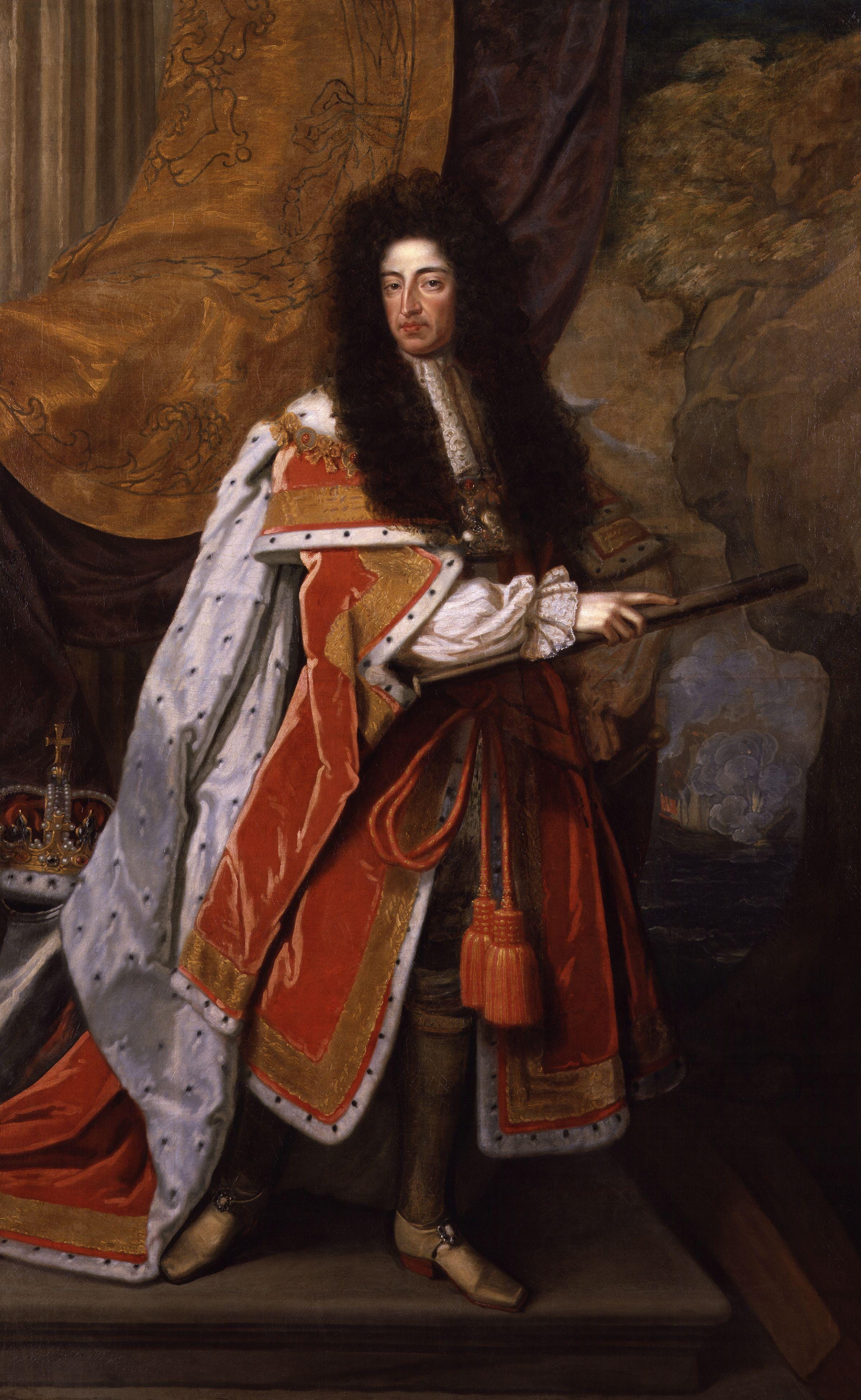
The Glorious Revolution was a major upset for the emerging factional system. The new co-monarchs William III and Mary II generally favoured Whigs and pushed Tories out of influence, given the lingering suspicion that Tories favoured the return of James II (the cause known as ‘Jacobitism’ which was particularly strong in the Catholic stronghold of the Scottish highlands) and were either more conservative in their Anglicanism or even out-and-out Catholics. (William, on the other hand, was a Dutch Presbyterian, a Calvinist more in line with the Scottish Kirk than Anglican Church.)
That situation was completely reversed after the deaths of Mary and then William, when Mary’s sister Anne took the throne. She recognised that the Whigs were still the faction of Parliamentary power and so the monarch’s natural allies were to be found amongst the Tories. Under her influence, Tories would often dominate the government, though they could never entirely overshadow the Whigs.
Fundamentally, the stain of Jacobitism was difficult for the Tories to wipe out and, furthermore, true old school Tories of the type who still didn’t recognise Parliamentary sovereignty had a hard time operating in Britain’s new political milieu.
In 1714, Queen Anne died. Like her sister, she had no surviving children and so, thanks to the convoluted succession Parliament had instituted to avoid a Catholic king, the throne passed to the Hanoverian King George I. Immediately, there was a Jacobite rebellion in 1715, then an attempted Jacobite invasion in 1719, and a Jacobite conspiracy in 1721. It all thoroughly convinced George I that Jacobitism was a real and present threat to his reign and that the potentially Jacobite Tories should be allowed nowhere near the reins of power. The Whigs, therefore, were given a near total monopoly on political offices which lasted until 1760, a period that is known as the Whig Supremacy or Whig Oligarchy. Throughout this period, the Tories were a small rump faction and the major division was between different kinds of Whigs who rallied around different influential leaders.
Having established himself as the first prime minister in 1721, Walpole remained at the top of British politics for two decades. However, opposition to him grew, in particular due to his corruption and cronyism. Whigs who opposed him, most notably the Earl of Bath and Pitt the Elder, united under the label ‘Patriot Whig’ and together with the Tories and even more radical Whigs — the Commonwealthmen — formed the loose ‘Country Party’ alliance. In 1742, they were able to defeat Walpole in a confidence motion by a single vote, forcing him to resign.
The opposition, however, was too disunited to govern. After less than two years, the Pelham brothers — previously close allies of Walpole — were able to wrestle back control. Henry Pelham was the real leader of the two but, when he died in 1754, his brother Thomas, Duke of Newcastle, took over. Newcastle’s bungling of the Seven Years War allowed the Patriot Whigs another shot at government but they were too few in number to form a stable government and, even more critically, George II just really didn’t like Pitt the Elder. Eventually, Newcastle had to be recalled, governing in coalition with his old rival Pitt. Throughout all of this, the Tories didn’t even get a whiff of power.
The Tories as they had been would never recover. Tory, to many, still meant someone who rejected the post-1688 constitutional arrangements and preferred an absolutist monarch. So, even when the Tories began to gain power again, it wasn’t really under the Tory label. Influential ‘Tory’ leaders rarely used that word to describe themselves. Instead, using terms like ‘Independent Whig’, they would unite true blue Tories with Whigs of a more conservative persuasion. The term ‘Tory’ had, effectively, become one of disparagement, associated with the most reactionary wing of British politics, and it would take time for it to again be adopted as a neutral party label.
Nonetheless, the Tories would return to power. It began when George III ascended to the throne in 1760 and made no secret of his dislike for the Whig leadership of Newcastle and Pitt the Elder. Instead, he favoured his old tutor, Lord Bute. With royal backing, Bute was able to oust the Whig leaders and govern with the support of Tories and disaffected Whigs like the Duke of Bedford’s faction. Today, Bute is usually seen as the first Tory prime minister.
Bute could take power, but he couldn’t keep it. Though the Seven Years War ended under his leadership, there was widespread opposition to the resultant peace treaty, seen by Bute’s opponents as not harsh enough to the defeated powers. Bute had to resign, leaving another, more Whiggish, man to lead his Tory-Whig alliance. Opposing them were, still, Pitt the Elder, as well as the old Pelham faction, which had come under the leadership of the Marquess of Rockingham.
Even with Bute gone, the government soon fell and Rockingham and Pitt each got a stint governing the country, despite George III’s personal distain for them. What George wanted was another Bute: a more conservative man who could hold together a coalition of true Tories with those Whigs willing to align with them. In Lord North, he found his man.
North’s twelve year premiership is mostly known today for the American War of Independence, which he in many ways both caused and lost. Indeed, the thing that finally forced his resignation was Britain’s imminent defeat in the war. Nonetheless, his ministry was a watershed moment, as he was the first man to hold together a stable government of Tories and certain Whig factions, and it was this alliance that dominated politics in the late-18th and into the early-19th century.
After North’s fall, the mainstream Whigs tried to govern alone but, just a few months later, were forced out by a coalition of North’s supporters united with the most radical Whigs under Charles James Fox. It was a coalition that couldn’t last, however, in particular thanks to the king’s personal intervention, stirring up the Lords against his own government. In 1783, Pitt the Younger, son and political heir to Pitt the Elder, was invited to form an alternative ministry.
United by a small-c conservatism, Pitt the Younger held together an alliance of Tories and various factions of Whigs, similar to those of North and Bute before him. Soon, they were further united by an aggressive foreign policy towards Revolutionary, later Napoleonic, France, though on some issues, like slave trade abolition and Catholic emancipation, Pitt’s government was divided. (Pitt himself favoured both.) Opposite them were the more radical and reformist Whigs under Charles James Fox’s leadership. Yet, the Foxite Whigs were a rump faction whose support for Parliamentary Reform, full freedom of worship, the American and French Revolutions, and the abolition of slavery went far beyond the political mainstream of the time.
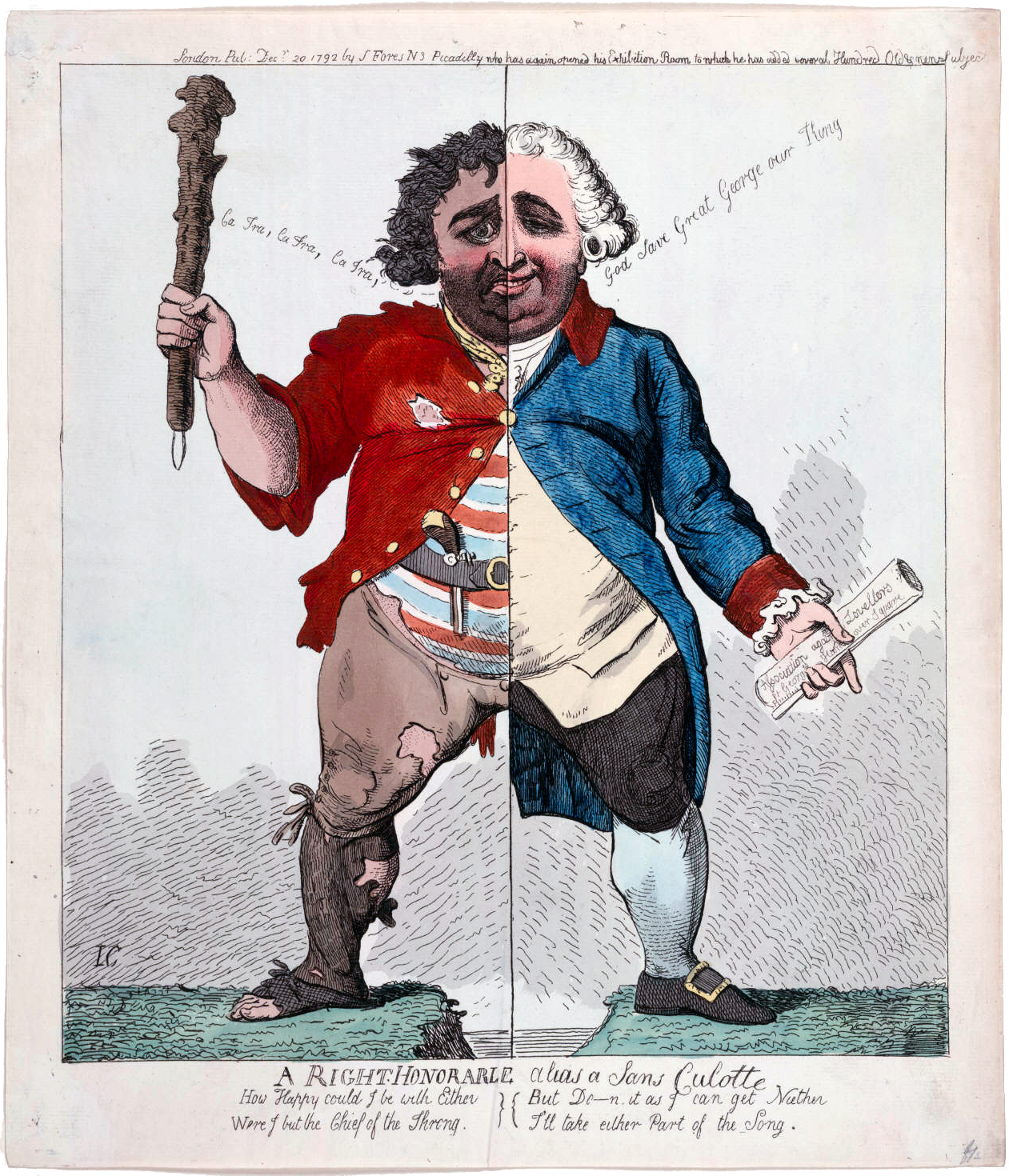
Nonetheless, this was a time when personality mattered more than party and, after being held together for over two decades by Pitt the Younger, the alliance was leaderless after his death in 1806. In the aftermath, three prime ministers quickly rose and fell, including an attempt at a wartime all-faction coalition which, thanks to its inclusion of the Foxite Whigs11, abolished the slave trade in 1807.
It took six years for the more conservative factions to reunite behind a single leader, Lord Liverpool, who continued to lead them until 1827, at which point he resigned owing to ill-health, and died shortly thereafter. Predictably, this lead to another leaderless period in which none could hold together the Tories and conservative Whigs. When even the Duke of Wellington, great hero of the Napoleonic Wars, couldn’t hold together a government, the reformist Whigs finally got a chance to implement their agenda. In particular, the long overdue reform of the House of Commons, to finally break the gentry oligarchy.
Under the leadership of Earl Grey, political heir to Charles James Fox, the reformist Whigs came to power in 1830 and achieved a popular mandate for their agenda in the 1831 election. Nonetheless, reform stalled in the conservative House of Lords. Over a few dramatic months of political brinksmanship it looked like reform might fall at the last hurdle. Grey threatened to resign unless the king flooded the Lords, creating enough pro-reform lords (through either new peerages or writs of acceleration) to pass the package. When William IV refused, Grey made good his threat — the last time a government fell due to royal intervention — but, after Wellington confirmed that Grey was too popular in the Commons for the Tories to form a government, Grey had to be recalled. To avoid flooding, Wellington agreed that his supporters would abstain in the Lords, allowing the reforms to pass. Though some, the ultra-Tories, defiantly refused to do so, enough followed Wellington’s lead that the package finally made it through the Lords.
The Great Reform Act of 1832 sought to address the issue both of constituencies and the franchise. On the constituency front, it abolished the rotten boroughs and other too-small constituencies, split up the larger constituencies, and created new ones for the more recently emerged urban areas. It furthermore extended the franchise to include, in the counties, not just those who owned land worth at least two pounds, but also those who rented land worth higher values. Under the new system, some tenant farmers could vote for the first time. Similarly, the borough franchise was simplified, taking away all the idiosyncratic systems for a single requirement to rent or own property worth at least ten pounds, with those who could have previously voted but couldn’t meet the new requirements being grandfathered in.
Overall, the reform act led to a small increase in the franchise while creating fairer, more uniform constituencies. It was by no means the end of the road to reform, but it was the first and most important step, breaking the gentry oligarchy of the previous era and creating more competitive and democratic elections across the country, even if the vast majority still couldn’t vote.
It also ended the Whig and Tory factions as they had previously existed. In opposition to the reformist agenda of Grey and his allies, the more conservative Whigs finally split permanently from the rest of their faction and fused with the Tories to create the Conservative Party in 1834. Like before, the Tory brand had become toxic: just as the post-1688 Tories were stained by Jacobitism and opposition to Parliamentary sovereignty, the post-1832 Tories were stained by their opposition to reform. Nonetheless, the Tory label was applied to the new party and, though still disparaging when in the mouths of opponents, was soon used by supporters as well.
Renewed under the influential leadership of Robert Peel, the Conservative Party would accept reform and attempt to embrace the opportunity that more democratic elections offered to beat their opponents at the ballot box. They would present themselves, not as reactionaries, but as sensible managers of this new political reality, as declared by Peel’s ‘Tamworth Manifesto’.
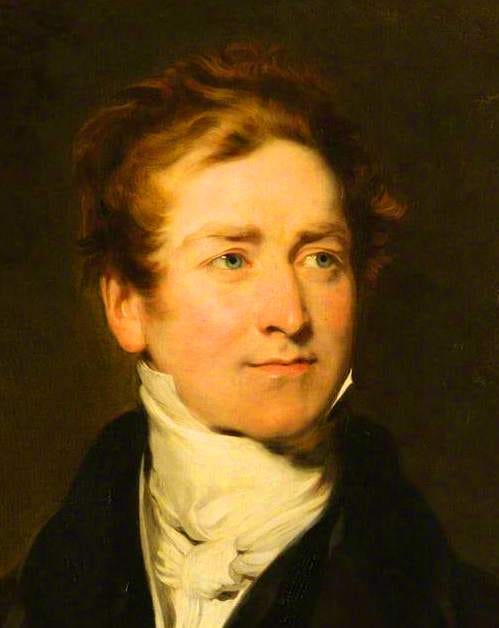
Yet, to go a little beyond our period, Peel would soon become disillusioned with the party he had founded. He was strongly in favour of free trade, while most Conservatives were avowed protectionists. In 1846, his faction — creatively called the Peelites — split from the Conservative party and began a loose alliance with the remaining Whigs, who had come under the leadership of best-frenemies Lord John Russel and Lord Palmerston. Whigs and Peelites governed in coalition with each other on-and-off before uniting to oust a Conservative government in 1859 and finally permanently fusing into the Liberal Party. It was these parties that would form Britain’s two largest political forces all the way up to the First World War, after which splits within the Liberals would allow them to be replaced by the Labour Party as the other half of the two-party system.
We’ve seen how, over the course of this period, various posts and institutions lost their power and joined the ‘dignified’ side of government. Most of the great officers, of course, but more importantly the monarch themselves, who went from ruling, to influencing, to a mere figurehead position. The passing of the Great Reform Act also proved something else: that a prime minister with the full support of the Commons could force the king into remaining merely dignified and, from there, could use royal powers to cow the House of Lords under threat of flooding. The House of Lords too, then, was rendered largely dignified. (Though it would continue to be an obstacle to reform, on and off, until first Lloyd George and then Attlee broke its remaining power through their respective Parliament Acts of 1911 and 1949.)
With the old now dignified, the prime minister and newly more democratic House of Commons would enter the next era, soon to be the Victorian period, as the engines of the effective government and basis of a system of mass democracy. In post-1832 Britain, parties formalised to fight competitive elections, replacing the old factional powerbrokers and local election-controlling magnates. Power would be given to whoever could win those competitive elections, rather than whoever could use graft and patronage to hold together enough of those powerbrokers and magnates. And this change was felt, not just in elections, but on the ground too. In 1838, the People’s Charter was drafted out of a feeling of betrayal by this incremental reform, demanding universal manhood suffrage, the secret ballot, and a host of other radical reforms. The Chartists were Britain’s first truly mass working-class movement, setting the stage for later mass protest campaigns like the women’s suffrage movement.
Truly the end of a political era and beginning of the next: one in which dignified and effective were firmly separated forevermore and politics moved out of the drawing room and into the streets.
Thank you for reading. If you enjoyed this, feel more than welcome to subscribe for more like it as well as my original fiction. Though very long, this article is fundamentally an overview and jumping off point: I encourage you to read further about anything I touched on that interested you. And, if you were confused by all these aristocrats and their complicated titles, you might want to check back on this article, which sought to explain all that:
In two weeks, my next short fiction will be Honour’s Forge, the story of an aging master-fencer and a young protégée angry at the world for not giving him his due, and of the duel between them that none shall soon forget. It’s inspired by two episodes from the life of Alex Dumas (the general, not his son the writer, nor his grandson the other writer), famous as the highest ranked black man ever in the French Army, who served alongside Napoleon.
And two weeks after that, I’ll be using that story as an excuse to discuss duelling and the culture of honour in the early modern period. It’s a topic so often misrepresented in media, so I’ll be doing my bit to correct that.
Don’t know where to continue with my writing? This might help:
For the purposes of this article, I won’t be interrogating the question of whether the dignified actually does this job very well, nor whether it’s a desirable thing to have.
Notably, this wasn’t even Anne overruling her own government. What happened is Anne’s ministers changed their minds on their own bill after it passed through parliament (due to a fear of Jacobitism in Scotland) and so asked her to withhold assent.
Actually, there’s a little more to it than that. An infrequently used mechanism that emerged in the 14th century and was abandoned in the 15th, the impeachment processes was brought back in the early 17th century by Parliamentary critics of James I/VI and then Charles I, who used it against high profile members of their governments. The first was actually Francis Bacon. Continual attempts to impeach the Duke of Buckingham — James’s lover and thereafter Charles’s chief advisor — were also a major source of contention between Charles I and Parliament. Still used intermittently after the Restoration, its use as a political tool basically ended with the Hanoverians and rise of the prime ministers. (If Parliament didn’t support the government, they could pass a motion of no confidence rather than impeaching, which was a much lower bar to clear as it didn’t require the Lords to agree, nor did it require a specific crime.) Nonetheless, it remained a way to police corruption in government until it completely fell out of use in the early-19th century.
Yorkshire is a special case. Though often considered one county for cultural purposes, Yorkshire was actually three counties under this system, split into its North, West, and East Ridings. Each got to send two representatives, giving a total of six from Yorkshire as a whole.
The ‘high’ part of all those ‘lord high’ titles is often dropped, which is what I’m going to do from now on to save us all a little time. However, very confusingly, there is a Lord Steward and Lord Chamberlain who is different from the Lord High Steward and Lord Great Chamberlain. They remained semi-effective posts and were often invited to cabinet until the late-18th century, but I’m going to ignore them because their role was to serve the monarch rather than govern the country. Basically, the Lord Chamberlain managed the monarch’s personal chambers (and also had to approve of all plays before they could be performed in England) while the Lord Steward managed the rest of the royal household.
‘Ministry’ being the term used in Britain to refer to a prime minister’s government, equivalent to the term ‘administration’ in an American presidential context.
Confusingly, these same terms are also used to describe the relationship between domestic and international law — monism meaning that international law automatically becomes part of domestic law, and dualism meaning that it doesn’t. Under that definition, the UK is dualist, as treaties only become domestic law if Parliament decides to pass a bill to that effect, such as the Human Rights Act 1998. This is because Parliament has no legal role in agreeing to treaties unlike, for example, the US Senate, and so otherwise the government could use treaties to create domestic law that Parliament hadn’t agreed to, which would undermine Parliamentary sovereignty.
Frankly, this was true of all politics in Britain until the Enlightenment. Everyone before that point, from the most reactionary to the most radical, justified their views on religious grounds. Pre-18th century radicals would, for example, argue that there was no Biblical basis for monarchy or aristocracy. ‘When Adam delved and Eve span, who then was the gentleman?, asked John Ball, the priest who gave the Peasant’s Revolt its theological justification. Or, to use my own modern translation: ‘When Adam dug and Eve weaved, who then was the Big Cheese?’. 17th-century Levellers developed similar ideas.
The Stuarts had been rather forced into Protestantism and none of the Stuart kings really embraced it. This all goes back to the Scottish Reformation which, unlike the English Reformation, was a bottom-up affair which broke the power of the monarch almost completely. In the 1540s and ‘50s, Scotland’s nominal monarch was Mary Queen of Scots, but she was a child and away in France. Protestant lords instead took power and instigated the reformation. When she returned in 1560, she couldn’t control them and was eventually forced to abdicate in 1567 in favour of the her young son James VI (later James I of England). James was raised protestant but never developed the fervent anti-Catholicism of other English and Scottish protestants — ironic given the later Catholic plot to blow him up. Anyway, he was king more in theory than practice and, when he was offered the English throne, he went south and never looked back, later passing his ideas on to Charles I, who himself passed them onto Charles II and James II/VII.
There was a botched attempt by the Duke of Monmouth to overthrow his uncle, raising the question of which is worse, a Catholic or a bastard? Still, the rebellion came to nothing due to lack of support for another civil war and Monmouth was executed.
Fox himself served as foreign secretary until his death, after which he was replaced by his protégé Charles Grey, then styled as Lord Howick, the future Earl Grey.
Comments
Nothing yet. Say the first thing.
Sign in to join the conversation.