
The week before Christmas we experienced a polar vortex. One night, low temperatures reached 16° F. I woke up early that morning to play tennis, and as I was pulling away from the garage at 6:30 I did a double take.
There was something plastered to the trunk of a large pin oak by the driveway. From the corner of my eye and in semi-darkness, it looked like a small colony of bats, but that couldn’t be.
I backed up for a closer look, and as my bleary eyes adjusted saw it was a pileated woodpecker, not moving. In bitter cold weather, woodpeckers (and other birds) often find shelter in holes in trees or logs or in empty bird boxes. In fact, I make a point of cleaning out the bird boxes in fall for this very reason, although in this case a pileated would be too big to fit in most birdhouses. (By the way, 14 of 17 bird boxes here showed signs of nesting activity this year.) What was this woodpecker doing? Had it frozen?
It worried me, but nature would take its course. When I returned, the temperature had improved to 21 degrees, and the woodpecker was gone. I suppose it had been using the tree trunk for insulation. Maybe it got caught away from its favorite hole and just hunkered down.
That’s how I feel sometimes, out in the cold, hunkering down. The invasives pushed back hard this year—honeysuckle, porcelainberry, bittersweet, English ivy. On the brighter side, most of our young trees survived and grew.
Sometimes we talk about selling Puddock Hill and downsizing, but I can’t bear abandoning my reforestation efforts, and besides, where would we go? We’re not ready for an apartment, and anyplace worth owning will come with its own backyard stewardship agenda.
So I will spend this winter as I’ve spent the past fifteen, imagining leaf litter accumulating, a little more every year, picturing tree roots diving down into the earth, more resilient every year, seeing in my mind’s eye next summer’s shade, thicker than ever, but not as thick as it will be one day.
Christmas is about the initiation of change. The greatest story ever told arcs from birth to suffering to resurrection. Not coincidentally, that’s the cycle of nature, too.
In 2025, some old trees came down and began returning their bounty to earth, continuing to feed and shelter wildlife along the way. Saplings arose—sassafras and maple and oak and black tupelo and holly and black walnut and tuliptree and hickory and sweetgum. Trees in restoration areas raced to build a future canopy. Dozens of bird species made Puddock Hill their home or at least stopped by.
The pileated woodpecker (Dryocopus pileatus) can only live in areas with mature trees and especially requires dead or dying ones for food and shelter.
If I were a religious Christian, I’d probably stretch for a metaphor here between the wood of the cross and the wood that sustains a woodpecker. Shelter and sustenance. Oh, and the woodpecker seeks carpenter ants. See? There’s even a carpenter in this story.
But, to be honest, if anything I tend toward Buddhism or the god of Spinoza. Respect for natural change and the unity of life is my road to salvation. And so I’m glad the woodpecker I saw plastered against the tree managed to survive the cold.
If I see him again, perhaps in warmer days, I plan to tell him that I, too, am working on the trees.
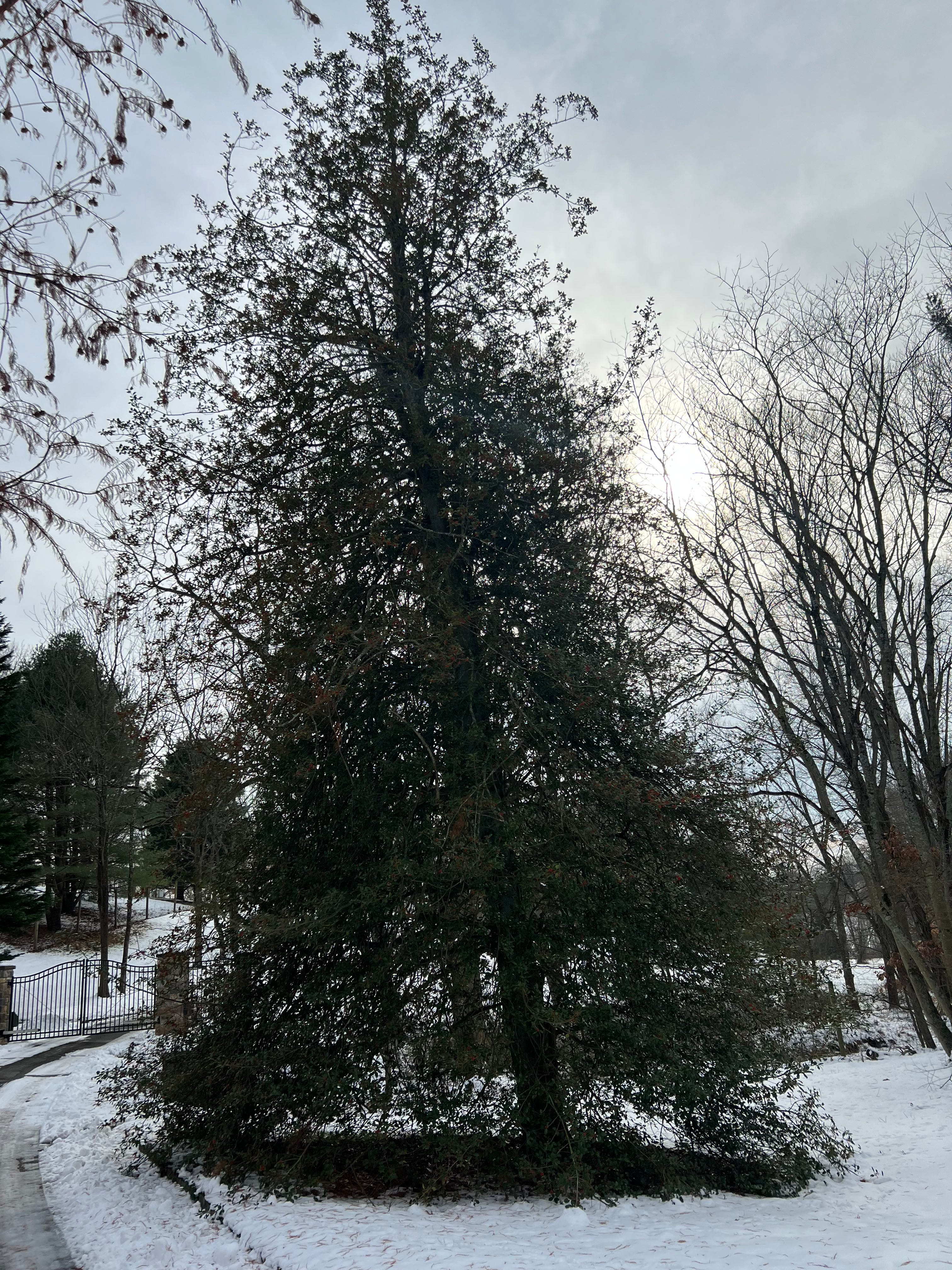
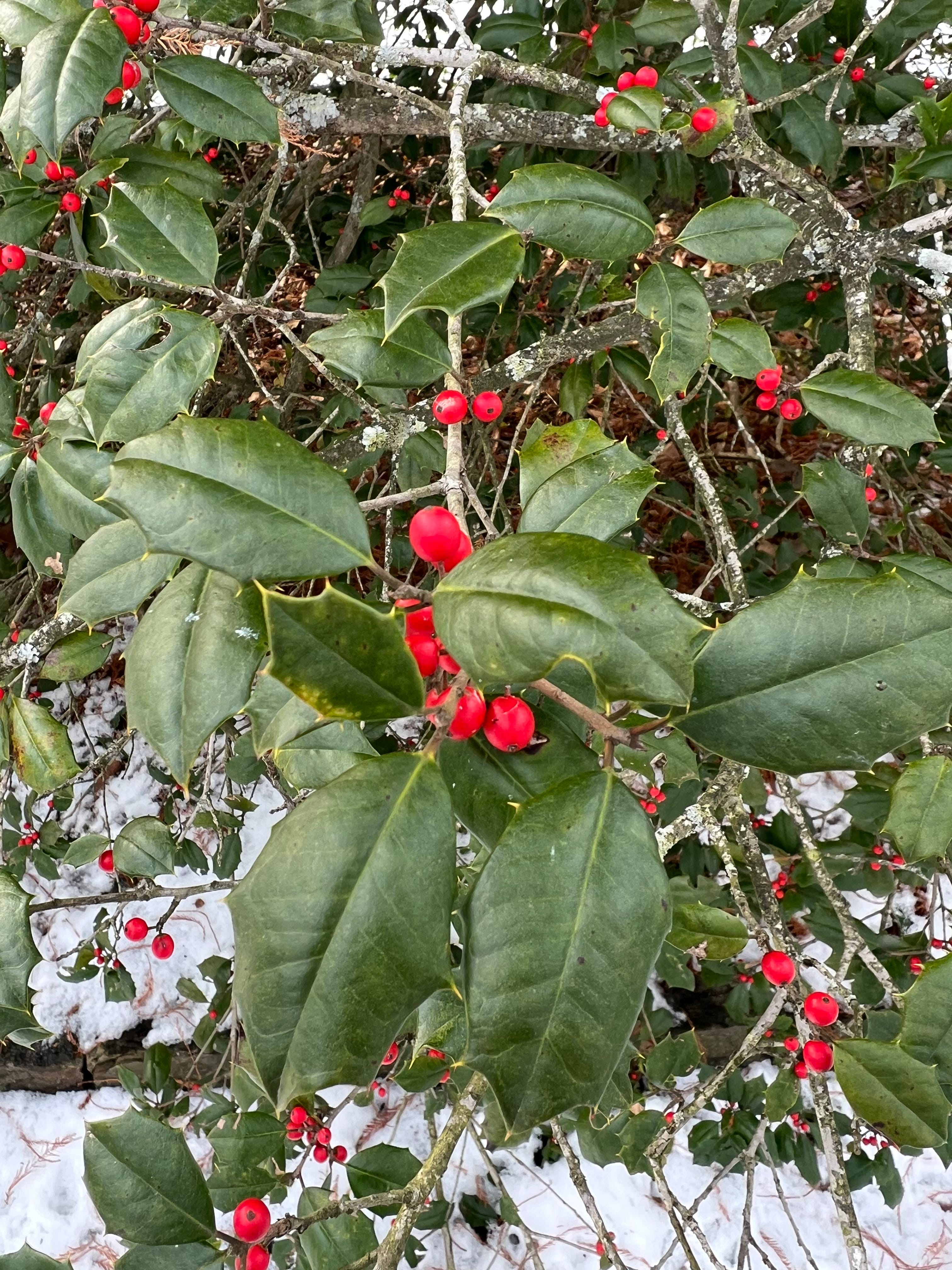
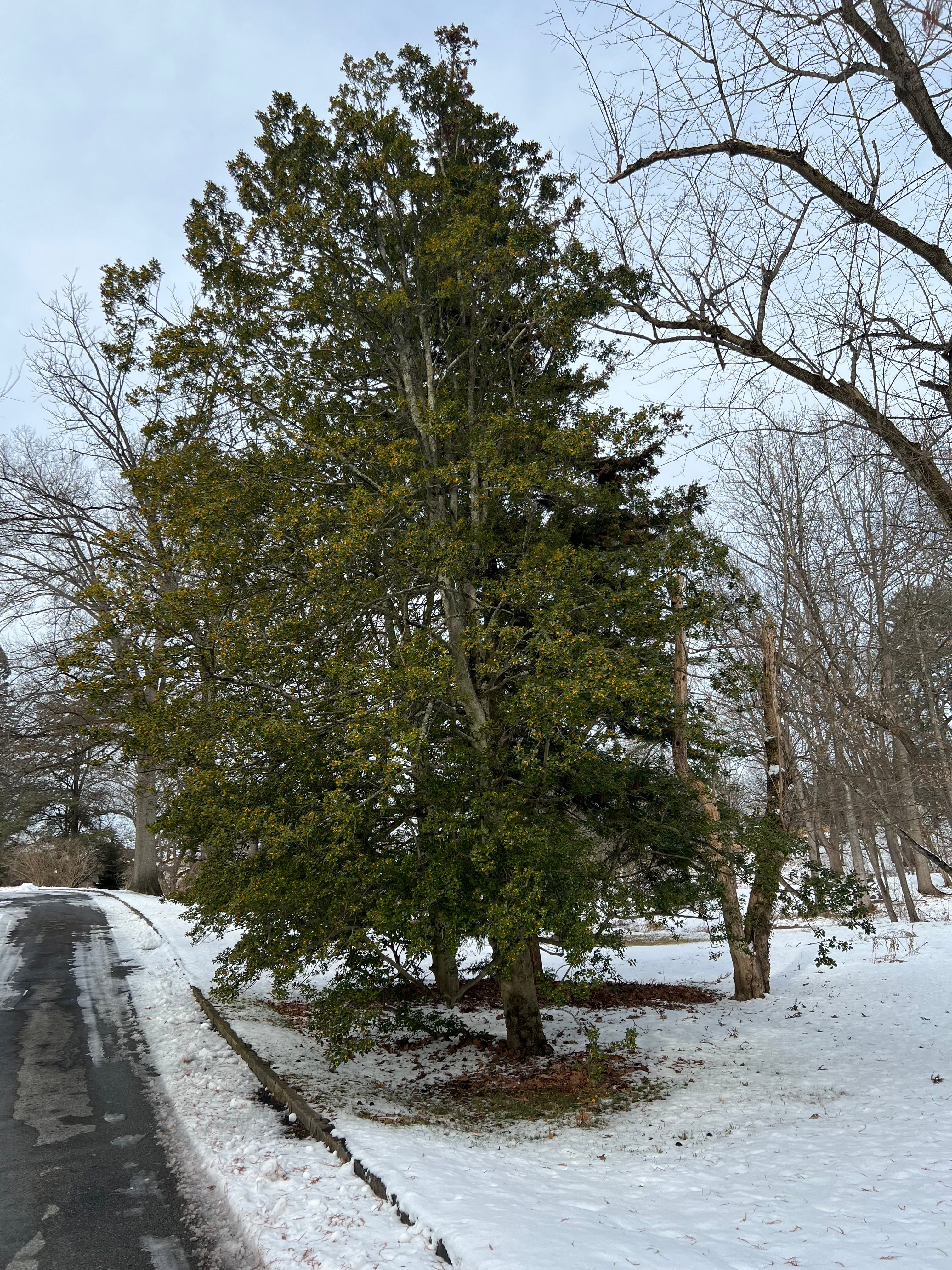
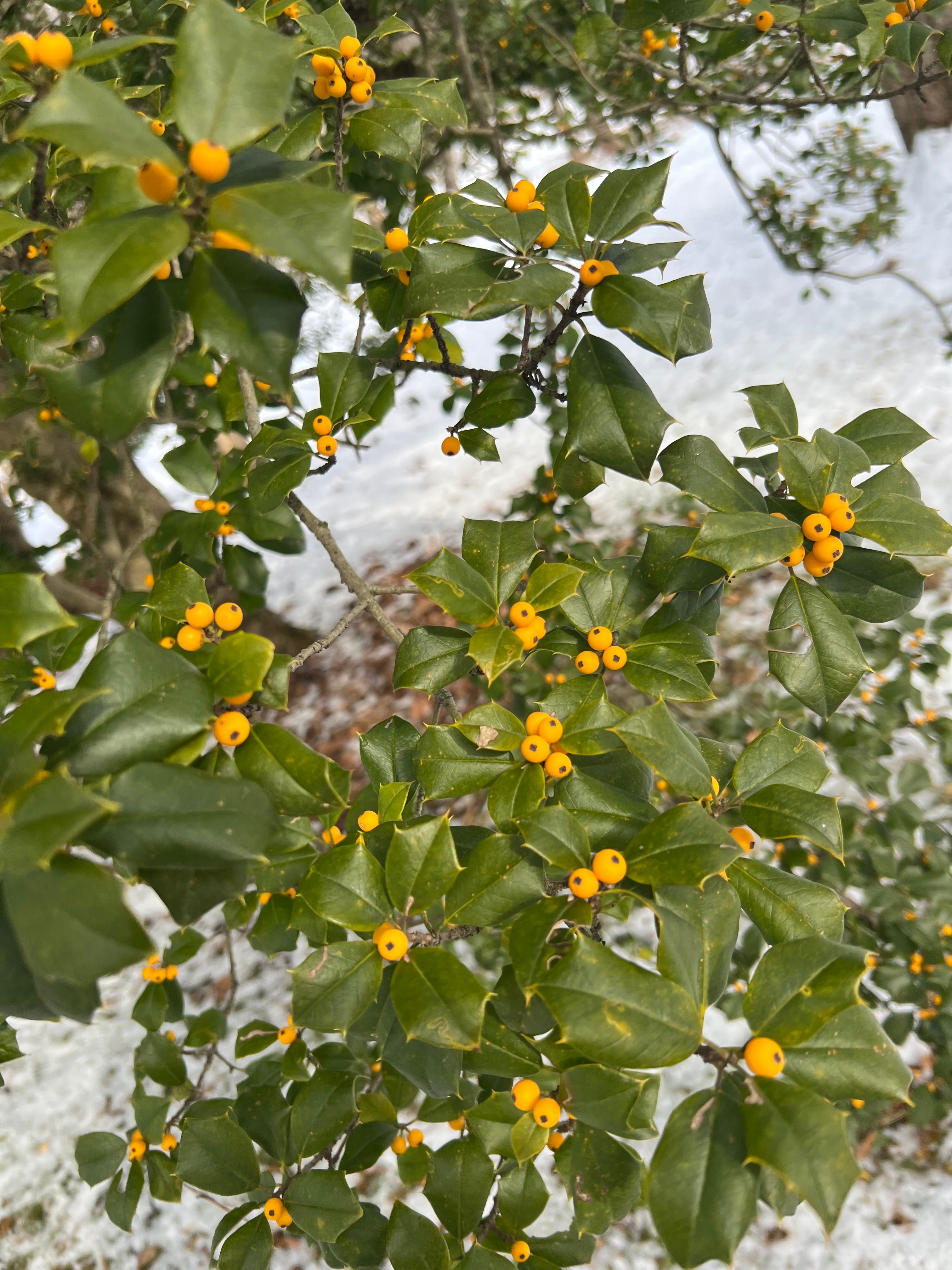
We are fortunate to have some mature American holly trees around, larval hosts to the Henry’s elfin butterfly (Callophrys henrici). These two—one with red and the other with yellow berries—grow by the driveway:
Comments
Nothing yet. Say the first thing.
Sign in to join the conversation.