
The British evolutionary biologist J.B.S. Haldane famously quipped, “If one could conclude as to the nature of the Creator from a study of creation, it would appear that God has an inordinate fondness for stars and beetles.”
If you ask me, I might be inclined to replace “beetles” with “black walnuts.” Of all the native trees that want to populate Puddock Hill, the black walnut may be the most enthusiastic. Perhaps we have forgetful squirrels to thank or the foxes that prevent some squirrels from living through winter. Either way, the walnut trees pop up by the dozens every spring and summer, colonizing unmowed areas and planting beds.
When we moved into the house sixteen years ago (and subsequently bought and combined a neighboring property), we inherited walnuts of all ages near both ponds, along the driveway (not recommended!), and in some density populating what I call the walnut woods.
“Woods” might be an overstatement. The area is no more than half an acre, not exactly a place you could get lost. And “walnut” is also doing a lot of work. The trees are mostly walnuts but several mature hollies and some kind of boxwood trees grow among them, the latter species perhaps planted before the woods grew up, both struggling and slowly dying since our tenancy began. (My experience with American holly is that it tolerates shade until it doesn’t.)
In any case, the so-called walnut woods is a collection of trees that I keep an eye on.
One of the main efforts on the whole property is management of invasive plants, and while we get mixed results for our trouble, the place would soon be overrun if we quit fighting. With regard to the walnut woods, for the first ten years I sent someone to mow and string trim there rather indiscriminately, keeping everything down. But then I decided to give the area more attention.
About ten years ago, we planted three native redbuds just fifteen feet or so into the woods. They thrived, but they stood as a reminder that years of white-tailed deer browse (before we installed the deer fence) had wiped out the understory. And our annual “clean up” hadn’t helped.
In response, I transplanted a few black walnuts that had volunteered elsewhere on the property and marked them with stakes. But, although I placed them in what I thought were sunnier spots, they struggled.
I decided to let things go for awhile and see what came up. The first good result was the establishment of a native herbaceous layer consisting mostly of jumpseed (aka Virginia knotweed; the Latin classification keeps changing but it’s known these days as Persicaria virginiana) and white avens (Geum canadense). Now also represented are goldenrod (Solidago spp.), sensitive fern (Onoclea sensibilis), and Canada lettuce (Lactuca canadensis), among other native green things.
Last year, I noticed more trees asserting themselves, particularly many self-seeded redbuds. And a recent trip into the woods found pin oaks, green ashes, a hickory, a sweetgum, and a tuliptree, as well as—you guessed it—black walnuts. This is a good reminder that the two best things we can do for a growing forest are fencing out deer and instituting a policy of benign neglect.
But I am also reminded when I wade into the walnut woods that neglect itself won’t cut it. Common invasive shrubs there are Chinese privet, Amur honeysuckle, and multiflora rose. Invasive vines include porcelainberry, oriental bittersweet, and honeysuckle, the usual cabal intent on destroying everything in their path.
What was I doing in the walnut woods this week? I waded into the morass twice with brush cutter and secateurs to fight back the invasives and give the natives a chance. It took a couple hours of hard work and I’m not yet done, but I made a dent.
I use the hand-held brush cutter to take most invasives down to the ground when possible and the secateurs to cut more isolated invaders popping up in a sea of good stuff. And I use both to carefully clear anything threatening the saplings still fighting to get established. Without help, the porcelainberry will soon overtop them or the bittersweet and honeysuckle will as soon strangle them.
Occasionally I also bring a chainsaw. Last fall I needed one to haul down a huge Amur honeysuckle that I’d allowed to get out of control near the property line. This time, I used it to cut back the bare lower branches of dead trees, where invasive vines were beginning to get purchase.
With regard to vines, I leave native Virginia creeper unmolested when I can, and I also allow a certain amount of native poison ivy to grow, although I don’t want it taking over.
But the trees are the main show in the walnut woods. Before long, those saplings will be taller than me, then taller than a giraffe. Then they will stretch up to compete with their bigger brethren for the light of the canopy. Not because I planted them, but because nature did the hard part and I pitched in to protect them from unfair competition.
Maybe we need to amend Haldane again. Maybe God has an inordinate fondness for stars any kind of native tree.
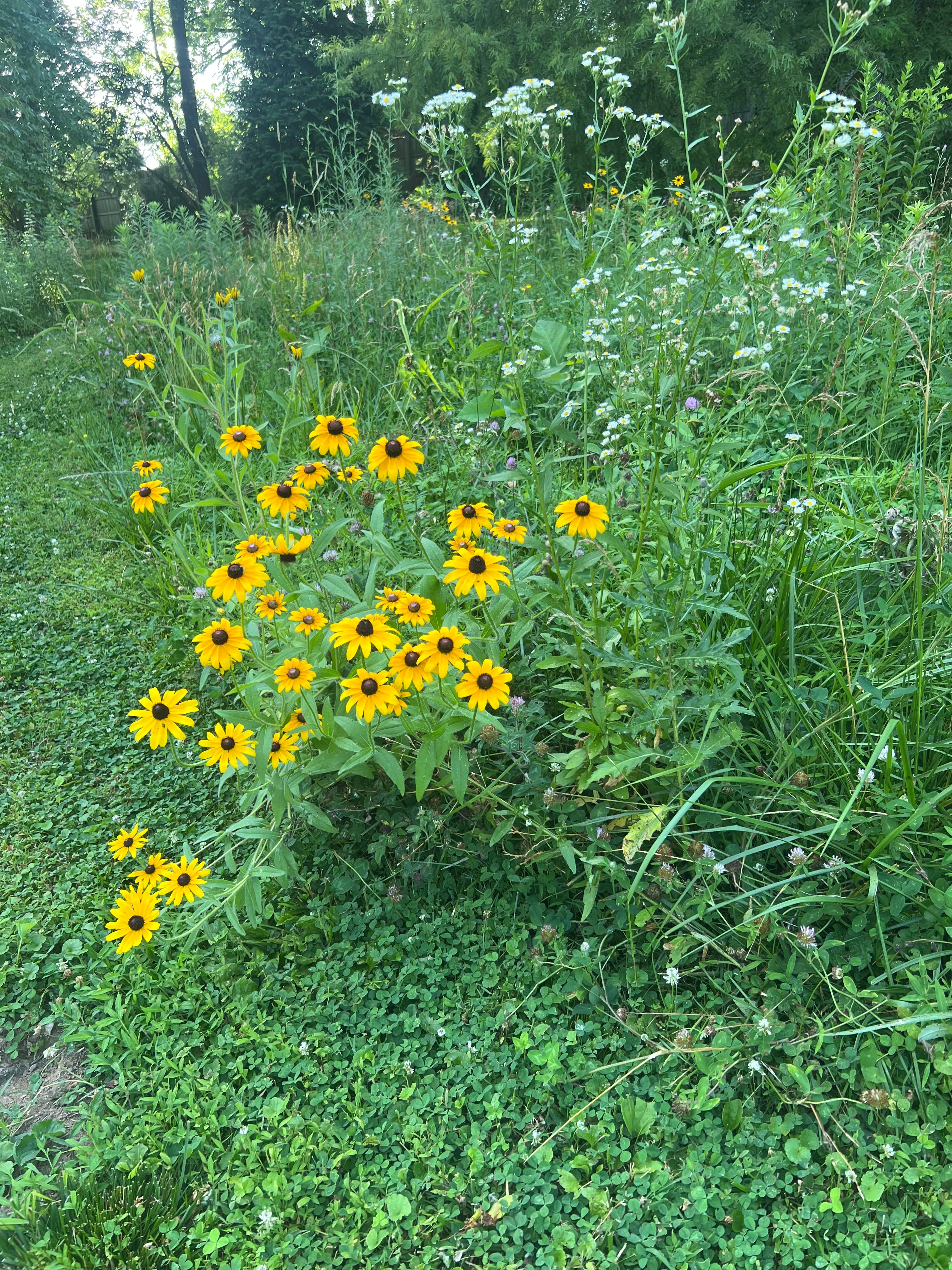
Native black-eyed Susan (Rudbeckia hirta) plays well with native daisy fleabane (Erigeron spp.) in the no-mow area north of the house:
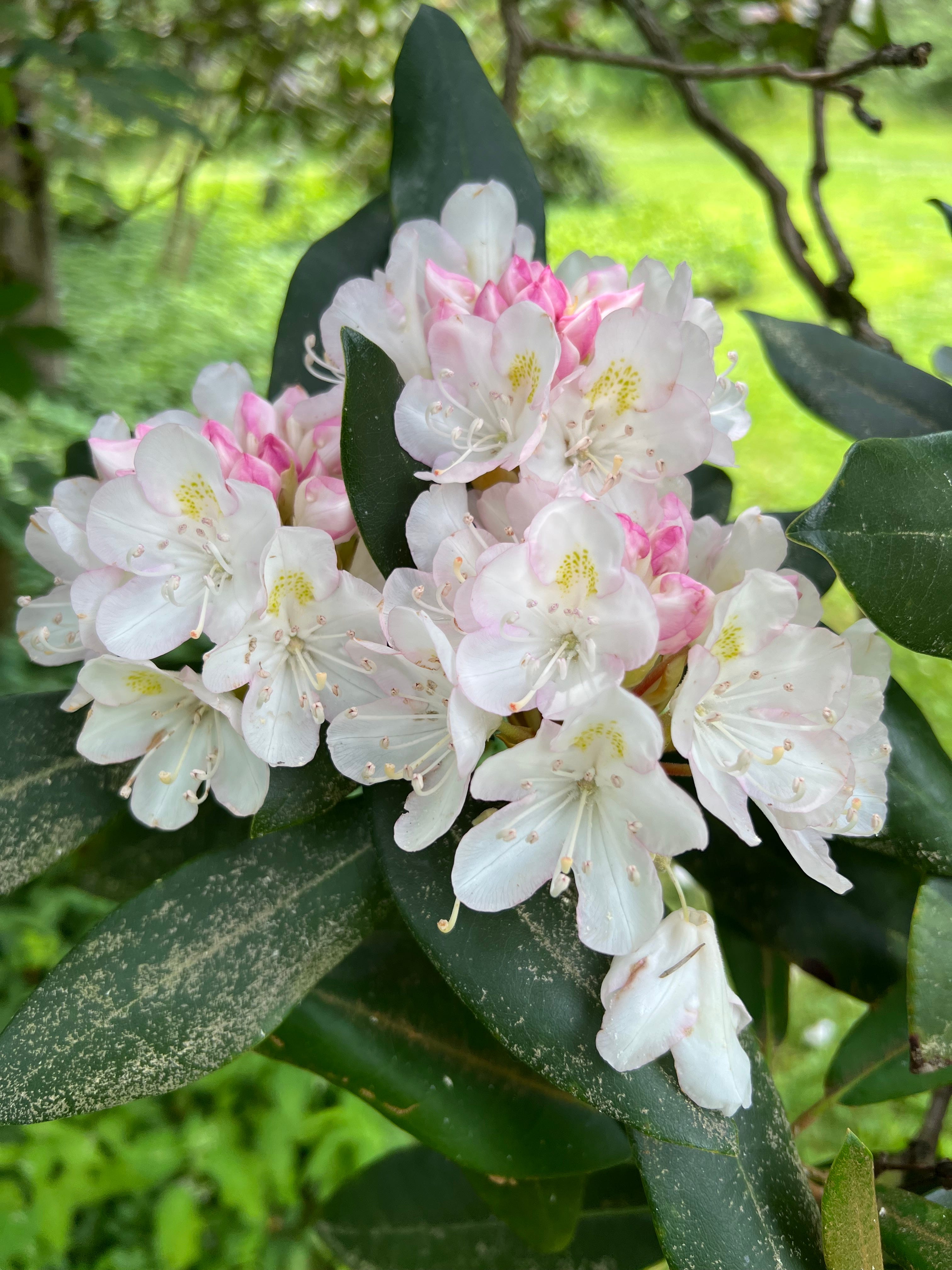
This old native great laurel (Rhododendron maximum) near the barn always flowers late but beautifully:
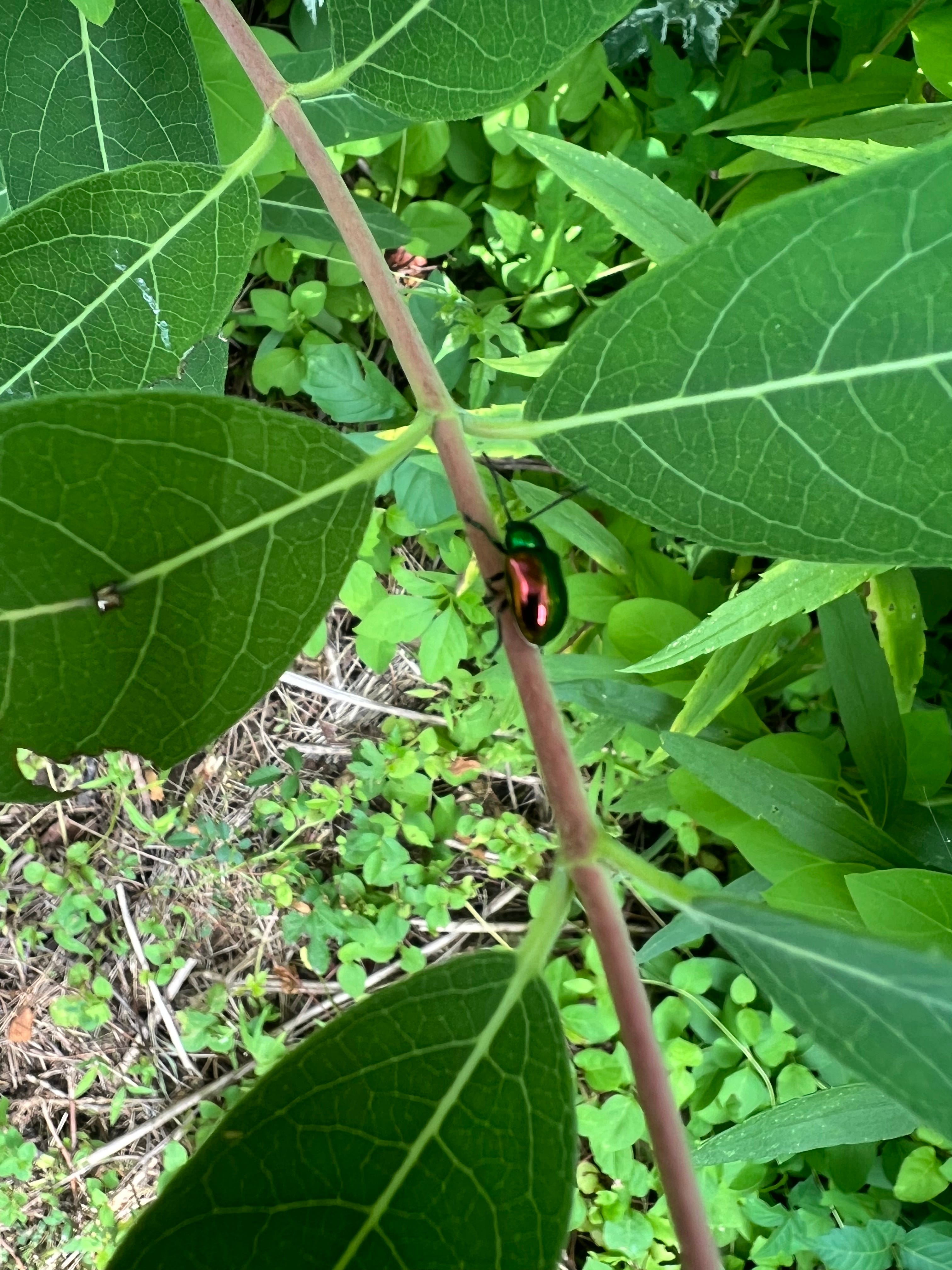
I only learned recently about the native dogbane leaf beetle (Chrysochus auratus), not to be confused with the invasive Japanese beetle (Popillia japonica), and then I found one in the wet meadow:
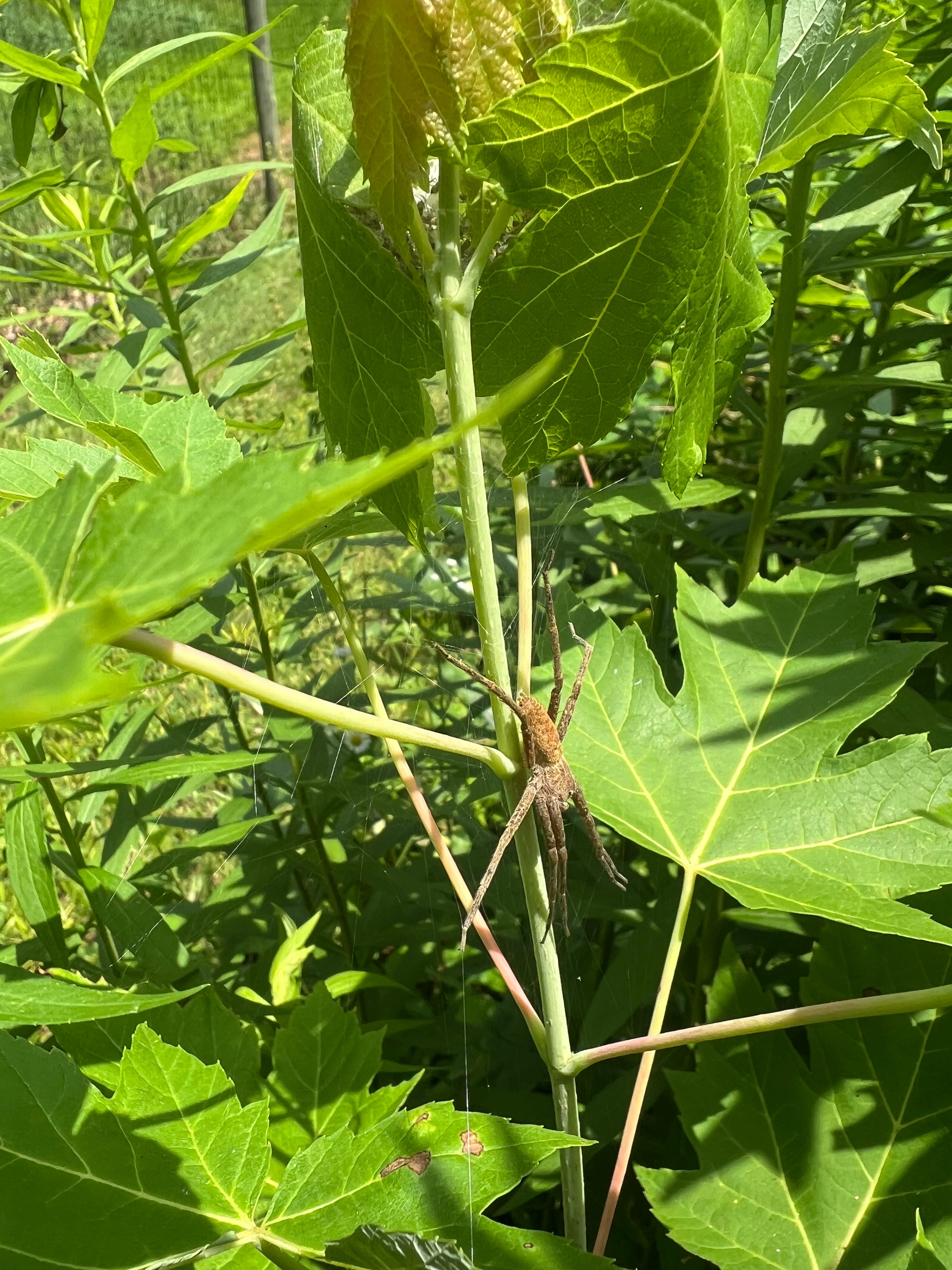
Also in the wet meadow, a nursery web spider (Pisaurina mira) hides on a silver maple sapling (Acer saccharinum):
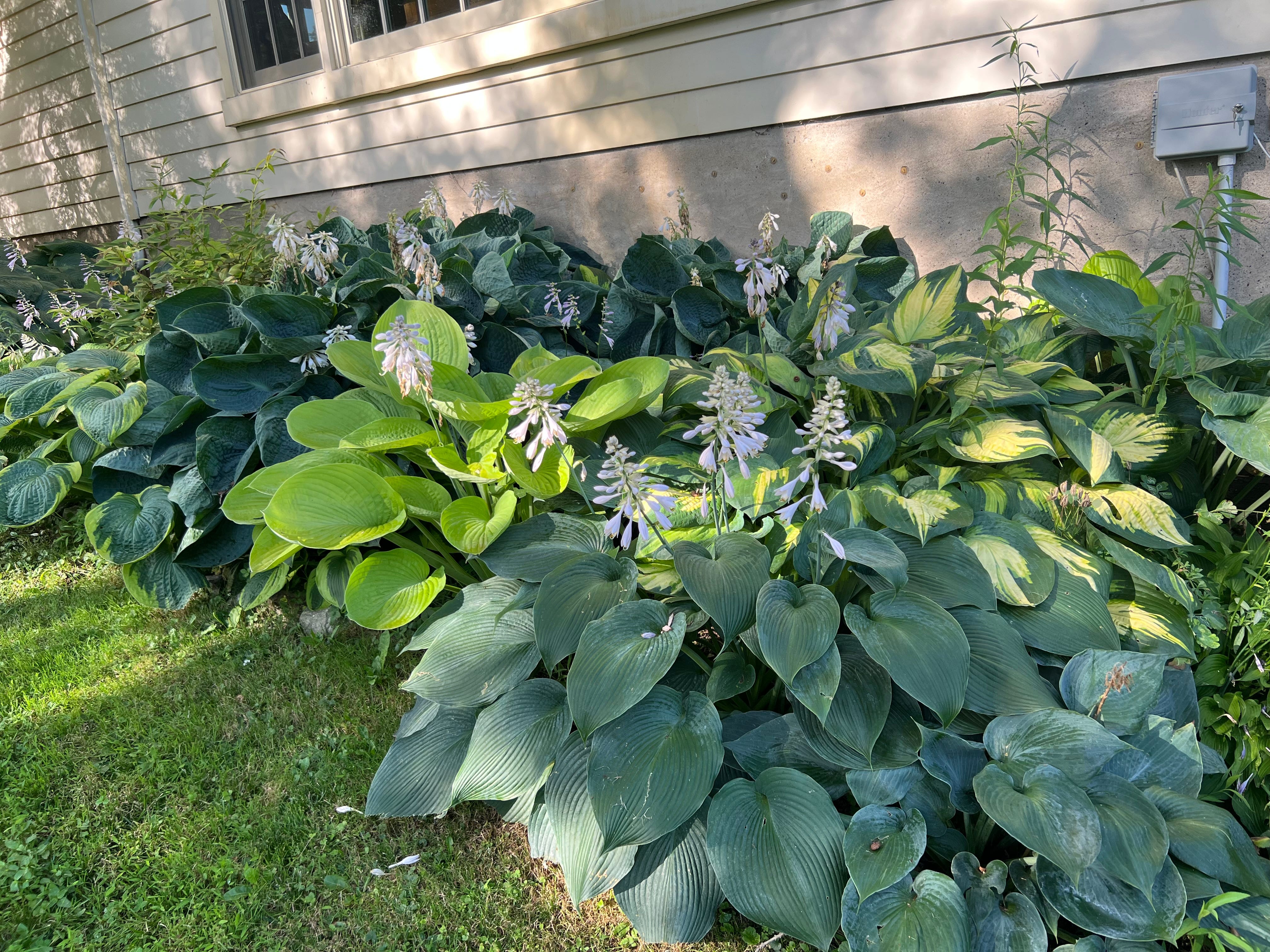
Non-native hostas flower along the west foundation of the house:
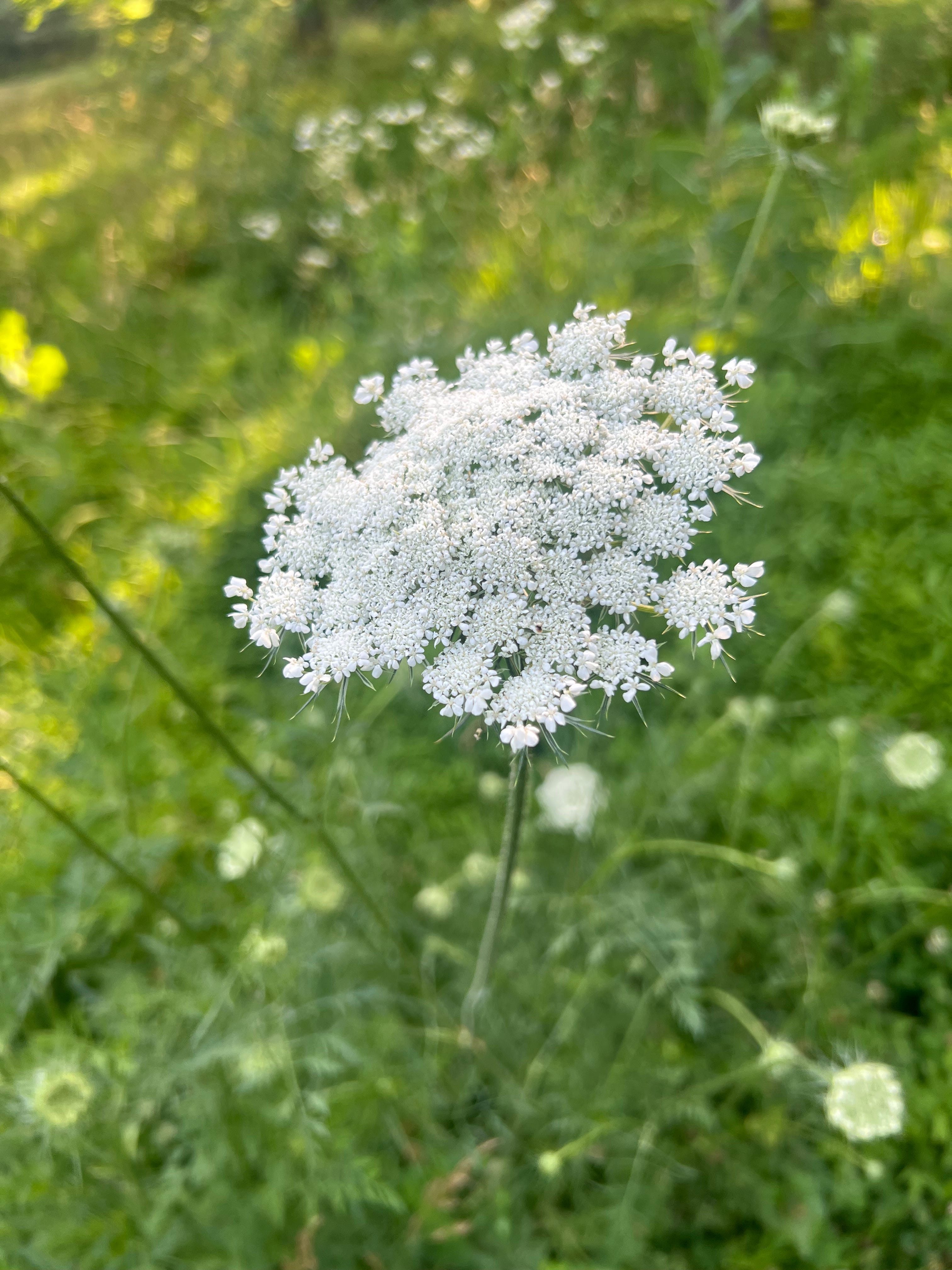
Lovely non-native but non-invasive Queen Anne’s lace (Daucus carota) is always a summer favorite and reminds me of Wyeth paintings:
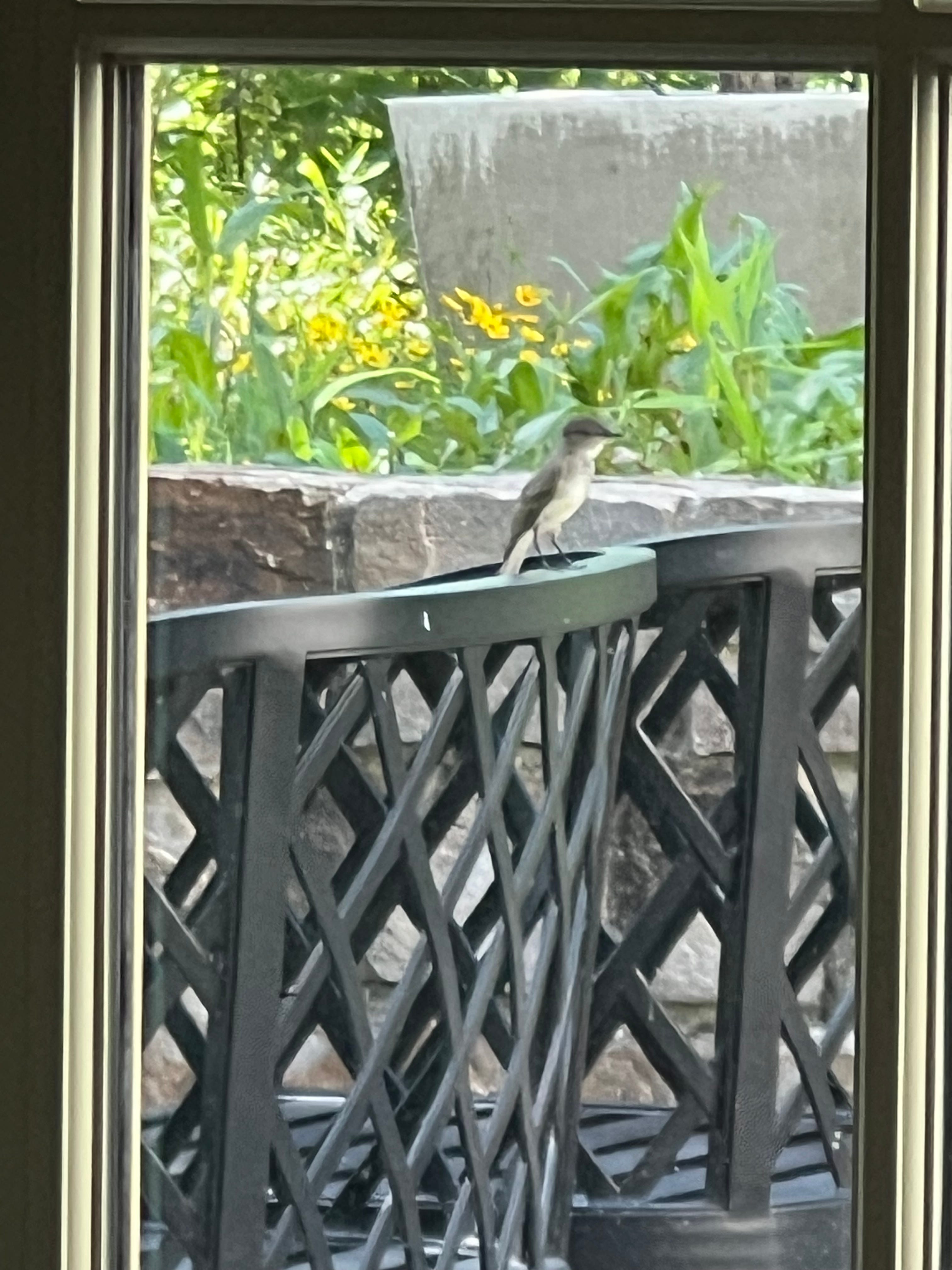
A native eastern phoebe (Sayornis phoebe) pauses on a patio chair:
Comments
Nothing yet. Say the first thing.
Sign in to join the conversation.