
One piece of advice I always offer people who are convinced that there are vast government conspiracies is this: “don’t underestimate incompetence or the ability to be inconsistent.”
This is not to say that I think most government employees are incompetent. In fact, I think quite the opposite. Most government employees, in my experience, are committed to doing the right thing. Sometimes, it is the politicians who get in their way. Other times, it can be the lawyers.
You may remember that I wrote recently about Kevin Bromberg, and his quest for underlying data and documents that the Montgomery County (Maryland) planning agency denied him. Kevin wanted to figure out if the agency’s positive characterization of community support for a redevelopment plan – the University Boulevard Corridor Plan to be exact - actually reflected reality. He was skeptical of this statement from the agency about community support for the plan:
“The Plan’s recommendations reflect the community’s priorities, balancing development with environmental sustainability, housing affordability, and improved transportation options,” the agency said in documents about the plan.
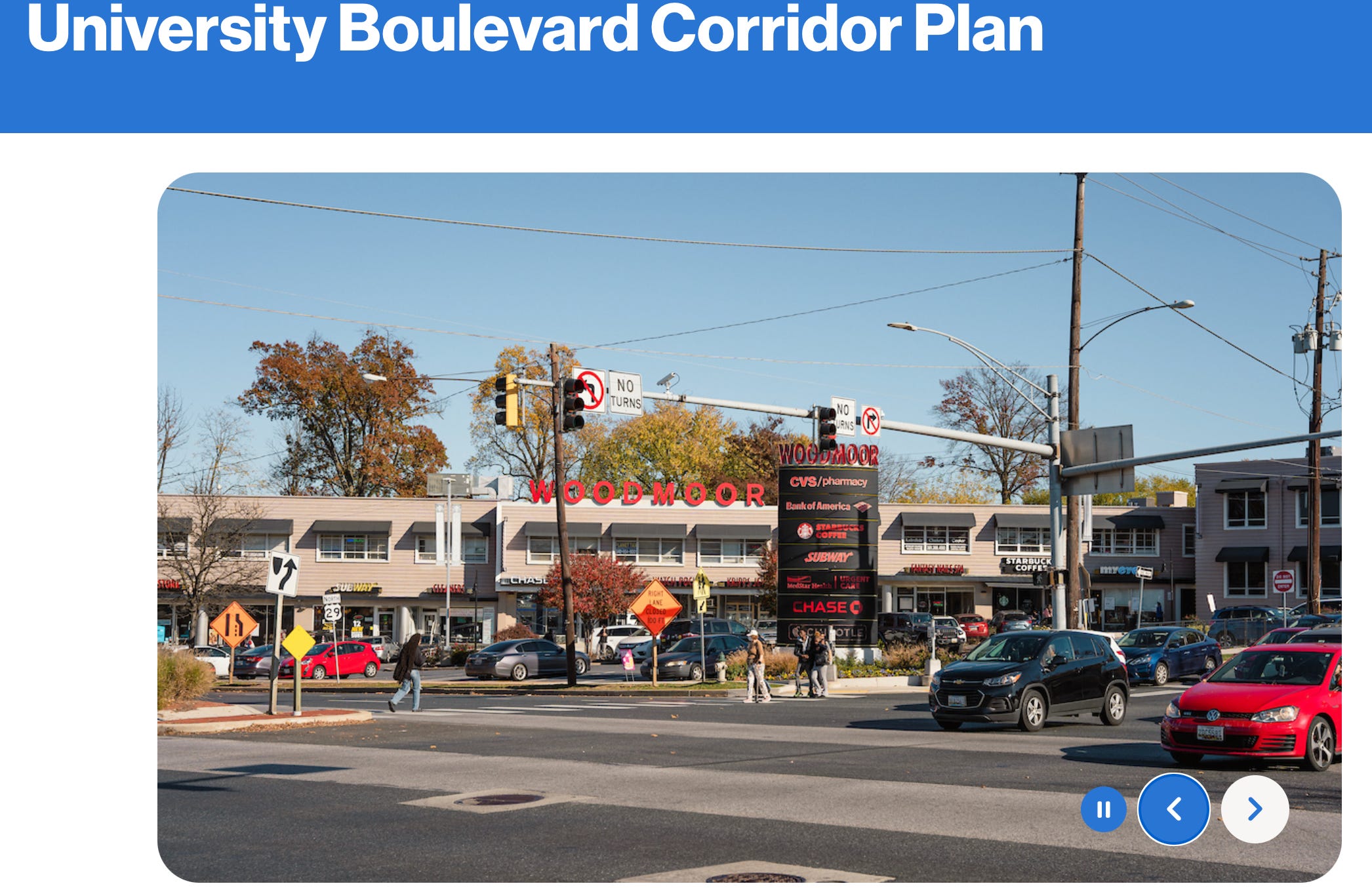
Kevin wanted the underlying data from the county’s planning agency because he thinks the agency has published an incorrect analysis of public sentiment about the University Boulevard plan. He says from what he has seen and heard, the community doesn’t like the proposed changes that the planning agency is pitching as improvements.
Well, we are about to find out what those underlying documents and data show. Maybe Kevin is correct about the mischaracterization of public sentiment by the planning agency – and maybe he isn’t. A ruling by a state review board went his way and now the planning agency must provide the material Kevin is seeking.
But first, here’s what he had to do to force the hand of the planning agency: Initially, the agency asked him for about $1,000 in fees to search for the information. He appealed that to a state public records ombudsman office, but it was never resolved. Instead, the agency changed its position and said Kevin could not have the information because it is “research.” The planning agency also said that revealing the information Kevin was seeking was impossible because to do so would amount to an invasion of privacy of the people who had been surveyed for their views of the master plan changes. The agency said it was impossible to redact the identifiers because they were sprinkled throughout individual statements.
So Kevin, who is a lawyer, took the next step, after months of resistance from the planning agency.
On February 24, he filed a complaint with the Maryland Public Information Compliance Board. He worried that if he lost, it could open the way for all government agencies in Maryland to claim that data they use to support their conclusions are now exempt from disclosure.
Kudos at least to Maryland, not the most transparent state, for having a non-court review system for public records disputes that doesn’t cost anything to the person filing the complaint. You can read more about the compliance board here.
On June 24, Kevin got his answer. While the compliance board agreed that the material he was seeking, was in fact, research, it told the planning agency that it was in the public interest to cough it up. (The wording was more polite than that).
The board found that the state’s public records law protects outside scrutiny of research projects while they are underway. But once they are completed – which the board found that the research for redevelopment plan was finished – then the material could become available to the public. The planning agency has the capacity to black out/redact personal, identifying information, the review board found. And the board found that the Maryland public records act must be “construed in favor of allowing inspection of a public record.”
You can read the full opinion here.
Here’s what makes the whole process a little weird. The Montgomery County planning agency has several plans for redevelopment underway. And in the case of another one, the Friendship Heights Sector Plan, about a community bordering D.C., the agency’s report includes raw data per this appendix.

So why would one group of planners resist sharing data and documents, and another in the same agency post online a very detailed data set that shows the details of the public’s views, which were not all positive? And then to add to the confusion, a later version of the Friendship Heights plan, known as the Working Draft, does not give a breakdown of the data that would describe even more recent public comments on the proposal, Kevin found.
This kind of inconsistency in government agencies’ public records responses is not limited to Maryland. You can look almost anywhere in the country and find that sometimes governments give out material, and the next time they are asked for something similar, they balk. Is there any kind of written policy about consistent government compliance with open records laws that you know of in your communities.? How do these open records laws operate in real life, in addition to what’s on paper? I’d love to hear from you about this – especially about oddball inconsistencies.
Drop me a line and tell me what you are seeing. And let me know how difficultit is for non-lawyers and non-journalists to get the public records you are seeking – and that your tax dollars already have paid for. You should not have to go through what Kevin did – which took almost a year, and required a lot of his lawyerly expertise to poke at the system.
I write a lot about government information blockades. If you want to learn more about how state and local governments are failing to comply with laws that require them to be transparent, my book Backroom Deals in Our Backyards tells more of these troubling stories. My publisher, The New Press, is offering the book at a discount if you use the code Backroom30. You can order the book directly from the publisher by clicking on this link: https://thenewpress.org/books/backroom-deals-in-our-backyards/
No posts
Comments
Nothing yet. Say the first thing.
Sign in to join the conversation.