

It has been one year since I started writing on substack with this, my first piece, inspired by Lasch’s Revolt of the Elites.
I decided to touch-up and repost the piece here, as a one year anniversary post. Though it is unpolished in some ways, it’s always worth reposting any piece with lots of Lasch quotes.
If you enjoy my writing and are inclined to do so, you can give me a tip! Or simply, like, share comment, or subscribe.
In his book, The Revolt of the Elites, Cristopher Lasch laments the invasion of free-market principles into the realm of personal and civic virtue.
Many readers will know and understand the economic theory of the invisible hand, a concept arising from liberal economics, which argues against the artificial regulation of markets and economies. It is posited, by the proponents of such free-market economics, that a population of unregulated, self-interested agents will produce in the aggregate—as an emergent phenomenon—more wealth and public goods than would a population of economic agents whose self-interest and behaviour is constrained by regulation

The grumbling Hive
One of the simplest and earliest examples of this perspective is found in a poem called “The Grumbling Hive” from The Fable of the Bees, by Bernard Mandeville. The poem describes a thriving hive of bees who were free to exert their economic self-interest and were living in great excess and wealth. Some bees, despite their overall thriving, success, and wealth, begin to ‘grumble’ of the lack of virtue among their members, and so the hive commits to a diffuse and widespread altruism:
“At last in Anger swore, he'd rid
The bawling Hive of Fraud, and did.
The very Moment it departs,
And Honesty fills all their Hearts.”
The bees cease to exhibit any self-interest (Mandeville says they are “Blest with content and honesty”) and show little appetite for excess and luxury. However, this results in a collapse in productivity, and the hive languishes, because:
“Bare Virtue can't make Nations live
In Splendor; they, that would revive
A Golden Age, must be as free,
For Acorns, as for Honesty.”
The argument underlying the Invisible Hand and the Fable of the Bees is that certain desires and behaviours, when exhibited by individuals at large, can produce outcomes which seem contrary to the traits displayed by those individuals (the subtitle is Private Vices, Public Benefits). Simply, it is asserted that widespread economic self-interest produces an environment which naturally maximizes the wellbeing of all, more so than in the attempt to constrain and regulate behaviour to produce such outcomes in an artificial manner. This reflects a belief that responsibility for virtue can be outsourced from individuals to “market forces”, “structures”, and “incentives”.
This may well be true in the economic sphere—when it comes to things like corporate competition, investment, price setting, and resource allocation. However, as Lasch points out in The Revolt of the Elites, even
“early admirers of the market—Adam Smith, for example—did not advocate or even envision conditions in which every phase of life would be organized according to the principles of the market.”
The sociocultural free-market
Regardless, these free-market principles have migrated out of the economic realm and into the social and civic realm. This is reflected in the liberal-postmodern dissolution of all but a few of our societal regulations, social expectations, and standards of personal conduct.
In contrast to the effects of free-market philosophies as manifested in economics (whereby these assumptions result in less state regulation), the erosion of organic norms and regulations around social and civic behaviour has meant that the responsibility for the healthy functioning of society and democracy has been outsourced from responsible individuals embedded in guiding systems of cultural norms and social expectations, to “structures”, “systems”, and finally, to the institutions of the State.
That is to say, the left’s free-market of morality relies on the logic of the invisible hand, but, as Lasch repeatedly shows, it doesn’t work, and thus the state has to step in to a now degraded social milieu—and that invisible hand turns into a boot.
And as government boots tend to do, it treads on all the wrong things.
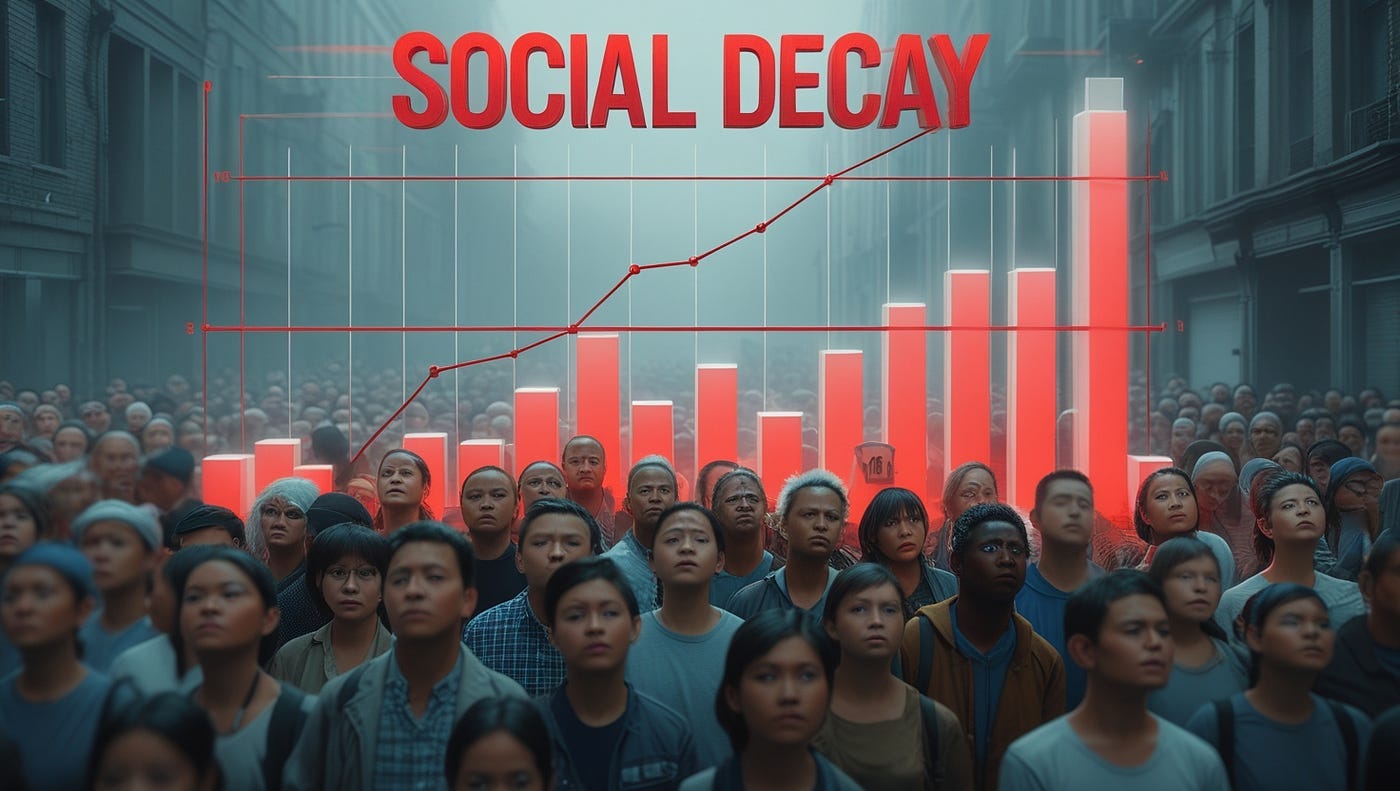
In Revolt of the Elites, Lasch argues (among a wide array of other things) that “democracy implies high standards of personal conduct”, and that this relies on a considerable network of organic social or cultural regulations—a fact which has been so quickly forgotten by today’s progressive left-wing especially. Progressives, being captured by an obsession with identity-politics, tolerance, and a hyper-sensitivity to perceived hardships, have asserted that traditional social regulations and standards (such as expectations around the family, personal virtue, competence, self-reliance, strength of character, education, etc.) are oppressive and unfair.
Thus, standards of conduct which were once demanded of citizens are now considered oppressive, racist, sexist, homophobic, ableist products of whiteness and patriarchy. In their utopian obsession with alleviating psychological distress and discomfort—especially for those who they consider “marginalized” by the old societal ideals—Lasch says that progressives have made “the deflation of ideals the prescription for mental health” and caused the “wholesale defection from the standards of personal conduct—civility, industry, self-restraint—that were once considered indispensable to democracy”.
Perhaps unsurprisingly, the deflation of these ideals has caused the deflation of an organic and authentic community-mindedness. After all, it is for the good of the community that people are expected to abide by certain standards, to be productive and constructive to civic society. As Lasch states “group life itself presupposes the trust that can prevail only when individuals are held accountable for their actions”. For the good of the community, it must be expected that individuals strive to reach certain levels of self-reliance, competence, virtue, selflessness, and responsibility.
Liberal-postmodern citizens, however, without the appropriate social pressure, have become frail, sensitive, self-centered, histrionic, and obsessed with identity and emotion. Unsurprisingly, a populace composed of such people cannot not produce a strong, communal, virtuous society—regardless of whether a similar, counterintuitive logic holds in the realm of markets. But as Lasch notes, many have “taken the position that democracy can dispense with civic virtue” and assume that “institutions, as opposed to character, [can] provide all the virtue democracy needs.” This is the idea of a new invisible hand of morality.
It’s important to point out here that things like “stigma” which get deconstructed in leftism, are actually meant to function as a kind of social technology, or “social scaffolding”, which supports and strengthens individuals’ fallible self-control, acting as a guard rail that helps incentivize people to resist pathological, self- and community-harming behaviors:
stigmatization by others may be an important instrument of individual self-control, and should therefore be conceived of as a type of “social scaffolding,” that may in the long run promote individual autonomy. The result is a defence of stigmatization, in a set of cases that have recently attracted controversy, such as drug addiction, petty criminality, child abandonment, voluntary unemployment, and dropping out of school. The central problem with destigmatization, in these cases, is that it shifts a greater part of the burden of self-control onto individuals, and onto the exercise of individual willpower, to resist the temptations that give rise to these patterns of behavior.
[Destigmatization] therefore represents an abdication, on the part of society, of one of the traditional functions that social institutions discharge in the behavioral economy of individuals.
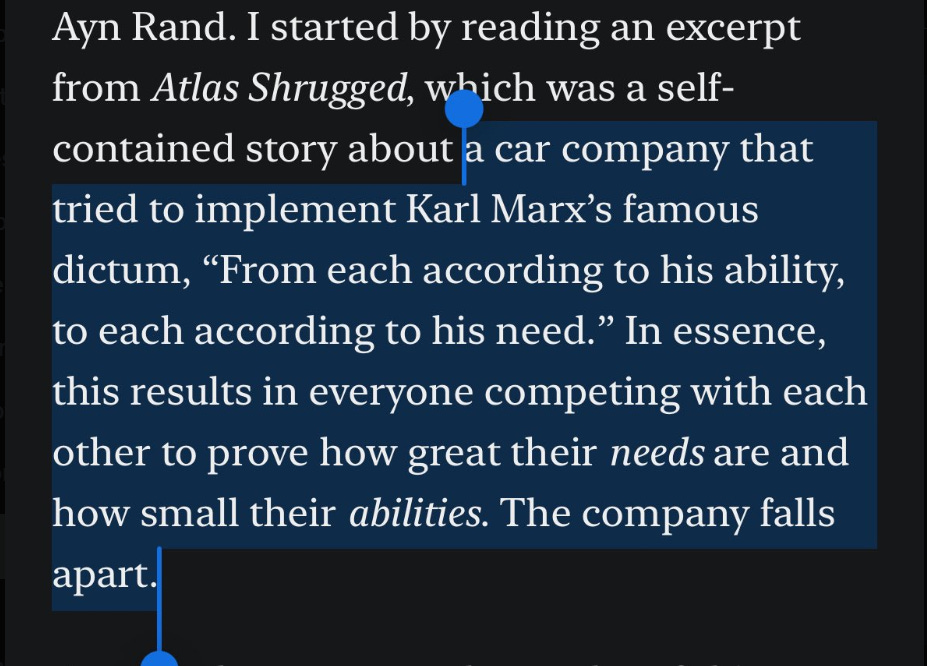
What happens when you remove social scaffolding and warp the incentive structures of society? You get a whole host of counterproductive behaviours, pathology, and learned helplessness:
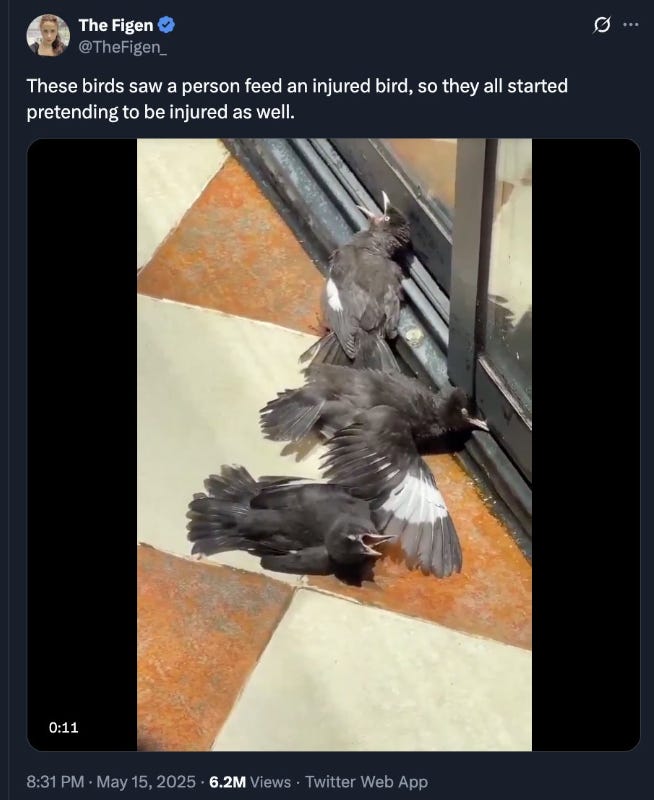
Even birds learn and respond to incentives like this:
Under these moral-free-market conditions, what results is a culture of absolute licentiousness in which nothing is forbidden—other than forbiddance itself. As Lasch says, the Left often “fall back on the claim that democratic men and women make up in tolerance what they lack in the way of character”, not realizing that an over-abundance of tolerance and compassion is what undermines civic virtue and therefore democracy itself. He points out that “the ideology of compassion, however agreeable to our ears, is one of the principal influences, in its own right, on the subversion of civic life, which depends not so much on compassion as on mutual respect”.
In Western democracies captured by this progressive doctrine, we are now loathe to make demands on each other—aside from the demand of a banal, degrading “tolerance”. We no longer expect people to behave a certain way or achieve a certain level of virtue, responsibility, self-reliance, or competence. Instead, we only make demands of the government and its institutions which are expected to provide all the virtue democracy needs, and which now invade and administer and mother-over every aspect of our personal and social lives. The result is the creation of a bloated, bureaucratic, therapeutic model of the state and its institutions, because, as Lasch notes, “the atrophy of informal controls leads irresistibly to the expansion of bureaucratic controls”, as I said earlier—that invisible hand must inevitably become a boot.
But, given that our highest ideals have become a free-market of tolerance, compassion, and victim-worship, these therapeutic state institutions can do nothing except “reduce everything exalted to its lowest common denominator”. They merely enforce ‘tolerance’ and, paradoxically, attempt to engender a culture of mutual respect by dissolving all other social regulations in the hopes that somehow this will produce a society of healthy, community-minded individuals. Instead, what we get is a culture in decline—a culture of narcissism.
Thank you for reading Brandon’s Substack. This post is public so feel free to share it.
To summarize…
Left-wing progressives—despite their aversion to free market economics—advance a strangely free market morality in which no one should have any social regulations or expectations placed upon them (other than expectation of indiscriminate tolerance, which is really just an enforced lack of the kind of social regulations I am talking about). Obsessed with all ‘minorities’, they deconstruct norms, expectations, and cultural meanings by which the vast majority of the population are well-served.
This, despite their claims, is the opposite of community-mindedness and civic virtue. Progressives think they abide by standards of virtue, but their standard is only that no particularly useful standards be placed on any individuals, while a huge weight of expectations are placed on the State. What results, as stated above, is a largely lazy, emotional, histrionic, or otherwise deviant populace which is increasingly subject to the power of a bloated bureaucratic state which is required to support and manage the personal lives and livelihoods of the citizenry.
What about the right?
Much of the Right-wing, in their parallel modern over-commitment to a rugged individualism, also tolerate very few regulations or constraints on their behaviour, but at least they maintain a shred of old, pragmatic ideals of self-reliance, strength, competence, traditional virtue, chivalry, or even at the very least just maintaining one’s physical fitness. The right-wing worldview is, in general, certainly more friendly to the idea of submitting oneself to exacting standards of personal and civic virtue, beyond mere ideals of tolerance and self-obsession. Despite the common criticisms levied against the right, in many ways their worldview is more amenable to the idea of effective personal service to the community.
The way forward
The expectation that we meet responsibilities conducive to democracy requires a commitment to education, virtue, competence, self-reliance, community-mindedness, and other apparently outdated qualities. None of which will develop in a progressive free market of morality, none of which our government institutions are interested in or capable of encouraging (many of these virtues would actually undermine the bloated role of the government), and none of which state-education systems appear to be concerned with teaching children.
So, it might be time to ask, as Lasch does:
“When government is relied on to furnish rules of moral obligation, will it weaken the very social ties that make government possible in the first place?”
With all of the concern touted about the functioning of our democracies, it would be useful to look to Lasch’s philosophy of communitarianism and mild social-conservatism. As he says in Revolt of the Elites, democracy “requires a more invigorating ethic than tolerance. Tolerance is a fine thing, but it is only the beginning of democracy, not its destination… We have become too proficient in making excuses for ourselves… We are so busy defending our rights… that we give little thought to our responsibilities.” We need a third way, between the excesses of the left and right, which relocates the moral obligation to the community and to each other, placing it back on community-minded individuals—on citizens, in the traditional sense.
It’s time we remembered that old-school qualities like civic virtue, self-reliance, community-mindedness, productiveness, and strength of character rarely develop in a licentious free market of morality. They are furnished only by traditional social-regulations and expectations.
As Lasch points out in The Revolt of the Elites, it is these diminishing qualities which are the preconditions for the trust and solidarity on which Democracy relies.
Thanks for reading Backcountry Psychology! Subscribe for free to receive new posts and support my work.
Comments
Nothing yet. Say the first thing.
Sign in to join the conversation.