
By Bruno Toledo
One of the more surprising elements of efforts to get countries to work on ‘roadmaps’ to phase down fossil fuels is that so many are working on one already. The perception at COP30 in Belem was that this was an entirely new phenomenon. But nothing could be further from the truth.
Nearly 50 countries have power sector decarbonisation plans, a report by analysts and academics in the UK, Italy and Brazil revealed recently. These include the EU27 (through national climate and energy plans), the United Kingdom (Clean Power by 2030), and Norway (already running on clean power).
The UK, Colombia, and at least nine other countries have plans in place to reduce fossil fuel supply to varying degrees, with subnational leaders such as California and Quebec also drafting plans. More have similar plans for reducing fossil demand in the transport, buildings, heating and cooling, and other key economic sectors.
Given the impact of the 2026 Iran-US war and resulting energy crisis - deemed the greatest fossil fuel supply crunch since 1973 by the International Energy Agency (IEA) - we should expect other governments are working up strategies.
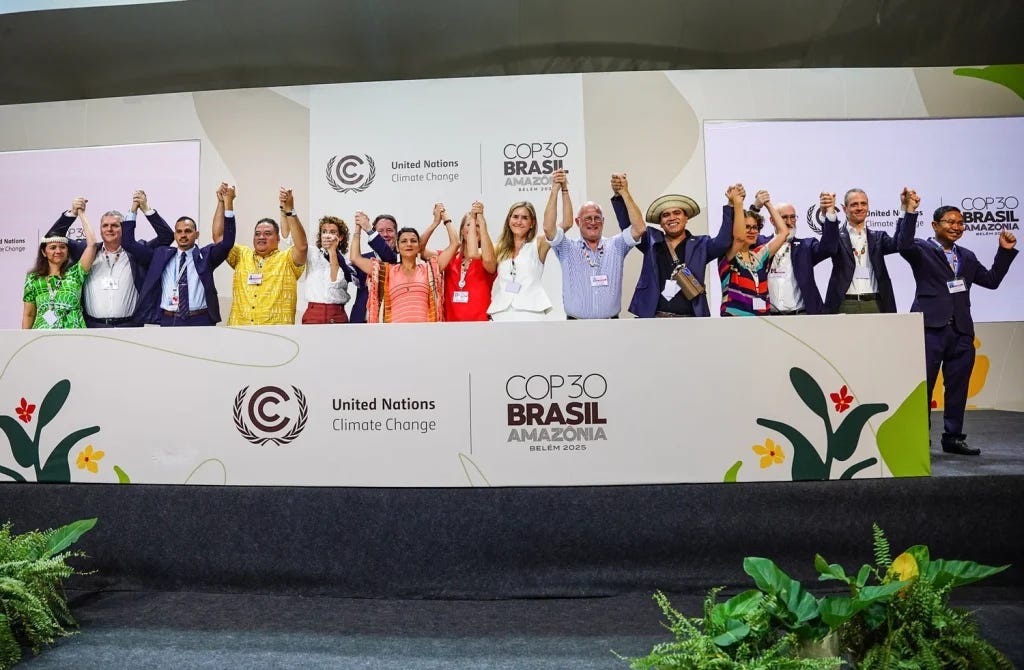
This makes the campaign by 80+ countries at COP30 for progress on fossil fuel roadmaps and the subsequent decision by the Brazilian government to lead the way and kickstart a process under its Presidency all the more salient.
What may have seemed a battle at COP30 now seems like common sense. Why would anyone be dependent on sources of energy that can - quite literally at a stroke - crash your economy and see the lights go out at the whim of a crisis?
What we know now is that progress on this roadmap is far more advanced than many thought - and we’re likely to learn more about the pace of work at the upcoming Santa Marta fossil fuel phaseout conference in Colombia later in April.
A wealth of alliances and initiatives already exist to kick this on - from the Beyond Oil and Gas Alliance (BOGA), the Coalition on Phasing Out Fossil Fuel Incentives Including Subsidies (COFFIS), and many national initiatives.
In parallel, a growing number of sectoral and national processes are translating this shift into concrete policy decisions. Take the Coal Commission that paved the way for the Coal Exit Law in Germany in 2020; the Canadian Task Force on Just Transition for Coal Power Workers and Communities; Denmark’s North Sea Agreement that reached an agreement on canceling future licensing and end all oil and gas production by 2050; and Chile’s stakeholder roundtable on coal, which resulted in an agreed retirement schedule for coal power plants by 2040.
Taken together, these experiences show that transition pathways are being shaped within national political and economic systems — not only through international negotiations. This is a good thing. Countries need to own this transition, and only through national shifts will it have the legitimacy it needs from electorates and citizens.
As decisions at the UN become harder to achieve we’re likely to see this fragmented ‘coalition of the willing’ approach proliferate. From a climate perspective, this creates an uncomfortable dynamic: fragmentation may weaken collective ambition, but it is also accelerating concrete action.
That’s the positive. What’s still a major issue is finance. For richer nations this can be navigated. But for poor nations - especially those hooked on fossil fuels and likely falling into greater debt as a result of the current energy crisis - this needs to be resolved. The long term financial benefits of clean energy are keen - but the short term capital costs can be immense.
Better access to low cost finance is indispensable to the transition, but existing instruments are still falling short of delivering it at scale and with legitimacy.
It’s this issue - perhaps above all - that needs to be tackled at Santa Marta and throughout 2026. The case for the transition is clear; the numbers planning a transition are rising fast, but the means to make the leap is still a major problem.
Bruno Toledo is a specialist in international climate policy at ClimaInfo.
Comments
Nothing yet. Say the first thing.
Sign in to join the conversation.