
By Anne-Sophie Cerisola, Norbert Gorissen & Linda Kalcher
Spiking oil and gas prices as a result of the Iran-US war present the European Union (EU) again with short and medium term energy supply dilemmas. It’s a repeat of the 2022 energy crisis sparked by Russia’s invasion of Ukraine but with even more limited options for alternative gas supplies.
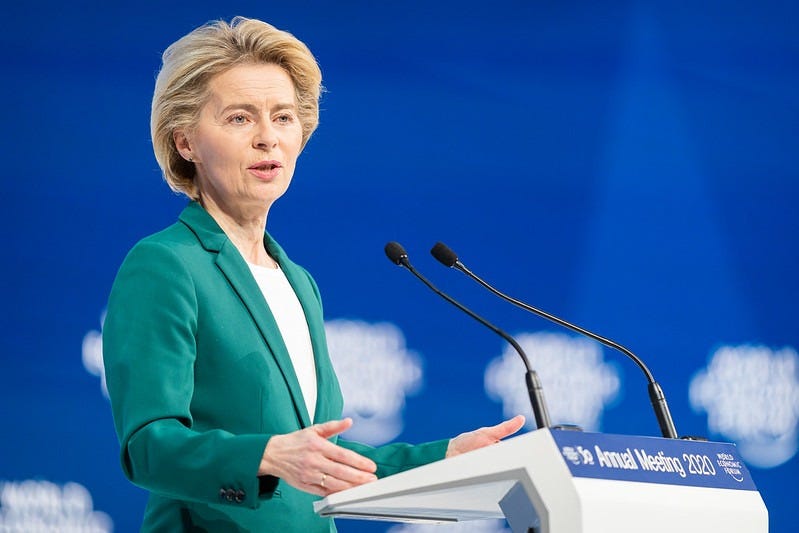
So far the European Commission’s response has been clear. ‘We also need to accelerate the electrification of our economy, of our industrial operations, of how we heat our homes, of our mobility. In other words: electrifying Europe means making Europe more independent,’ Commission President Von der Leyen said on 13 April. She added the electrification strategy will include ‘an ambitious new target on electrification’ for the EU.
If the path at home is clearer, Europe’s diplomatic strategy on climate is fuzzier and needs work, especially after a confused show at COP30 in Belem. Clarity this week at the Petersberg Climate Dialogue in Berlin and the Africa Forward Summit in May will be key.
Trade, rules leverage
What’s clear is the EU is redefining its international position, including its geo-economic interests, amid aid budget cuts, increasing climate damages, rising fossil fuel prices and strains in traditional alliances. It’s in the EU’s interest to have more secure, climate-friendly and diverse supply chains, hence supporting other countries to participate in a green economy.
The EU can also engage in enhanced dialogue and partnerships with major emerging economies and regional groupings in the Global South who may not be aligned on all areas but still recognise common interests in the success of effective and equitable multilateralism.
Against this backdrop, the UN Climate Change Conference of the Parties (COP) remains one of the few truly global forums for multilateral cooperation - and COP31 in Türkiye is no exception.
Vital goals such as global access to clean energy, tripling renewable energy or doubling energy efficiency are currently off track - and COP31 is a moment to deliver significant and concrete results on these goals by 2030. Europe has agency in this space and can further strengthen its economic cooperation and partnerships to ensure more countries can benefit from the growing global clean transformation.
The economic case for this is clear: the International Energy Agency predicts global cleantech markets to reach $2 trillion by 2035. At the same time most countries share the goal not to be too dependent on a single supplier for their transitions.
Just Energy Transition Partnerships, Clean Trade and Investment Partnerships and “country platforms” in general are some of the tools the EU can use to scale up clean investments, support industrial development, and accelerate transitions away from fossil fuels.
Big tent diplomacy
This isn’t just about EU governments. Beyond formal negotiations among governments, COPs have increasingly brought together a wide range of actors, including businesses, investors, sub-national authorities, scientists and civil society.
COPs as a “big tent” are not replaceable. The EU will contribute and can ensure there is space for voluntary initiatives and credible non-governmental decision-makers featured in the non-negotiation space (the “Action Agenda”) for advancing climate cooperation across very diverse constituencies, even when geopolitical tensions run high.
Provided that this wide range of actors is strongly invited and encouraged to keep engaging, COPs can therefore serve not only as negotiating venues but also as platforms to showcase progress, collaborate on implementation, and address common challenges such as damaging impacts, finance gaps, policy constraints, and capacity limitations.
Investments, solidarity
The EU also needs to provide evidence of leadership in the form of finance and improved engagement. A multi-year climate finance strategy ensuring that European public and private finance supports global transformation investments and resilience is essential. The EU is the largest contributor to climate finance, but its impacts are often intangible, fragmented and not well communicated.
This lack of clarity regarding aggregate collective investments in partner countries is concerning, as it allows a few countries to exploit the situation in negotiations. The EU and national governments risk undermining their own position unless this changes.
Climate finance can be complemented by enhanced trade cooperation and improved market access for partner countries. Linking investment with trade opportunities can help ensure that climate investments translate into long-term economic opportunities and industrial development.
It is quite clear that the war and ongoing crisis in the Middle East will increase the hardship, energy poverty and fiscal constraints in many emerging and developing countries - by the time we reach COP31 this will be hurting. This is the moment to talk about diversification of exports with fossil fuel producers and rapidly scaling up renewables cooperation with other countries and reconfirm our solidarity with the most vulnerable countries.
Far from making the COP irrelevant, the current crisis makes accelerating the transition essential - and the EU is well placed to shape these discussions - but only if it gets its house in order.
Linda Kalcher is Executive Director, Norbert Gorissen is Senior Fellow & Anne-Sophie Cerisola Distinguished Fellow at the Brussels-based Strategic Perspectives think tank. The working paper this opinion piece is based on can be read here.
Comments
Nothing yet. Say the first thing.
Sign in to join the conversation.