
Imagine ordering a new book online, or placing a book that sounds exciting on hold at your local library. You read the blurb. You know the author. You love the genre. All signs point to this being the perfect book for you.
The wonderful day comes when the package arrives, or the library staff notify you that it is your turn to read the book. A breathless excitement fills your chest as you open the box, or as the library staff reaches behind the counter to pass you the long-awaited title.
Then your heart drops. This is not the book you asked for.
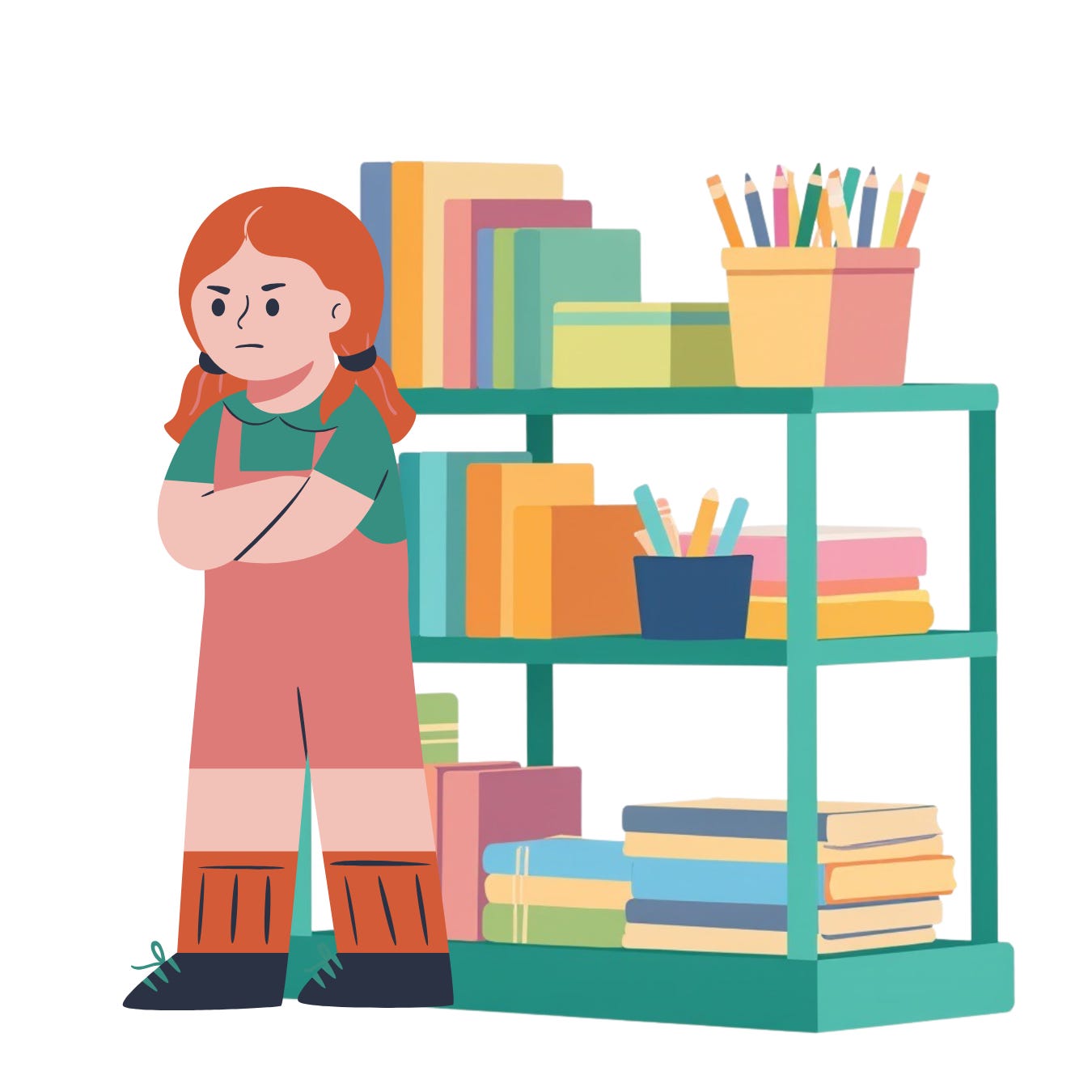
Clearly, a mistake has been made. You notify the powers that be at once. Errors happen. You are an understanding individual. You still want that particular book, and you are sure a short discussion can solve everything.
Unfortunately, the unthinkable happens.
When you raise your concern, no one apologizes. Instead, they begin to scold you. The powers that be explain that they have actually given you a better book. A real book. A book you should be completely grateful to read because they liked it, and they know best.
You examine the book, and it gets worse by the second. Maybe you have tried this author before and know you do not like them. Maybe this is not a genre you ever read. Maybe you feel nothing but ambivalence toward it, and simply want the book you requested.
This is the situation many “reluctant” child readers find themselves in every day.
The world is full of wonderful adults with the best intentions. They want to foster a love of reading in children. Many of them feel passionately about this because they were once voracious child readers themselves.
This leads to a strange problem from my point of view as a children’s librarian. The adults trying the hardest to help are sometimes the ones most likely to turn children off of reading.
Especially if the child is considered a “reluctant reader.” Especially if the child’s interests do not align with the interests of the adult who is “helping” them.
I have seen, with my own eyes, a little boy burst into tears because his mother insisted he would love the Harry Potter series, and those were the books that would be going with them on vacation. This child did his best to say he wanted a nonfiction book about marine life, but his mother did not think that was “fun,” and it would not “lead to reading a whole series of books.”
I have seen grandfather after grandfather keep the vintage Hardy Boys books in circulation, even though I have yet to meet a modern little boy who independently seeks them out and then enjoys the antiquated language and plots.
Time and time again, I see well-intentioned adults decide what counts as a “good book,” a “real book,” or an “appropriate book.” The child learns that their own taste does not matter very much.
Sometimes the child has asked for something funny and been handed something improving. Other times, they have asked for a graphic novel and been redirected to a chapter book. And worst of all, children have asked for animals, sports, ghosts, dragons, princesses, gross facts, scary stories, joke books, or books with lots of pictures, and an adult standing nearby has decided what they really need is a novel the adult has already predetermined as “worthy.”
Then, when the child does not read it, the child becomes the problem.
This is a remarkable thing.
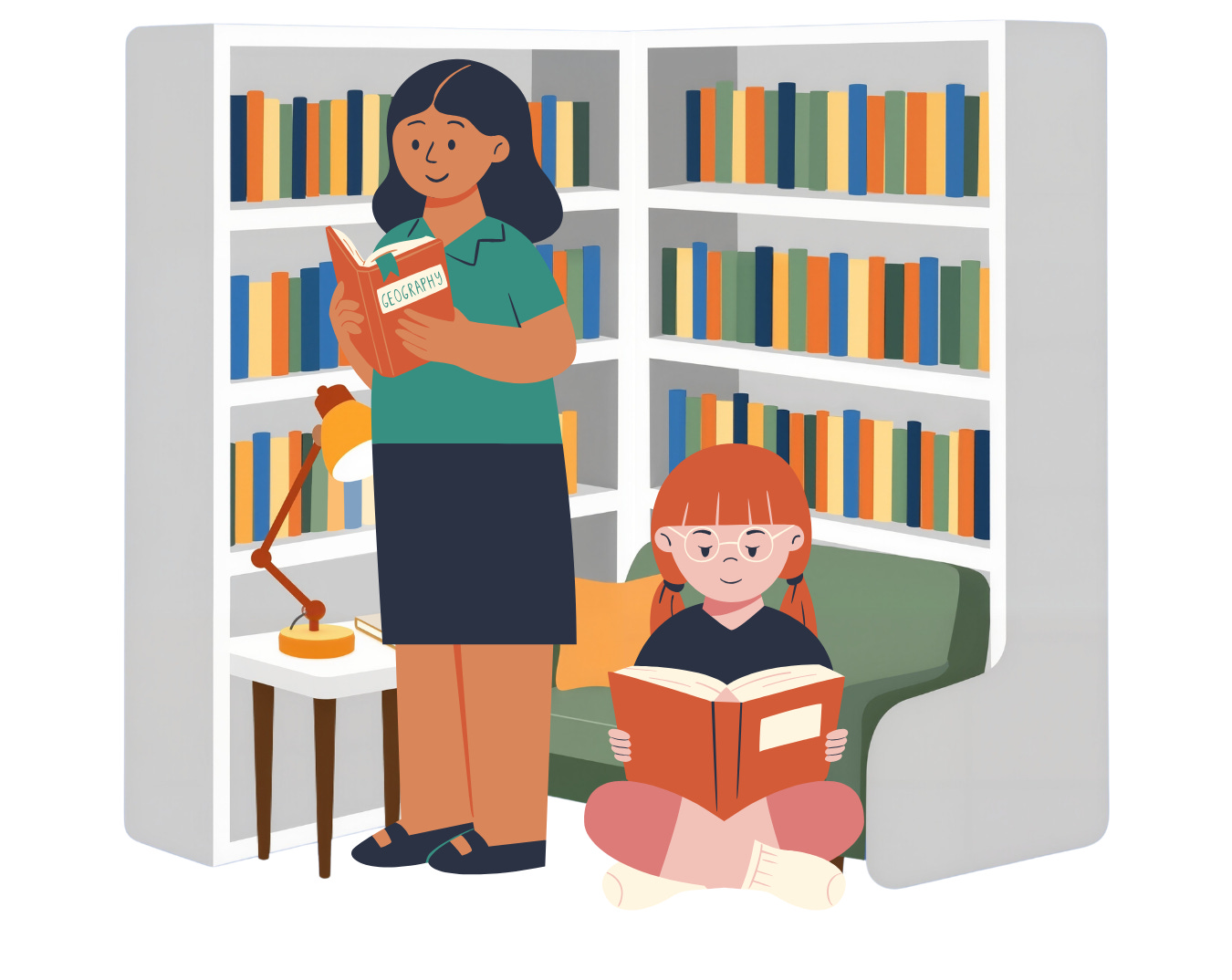
We do not build adult reading lives this way. If an adult tells us they hate historical fiction, we do not insist they begin with a three-volume historical epic and then diagnose them as a reluctant reader when they fail to enjoy it. Adults are allowed to have taste. Adults are allowed to quit books. Adults are allowed to prefer mysteries, memoirs, romance, thrillers, dense nonfiction, literary fiction, audiobooks, beach reads, or no books at all for a season.
But children, who have far less control over their days and their environments, are often given less respect than adults in the one area where personal appetite matters most.
A child who says, “I don’t want that book,” is not automatically being difficult. Sometimes they are giving us useful reader’s advisory information. They are telling us where the door is not.
Too often, adults respond by pushing harder on the locked door and then blaming the child for not walking through it.
At this point, I need to explicitly say that I am not talking about assigned reading in schools. Lots of rather crummy books are assigned across this nation for a variety of reasons that are hyper-local, institutional, political, or logistical, and addressing all of that would be another essay entirely.
What we are talking about today is children deciding, or not deciding, to read for their own enjoyment.
And research gives us very good reasons to take that seriously.
Reading motivation is not a cute little bonus attached to literacy. It matters. Researchers Allan Wigfield, John Guthrie, and their colleagues have written extensively about children’s reading motivation and how it relates to reading comprehension. In their review of the research, they argue that motivation is not separate from reading development but connected to whether and how children engage with texts.
In other words, “Why would this child want to read?” is not a frivolous question.
It is a literacy question.
The National Literacy Trust has also emphasized the importance of book choice in reading for pleasure, noting that freedom of choice and matching reading to a child’s existing interests can be fundamental drivers of motivation.
This should not surprise anyone who has ever watched a child ignore an assigned-looking book and then spend twenty minutes reading every page of a book about poisonous animals.
Children are people. People are more willing to do things that feel meaningful, pleasurable, interesting, funny, or connected to who they already are.
This is not the same thing as saying children should never be challenged, taught, or guided. Of course they should. Children need adults. They need teachers, parents, librarians, and caregivers who can open doors they did not know existed.
But there is a difference between opening a door and dragging a child through one. There is a difference between guidance and override.
And too often, when it comes to children’s books, adults feel strangely comfortable overriding a child’s clearly expressed preferences.
A child says, “I want something funny.”
The adult says, “How about this award winner about grief?”
A child says, “I want a graphic novel.”
The adult says, “Let’s find you a real book.”
A child says, “I don’t like fantasy.”
The adult says, “But this one is really good.”
A child says, “I like facts.”
The adult says, “You should really try fiction.”
A child says, “I want the next book in this series.”
The adult says, “You’ve already read one of those.”
Imagine doing this to another adult.
Imagine a friend telling you, “I’m in the mood for a funny memoir,” and you reply, “Actually, I picked you a morally significant novel about generational trauma.” Imagine your friend saying, “I’m too tired for that right now,” and you replying, “Well, this is why you don’t read enough.”
We would recognize that as obnoxious. But many children experience some version of this constantly. And then we wonder why reading starts to feel like limp broccoli with a bookmark in it.

Children need choice before they can build taste. Taste is not something adults can simply hand down like a sweater. It develops through abundance, browsing, rereading, rejecting, obsessing, comparing, and changing one’s mind.
Children learn what they like by being allowed to like things.
That includes things adults find annoying. That includes the same series over and over. That includes graphic novels.
That includes books about Minecraft, sharks, dragons, sports, slime, ghosts, tornadoes, horses, princesses, dinosaurs, cats, dogs, poop, monsters, and whatever topic has currently taken over the child’s entire brain at the current moment.
Adults often call these books “junk reading,” but I think we should be careful with that too.
A joke book may be teaching timing, wordplay, social performance, and rereading. A graphic novel may be teaching sequencing, inference, visual literacy, dialogue, and stamina. A fact book may be giving a child the delicious power of knowing something an adult does not. A scary book may be letting a child practice bravery in a controlled environment. A series book may be offering the confidence of familiarity. A silly book may be the first book a child has ever wanted to finish.
The National Literacy Trust’s research on comics found that 40.3% of children and young people ages 8 to 18 read comics or graphic novels at least once a month, with boys reporting higher monthly engagement than girls. Their work on audio also found that 42.3% of children and young people said they enjoyed listening to audio formats in 2024.
This matters because formats are not the enemy of reading.
Sometimes they are the bridge.
A child listening to an audiobook is still meeting story, vocabulary, structure, character, and language. A child reading a comic is still reading. A child reading a book far below their official reading level may be building fluency, confidence, comfort, and momentum. A child rereading the same book is not wasting time. They are living with a text long enough to own it.
When adults narrow “real reading” to one format, one level, one kind of book, or one path, we may accidentally close the door on the very children we are trying to invite in.
And the stakes are not small. The National Literacy Trust’s 2025 report on children and young people’s reading surveyed 114,970 children and young people ages 5 to 18 across the UK. Their broader reading research has reported that reading enjoyment remains far below past levels, even with a modest rise in 2026 after a 20-year low in 2025.
We are living through a reading-for-pleasure problem. So perhaps this is not the moment to make the doorway narrower.
A more friendly and generous reading environment benefits all kids. It gives the “gifted” child permission to take a break and read the graphic novel that is now technically below grade level but still deeply loved. It gives the child with a reading disability a gentler framework: their friends listen to audiobooks too, so it is okay if they do as well.
It gives the child who wants facts permission to be a nonfiction reader. It gives the child who wants jokes permission to laugh. It gives the child who wants the same series again and again permission to build fluency inside familiarity. It gives the child who has been told “no, not that one” a hundred times the experience of finally being heard.
This does not mean adults should disappear from the process. It does not mean we never recommend books, never challenge children, never introduce them to something unexpected, never say, “I know you asked for this, but I think you might also like that.”
That is reader’s advisory. That is teaching. That is invitation.
But invitation is not the same thing as replacement.
If a child asks for a book about sharks, give them the shark book. Then, maybe, also show them a novel with an ocean setting. If a child asks for Dog Man, give them Dog Man. Then, maybe, also show them a funny illustrated chapter book. If a child asks for ghosts, give them ghosts. Then, maybe, also show them a mystery. If a child asks for graphic novels, give them graphic novels. Then, maybe, also show them prose books with strong visual pacing.
Start with the yes. Start with the child in front of you. Start with the door they are already willing to open.
Because the goal is not to produce children who can be photographed holding impressive books. The goal is to help children build their lives as future readers.
A reading life is bigger than a level. It is bigger than a format. It is bigger than a single approved shelf. A reading life has comfort books and challenge books, silly books and serious books, books abandoned after three pages and books read until the spine gives out. It has phases. It has obsessions. It has opinions.
And sometimes it begins with an adult finally listening when a child says, “Not that one.”
Maybe the child who “hates reading” has never been handed enough books that felt like an invitation. Maybe the child who “only reads graphic novels” is reading more eagerly than the adults around them realize. Maybe the child who “won’t move on” from a favorite series is building the fluency and confidence needed to move on later.
Maybe they are telling us exactly where to start.
Before we call a child reluctant, we should ask what they have been offered. Before we blame their motivation, we should examine their access. Before we decide they do not like books, we should make sure we have not confused “books” with “the narrow category of books adults keep approving for them.”
Some children are reluctant readers. Some children need help, support, instruction, accommodations, and time.
But many children are also under-supplied readers, overruled readers, or are tired of being handed books they already said they did not want.
And some children are waiting for an adult to do the simplest, most radical thing in the world:
Believe them when they say what they like.
Want me to critique your book? Become a founding member. Founding members will receive a 60-minute video critique call for their manuscript, illustrations, or book dummy.
Allan Wigfield, Jessica Gladstone, and Lara Turci, “Beyond Cognition: Reading Motivation and Reading Comprehension.”
National Literacy Trust, “Book Choice: Empowering Pupils to Read for Pleasure.”
National Literacy Trust, “Children and Young People’s Reading in 2025.”
National Literacy Trust, “Children and Young People’s Engagement with Comics in 2023.”
National Literacy Trust, “Audiobooks and Literacy.”
International Literacy Association, “Children’s Rights to Read.”
No posts
Comments
Nothing yet. Say the first thing.
Sign in to join the conversation.