
Hey Fam,
Here is a number that stopped me when I first saw it.
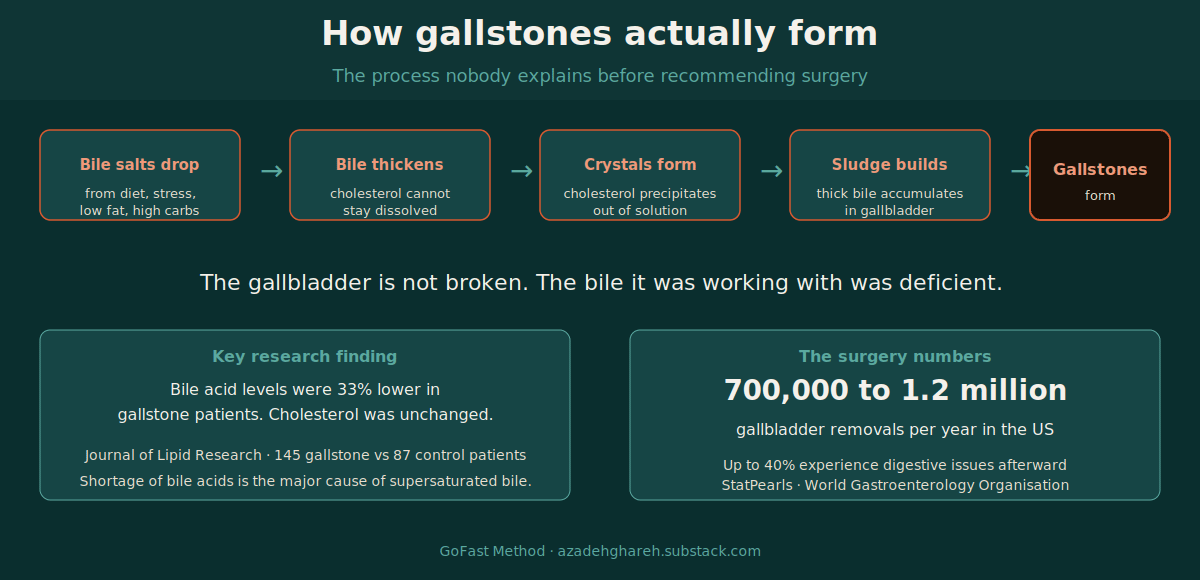
Over 700,000 gallbladder removal surgeries are performed every year in the United States. Some estimates place the number even higher, with more recent data suggesting over 1.2 million cholecystectomies annually.
That makes it one of the most common surgeries in the country. And the reason most people end up on that operating table is gallstones.
But here is what almost nobody is told before the surgery. Your gallbladder did not malfunction. It was responding to a problem that started somewhere else entirely. And in many cases, that problem was fixable without removing an organ.
I want to walk you through how gallstones actually form, why the standard advice misses the root cause, and what you can do if you want to support your gallbladder before it becomes an emergency.
Most people think gallstones come from eating too much fat. That is one of the most persistent myths in nutrition, and it has led to decades of low-fat dietary advice that, ironically, makes the problem worse.
Here is what is actually happening inside your body.
Your liver produces bile. Bile is stored in your gallbladder. When you eat fat, your gallbladder contracts and releases bile into the small intestine to break down that fat. This is a normal, healthy, essential process.
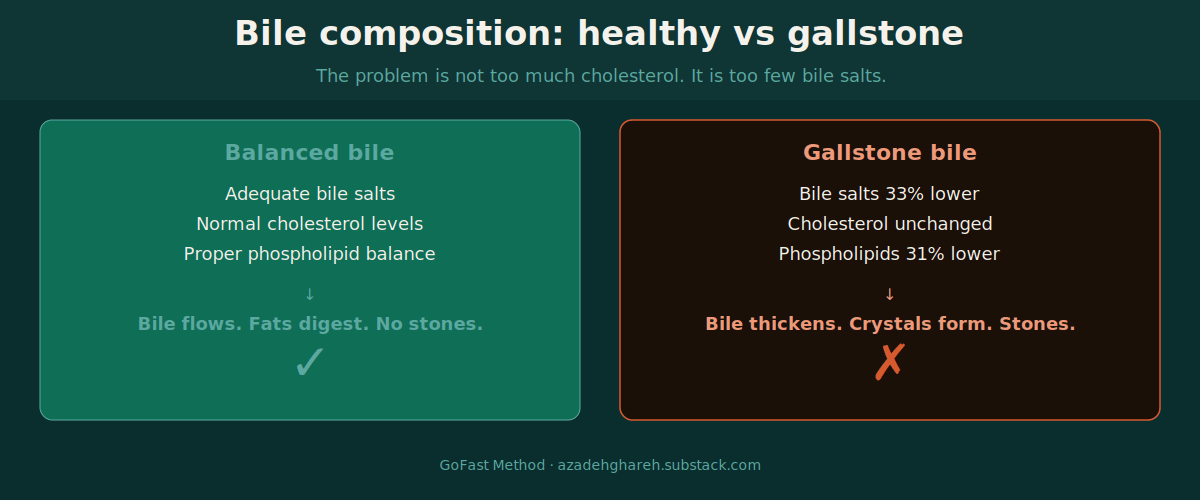
Bile is made up of three main components: bile acids (also called bile salts), cholesterol, and phospholipids. When those three are in the right balance, bile flows smoothly. It does its job. No stones form.
The problem starts when that balance shifts.
Research published in the Journal of Lipid Research examined gallbladder bile from 145 gallstone patients and 87 gallstone-free patients. They found that bile acid levels were 33% lower in gallstone patients, while cholesterol levels were essentially unchanged.
Read that again. It was not that the gallstone patients had too much cholesterol in their bile. They had too few bile salts to keep the cholesterol dissolved. The study concluded that a shortage of bile acids is a major reason why gallbladder bile becomes supersaturated with cholesterol in gallstone patients.
When bile salts are too low, bile becomes thick and concentrated. Cholesterol that was dissolved in the bile starts crystallizing out. Those crystals accumulate into sludge. The sludge hardens into stones. And at that point, your doctor tells you the gallbladder needs to come out.
But the gallbladder was doing exactly what it was supposed to do. The bile it was working with was deficient. The organ was not broken. The input was.
This is the part that matters for prevention, and it is the part almost nobody hears about.
Your bile salts are recycled through a loop called the enterohepatic circulation. Bile gets released into the small intestine, does its work breaking down fats, then gets reabsorbed in the lower small intestine and sent back to the liver to be used again. This loop runs six to eight times a day in a healthy system.
Several things disrupt this loop.
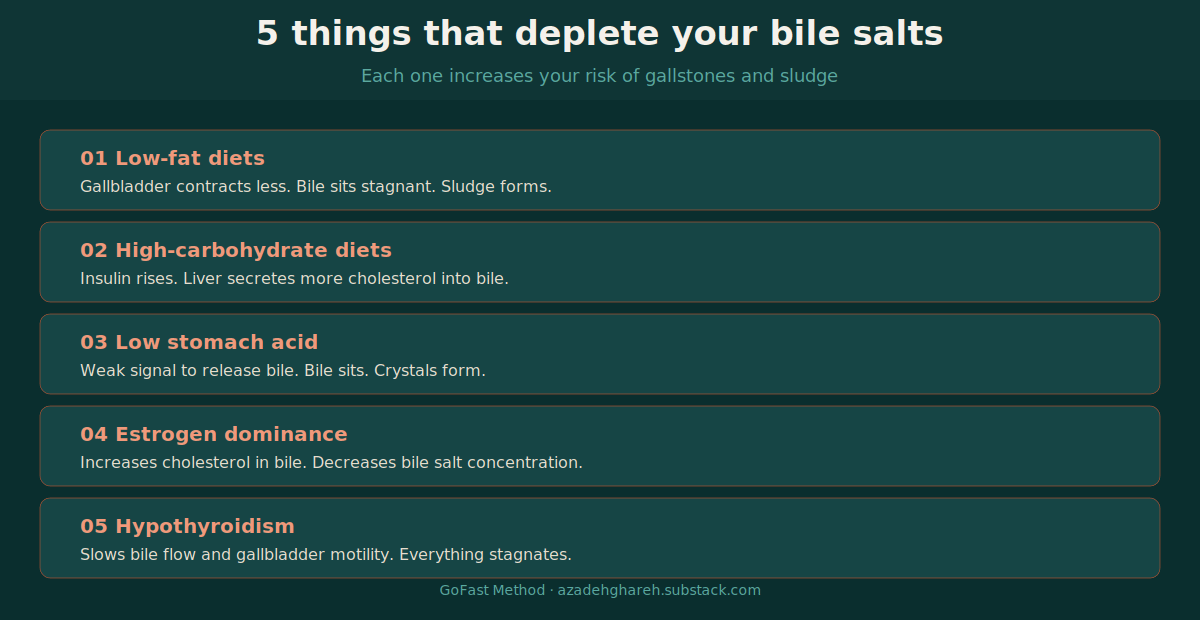
Low-fat diets. When you reduce dietary fat, your gallbladder contracts less frequently. Bile sits in the gallbladder for longer periods, becoming concentrated and stagnant. The less your gallbladder squeezes, the higher the risk of sludge forming. This is one of the great ironies of conventional nutrition advice: people are told to eat low-fat to protect their gallbladder, and that advice creates the exact conditions for stones to develop.
High-carbohydrate diets. A study published in Gut found that high carbohydrate intake, particularly from foods with high glycemic loads, significantly raises the risk of symptomatic gallstone disease. High-carb diets increase insulin. Elevated insulin promotes cholesterol synthesis in the liver, which shifts the bile composition toward supersaturation.
Low stomach acid. Your stomach acid triggers a cascade that leads to bile release. When stomach acid is low, which is common with stress, aging, and long-term use of acid-blocking medications, the signal to release bile weakens. Bile sits stagnant. Sludge accumulates.
Estrogen dominance. Estrogen increases cholesterol secretion into bile and decreases bile salt concentration. This is a significant factor in why gallstone disease affects women at roughly twice the rate of men, and why risk increases during pregnancy, with hormone replacement therapy, and with oral contraceptive use.
Hypothyroidism. Low thyroid function slows bile flow and reduces gallbladder motility. If your thyroid is sluggish, your bile is sluggish.
If you are reading this and realizing your diet, your digestion, or your hormones might be creating the conditions for stones, this is exactly the kind of pattern we look at in a discovery call. One conversation. Your specific situation. A direction that is actually yours.
→ Book a free discovery call : Book a call
This is the part that breaks my heart about how quickly the surgery is recommended.
When your gallbladder is removed, your liver still produces bile. But there is no longer a storage tank to concentrate it and release it at the right time. Instead, a diluted trickle of bile flows continuously into the small intestine regardless of whether you have eaten.
Up to 40% of individuals who undergo gallbladder removal experience post-cholecystectomy syndrome, characterized by bloating, indigestion, nausea, constipation, or diarrhea.
Without concentrated bile being released on demand, fat digestion becomes permanently compromised. Fat-soluble vitamins (A, D, E, and K) are harder to absorb. Essential fatty acids are poorly broken down. And many people who have had their gallbladder removed report chronic digestive discomfort for years afterward.
The surgery addresses the stone. It does not address the reason the stone formed. And in many cases, the metabolic conditions that created the stones continue, now without the organ that was trying to manage them.
If you still have your gallbladder and you want to protect it, or if you have been told you have sludge or small stones and want to explore whether the underlying conditions can be improved, here is where the research points.
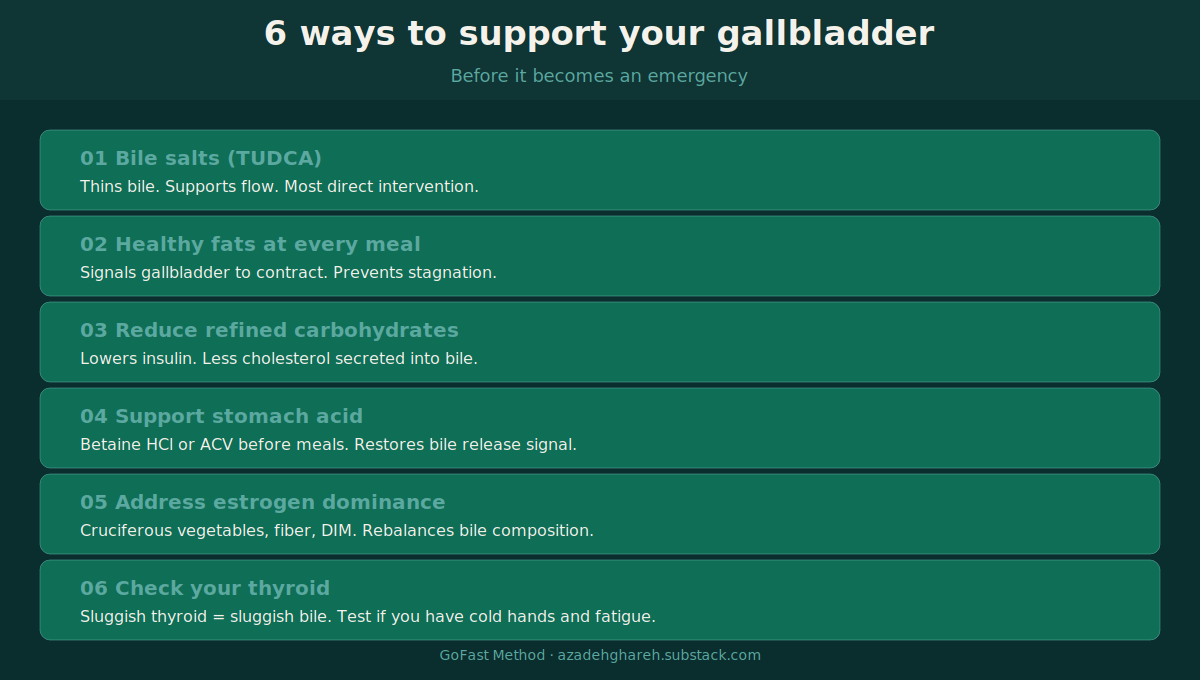
Bile salts supplementation. TUDCA (tauroursodeoxycholic acid) is one of the most studied bile acids for thinning bile and supporting bile flow. Purified bile salts taken with meals can help emulsify fats and reduce the cholesterol saturation in the gallbladder. This is the most direct intervention for addressing the bile composition imbalance that leads to stones.
Adequate dietary fat. Your gallbladder needs a reason to contract. Healthy fats at every meal, olive oil, avocado, fatty fish, butter, eggs, give the gallbladder the signal to squeeze and release bile. The worst thing you can do for gallstone prevention is avoid fat.
Reduce refined carbohydrates. Lower the insulin load. Less insulin means less hepatic cholesterol secretion into bile. Less cholesterol saturation means less stone risk. This aligns with everything we talk about in metabolic health: the carbohydrate and insulin connection drives problems far beyond blood sugar.
Support stomach acid. If you experience heartburn, bloating after meals, or a feeling of food sitting heavy in your stomach, your acid may be low. Betaine HCl taken before meals can restore the digestive cascade that triggers proper bile release. Apple cider vinegar in water before meals is a gentler starting point.
Address hormonal imbalances. If estrogen dominance is a factor, supporting healthy estrogen metabolism through cruciferous vegetables (broccoli, cauliflower, Brussels sprouts), adequate fiber, and liver support nutrients like DIM (diindolylmethane) can help shift the bile composition back toward balance.
Check your thyroid. If bile flow is sluggish and you also have cold hands, fatigue, dry skin, or difficulty losing weight, thyroid function is worth investigating. A sluggish thyroid creates sluggish bile.
Gallstone disease does not happen in isolation. It happens inside the same metabolic environment that produces insulin resistance, fatty liver, hormonal imbalance, and chronic inflammation. The bile composition problem is downstream of the same upstream causes we talk about every week in this newsletter: too many refined carbohydrates, too much insulin, not enough dietary fat, not enough nutrient density.
Gallstone disease affects approximately 20% of the Western population and is expected to grow as obesity and metabolic conditions become more prevalent. The healthcare costs of gallstone disease in the US alone exceed $6.5 billion per year.
This is not a rare condition. It is a metabolic condition. And like most metabolic conditions, the root causes are addressable before the body reaches the point of crisis.
If someone you know has been told they have gallstones and surgery is the only option, please forward this to them. The conversation about bile salts, dietary fat, and the metabolic root of stone formation is one that most people never get to have before they lose an organ.
With Love,
Azadeh
Gallbladder bile supersaturated with cholesterol in gallstone patients preferentially develops from shortage of bile acids. Journal of Lipid Research, 2019.
Gallstones (Cholelithiasis). StatPearls, NCBI, updated June 2025.
Open Cholecystectomy. StatPearls, NCBI.
The Growing Global Burden of Gallstone Disease. World Gastroenterology Organisation.
The Need for Standardizing Diagnosis, Treatment and Clinical Care of Cholecystitis and Biliary Colic. NCBI/PMC, 2022.
High carbohydrate intake and gallstone disease. Gut (BMJ).
High-fat diets with less frequent meals and gallstone risk. BMC Public Health.
Comments
Nothing yet. Say the first thing.
Sign in to join the conversation.