
Photographic evidence reached end of life.
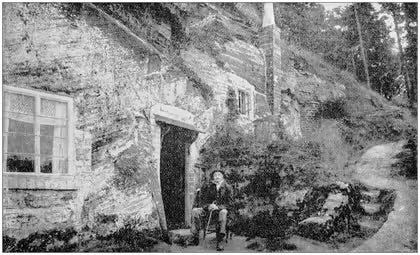
Roughly 1826 to 2025.
Decent product cycle.
The year pictures stopped proving anything
AI systems now spit out faces and places faster than we can doomscroll them.
Around 34 million AI images come online every single day, with more than 15 billion already created since 2022.
Around 71% of images on social platforms now come from generators rather than cameras.
Adobe Stock, a platform that built its business on photography, sits at roughly 48% AI images in its library.
Half of consumers say they recently saw AI created marketing content, and 30% feel unsure whether the images they see are synthetic.
So the default image in your feed now arrives from a prompt, not a lens.
Everyone senses this shift, even when they scroll past it.
How the machine fakes reality so well
Diffusion models start with random noise and reshape pixels step by step until a clear image pops out.
Training runs on mountains of scraped photos.
The system absorbs patterns of light, skin, fabric, glass, depth, and architecture.
Ask for “twenty two year old in a wine bar, candlelight, f1.8, Nano Banana Pro vibe” and you get her.
Perfect pores.
Soft background.
Bartender in the back with believable forearms and dead eyes.
The model never met her.
She still feels more familiar than half your contacts list.
Why this is bigger than Photoshop
Generative models feel closer to a camera with god mode unlocked.
Unlimited attempts.
Low cost.
Instant reshoots in any country, decade, or weather.
This changes four things at once.
First, “pics or it happened” leaves the chat.
Screenshots, CCTV stills, tourist snaps, receipt photos, behind the scenes candids, all move into the same “could be AI” folder in your brain.
Second, reputation turns fragile.
Deepfake incidents rose more than tenfold across the last few years, and fraud attempts linked to synthetic media keep climbing.
Third, memories lose their anchor.
Family albums, travel photos, protest shots, all compete in the same feed with dream holidays conjured in ten seconds.
Fourth, the internet gains infinite stock models who never age, complain, sue, or ask for usage fees.
Great for margins.
Strange for culture.
Surrogates was a documentary with Bruce Willis by accident
If you watched Surrogates, you remember the premise.
People stay home while flawless robot bodies run around the city.
We now run that script through screens… soon comes androids.
You choose an AI face, tweak age and symmetry, then drop that avatar into AI generated bars, beaches, riots, and sunsets.
The model fabricates perfect angles and backgrounds.
A headset closes the loop.
Why step outside if the synthetic version of you sleeps more, looks better, and catches golden hour on command
The scary version of this story says society collapses.
I don’t buy that.
Human stubbornness refuses full upload.
I see something subtler.
Enough people slide into semi synthetic lives to shift markets and politics.
Work happens in Teams calls, friendships run through parasocial streams, dating apps prefer filters over faces, metaverse clones attend gigs.
The body stays on the sofa.
So what, though?
If AI images stay everywhere and everybody shrugs, what problem do I want you to care about…
1. Receipts lose power
Images used to end arguments.
The bruise photo.
The protest shot.
The leak from the office away day.
Once every party in a conflict can fabricate high resolution “evidence” on demand, arguments drag longer.
Bad actors flood the zone with synthetic clips.
Courts, journalists, and platforms scramble to prove absence of editing while attention moves on.
2. Shared reality thins out
Kids now grow up with synthetic faces in their feeds from day one.
The European Parliament already flags deepfake exposure as a risk for children because it confuses their sense of reality.
AI polluters now corrupt public opinion surveys with bot responses that mimic humans perfectly.
When pictures and polls both drift away from physical events and real people, decisions start resting on vibes and confirmation bias.
Who feels more believable.
Who posts faster.
Who owns the better model.
3. Reality turns into the unskippable ad break
AI worlds feel custom, responsive, and flattering.
Physical life feels laggy, flawed, and boring in comparison.
The temptation grows.
Goggles for work.
Goggles for games.
Goggles for dates.
Whole cities of users who rarely look straight at each other.
Governments and corporations enjoy that version.
Crowds lose coordination.
Annoyed citizens stay indoors.
Consumption keeps rolling through frictionless digital channels.
The choice in front of you
I don’t see a clean way back to “photo equals proof”.
The flood already arrived.
So you either:
• Treat every photo as vibes first, evidence second
• Protect a smaller circle of verified images, watermarked and traceable
• Or surrender and live through Nano Banana Pro, fully synthetic, full send
I plan to move between those modes.
Sceptic in public.
Soft LARPer in private.
Curate some fake sunsets while still touching grass often enough to remember gravity.
The end of photographic evidence sounds apocalyptic on first read.
In practice, this phase looks more like paperwork.
Less blind faith, more source checking, more boredom.
The danger is in apathy, not panic.
If you treat every frame as disposable content, the people with serious budgets and strong motives will fill that gap with images that serve them.
So update your personal rules.
Assume the camera lies unless you know who holds it.
Demand proof where stakes run high.
Play with AI images when you feel like it, fully aware of the trade.
Comments
Nothing yet. Say the first thing.
Sign in to join the conversation.