
Someone said authenticity isn’t a nice-to-have, it’s a business strategy with compounding returns, and that it requires a framework. I’m sorry, do you need a framework… to be authentic.
The word used to mean the thing a brand did when nobody was trying but it’s become a deliverable or content pillar, you know, “just be genuine”.
Fact is, once authenticity became something we built deliberately, for a return, it started meaning the opposite. You can’t strategise your way into not having a strategy.
Come to think about it, nobody authentic has ever used the word.
So setting out to deliberately produce it, to manufacture an impression is a contradiction.
You already know this, because you do it to people without thinking. When a man says “I’m a really honest guy” a few minutes into a first date, he’s told you something, and it isn’t that he’s honest. Equally, when a brand opens with “we’re all about keeping it real,” you get that same mirco-ick.
And it’s happening more, because audiences have endured the longest season of performance and they’ve learned the moves. Being ‘real’, means nothing now, almost to the point of cringe.
Sources: Reader-side definitions of brand authenticity centre on consistency between what a brand says and what it consistently does, “whether or not it is being watched” [I Am Female, “Brand Authenticity,” 2026]. The 2017 Pepsi/Kendall Jenner campaign is the standard case of authenticity collapsing when a brand borrows cultural relevance it hasn’t earned [I Am Female, 2026].

A flawless authenticity campaign is a flawless performance of not performing.
The work, budget and team go into hiding the work and making it feel like one honest person talking at and relating to you. Every bit of it erasing the evidence of craft. So we praise the brand that “nailed authenticity” as the case study, but we’re actually praising their success at concealment. They got better at looking unmanaged, that’s all.
I’m talking about the lo-fi, “raw, unfiltered” founder video that took three days and a director to shoot, and went through four rounds of legal. Or the brand that “just says what it thinks,” staffed by an underpaid and overworked social team.
It has a name, and I promise you, it’s not authenticity.
I don’t think they’re villans for it. Most of us aren’t. It’s just weird that one day, in marketing “authentic” became a legitimate deliverable, the same way “going viral” became a KPI.
“Just be authentic” is free advice if your unmanaged self already matches what the market rewards, and an expensive instruction if it doesn’t.
First of all…
Authentic: of undisputed origin, genuine. Not a copy or imitation. The real thing, made by the person it claims to be made by, being what it says it is.
Notice nothing in there about warmth, or relatability. The original meaning is about origin. Is this thing what and who it claims to come from.
That’s the definition we should to hold brands to. Because we’ve taken a word about origin and repurposed it to mean “feels personal.” In what world are those the same thing, and the distance between them is where the cosplay hides.
We can call it a gap test. Authenticity is consistent all the way down, you’ll see it in what the brand says, what it makes, how it treats people and who’s actually making decisions. Cosplay is consistent in one place: the marketing. So all you need to do is hold the marketing up against the bits marketing can’t reach, and you look for the gaps.
What the brand claims to value, against how it treats the people who make the product. A cruelty-free bunny on the bottle means nothing if the warehouse is grinding people into the floor. Cruelty-free to the rabbit, cruelty-full to the twenty-year-old picking orders at 2am. If the values stop where the customer can’t see, that’s a damn shame.
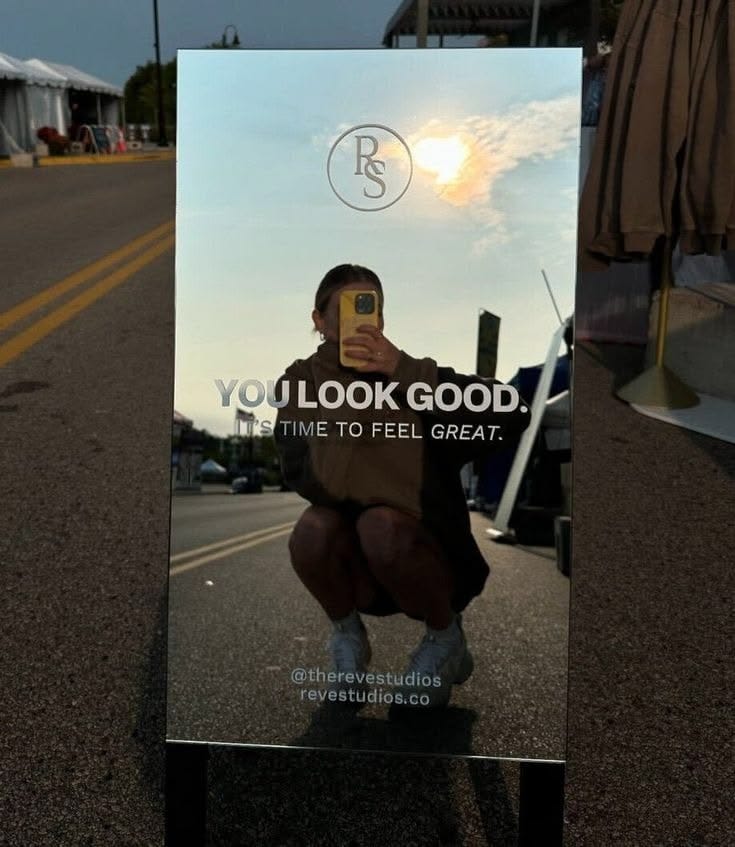
What the brand says to you, against what the company looks like when you hold up a mirror to it. A beauty brand whose language is “embrace your natural self, inclusivity, all of you is welcome,” that sells eight foundation shades and runs a campaign where every single face looks the same. Or the brand preaching “represent everyone” from a marketing team that represents no one. The words point one way, the org chart and the shade range tell another story.
Luca Mancari
This is a sneaky, because it uses real people to launder a fake claim. Like the relatable intern who runs the TikTok and shows you their personality, a person who is often authentically themselves. But often, their realness gets borrowed to imply the whole business is real, when really the personality facing the world is completely disconnected from what the company does with its money and power behind them. Worst part is that intern carrying the entire brand’s likeability is usually the least paid, least protected person in the building. The brand is extracting real human warmth at intern wages and selling it back to you as the company’s soul.
Anyway, if you size up any brand against these markers (if you can get that level of visibility of course) it will reveal a lot.
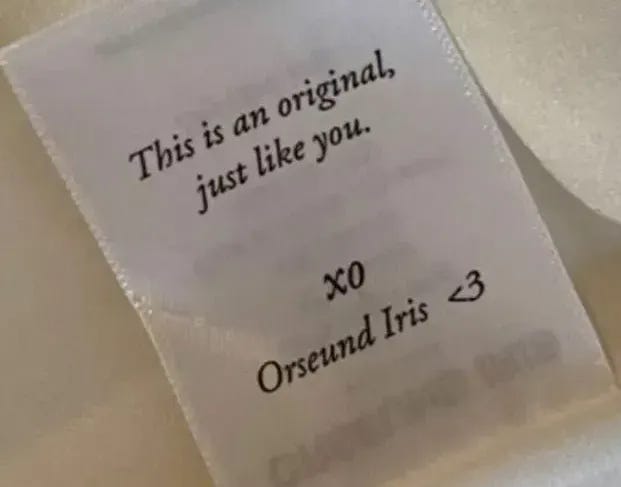
The cosplay isn’t a moral failure so much as a rational one, at the end of the day, genuine, all-the-way-down consistency is brutally expensive and most companies can’t afford it and stay competitive.
Real authenticity means turning down the cheaper supplier that doesn’t match your values. It means the shade range that costs more to produce than it sells. Saying no to the collab, trend, the quick money, over and over, for years. It means standing ten toes down on all of this. Almost no business can do that without destroying margin, and margin bloody matters.
So what you get instead is the vast middle of the market cosplaying and performing the consistency they can’t afford to actually have. And I don’t fully blame them, the alternative is bad for business.
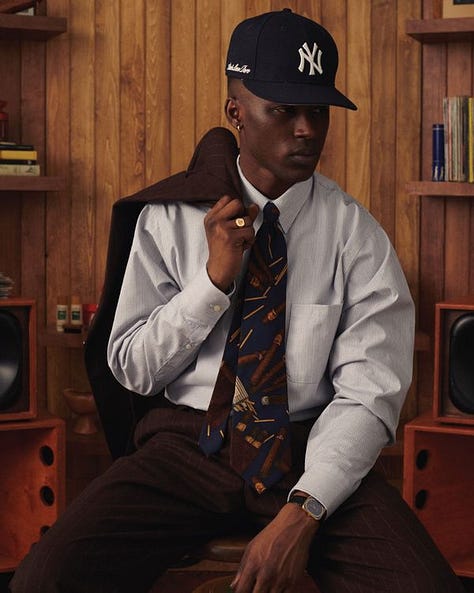

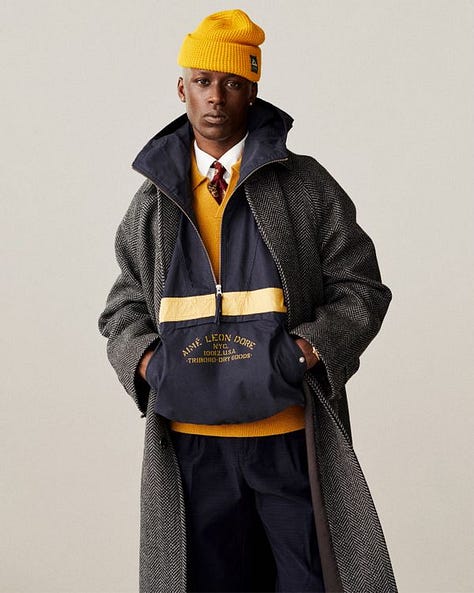
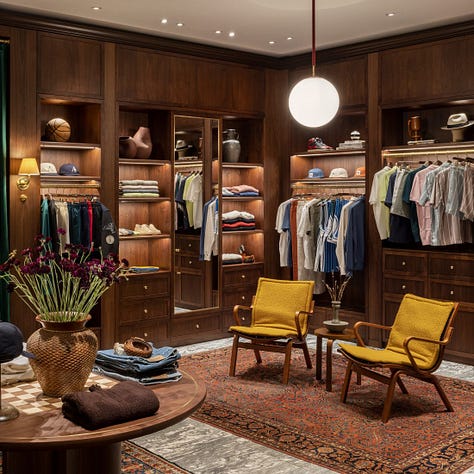
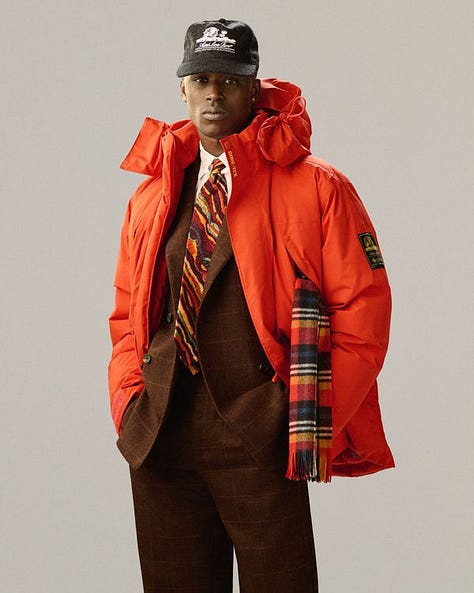
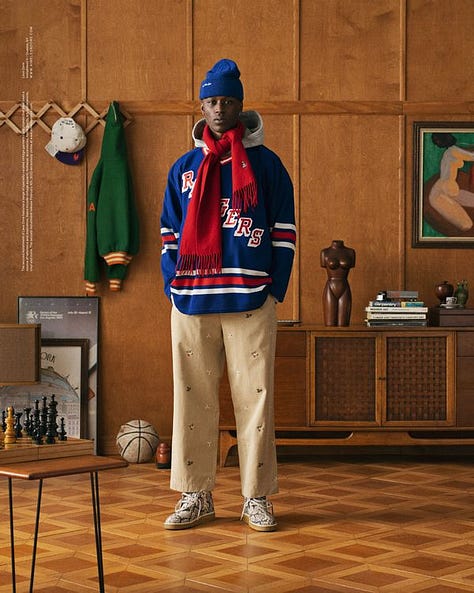
One of my personal favourite example being Aimé Leon Dore, because it survives the test at every layer, and most of that has little to do with marketing.
Start with the product, since that’s where things usually falls apart first. They make their core garments in Portugal, sources Canadian-milled French terry for its sweatshirts, use European mills, and prints the manufacturing origin on the interior care label, which is a small thing that tells you a lot. The New Balance range is made in the USA. The New Era caps use chain-stitch embroidery and a wool-poly crown instead of the flat machine stitch on a standard licensed cap, you can literally feel the difference with your thumb. None of that is broadcast in a campaign. It costs more, but sells at the same price point. That’s what I’m talking about, the real thing, quality is there even in the areas marketing never sees.
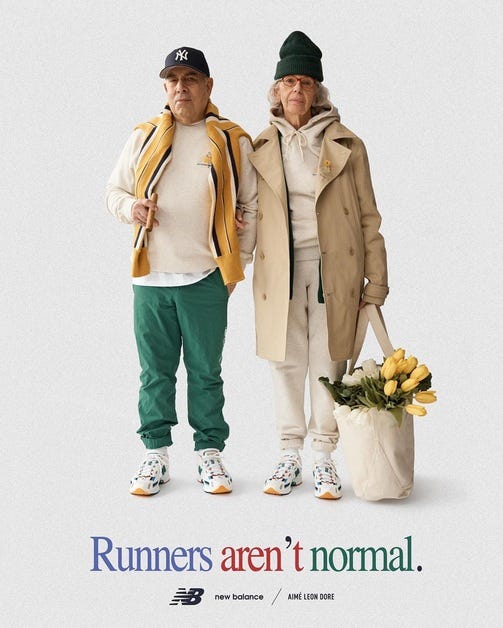
Label vs. labour holds, because the care and cost show up in the make. Talk vs. walk holds, because the brand’s whole pitch is New York craft heritage and the garments are actually built to that standard. And mascot vs. machine holds in the hardest way, because Teddy Santis is truly a Queens kid, genuinely running the creative direction himself, and genuinely doing the same job for New Balance’s Made in USA line, so the founder out front is connected to the actual production behind him.
Ngl, the name “Aimé Leon Dore” isn’t a hidden autobiography, it’s French for something like “love the golden one,” an aesthetic choice. And that part I still find quite clever, because ALD didn’t need to invent a heritage myth to be authentic. The authenticity is in the terry, the stitching, the Portugal label, the fact that the founder makes the decisions. Even when LVMH money came rolling in, it didn’t tip into cosplay, because it’s hard to corrupt a solid foundation.
That’s the 2%. What it looks like when the gap test finds no gap.
Aimé Leon Dore clears it at the product. Patagonia clears it at ownership. Dr. Bronner’s clears it where few brands can, which is how it treats its people.
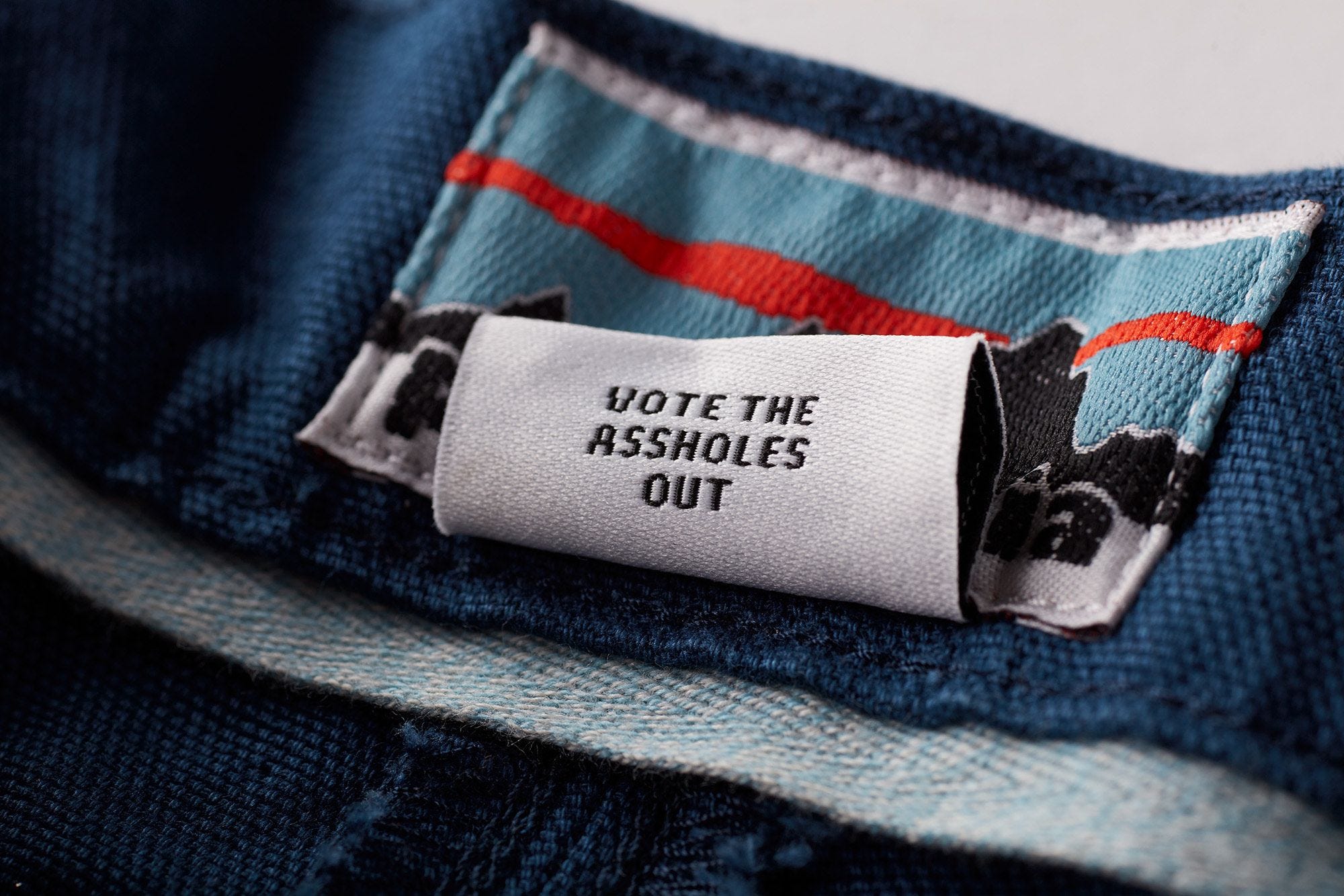
Patagonia: in 2022 Yvon Chouinard gave the company away, transferring the whole $3 billion business into a trust and a nonprofit so that every dollar of profit not reinvested goes to fighting climate change. “Earth is now our only shareholder,” he wrote, and then made himself not a billionaire to prove he meant it. They’ve moved around $180 million to environmental work since. Sure, you can argue with the mechanics, the nonprofit’s a 501(c)(4) and there were tax questions, but you can’t call it cosplay, the value is baked into who legally owns the company rather than the tone of voice. Imo, that’s the hardest layer to fake, and most brands preaching purpose wouldn’t survive one honest look at their cap table! Also, I Patagonia stands on business, they don’t sit on a fence. That’s hard, and authentic.
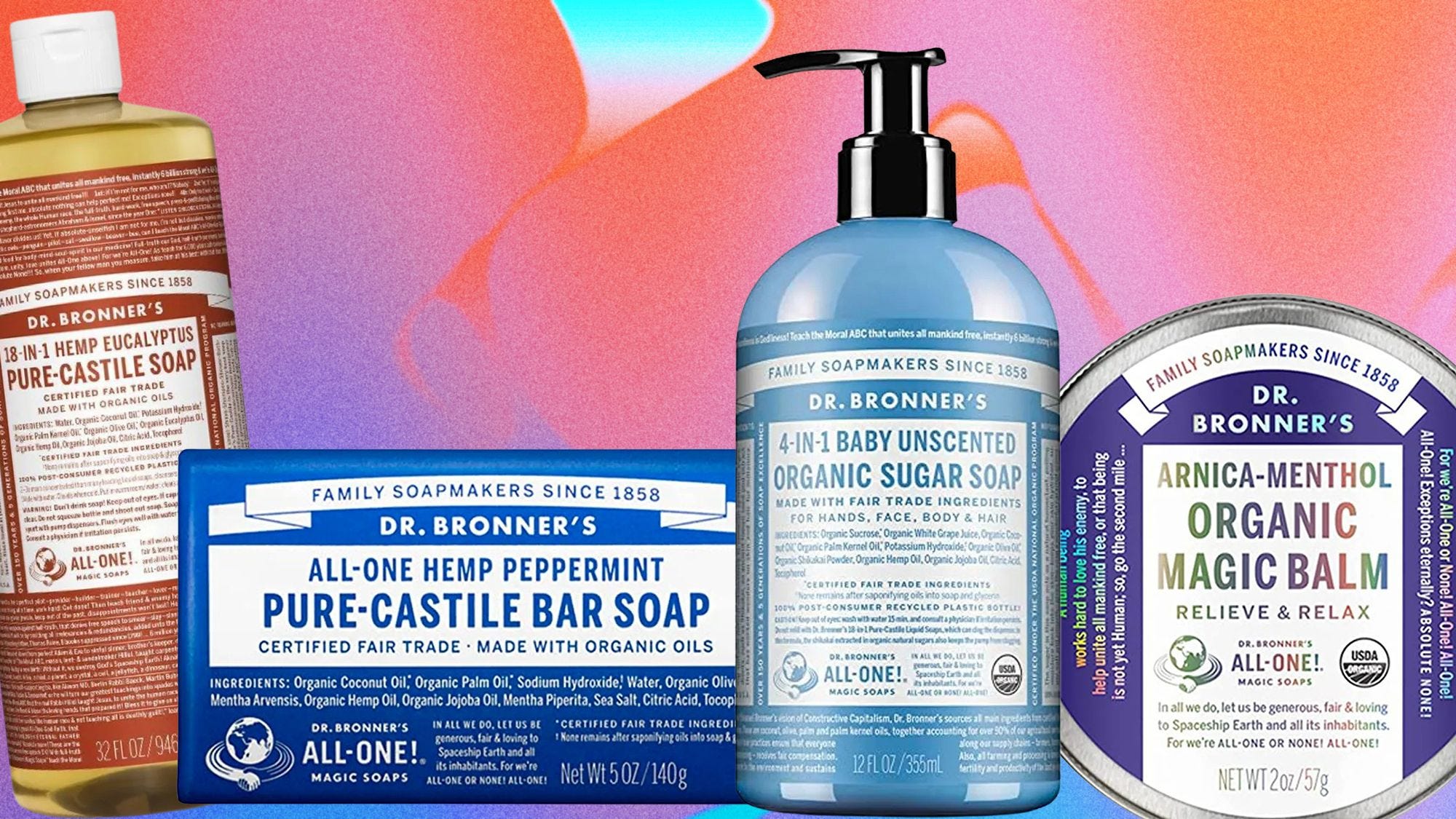
Dr. Bronner’s: caps its highest-paid executive at five times the lowest-paid fully-vested worker. In an era where the average big-company chief makes over 160 times their median worker. Health cover for staff and their families is fully paid, no deductible. There’s childcare money, profit-sharing, a daily meal. And everything left after running the business gets given away to activism and charity, written into how the company works. Dr. Bronner’s put the value in the payroll and barely mentioned it for years, which is pretty authentic. Note, I say all this about the OG brand, have they changed their formulations and practises now since going big corp? Idk.
A care label, trust deed and pay cap. These are decisions, made mostly where the customer isn’t looking, that happens to add up to a whole lot of good as far as I’m concerned. The authenticity is a residue of the choices.
Sources: Aimé Leon Dore was founded in 2014 by Teddy Santis, a Queens native raised by Greek immigrant parents, with no formal fashion training, building the brand from his personal archive and New York upbringing; its café, flagship and community programming grew from that biography, and the brand retained its identity after 2022 LVMH investment [MR PORTER, The Journal, 2025; The Fashionography, 2025; Grokipedia, 2026], In September 2022, Yvon Chouinard and family transferred ownership of Patagonia (valued ~$3bn) to the Patagonia Purpose Trust and the Holdfast Collective nonprofit, directing all profits not reinvested (~$100m/year) to environmental causes; Chouinard lost billionaire status, and the company reports ~$180m given since. The Holdfast Collective is a 501(c)(4), which drew criticism over political spending and tax treatment [NYT; Forbes; CNBC; Fast Company 2025; Patagonia "Ownership"; HuffPost 2022]. Dr. Bronner's caps total executive compensation at 5x the lowest-paid fully-vested employee (top pay ~$238,560), pays a starting wage above $26/hour, fully covers employee and family healthcare, and donates all profits not needed for the business to charity and activism; the 5-to-1 cap has run since 1998 [Entrepreneur, Jul 2024; Dr. Bronner's "Cosmic Principles," 2025]. For contrast, large-company CEO-to-median-worker pay ratios commonly exceed 160:1 [Nvidia FY2025 proxy, 166:1, SEC].
You can’t buy it, because it’s made in private. If you have to point a spotlight at your consistency, you’ve turned the consistency into content, and the content into a performance, and you’re back at the start of the loop.
Which is why the honest advice to any brand asking me to make them feel authentic is the thing they probably don’t want to hear.
Go be consistent for five years where nobody’s filming, and let other people decide what to call it. There’s no framework for this one pals.
“First be, then do.”
- Ayo
The word has been doing two jobs. Describing a thing, and destroying it at the same time. Pick a different word, please and thanks.
Ayo
The Wedge Framework find your position before you find your voice
The Culture Engine the system I use to analyse D2C brand strategy and digital culture
The Operator Control System the full bundle for running your content operation
No posts
Comments
Nothing yet. Say the first thing.
Sign in to join the conversation.