
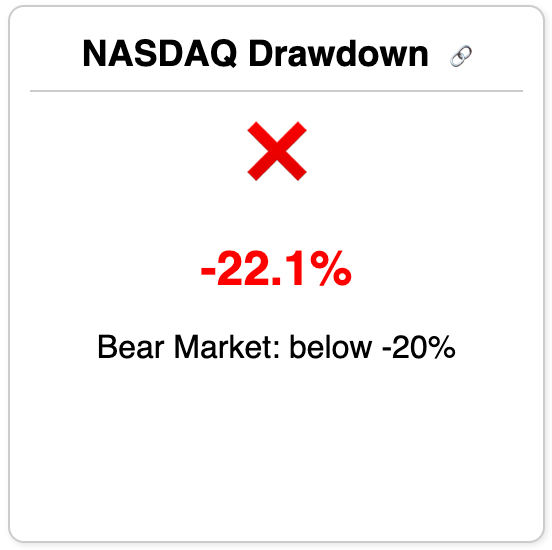
As of this writing, the Nasdaq is in a bear market and the SP500 is fast approaching one. Consequently this is a case study of what leveraged ETFs do during market extremes. SOXL is a 3X leveraged ETF in the semiconductor (microchip) sector, which is currently priced at $8.81, and it had a long-term high of $74.21.
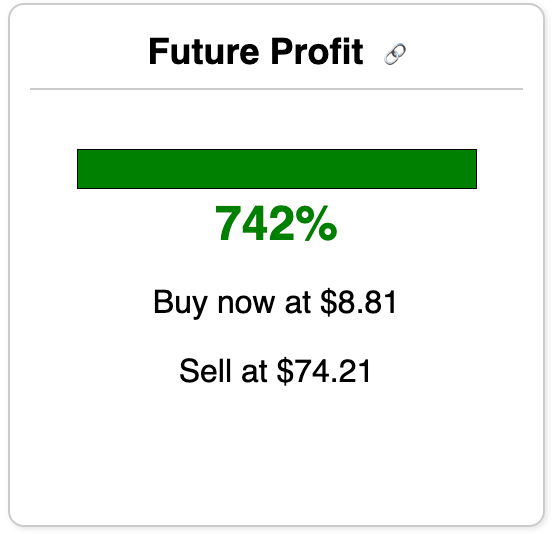
Theoretical future profit (sometimes called “recovery potential”) can be calculated by taking the current stock price and seeing how much profit you would make, if you sold after the stock returns back to the previous 5-yr historical high price. Currently you would make 742% profit. This is somewhat conservative, because the overall market increases over time, and if SOXL reaches a new high (which it regularly does during bull markets), the profit % would be greater.
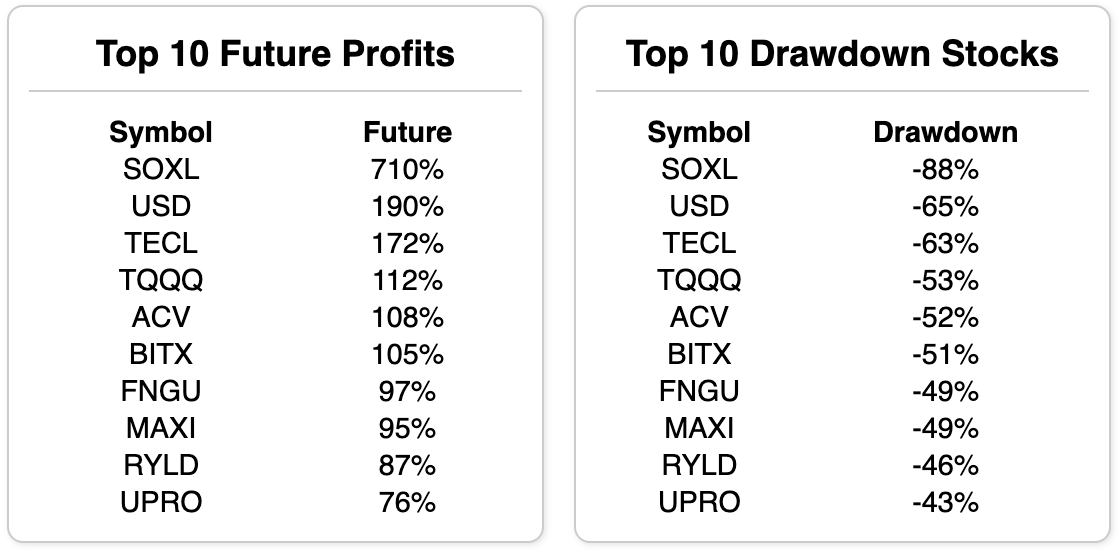
These are several charts showing some common leveraged ETFs and their future profit percentages and current long-term drawdown levels (based on slightly older data from this morning). When drawdown rates get very high, future profit levels get even higher.
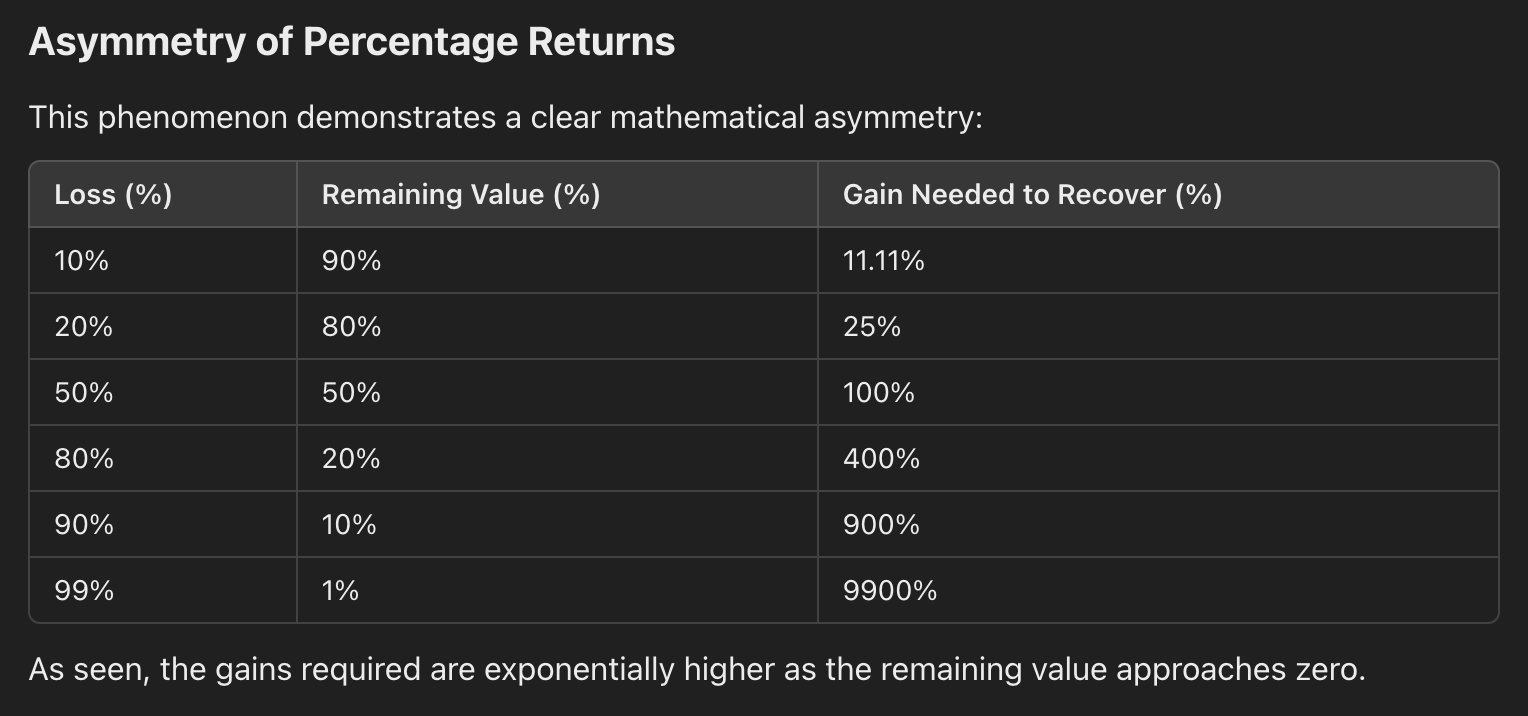
The chart above shows the exponential and hyperbolic relationship between Loss (i.e. drawdown) and Recovery Gain (i.e. potential profit). When a stock is 90+% down, future profit levels can get ridiculous (presuming eventual recovery).
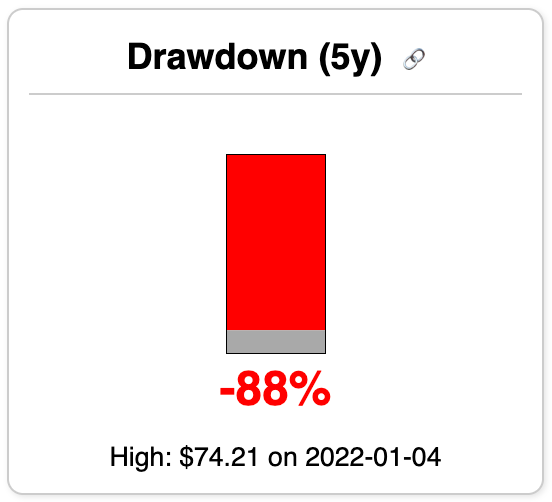
5 years is a useful time period to evaluate drawdown (% current stock price is, below the absolute historic high, for a time period) because it covers multiple boom and bust cycles and remembers extreme past highs if they occur. Currently it is at 88% drawdown (which is technically a negative percentage).
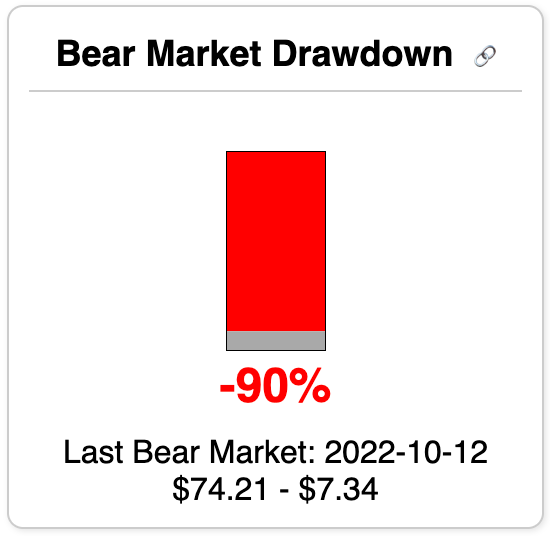
During the last major bear market in 2022, SOXL reached -90%, so we’re approaching that now.
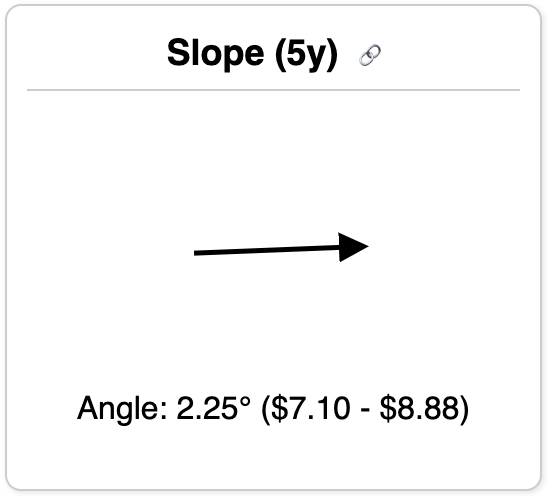
Slope of a stock can be calculated based on the stock price X years ago (I use 5), getting the current stock price, and determining the approximate angle between the prices. A negative degree value would mean the stock is trending down over time and probably has eroding value. Even with the extreme volatility of SOXL, it is still positive over a longer timeframe, even when in an extremely bad scenario.
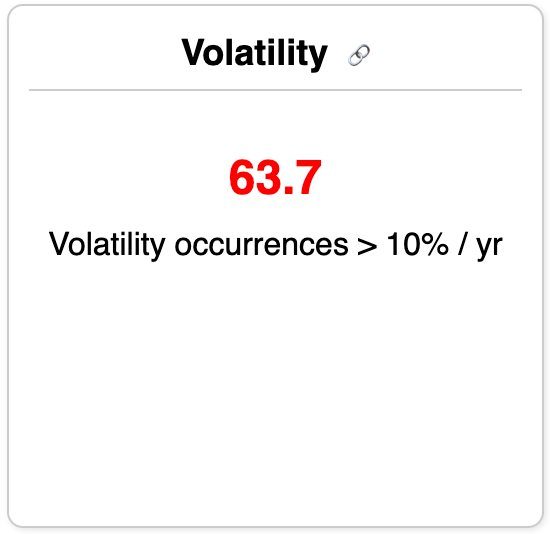
I calculate my own volatility score which is: the average number of 2-day “volatility periods” (> 10% price change) / yr (typically sampled over a 5-yr period). So for example, if a stock goes from 10.00 to 11.00 with 2 days that counts as 1 “volatility occurrence”, which is then averaged across years. SOXL has an extremely high volatility score of 63.7 instances / yr. I have yet to find a leveraged ETF that is higher (BITX is close). Higher volatility means higher potential gains.
Roth retirement accounts let you pay taxes up front, and then not pay them on the (much larger) amount when you retire. Many investment advisors advise putting these into investment vehicles such as the SP500, bonds, or money market accounts, which return between 3-10%/yr.
I have chosen a different path. Below, I provide snapshots of my two different Roth accounts to show what they are invested in, and how they are “balanced”.
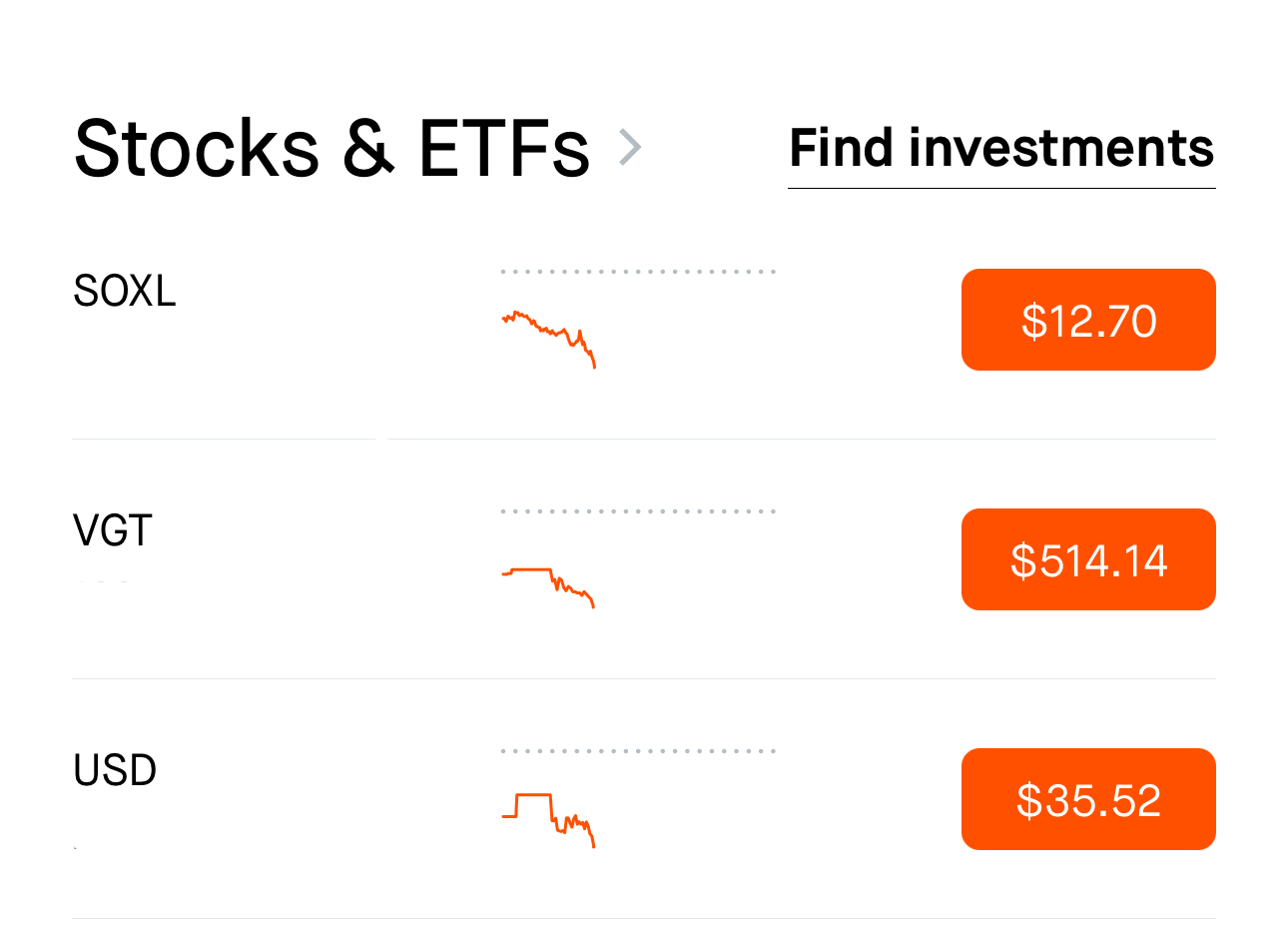
Above is my “high risk” Roth account. Most of it is in SOXL and USD. I am specifically taking more risk to build this one faster. A small amount is in VGT, which I consider a low-risk investment.
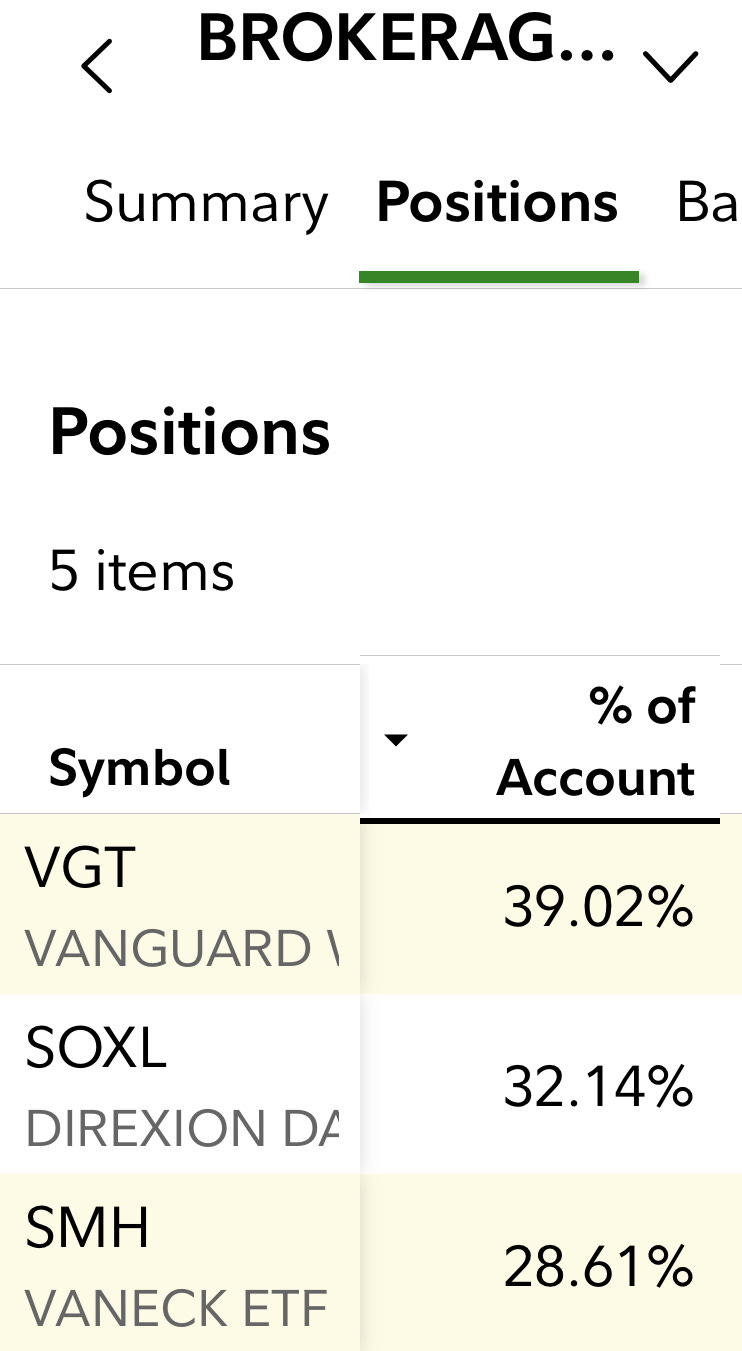
My “lower-risk” Roth account has a large amount of VGT and SMH^, which are both non-leveraged and producing 20-50% / yr returns. They will become a passive income stream after retirement. The SOXL adds some potential for large shorter-term gains which will be put back into VGT and SMH eventually.
The above is not a normal portfolio. It will drop large amounts during market downturns. I have multiple safety nets in place. I can’t begin drawing on these until 59 1/2. I had to request special access to manage my own Roth account in one case. I will probably migrate some of this portfolio into low-risk-low-return investments such as VOO/VTI after I reach 60. (Build fast now, live off the appreciation later.)
My advisors do not approve of what I am doing. Also, if I had followed my advisors’ advice, I would have had gains of perhaps 20% in the last 5 years. Instead I have had gains of perhaps 200+% across the entire portfolio, which will make for a qualitatively different retirement. Advisors tend to advocate stability and safety, but there is no actual stability in the stock market, and you are unlikely to get bigger gains without taking calculated risks.
^ I only recently started investing in SMH. I love VGT, and SMH seems like a more specific and lucrative version of the same investing premise, but I have not tested it yet.
Disclaimer: I do not hold any financial degrees or certifications. I am not a tax advisor. Your investment decisions are your own, and it is best to test strategies with small amounts of money first, preferably after extensive back-testing. Question the dogma and discover the facts for yourself.
No posts
Comments
Nothing yet. Say the first thing.
Sign in to join the conversation.