
“AI is a mirror that reflects humanity. If we don’t like what we see, we have to change ourselves, not the AI.”
Joanna Bryson, Professor of AI Ethics, 2020
Welcome to The ‘Med AI’ Capsule Newsletter—your go-to source for exploring how AI is transforming medicine! Whether you're a medical professional 👩⚕️, a tech enthusiast 💻, or simply curious 🧠, The 'Med AI' Capsule is for you! Stay ahead of the curve with the latest trends, insights, and updates in the rapidly evolving world of AI in medicine. 🚀
5 QnA Primer
4 Research Picks
3 Learning Resources
2 Worth-Attending Events
1 Industry Spotlight, and more..
Time to Read: Around 8-10 minutes.
The concept for today is Synthetic Data.
Q1: What is synthetic data in healthcare?
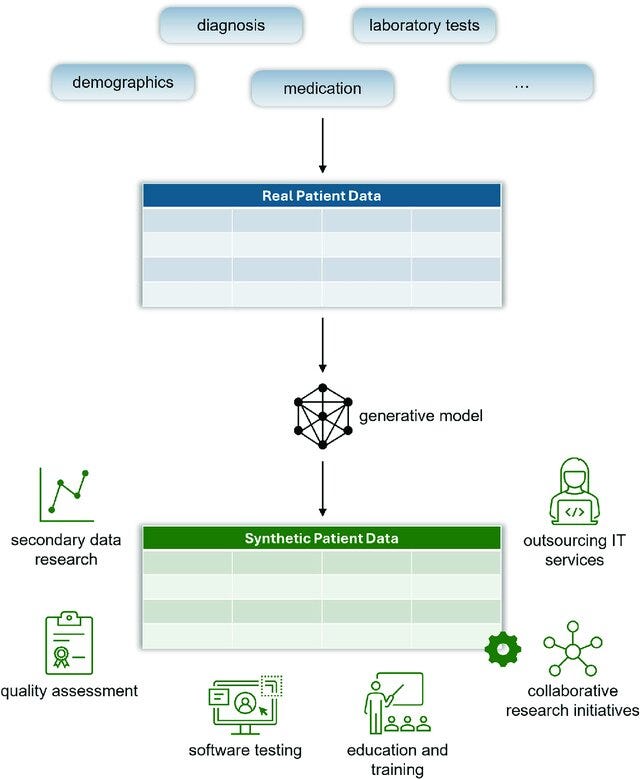
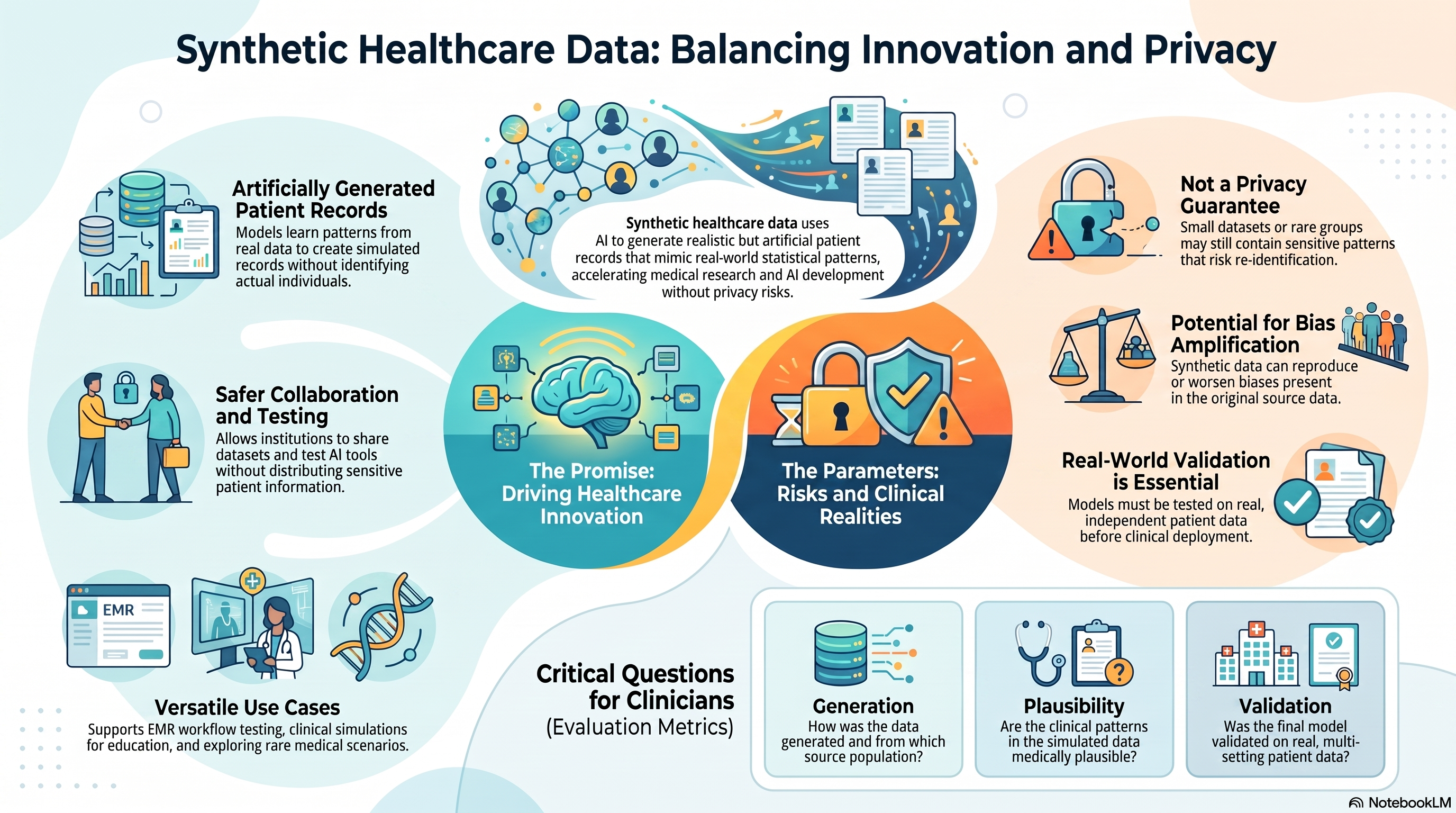
Synthetic data in healthcare refers to artificially generated patient or clinical data that imitates the statistical distributions, correlations, and relationships found in real-world healthcare datasets, without being a direct record of any specific individual. For example, a generative AI model can learn patterns from ICU data—such as how age, co-morbidities, vital signs, laboratory results, treatments, and outcomes relate to each other—and then generate new simulated patient records that look realistic but do not correspond to actual patients.
Q2: Why is synthetic data attracting attention?
Healthcare data is valuable for research and AI development, but sharing it is often limited by privacy, consent, institutional governance, and regulatory requirements. Synthetic data may allow researchers, hospitals, and developers to analyse realistic datasets, collaborate across institutions, and test early-stage AI tools without routinely distributing raw patient information. Its main value is enabling safer access and experimentation—not eliminating the need for governance, ethics review, and formal evaluation.
Q3: Where can synthetic data be used?
Synthetic data can support early-stage AI development, data augmentation, software testing, education, and clinical simulation. For example, developers may use synthetic electronic health record data to test clinical decision-support alerts before deployment in a hospital. Educators can use synthetic patient cases for training without exposing confidential records. Researchers may also use it to explore rare clinical scenarios or stress-test whether an AI model behaves safely across diverse patient profiles.
Q4: How could synthetic data be relevant to healthcare professionals?
Synthetic data could make it easier for clinicians to participate in research, quality-improvement projects, AI validation, and digital-health innovation without direct access to identifiable patient records. It may also support safer sandbox environments for testing EMR workflows, clinical alerts, documentation tools, and training simulations. However, synthetic data should complement—not replace—real clinical data and prospective evaluation when assessing whether an AI tool is safe, clinically reliable, and generalisable for patient care.
Q5: What limitations and risks should clinicians understand?
Synthetic data is not automatically private, unbiased, clinically valid, or suitable for regulatory-grade evidence. It may retain sensitive patterns, especially in small datasets or rare patient groups, and can reproduce or amplify bias from unrepresentative source data. Models may also perform well on synthetic data but fail with real patients. Before trusting a study or AI product, ask: How was the data generated? Which population was the source? Was privacy risk assessed? Are clinical patterns plausible? And was the final model validated on real, independent, multi-setting patient data with clinically meaningful outcomes?
Further Reading
Gonzales A, Guruswamy G, Smith SR. Synthetic data in health care: A narrative review. PLOS Digit Health. 2023 Jan 6;2(1):e0000082.
Giuffrè M, Shung DL. Harnessing the power of synthetic data in healthcare: innovation, application, and privacy. NPJ Digit Med. 2023 Oct 9;6(1):186.
Susser D, Schiff DS, Gerke S, Cabrera LY, Cohen IG, Doerr M, Harrod J, Kostick-Quenet K, McNealy J, Meyer MN, Price WN 2nd, Wagner JK. Synthetic Health Data: Real Ethical Promise and Peril. Hastings Cent Rep. 2024 Sep;54(5):8-13.
Generative AI Research in Health Professions Education: A Scoping Review | Med.Sci.Educ.: Generative AI research in health professions education is rapidly expanding worldwide, mainly using GPT-style models for creating teaching materials and evaluating test items, but remains fragmented, concentrated in high‑resource regions, and focused more on technical feasibility and user acceptance than on actual educational impact.
An artificial intelligence model to detect abnormal ejection fraction from non-contrast chest computed tomography: the CT-LVEF study | Eur Heart J Digit Health.: Vision-transformer–based AI on non-contrast chest CT can opportunistically flag abnormal LVEF with moderate discrimination (AUROC ≈0.76–0.79) and outperform radiologists, but it remains limited by retrospective single-health-system data, EF binarization at 50%, potential temporal mismatch between CT and echo, and uncertain generalisability and clinical impact beyond the studied cohorts.
Implementation determinants of a planned machine learning-enabled surgical scheduling system in a high-volume orthopaedic centre in Canada: qualitative findings | BMJ Open.: Pre-implementation interviews at a single Canadian orthopaedic centre found strong but variable support for an ML-enabled surgical scheduling system to address major process and resource inefficiencies, with key limitations including single-site context, exclusion of patient perspectives, some unresolved system challenges and the need for further evaluation amid upcoming hospital IT and workflow changes.
Generative artificial intelligence in forensic medicine: a pilot study on AI-simulated medico-legal reports in healthcare liability cases | Int J Legal Med.: Generative AI can rapidly produce structured medico‑legal reports that reasonably simulate patient‑ and hospital‑oriented reasoning in healthcare liability cases, but its reliability is limited by small pilot sample size, single-center/single-expert design, use of one platform and configuration, slight agreement on impairment estimates, and frequent fabricated or non-verifiable citations requiring strict human oversight for source checking and medico-legal interpretation.
P.S. Each research pick title links to the original paper—do explore yourself for deeper insights, methodologies, and study limitations.
DoctorPPT.in is an innovative online platform created by medical professionals for medical professionals, educators, and students. It simplifies the process of creating, sharing, and discovering high-quality medical presentations, using both artificial intelligence (AI) and a rich community-contributed library.
What DoctorPPT does: An AI-powered platform to quickly generate medical presentations and access a peer-reviewed community library, with clear ownership, quality checks, and evidence-based standards.
How it works: Users generate AI slides by entering topic, audience, specialty (optional PDF), or upload their own presentations; credits are used for generation/downloads and earned via approved uploads.
Who it’s for & support: Useful for doctors, students, and faculty; transparent dashboards track credits and files, with time-limited downloads and dedicated email/WhatsApp support.
CLICK HERE to Claim 1000 FREE Credits
*This ‘Industry Spotlight’ is editor-picked, not sponsored. Mention reflects interest, not endorsement.
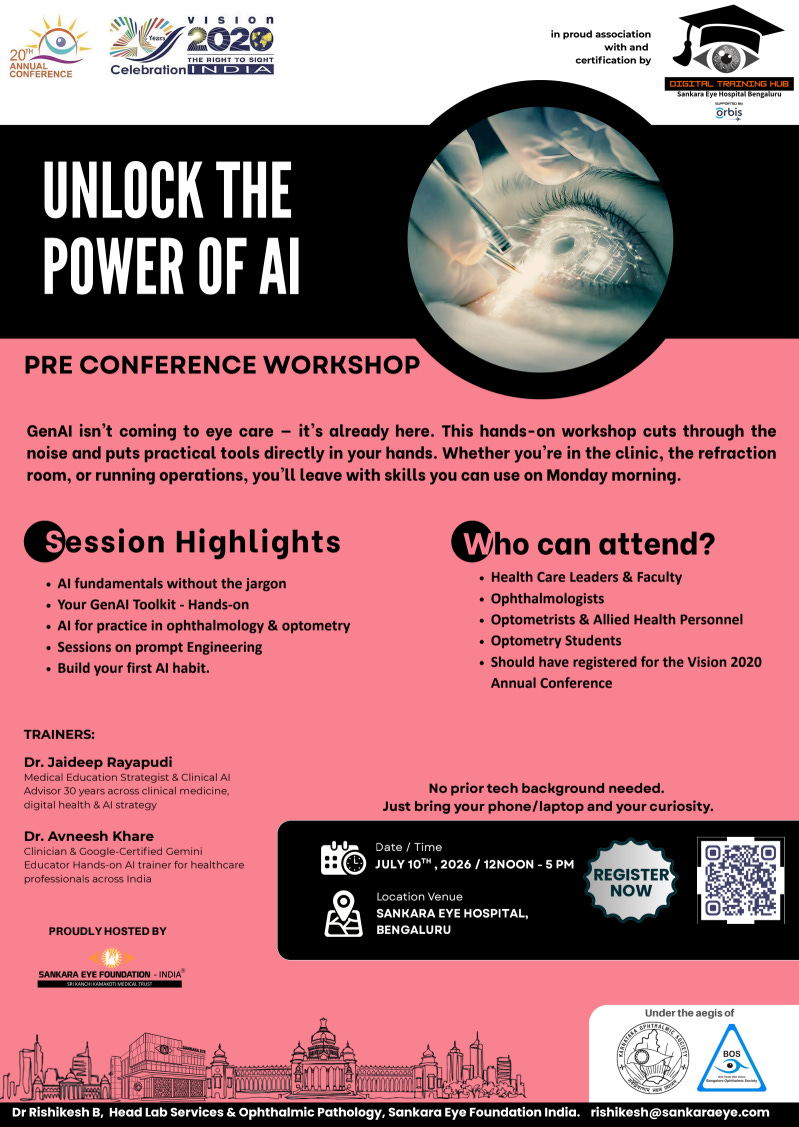
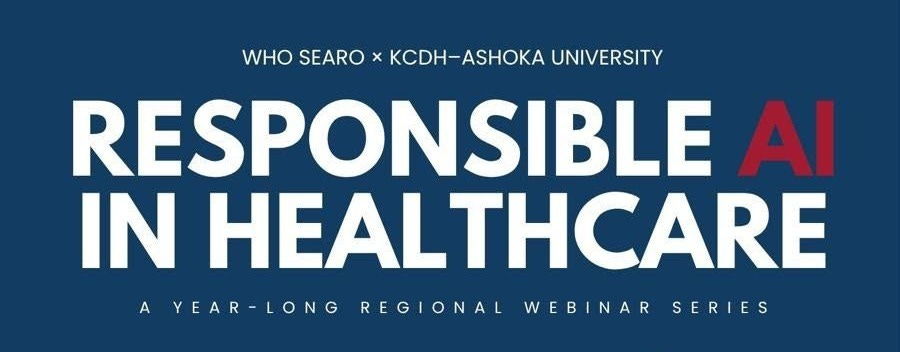
This webinar provides an insightful overview of the practical applications of Artificial Intelligence (AI) in Pain Medicine. The session is structured into theoretical foundations, hands-on demonstrations, and a Q&A session.
This webinar focuses on the transformative potential of AI across the perioperative continuum while addressing critical safety and workforce considerations.
Latest issue of the BrainX Waves newsletter, highlighting responsible AI for healthcare agents, recent BrainX community activities, open medical datasets, and featured publications in healthcare AI.
Your feedback is crucial to me, as it helps me understand your interests and improve my offerings. I would appreciate it if you could take a few minutes to share your thoughts about what you’ve enjoyed and what you think I could do better.
Midjourney, known for creative AI image and video generation, is launching an AI-driven full‑body medical scanner to enable early, preventive health assessment and wellness monitoring beyond traditional creative applications.
OpenEvidence is partnering with Pathway Labs to embed EchoNext, an FDA‑approved ECG‑based deep learning model that flags hidden structural heart disease and prompts timely echocardiography, into its widely used AI clinical decision support platform, expanding early heart disease detection to more physicians and patients.
The UK is launching an MHRA-led AI “medicines safety sandbox” that lets regulators, industry, and researchers collaboratively test AI models for drug safety and pharmacokinetics to reduce adverse reactions, speed development, and cut reliance on animal testing.
Stay tuned for the upcoming issues of my newsletter to explore the latest breakthroughs and dive deep into the transformative power of artificial intelligence, shaping a healthier future. 🚀
Disclaimer: The content in this newsletter was partly curated and summarized using AI LLMs, which can make mistakes. Please check all important information at your end. For any issues, please reach out at avneeshkhareonline@gmail.com.
Comments
Nothing yet. Say the first thing.
Sign in to join the conversation.