
(If you have received this by email, please click on the title to read the latest version. I often correct typos and continue to edit my essays after publishing the first version).
Last Sunday, I gave an online talk at the invitation of Prof. Haim Bresheeth and the Jewish Network for Palestine. The topic was the social psychology of Israeli society. I spoke about the Israeli enclave society, its cult mentality and civil religion and the heavy indoctrination that makes such a society possible. The Israeli indoctrination machine doesn’t just manufacture consent. It stamps out empathy. It breeds a blood-curdling, widespread enthusiasm not only for genocide in Gaza, but for the removal of every Palestinian from historic Palestine.
In the Q&A, someone with a background in therapy asked a question about the individualistic nature of psychotherapy. I couldn’t engage with it in any depth because it would have pulled the discussion away from the focus of the talk. But the question stayed with me.
Thanks for reading Avigail Abarbanel’s Fully Human Essays! Subscribe for free to receive new posts and support my work.
Two and a half weeks earlier, I attended a conference organised by Psychologists for Palestine — a group I want to acknowledge and thank properly, because what they put together, on what I imagine was a modest budget and largely volunteer labour, was extraordinary. The venue was humble. The chairs a bit uncomfortable. Presentation slides were hard to read — there was too much light and no way to darken the space. But it was by far the best conference in my field that I have ever attended.
The first speaker offered a striking image early in the day that I still haven’t been able to shake. He asked us to imagine a man trapped inside a burning house. A psychologist rushes in and offers a breathing exercise. In for four, hold for four, out for four. If the man can’t calm down, if his hands shake and his thoughts scatter, if he panics, this is taken as a problem with him. His dysregulation. His pathology. Never mind that the house around him is in flames.
That’s an incredibly accurate image to describe the malaise of individualism in mainstream mental health. Mainstream Western psychology for the most part focuses on symptoms and avoids context. Human beings are reduced to their problems, rather than seen as whole beings with a history and a rich life context. Despite everything we know, despite excellent science that confirms that we are largely a product of our environment, that our brain is wired in response to our environment, and that most people don’t ‘malfunction’ — despite all of that, people are heavily pathologised. The ‘therapies’ on offer are irrelevant or pointless at best, harmful at worst. They offer so little to people. Individualistic, reductionist psychology tells people that all they can hope for — all they should hope for — is to cope, to survive and function, regardless of their history, their pain, their losses, how awful the world is, or anything else that might be going wrong in their lives.
The speaker who gave us that striking burning house image, Dr Ron Roberts, had left the British Psychological Society in protest over exactly this failure — not only regarding Gaza, but going back to Bosnia. He said that our profession has still, to this day, not properly reckoned with its own silence on Bosnia, despite three separate international courts confirming that a genocide took place there. Gaza isn’t the first failure. It’s a continuation of a pattern our associations have never once been made to answer for.
He was specific about how that silence gets built. Articles on Gaza rejected without being sent for peer review. Contributors who raise the subject facing professional backlash. Letters that go unanswered or quietly redacted. He described writing to the BPS himself, only to be told that as a charity, it doesn’t comment on ‘political’ matters — while the same organisation apparently found room to publish commentary from people connected to the arms industry.
He described how the American Psychological Association spoke out quickly and clearly on Ukraine, while simultaneously discouraging its own members from calling for a humanitarian ceasefire in Gaza. “We’re still living in the Empire”, he said. Sitting there, my own translation of that was even blunter: our professional associations are in the service of Empire, not of the people or societies we’re supposed to serve.
Every single one of our major professional bodies either actively prohibits members from speaking about Palestine, or simply looks away and calls it neutrality. They don’t just avoid Palestine — they avoid talking about the social, political and economic issues that directly affect people’s mental health. These professional bodies do not see themselves as agents of societal change. They actively maintain the status quo. And there is a very uncomfortable truth hiding in plain sight. The profession profits from misery. If the world were fixed, none of us would have any clients. Our associations are more interested in whether we are making a living than in making the world better.
This isn’t a minor institutional failing. It produces generations of therapists trained to believe that context stops at the therapy room door — that naming what’s happening in the world to the person sitting in front of you, engaging with their political or social concerns, is somehow unprofessional, rather than the most basic and compassionate act of seeing them. It ignores the simple reality that we, therapists, live in the same world as our clients, and are affected by it too. Yet our professions seem to expect us to keep ourselves separate, and pretend to be oblivious to what is going on around us. I have encountered this directly with colleagues telling me that therapists are ‘quiet’ people or that therapy isn’t political. The general atmosphere in the professions actively discourages therapists from being activists. It’s as if you can’t be a therapist and an activist.
That’s what was so different about this conference. Everyone there understood that psychology and psychotherapy are political, and that if we do our job properly, we are by definition activists. Everyone understood that we have a double role: to help our clients, and to be agents of change in the world and no one apologised for it.
What we name, and what we ignore or stay silent about, are political statements — whether we see that or not. Neutrality is not only an illusion; it is itself a political statement. Pretending otherwise is a betrayal of everyone who reaches out to us for help.
Mental health professions have a long, disgraceful history of being conscripted into, and colluding with the machinery of oppressive states. In the Soviet Union, psychiatry invented a fictitious diagnosis, ‘sluggish schizophrenia’, whose defining symptom was political dissent itself. An ‘obsessive’ pursuit of truth, disagreement with the regime — these were treated as a slowly progressing psychosis, which led these regimes to confine dissidents to psychiatric institutions for years where they were forcefully medicated and tortured. East Germany’s Stasi ran a parallel programme of psychological destabilisation against dissidents, designed with real clinical understanding of how to induce breakdown and isolation. Documented reporting on Israeli detention today describes a related pattern: government-paid healthcare professionals identifying psychological vulnerabilities in detainees, sharing them with interrogators, and systematically failing to document the abuse they witness. This is what happens when a profession betrays its own ethics and serves whoever is in power.
My own training and practice was in the humanistic and existential tradition, which insists context matters, and that suffering isn’t a pathology to be corrected in isolation. Existential work in particular emphasises our human need for meaning and purpose, not as a luxury but as a basic necessity alongside our need to survive. I’ve never practised the individualist, medicalised, symptom management model in mental health. It is not only against my professional ethics, it offends my own humanity.
It was at this conference that I realised, for the first time, that even humanistic and existential psychology, for all that they get right, were built inside a fragmented, individualistic, Western liberal, capitalist culture. They were created for people whose difficulty is a hard childhood, a strained marriage, an existential crisis of purpose — not an active, live-streamed military assault with no end in sight. Not mass destruction of everything that sustains people’s lives and gives it meaning, torture, wholesale loss and displacement. Gaza doesn’t just break the individualist model. It shows the limits of even the more humane end of Western psychology.
Livestream from Palestine — Dr Reem Abu Hweij
Early in the afternoon the psychologist Dr Reem Abu Hweij joined us by live video link from Palestine to talk about her group therapy practice. The title of her talk was ‘Between Actionality and Meaning: Group Therapy as a site of Liberation Madness’.
I trained as a group therapist myself, in Irvin Yalom’s tradition. Yalom’s model is built around the idea of the group as a kind of laboratory, a safe-enough space where people learn about themselves through each other, then carry it back out into ordinary life. The group inevitably becomes a microcosm of the participants’ families of origin, with members’ interactions and feelings about each other beginning to mirror their earlier family experiences. The therapy process makes use of this, and the assumption is that through skilled facilitation, people can finish some of their ‘unfinished business’ as they relate to the other group members.
Listening to Dr Abu Hweij, I understood immediately how much Yalom’s model quietly assumes the room is safe and the world outside stable enough for the laboratory to function. But what Dr Abu Hweij described was something else entirely. Group therapy in Palestine is not a room set apart from danger. It operates within the danger, while the bombs — real and metaphorical — are still falling, while a deliberate and systematic programme of erasure and elimination is progressing in full speed. It serves as collective preparation for an ongoing reality that is far from resolved and whose end is not clear. If Israel had its way, Dr Abu Hweij, her colleagues, her clients, and everyone they know would be dead or expelled from their homes and reduced to the most basic survival imaginable. It was remarkable to encounter a clinician working right in the middle of it all, with her eyes completely open. Yalom is one of the world’s foremost experts on existential psychotherapy — but what Dr Abu Hweij is working with is existential therapy as I have never encountered it before, and it made complete sense.
Dr Abu Hweij calls the shift she works toward ‘liberation madness’. She sees it as the moment a person stops accepting the logic of their own domination by their oppressor, and turns instead toward the possibility of freedom. It’s worth pausing on the word ‘madness’, because our profession has spent a century pointing it in exactly the wrong direction. When someone resists domination, breaks down under conditions no human being should have to endure, or simply refuses to accept the story their oppressor tells about them, psychology shamefully calls this madness. It locates the pathology in the person who was harmed, rather than in the system or the people doing the harming.
Dr Abu Hweij’s use of the word does the opposite, and deliberately so. The madness, in her framing, isn’t the Palestinian who refuses to accept their own erasure. It’s the system built to erase them in the first place, and everyone participating in it. Real madness belongs with the perpetrator who commits genocide and calls it self-defence, not with the person who resists it. Reclaiming the word this way isn’t just clever reframing. It’s a correction our whole profession badly needs, applied here to Palestine, but true everywhere power tries to pathologise the people it’s harming rather than the harm itself.
Dr Abu Hweij drew on Viktor Frankl, who built a psychology of meaning and a therapy modality — logotherapy — out of surviving the camps. Existential therapy has told me for years that meaning isn’t optional. People can’t live without purpose and meaning and Frankl believed that to be well we need to be able to find meaning even in the middle of hell. It doesn’t mean ignoring hell, quite the contrary. But you work towards maintaining your humanity all the way through so that you can continue to live fully when you are finally liberated. This kind of psychology is revolutionary, because in its essence it is the strongest form of resistance we can have. Here is a group therapy model that doesn’t ignore reality, or teach people merely to cope, but that supports people’s humanity in the middle of a dehumanising, sadistic system created by a powerful and determined annihilator. Dr Abu Hweij is living inside that world herself, she isn’t detached from it.
She isn’t taking a Western model and adapting it for Palestinian clients. She isn’t nudging people toward the more individuated, more ‘differentiated’ relationships to family and culture that Western therapy aims for, even at its best. She’s doing close to the opposite — working with the culture, with the relationships, with sumud and faith and family exactly as they already exist, and finding the liberation and meaning already inside them. Nothing needs correcting. Nothing needs Westernising. Watching it live from a hall in Luton, it struck me as nothing short of a masterpiece.
The image she left us with comes from the words of one of her clients, and it’s stayed with me: “I just want to bake bread and sit with my children. I feel like the thing that angers them the most is that we know how to live despite their hideous attempts to stop us.” Damn right. Here is therapy as resistance, and as preparation for liberation. It puts Western therapy to shame.
I’ve spent most of my career as something of an outlier — out of step with NHS mental health services, with how GPs approach psychological distress, with how my own professional bodies have often behaved. In Luton, for the first time I can remember at a professional conference, I wasn’t out of step. It was also, without question, the most ethnically diverse room of professionals I’ve ever been part of, and somehow everyone in it spoke my language. We all understood suffering as something happening to people inside real life situations, not a private ‘malfunction’ to be corrected in isolation from the world that produces it.
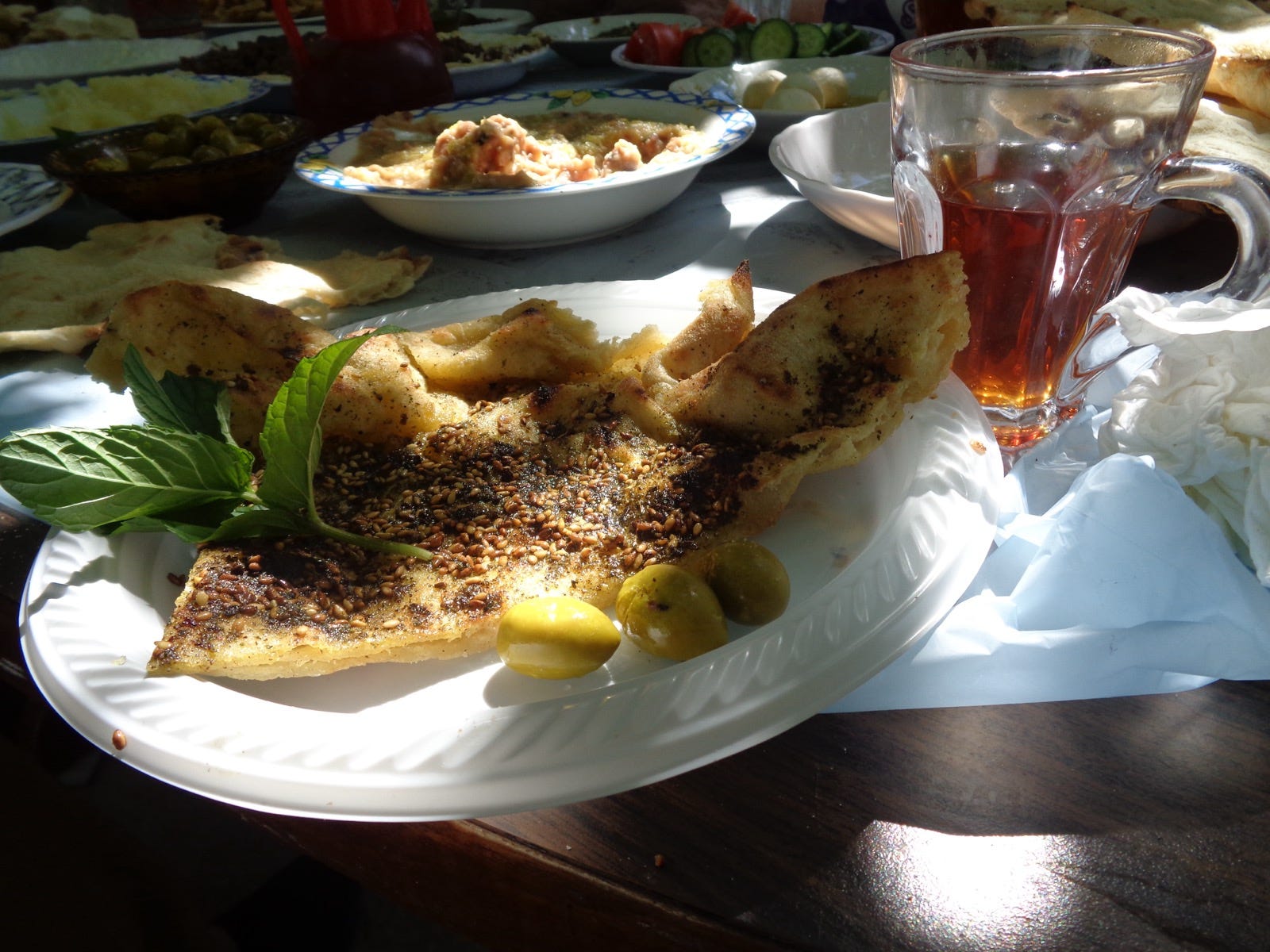
At the end of the day, over an extraordinarily generous spread from Al Quds, a brilliant Palestinian restaurant in Luton, ideas turned into something more lasting. I found myself at the same table with a psychologist from Poland, another from Bangladesh, one from Pakistan, one of the speakers originally from Greece, and me, from Israel by way of Australia and now Scotland. Six countries, one table, entirely at ease with each other, enjoying an incredible meal.
Listening to Dr Abu Hweij, I felt not just admiration but something closer to release. Her psychology elegantly dismantled a bias I hadn’t even recognised I had — my faith that humanistic and existential therapy, the traditions I love and practise, were somehow complete. They aren’t. They were formed inside a particular culture, and they carry its blind spots. But it wasn’t a loss. It felt liberating.
Here is what I didn’t have time to say in response to that question. Western psychology, even at its most humane, still largely assumes the room is safe and the ‘fire’ is somebody else’s department. Palestinian psychologists don’t have that luxury. They’re working under conditions most of us will never face. They are building something the Western world badly needs — a psychology that doesn’t flinch from naming reality, doesn’t turn a broken world into a personal diagnosis, and doesn’t pretend neutrality is professionalism.
Palestinian psychology is far ahead of us. It should lead the way, not only for Palestinians but for all of us.
A note on paid subscriptions
Substack encourages writers to activate paid subscriptions. When people pay for subscription or make a one-off donation Substack take a small cut. I am grateful to the readers who have pledged money for monthly or yearly subscriptions, but I have no intention of monetising my work and this is not enabled on my page.
I don’t want to turn my writing into an obligation, but even more importantly, I don’t believe in a tiered system where those who can pay get preferential treatment over those who can’t, such as the right to comment, or privileged content. This hierarchy of ‘worthiness’, especially based on such an arbitrary principle like how much money people have, couldn’t be further away from my values.
If you do feel moved to support my writing, please use the ‘buy me a coffee’ button below. If you haven’t seen it before, it is a way of offering a donation to freelance writers. Payments are processed securely by Stripe on the ‘Buy Me A Coffee’ site. Donations can be made anonymously.
My writings will always remain free to all.
Thank you for reading my work!

Thanks for reading Avigail Abarbanel’s Fully Human Essays! Subscribe for free to receive new posts and support my work.
Comments
Nothing yet. Say the first thing.
Sign in to join the conversation.