


Sitting at a table in her farmhouse, Marinella Camerani didn’t strike me as a wine outlaw. A white-haired former accountant in her 60s, she has farmed 13 hectares in Valpolicella for 40 years, biodynamically for the last 25. She was the influential Gambero Rosso guide’s Winemaker of the Year in 2024. Nevertheless, the Valpolicella Consorzio, the professional body that promotes the appellation’s wines and enforces its rules, fined her €5,000 [£4,350; US$5,900] for one word on a label that it deemed impermissible.
It’s an example of the kind of wine bureaucracy that is normal in many parts of Europe, and indeed in places is currently being strengthened. But is it doing what it’s supposed to – and if not, do we even need it anymore?
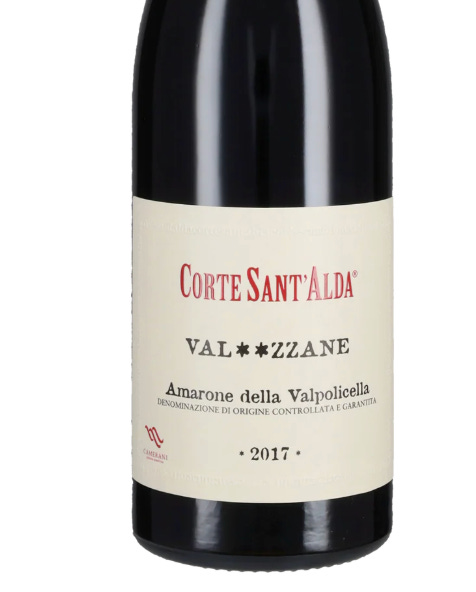
Camerani’s crime was to put “Valmezzane” on a label underneath the name of the wine and above its appellation, Amarone della Valpolicella – because that’s the name of the valley it’s from, farmed by her and other small producers. But Valmezzane had not been officially recognised for this eastern fringe of the Valpolicella appellation; she says the Consorzio is run by producers from the original Classico zone, who don’t want what she calls “the poor cousins” getting above themselves. Some large producers do this kind of thing and accept the fine as a cost of doing business, she says, but for a winemaker like her, €5,000 is a lot. She now labels the wine “Val**zzane” and hasn’t been bothered again.
Such local squabbles are typical of many places in Europe. Inevitably, local farmers’ groupings can be grumpy and reflect petty local jealousies (especially in Italy). Nevertheless, such rules are central to the operation of appellations, the systems that decide which wine can be labelled Rioja, or Bordeaux Supérieur, or Barolo – and they are central to how wine is made and sold, at least in Europe.
These systems started in France in 1905, formalised there at national level in 1935, and were designed to outlaw the adulteration of wine, especially the beefing up of Bordeaux and Burgundy with stronger reds from the Rhône and Algeria (I wrote about this earlier this year.) Similar systems were already developing in Germany and in Spain: Rioja was the first Denominación de Origen (DO) in 1925 – later joined by Italy, where the Denominazione de Origine Controllata (DOC) system arrived in 1963.
The idea spread to other products: in France, Roquefort cheese had enjoyed protected status from as early as 1925 and in the 1980s even lavender oil (AOC Haute-Provence) got in on the act. Finally in 2009 the EU revamped continent-wide laws to create a new category of Protected Designation of Origin (PDO) or Protected Geographical Indication (PGI). These terms or variations of them now appear on most European wines from a given area – as well as on cheeses, cured meats and other products.
So far, so reasonable? If you’re buying a white Burgundy, you don’t want to get fobbed off with the anonymous Australian white labelled for years as Houghton’s White Burgundy. Splashing out on a nice piece of Roquefort? You’re protected against blah Danish knock-offs.
There are two problems here – both for producers and consumers. For winemakers, the rules can be a constant headache. They are usually extremely detailed, prescribing not simply the geographical limits of an appellation and labelling, and not just the grapes – though the rules though can vary from completely inflexible (eg Chablis – only Chardonnay permitted) to relatively relaxed (for Côtes de Provence rosé, a total of 11 permitted grapes). They can also specify permitted yields, planting densities, pruning systems and more. Enforcement can vary from tight – as Camerani found out – to lackadaisical (parts of Spain).
This has been a major motive for the continent’s “natural” winemakers, especially in France. Some winemakers have long settled for lesser designations – such as the “super Tuscans” made from Cabernet Sauvignon and Merlot rather than the local Sangiovese grape and thus labelled as Indicazione Geografica Tipica Toscana rather than Chianti Classico. But many French natural winemakers have gone much further, completely ignoring the rules and taking the only legal designation permitted for their wines, humble “Vin de France”, as a badge of pride. I once asked why a Roussillon producer had thus labelled a wine when, as it looked to me, he could have used a more respectable regional designation. “Alain doesn’t want to be formatted!” [formatté] came the passionate reply.
Thus appellation rules are a barrier to innovation. This is especially important in the context of climate change. Rules on grape varieties and irrigation, in particular, are starting to look out of date in a number of key regions. Yet the authorities implement any change at glacial speed. In 2021 the Bordeaux authorities approved six new, more heat-resistant grapes including Touriga Nacional for limited use in the Bordeaux and Bordeaux Supérieur designations. Even this very limited shift appears to have had no impact to date. But the lack of action hastened the departure last summer of megastar Château Lafleur from the Pomerol appellation, in protest at the rules’ ban on irrigation, an increasing challenge in hotter summers.
The other shortcoming of all the complicated rules is, paradoxically, for consumers. For well-known regions, the rules theoretically offer drinkers some assurance (never mind that few Italians have ever heard of most of the country’s hundreds of DOCs.) But they don’t guarantee much. A supermarket Chianti around the £7 mark in the UK is unlikely to be any better than just-about-drinkable. The red Bordeaux that graces French supermarket bargain shelves at €4-odd? Let’s not even go there. The hard truth is that in every major region, large operators have found ways to cut corners within the law, making cheaper but undistinguished wines. As a Verona wine merchant told me last week, he’d seen a bottle of the region’s top red, Amarone della Valpolicella, in a supermarket for just €13: “It’s a lie! This isn’t Amarone!” Well I’m afraid, legally, it is.
One of the most egregious examples is Cava, 90 per cent of which is made around the small town of Sant Sadurní d’Anoia, south of Barcelona. Cava can be a superb, quality sparkling wine. But production is dominated by two giant companies, Freixenet and Codorníu. Freixenet, which makes roughly half of all Cava – well over 100 million bottles a year – is owned by Henkell Freixenet, part of Germany’s €7 billion-turnover Oetker Group. Most of its products are as anonymous as you’d expect. This has had a corresponding impact on Cava’s image, hitting sales – and enraging quality producers. The result has been several breakaways from the Cava DO, most significantly by a group of growers calling themselves Corpinnat (I wrote about this in more detail here.) Their solution to the dilution of Cava’s quality: new and tougher rules. Sparklers labelled Corpinnat must be made from organically farmed, hand harvested grapes; the wine must be made in the producer’s own winery, using no bought-in juice; and it must be aged for at least 18 months – among other restrictions.
Corpinnat (not officially a DO) seems to be doing well: at the start of this month, major quality producer Juvé & Camps officially deserted the Cava DO for Corpinnat, thereby doubling the latter’s total production. Perhaps the new designation will gradually improve consumer perceptions. Yet the funny thing is, leaving the appellation doesn’t appear to have dented the sales of the companies involved. The lesson: you don’t have to be £700-a-bottle Château Lafleur for consumers not to care much what appellation your wine has on the label.
This, of course, is how producers manage in most of the New World, where in general geographic designations are much looser and rules on grape varieties and winemaking limited or non-existent. Want to know whether a bottle of Stellenbosch in your wine shop is any good? Mulling a Mendoza on a restaurant wine list? You’ll just have to know who the producer is – or else ask for advice. Yet this doesn’t appear to have hurt these wines’ sales, either at home or on export markets.
This is borne out by the success of natural wines – perhaps ironically, given that one of the sector’s big selling points is that it is somehow more democratic and less in hock to “stuffy” wine experts. Without an encyclopaedic knowledge of these small producers, you need a sommelier’s help. And so when I’m in my local natural-leaning independent wine shop in Brittany, despite my nerdy knowledge of French wine regions, I still end up having to ask the owner what exactly many wines are. “Vin de France” tells you nothing.
This may not help wine producers like Marinella Camerani: breaking away from an appellation is scary for most small producers and might well look like an unacceptable financial risk. But I suspect that as climate change gradually alters European grape growing, and as producers see the efforts of mavericks paying off, they may be more willing to try selling their wines purely on their own merits. For the vast majority of wine consumers, an appellation is in practice just a brand – famously defined by one American marketing guru as “a promise kept”. When that brand isn’t keeping its promise – when “Sancerre” or “Chablis” disappoint – consumers may be more open to a new kind of wine promise than many winemakers imagine.
I’ve been in Verona for most of the past week, finishing off the big Vinitaly fair and on the road in Soave, Valpolicella and Franciacorta. These were some of my favourite wines from elsewhere in Italy that I sampled along the way.
Terenzi Morellino di Scansano 2022 – Morellino is the local name for Sangiovese in the zone just to the south west of the main Tuscan appellations, and it’s mostly a little lower altitude too – so the grapes tend to ripe a bit earlier. Sweet cherry fruit, spicy notes, good acidity, an easy but very enjoyable Tuscan red (the 2023 and 2024 are in the UK at Call Me Wine, Xtrawine, and elsewhere, from £12. Vino.com also have it, shipping to the UK from Italy.)
Ferdenando Zanusso “I Clivi” Schioppettino 2024, IGT Venezia Giulia – Schioppettino is a typically idiosyncratic Italian red grape from Friuli, towards the Slovenian border. This one boasts the grape’s trademark herbal and spice notes, with fresh, sweet fruit and firm acidity (the 2023 is at Call Me Wine, £18. Vino.com also have it, shipping to the UK from Italy.)
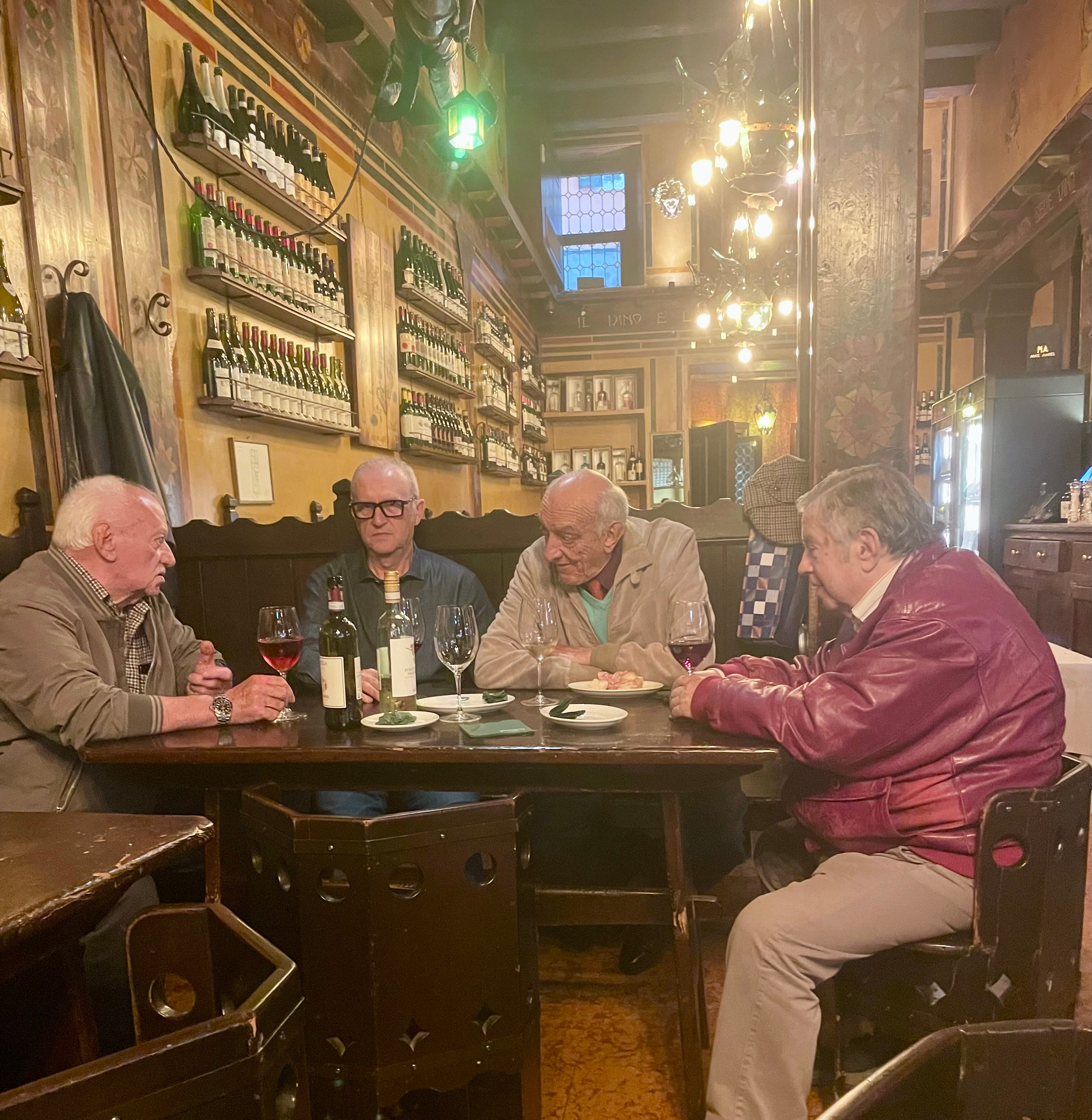
Le Ragnaie Rosso di Montalcino 2022 – this is more than half way to a Brunello di Montalcino, and I prefer its freshness too: bright, crunchy cherry fruit, a bit of weight but still very elegant – pure class from a fine producer. I drank this at classic 16th-century Verona bar, Antica Bottega del Vino – though unfortunately I didn’t get to see its cellars, said to hold over 19,000 bottles (Vinum, £25.10 and elsewhere in bond.)
Monte dall’Ora “Camporenzo” 2022, Valpolicella Superiore – OK, one last Veronese wine, as this was in fact the best Valpolicella of my trip. This single-vineyard bottling from an organic producer is just beautifully balanced: light, fresh, pure, surprisingly long. I drank this at brilliant natural-leaning Verona wine bar Tor-Tor (Xtrawine, £23.50. Swig, The Sourcing Table and others have the 2020 and 2021.)
No posts
Comments
Nothing yet. Say the first thing.
Sign in to join the conversation.