
Check out the latest episode of Get Yourself a Glass, my podcast with my friend and Telegraph wine critic Victoria Moore, where we investigate what the Iran war energy shock means for wine – and how renewable energy, organic farming and lighter bottles are all helping cushion some winemakers from the worst of it. On Apple, Spotify and wherever you get your podcasts.
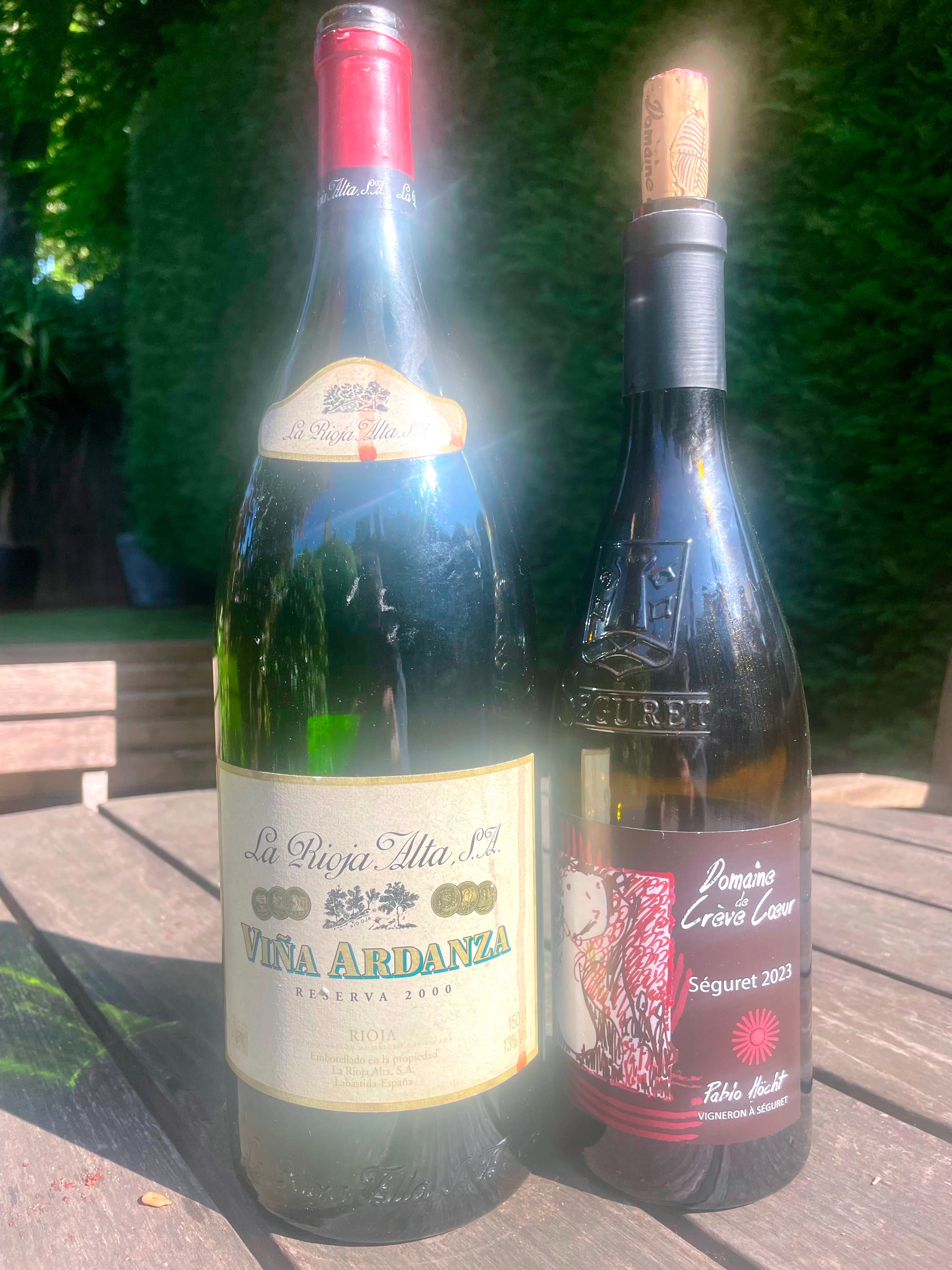
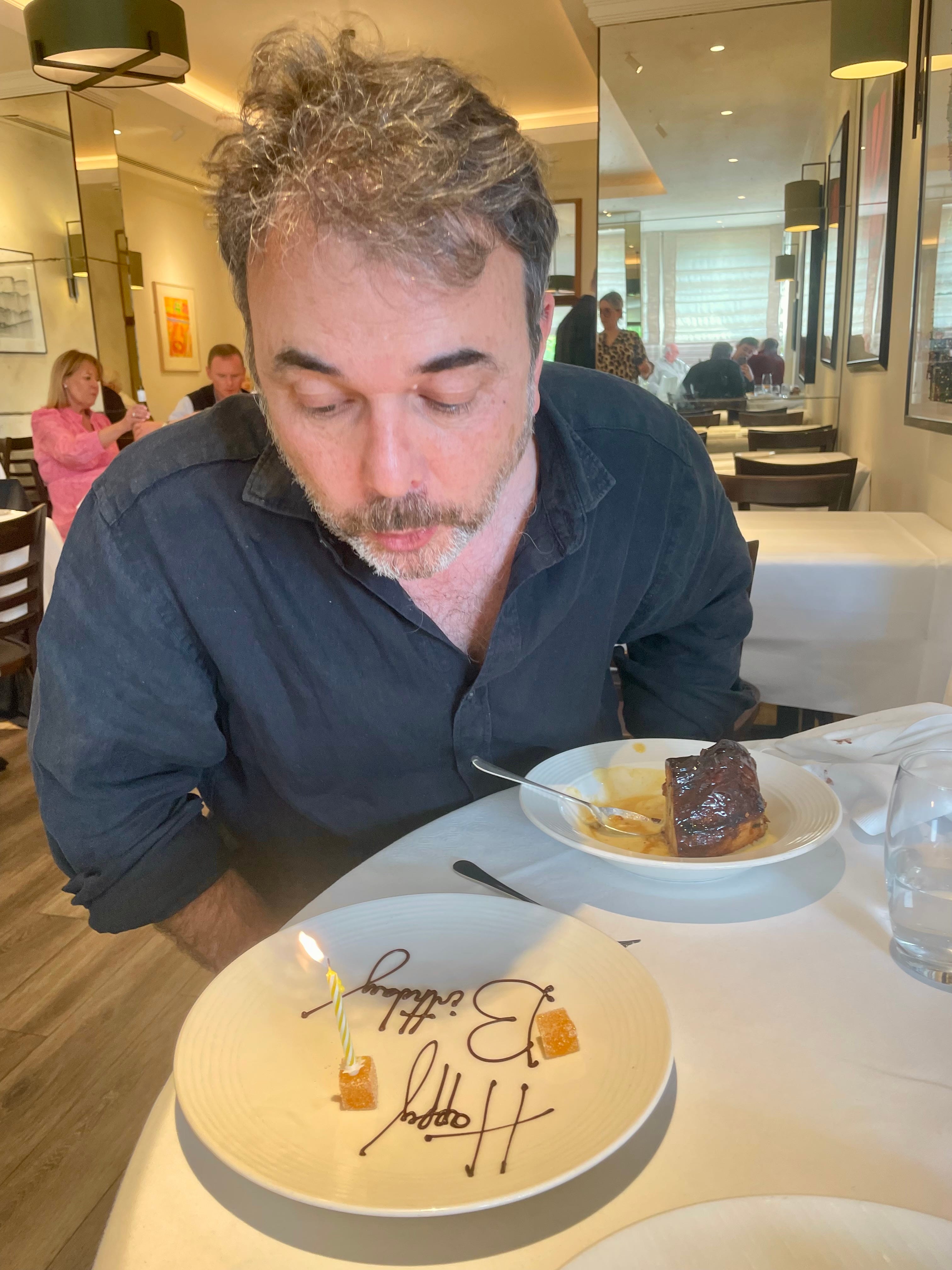
It wasn’t a big birthday, but for mine last week, I decided to open a magnum of Viña Ardanza Rioja Reserva 2000. It had been given to me for my sixtieth last year by a generous friend; I was confident that it would be in good shape though wasn’t sure for how much longer. And it was indeed magnificent: the wine, but the bottle itself too.
Magnums (1.5 litres) are a special treat. As celebrated Italian sommelier Alessandro Scorsone once quipped, “The magnum is the ideal bottle if you’re dining as a pair. And one isn’t drinking.” A magnum on the table makes a statement of serious intent. And they are extravagant: normally more than the price of two bottles of the same wine, since the glass is more expensive. Plus, if the wine is corked, you’ve lost two bottles in one go.
“Champagne mags bring joy before you even get to the table,” says my friend David, a particular fan of the format. He adds that, “I almost exclusively buy mags because it stops me opening one when I’m on my own and helps me with my mission to drink less but better.” I’m not sure how successful this strategy has proved.
Of course there are wine-geeky reasons to like magnums too. The larger ratio of liquid to the same diameter of cork means that the tiny quantities of oxygen that enter a normal bottle via the closure are tinier still relative to the volume of wine, thus reducing the speed of oxidation and slowing the wine’s maturation. Vintage champagne stays fresh and youthful longer, while tannins in reds like my Rioja soften more slowly as the wine gains complexity. Swiss sommelier and large-format expert Stefan Schachner tells Falstaff magazine, “For every three litres, you can calculate five additional years until the wine reaches drinking maturity.”
But in fact, these sort of rationales don’t much interest me. As I’ve written before, I have limited patience with the fetishism around ageing wine over long periods. I have neither the money nor the cellar space to invest in laying down wine for many years. I’m sure it would be nerdily fascinating to compare the evolution of the same wine in a regular 75cl bottle versus en mag over 10 years, and I stand ready to assist anyone conducting that experiment. But space and money militate against my trying it myself – as does my lack of the requisite patience. Indeed the only reason I was drinking a 2000 Rioja was because I’d been given it aged – it would never have lasted anywhere near that long in my cellar if I’d had it from release.
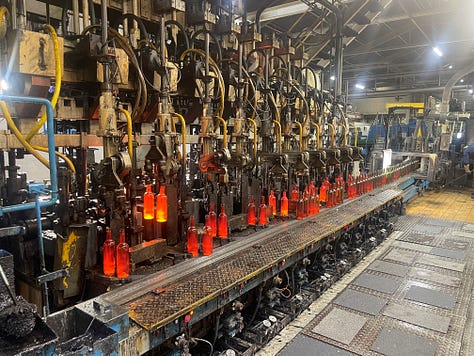
So for me, the draw of magnums is largely aesthetic. But they also represent the imprint of industry on wine literally writ large. Few wine writers seem much interested in the grubby practicalities of how you package and transport the stuff. I sense that at root, much of the romance of wine in the heads of wine geeks stems from its connection to the soil: it is thus seen as the expression of terroir, of a particular corner of, say, rural France, rather than as having anything to do with things as unglamorous as bloody great glass factories. By contrast, I have a bit of a thing for production lines, and it’s a subject I investigated at length for my recent book on sustainability with Jane Masters MW.
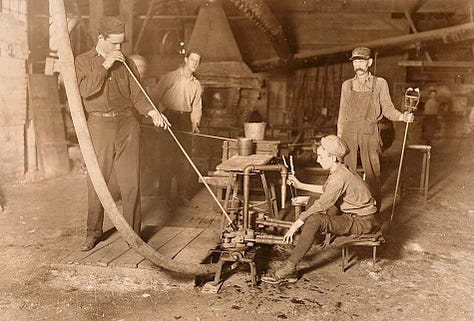
Standard 75cl wine bottles are the size they are essentially because that was the average capacity of a glassblower’s lungs. Hand-blowing and shaping remained the only method of bottle manufacture until the eighteenth century, although some larger-format bottles did appear in Champagne in the late 1700s. By then too, glassblowers were using two-part moulds of clay or wood to form the base and sides of bottles, though they still had to draw out the necks by hand, a skilled task. The big change came with the invention in 1821 of a three-part cast-iron mould for the whole bottle, developed by Henry Ricketts, a Bristol glassmaker.
This, the first process for turning out identical bottles, revolutionised the industry. Still, they had to be blown with human puff until the 1890s, when Michael Owens invented an automatic bottle machine in Ohio that blew as well as moulded the bottles (the Owens Bottle Company’s successor, O-I Glass, remains the world’s largest manufacturer of glass containers.) As well as speeding up bottle manufacture – Owens machines in the first decade of the twentieth century could turn out 240 bottles per minute – it made bottles of unusual sizes, such as magnums, a lot simpler to manufacture.
Nevertheless, magnums remained relatively rare until the 1920s. This was a key piece of evidence against German fraudster Hardy Rodenstock, who I wrote about a couple of weeks ago. He served magnums and other large formats purportedly from top Pomerol and other Bordeaux châteaux, only for those estates to deny later that they had made any magnums in the years concerned. That said, earlier this month a Sotheby’s auction in New York saw two 1870 magnums of Château Lafite fetch $200,000 [£147,600; €170,300] and $106,250 (£78,500/€90,500 – the cheaper one had no label). They originally came from a legendary cellar at Glamis Castle, an aristocratic Scottish pile, where they were purchased by the thirteenth Earl of Strathmore and Kinghorne, grandfather of the Queen Mother. The Earl somehow never got around to drinking them – he was a keen cricketer and also had a lot of retainers to keep in line – and they slumbered for nearly a century before being discovered by claret doyen Michael Broadbent, and auctioned, along with many other bottles from the cellar, in 1971. That’s the extended magnum ageing effect in action.
After World War II, production of magnums in Bordeaux and Champagne especially became more standard, though it’s worth noting, for instance, that even an iconic champagne such as Laurent-Perrier’s non-vintage Grand Siècle has been bottled en mag only since 1959. Then the practice spread from the 1970s, from which point most Bordeaux wines were bottled by their estates rather than négociants. And now wine is bottled in magnums across the world.
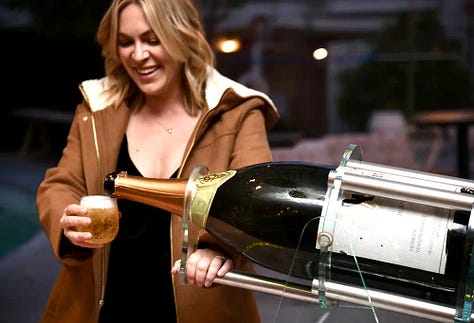
But – expense aside – why stop there? A magnum is only the most modest of larger-format bottles. I have only once bought a Jeroboam, or double magnum, for my fortieth birthday: opening the champagne was a thrilling moment, and the bottle still stands by our fireplace. From there, bottle sizes go up, named after various Old Testament worthies: a Methuselah (6 litres/8 bottles), a Salmanazar (9 litres/12 bottles), a Balthazar (12 litres/16 bottles) and a Nebuchadnezzar (15 litres). I think the largest I’ve seen poured was a Salmanazar, at a birthday party held in a high-end wine shop: certainly for that size or bigger, if not for a Methuselah, you need a specially designed cradle to hold, tilt and pour the bottle. And just the bottle will cost the producer upwards of £100; the cheapest champagne Salmanazar I can find is £770, for Lanson Black Label – roughly twice the cost of a dozen 75cl bottles.
I hasten to add that this is far beyond my budget or indeed that of any journalist I know. In fact I buy few magnums, and even fewer that are at all fancy; I give most of them away as gifts. Still, there’s nothing quite like opening a big bottle. I think my seventieth birthday might well demand another Jeroboam. But, thank goodness, that’s a long way off.
For over 30 years now, Wandsworth’s Chez Bruce has been turning out some of the loveliest, most reliable good food in London – classic but always with fresh twists, the kind of menu where I want to order everything. It’s also more relaxed and friendly that the Michelin star that it has held since 1999 might suggest. And it’s probably my favourite London restaurant, so it was a natural choice for a late birthday lunch at the weekend. It has also long boasted one of the capital’s best wine lists, now in the capable hands of new Head Sommelier Joe Collier. This is what I drank:
Gusbourne Rosé Brut 2019, Kent – I visited Gusbourne Estate last week (of which more in a later Substack) and their rosé was one of the highlights of a tasting there, so I was excited to start with this as an apéritif. Crisp, subtle red fruit, perfectly balanced (fairly widely available in independents, from £42.)
François Confuron-Gindre Nuits-St-Georges 2014 – a beautifully mature red Burgundy from a grower in Vosne Romanée, at a very fair price for what it is: fragrant, supple, balanced, long (Clark Foyster Wines, £71.64. More recent vintages from Haynes, Hanson & Clark and others.)
Gramercy Cellars “Lower East” Syrah 2020, Columbia Valley – Gramercy is one of my favourite producers from Washington state, making powerful yet poised reds. Dark black fruit and smooth oak, notes of tobacco and coffee, lush and rich but with appealing freshness and mineral notes too (Cult and Boutique Uncorked, Tivoli Wines have other recent vintages, from £30.)
Château Dauphine-Rondillon “Cuvée d’Or” 2011, Loupiac – just across the Garonne from Sauternes, Loupiac can be a good-value alternative to its more illustrious neighbour. Unusually, this one has serious bottle age, giving it a deep, orange-tinted gold colour, with rich, honeyed, caramel notes underpinned by a firm acidity (I can’t see the 2011 available anywhere in the UK retail, thought the 2015 is at Jerome’s Wine Bar and Shop, £23.)
No posts
Comments
Nothing yet. Say the first thing.
Sign in to join the conversation.