

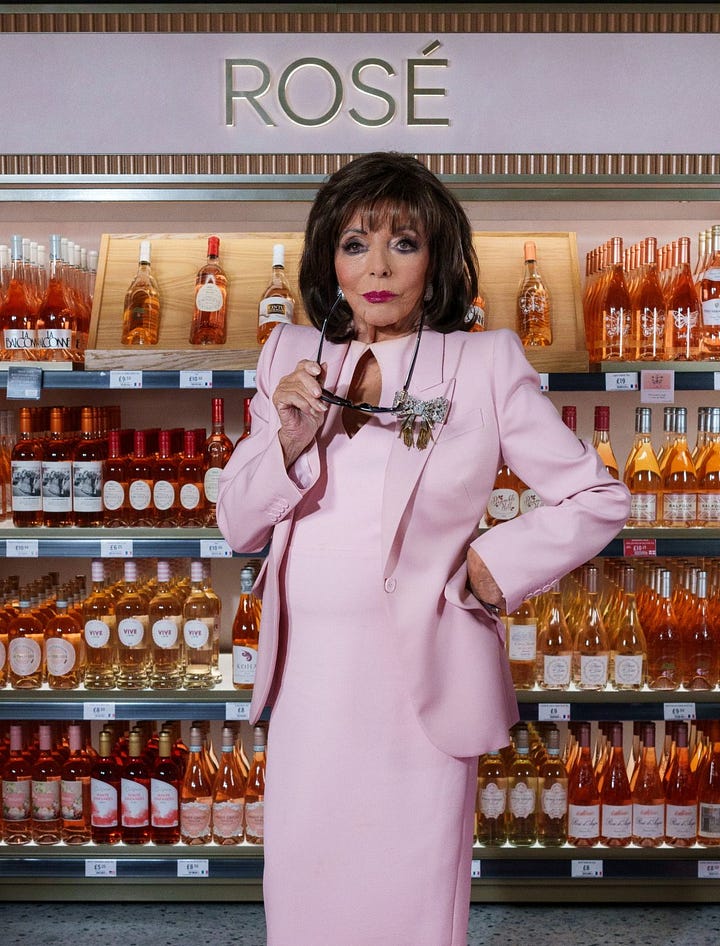

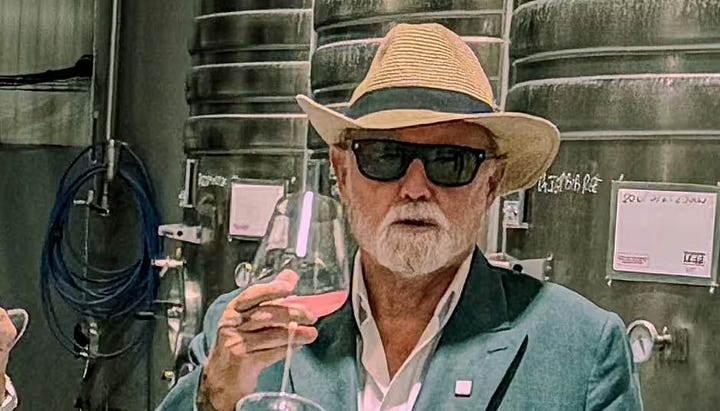
I think it would be fair to describe the atmosphere at this week’s London Wine Fair as slightly apprehensive: the British wine trade, like much of the industry globally, faces tumbling sales and economic uncertainty. Yet there’s one still wine brand that sold 1.9 million bottles here at around £23 a pop [$31/€26.50] last year, part of a wider category whose sales jumped yet again in 2025. The brand is Whispering Angel and the category is, of course, rosé.
Will we ever be able to get enough pink wine? Last month Wine and Spirit Trade Association figures showed that UK rosé sales in 2025 bucked the trend of falls for white and red. We consumed a total of 129 million bottles; rosé now makes up around 11 per cent of UK still wine sales (roughly double the proportion 20 years ago). Earlier this month Marks & Spencer launched its biggest rosé range ever, oddly fronted by a 92 year-old Joan Collins in a pale pink dress suit. Indeed rosé is so hot that last month Carlsberg launched 1664 rosé, a pink, fruit-flavoured beer. The company explained that “consumers are more open to hybrid, lifestyle led propositions.” Er, whatever: just make it pink.
Things have changed. In the 1970s, rosé wasn’t particularly cool: the largest-selling wine brand in the world was, for a while then, Portugal’s Mateus Rosé, shifting close to 40 million bottles a year globally. Even in 2021, despite being overtaken by the even nastier Blossom Hill rosé, Mateus still sold 3.6 million bottles a year in the UK, somehow (yes: it’s pretty grim.) But then nobody is paying more than £7 a bottle for it.
For this is the intriguing trick pulled off by Whispering Angel and its peers: getting people to buy not just more wine, but to spend more per bottle too. While UK rosé sales last year rose three per cent by volume, they were up five per cent by value. This strategy is known in the industry as “premiumisation”: Provence rosé’s masterclass in it must be making other regions’ producers gibber with envy.
It’s a marketing triumph for Provence, which produces over 40 per cent of French rosé, and especially for the Côtes de Provence appellation, making the lion’s share of that. But as Maison Mirabeau’s Jeany Cronk points out, “producers here specialised in rosé long before it was fashionable.” They were helped by the appellation authorities’ deliberate strategy over the past two decades to help producers focus on rosé and to associate it with premium quality in consumers’ minds. This is why we are prepared to spend an extra £3 a bottle or so for it.
Indeed Provence rosé has itself become a brand, much as for the wines of Champagne. Says Cronk: “it represents accessible luxury: while more approachable than Champagne or premium spirits, it still offers consumers the pleasure of choosing something distinctive and special.” And its pale colour has become the dominant style. As Tom Fahey of rosé specialist The Terrace at Ventnor told The Buyer website last year, “Consumers are convinced that dry = pale and that pale = Provence… The success of the… message seems almost to be overpowering other rosé regions.”
Of course, Provence’s association in many people’s minds with sun-drenched terraces, swimming pools and lavender fields doesn’t hurt either. It’s an image that has been skilfully deployed by Mirabeau, whose Instagram feed presents a succession of pretty Mediterranean gardens, beautiful people in the sunshine and “endless lunches”. Especially in an English May where we’ve had to put the heating on, what’s not to like? The net result: Provence rosé exports to the UK are up more than 400 per cent over the last 10 years, making us the region’s second most important export market.
Of the premium Provence rosé producers, Mirabeau is the most interesting, the personal project of Anglo-German couple Stephen and Jeany Cronk. Unusually for a French wine, they started off with a clear idea of the brand they wanted to build, rather than with a wine they needed to sell. But they are also seriously committed to sustainability, having won both regenerative and organic accreditation for their own vineyards (they buy wine in too) as well as B Corp status, the gold standard of ethical corporate behaviour. Years of hard work were rewarded earlier this year when Concha y Toro, Chile’s largest wine group, bought a majority stake in Mirabeau.
The Chileans were following in the footsteps of luxury goods giant LVMH (owner of Whispering Angel, Minuty and Galoupet), Pernod Ricard (Château Ste Marguerite) and the business empire of Tory and Reform party donors the Bamford family (Château Léoube). Meanwhile Provence has attracted a steady stream of celebrities launching their own pink wines: last month former Queen drummer Roger Taylor and his Queen Côtes de Provence Rosé joined Kylie Minogue (her non-Provence Signature Rosé is Britain’s second-biggest-selling pink brand), Brad Pitt and Angelina Jolie (Miraval) and others. I find the celeb trend utterly baffling, but then I don’t watch TV or really know who most of them are.
Nevertheless, most of the rosé that Brits buy is from elsewhere, and like other mass-market wine, costs less than £10. Here the biggest success story is “chicken wine”, Famille Perrin’s La Vieille Ferme rosé, with its farmyard label. Last year it was responsible for over 70 per cent of the UK growth in French pink sales – indeed at almost 14 million bottles, chicken rosé amounts to more than a tenth of all still rosé sold in this country. What’s more, it’s actually perfectly drinkable.
And this is perhaps rosé’s greatest cultural success: it is the most democratic of wines. It doesn’t have to be memorable, and people don’t feel they need to wonder much about whether they’re choosing the right one. This is a trick that rosé has managed in France with even greater success: there, it now takes more than a third of wine sales and is on course to overtake red in popularity in a few years’ time. Indeed rosé sales aren’t even very seasonal nowadays, though it does still sell more in the summer.
So is Provence rosé worth it, and does it need to be pale? Like any wine, Provence rosé is worth as much as people are prepared to pay for it. Personally I like the style’s crisp elegance and berry fruit aromas, though it has plenty of better-value imitators these days – and deeper-coloured rosés have more complexity, too.
But deepness of colour – and for that matter dryness too – are simply down to winemaking decisions. Contrary to what many drinkers believe, the two are not connected: a bright pink wine can be bone dry and a very pale one quite sweet. Most Provence rosé producers achieve their wine’s colour by direct pressing – very slowly and gently extracting a little colour from the skins, then separating them from the juice – though winemakers can achieve the same effect from brief, carefully timed maceration of the juice on skins. Then the wine is fermented at low temperature (14-18 ℃, in temperature-controlled tanks) to preserve freshness and fruit aromas. Dryness instead depends largely on how ripe the grapes are when harvested.
These are all techniques that can be replicated elsewhere, with the same or similar grapes – the main varieties used in Provence being Grenache (aka Garnacha), Cinsault, Syrah and Mourvèdre. Provence’s biggest competitor in France these days is the Languedoc, but it’s noticeable how many rosés are now being made there in the paler style – traditionally west of the Rhône, they’re a deeper pink.
Some industry commentators think we’ve reached peak pale rosé and that it can’t hold on to its chic much longer. More important, deeper-coloured pinks can be very good: most Spanish rosados are a deeper colour and have more weight to them, which often makes them more versatile with food. Earlier this week, Château Ksara co-owner George Sara told me that no Lebanese would choose a rosé as pale as the Provence ones, instead preferring a more robust pink like his company’s classic Sunset rosé from the Bekaa valley. Meanwhile, as Jancis Robinson MW notedin her FT column last weekend, Greece is making an increasing number of very tasty, crisp rosés. England is in on the act too. Even the off-dry style typified by the Loire’s Rosé d’Anjou has its fans (though I am not amongst them.) But we have all summer to experiment – even if most of us can’t do so in Provence.
Boutari “Dianthos” 2025, PGI Imathia – made from northern Greece’s great red grape, Xinomavro, this mid-pink-coloured rosé has lots of red berry fruit, zippy acidity and a little bit of weight. Intriguingly different to most southern French rosés (Tesco, £10.50).
Château Ollieux Romanis Racine 2025, Corbières – made in a fairly pale style with Provence-style lightness and elegance, this Languedoc rosé boasts herbal notes and bags of fresh fruit. Perfect summer drinking (The Wine Society, £11.95).
Viña Zorzal Garnacha Rosé 2025, Navarra – this Spanish red is quite a deep pink and there’s more fruit and weight to it than any of the Provence rosés. A good choice with food, this would stand up to fuller-flavoured dishes or barbecued meats (The Wine Society, £10.95).
Definition by Majestic 2024, Côtes de Provence – a slightly deeper pink than many Provence rosés, this is nevertheless a nice example of the style. Made from organic grapes for Majestic by Peyrassol, this brims with red berry fruit (Majestic, £15.50 or £13.50 as part of a mixed six). The same producer’s “Les Commandeurs” Organic Rosé 2024, also in Majestic, is very decent too.
Maison Mirabeau “Étoile” 2025, Côtes de Provence – Mirabeau’s top cuvée is made from organic and regeneratively produced grapes. Fresh, crisp red fruit with a little breadth to it – good (ca £23, widely available).
Maison Galoupet 2025, Côtes de Provence – pale, elegant, slightly spicy red fruit, with more to it than Whispering Angel. It’s also the only rosé I’ve tasted that comes in green glass bottle – far more sensible than clear glass, which leaves the wine open to “light strike”, spoilage that can affect bottles after just a couple of days on the shelves in bright light. A very pleasant wine, though I wouldn’t personally pay this much for it (ca £23, widely available).

Contrary to what many friends and relatives seem to think, my life as a wine journalist doesn’t consist of swanking around high-end restaurants drinking gasp-inducing fine wines – except just very occasionally, it does. Last week was such a happy moment, with a PR-provided visit to the re-launched Orrery restaurant on London’s Marylebone High St.
The Orrery has been there almost 30 years since its launch by Terence Conran, and held a Michelin star for a while. Yet it’s had a low profile for years; it was over a decade since I’d been. Then after a closure for refurbishment by owner Evolv, it re-opened in March with youngish French chef Pierre Minotti in the kitchen. Aside from the place’s newly sleek interior, Minotti’s food is stunning: this is a very high level of cooking, worthy of a couple of Michelin stars. The dishes are almost too intricate to describe, like the eel served with caviar and at least half a dozen complex components to it (suffice to say that it was the eeliest thing I’ve ever tasted: sublime.)
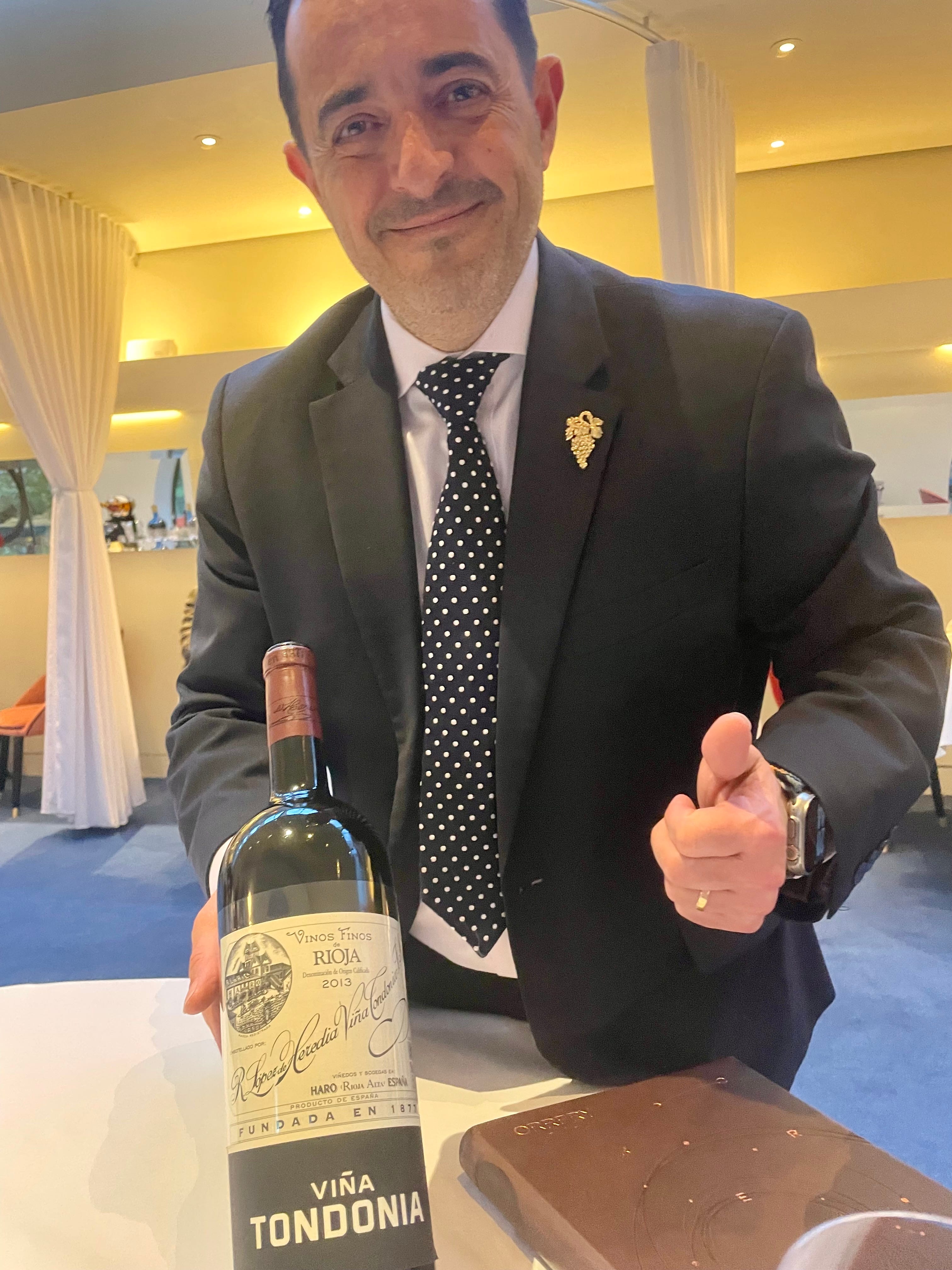
In any case, I had been brought there primarily to assess the wine – and impressive it was too. Head Sommelier Julio Sierra, a native of Alicante, held the same post prior to the Orrery’s re-launch but has been given an expanded budget and remit. There are 13 Champagnes by the glass alone, some of about 100 wines by the glass in total, including those served via Coravin. Sierra offers a particularly ambitious range of large-format bottles, some of them (eg Château d’Yquem 2021) using what he claims is one of only two Jeroboam-sized Coravin machines in the UK (the jaws have to be wider to accommodate the big bottle’s thick neck.)
We drank a succession of paired wines, including a couple of unusual ones from Minotti’s native Jura region. All excellent, though the following were the most memorable.
Egly-Ouriet Grand Cru NV – this illustrious Ambonnay producer makes some of the richest yet most elegant Champagnes I know of. A deep gold colour, rich and toasty on the nose; such a complex palate, so long but I still didn’t want it to end. Very serious Champagne (Xtrawine, IDealwine, Lea & Sandeman, from £80.77).
Sigalas Assyrtiko 2024, Santorini – probably Santorini’s premier producer of the island’s signature Assyrtiko grape, this is steely and saline, so poised, supremely elegant (London End Wines, Millesima, from £36).
Viña Tondonia Rioja Reserva 2013 – I had tasted this vintage from Rioja’s most traditional producer before but was even more blown away by it this time. This is now, to my mind, à point: amazing complexity on the nose, perfumed and just a perfect, savoury balance of fruit, acidity and oak. Incredible value, especially from the Wine Society, for an aged fine wine of this calibre (The Wine Society, IDealwine, Woodwinters, from £36).
Bodegas Manovar Fondillón 1996, Alicante – I’d heard of the obscure Fondillón wines from Alicante but hadn’t previously tasted one. They are red, made from Monastrell (aka Mourvèdre), and are sweet, oxidised but not fortified – and served here with regional pride by Sierra. Smoky, nutty with complex layers of caramel and dried fruits, yet somehow still balanced by acidity. Offbeat but delicious (The Wine Society, Kerno Wine, Nigel’s Cellar, from £46/50cl).
Transparency declaration: all of the rosés above were free samples. I ate at Orrery as the restaurant’s guest.
No posts
Comments
Nothing yet. Say the first thing.
Sign in to join the conversation.