
easyJet carried 25.8 million passengers in the three months to June 30, its heaviest quarter of the year, and booked £85 million of headline pre-tax profit. Its package holidays arm booked £84 million of that.
So the airline, in the quarter that is supposed to pay for the other three, contributed a rounding error. The same quarter a year earlier produced £286 million.
That figure sits underneath everything else happening around the company this week. Two U.S. investment firms are holding put-up-or-shut-up deadlines that expire at 5pm on Friday, August 7. The European Commission has an airline ownership review queued for the autumn. And on August 5, per FlightGlobal’s report of his remarks, Lufthansa Group chief executive Carsten Spohr said he was watching for “market opportunities” from whatever happens next.
Spohr is not going to bid. The reasons are arithmetic rather than strategic, and they are visible in his own second-quarter numbers. What he can do instead is wait — which, in this particular configuration, is worth more than a bid and costs nothing.
Ten months ago easyJet reported the best year in its history. FY2025 headline pre-tax profit came in at £665 million on revenue of £10,106 million, both up 9 percent. Headline return on capital employed reached 18.0 percent. The holidays business hit its £250 million profit target early and management raised the bar to £450 million by FY2030.
Then the jaws opened.
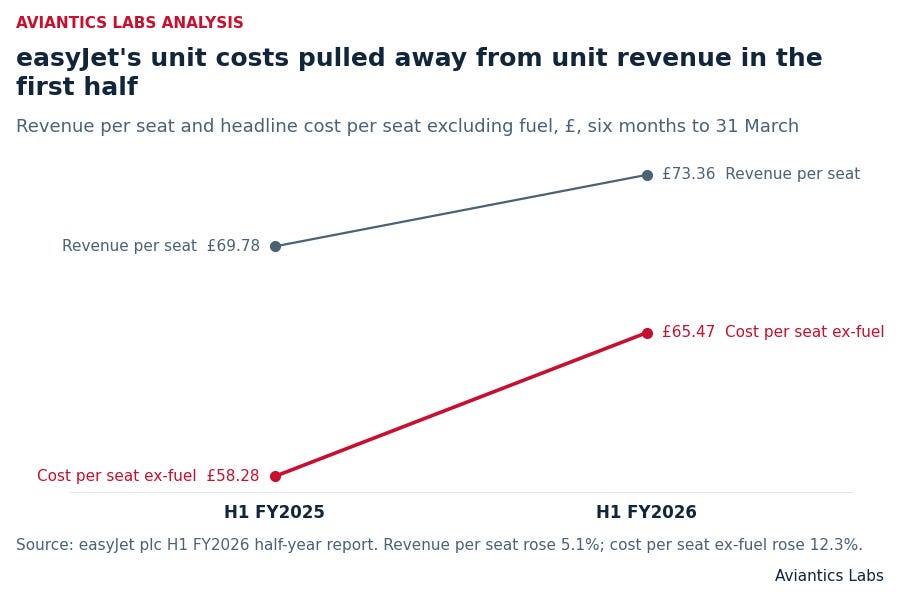
In the first half of FY2026, revenue per seat rose to £73.36 from £69.78, a gain of 5.1 percent. Cost per seat excluding fuel rose to £65.47 from £58.28. That is 12.3 percent, and no amount of load factor covers a gap that wide — the half produced a £552 million headline loss against £394 million the year before, on 6 percent more passengers.
Comments
Nothing yet. Say the first thing.
Sign in to join the conversation.