

Congressman Dan Newhouse takes questions about his vote for medicaid cuts
(Rokosz Most- photo/Kevin Teeter- video).
It was late August, 2025, in Okanogan County, Washington, when reporters and community groups received word their congressman, Dan Newhouse, was meeting with the management of the Three Rivers Hospital in Brewster, a town of less than 2,000 residents about 75 miles from the Canadian border.
News about the Republican congressman’s whereabouts represented a rare opportunity. In July, in the weeks after he had voted along with his caucus to cut $911 billion in Medicaid funding over the next 10 years, Newhouse ended all in-person engagements with his constituents.
He made the decision on the advice of law enforcement. Since casting his vote, the congressman has received numerous death threats.
Newhouse, a hops farmer who owns a 850-acre farm in Sunnyside, was first elected to represent Washington’s 4th Congressional District in 2014. Reaching down to the Oregon Border and up to Canada, the district spans nearly 20,000 square miles in central Washington. Excepting Yakima and the Tri-City area, the district is overwhelmingly rural.
According to the Cook Partisan Voting Index, it’s also the most Republican district in the state. No Democratic presidential candidate has carried any county in the 4th district since Bill Clinton carried Okanogan County in 1992. Yet, of Washington’s 10 congressional districts, Newhouse’s contains the highest percentage of constituents who rely on Medicaid. As of 2025, 278,000 residents in the 4th district, or 33%, of the district’s population were enrolled in Medicaid, just under half of whom are children.
To make matters worse, nine rural hospitals in his district are identified on a national list as at-risk of being forced to curtail services or even close entirely.
Besides losing money for the last three years, Three Rivers Hospital is among the top 10% of rural hospitals serving the highest percentage of Medicaid recipients nationally.
Historically, Medicaid has reimbursed hospitals at rates far below the services they provide. Known as “Medicaid shortfall,” the difference between actual costs and payments received by hospitals from Medicaid in 2023 was $27.5 billion.
Days after the cuts were made official, Scott Graham, Chief Executive Officer of Three Rivers Hospital explained the predicament at a news conference. “Many of the folks who come here … are relying on Medicaid to be able to cover the costs of the care that they receive … the legislation essentially guts Medicaid for the care that we provide.”
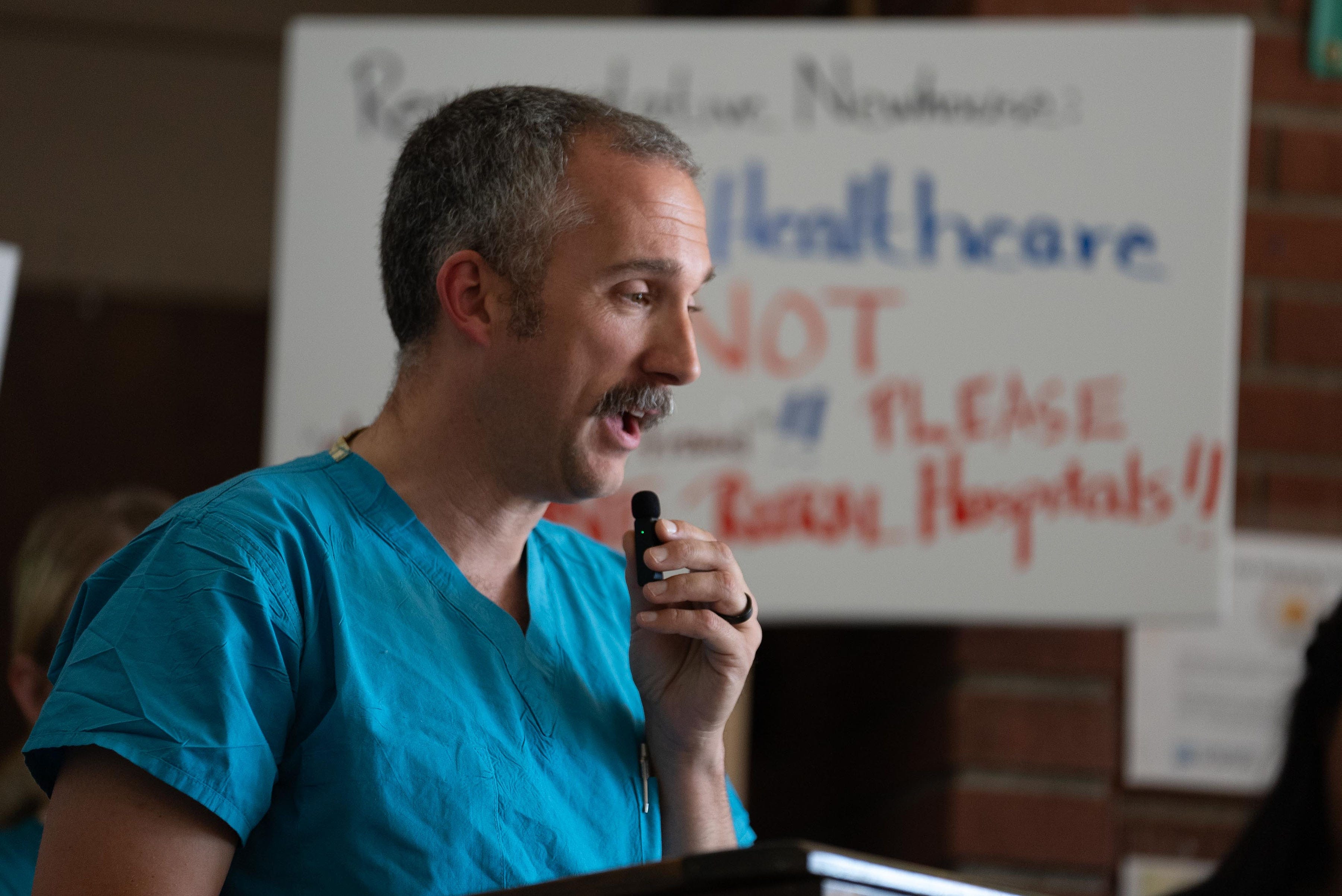
Josh Corsa, the ER director at Three Rivers Hospital spoke more bluntly:
“I’m tired of rationing medicine based on what my patients can afford. I’m tired of watching my patients decide between life-saving treatments and housing. And I’m tired of sleepless nights hoping and praying our hospital finds enough revenue to stay open just a little bit longer. This is not how it’s supposed to be in America.”
Comments
Nothing yet. Say the first thing.
Sign in to join the conversation.