
After February 28, 2026, relations between the United Arab Emirates (UAE) and Iran entered a new phase of escalation, one in which the old formula of cautious pragmatism effectively stopped working. Formally, the UAE declared neutrality in the war which the US and Israel launched against Iran, and emphasised that it was not providing its territory, airspace, or its waters for strikes against Iran.
However, during the course of the war Iran began to question UAE statements of neutrality. The UAE is a key US partner in the Persian Gulf, a participant in the Abraham Accords with Israel, and an important financial and logistical hub within the Western infrastructure in the region. In Iran’s perception, the UAE increasingly looks like a participant in an anti-Iranian coalition.
Austrian’s Newsletter is a reader-supported publication. To receive new posts and support my work, consider becoming a free or paid subscriber.
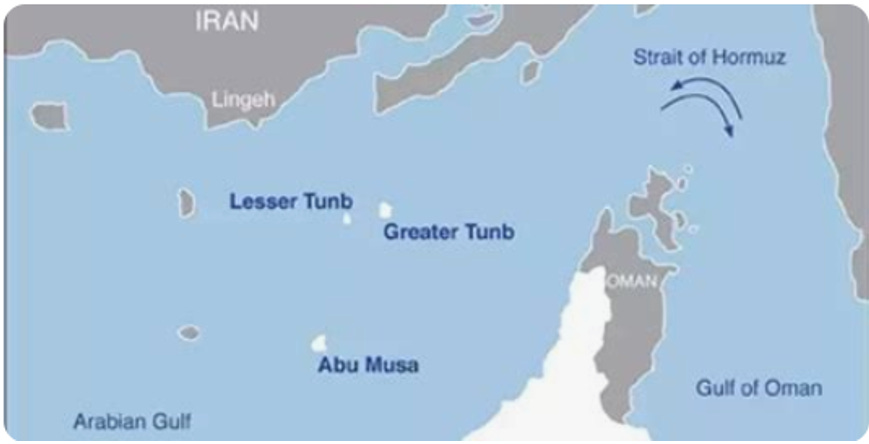
The central symbol of the dispute remains the issue of Abu Musa, Greater Tunb, and Lesser Tunb, three islands located near the entrance to the Strait of Hormuz. Iran established control of them in 1971, shortly before the creation of the UAE. The Emirates have since regarded the islands as occupied territory and have demanded that the dispute be resolved through negotiations or international arbitration.
Iran regards the matter as closed, since Tehran considers the islands part of its own territory. For the UAE, it is an unhealed wound from the birth of the federation and a constant reminder of its strategic vulnerability before a larger neighbour. Discussions this week about a possible military scenario around the islands are perceived as a direct return to the most painful issue in Emirati-Iranian relations.
Before February 2026, Abu Dhabi tried to be on good terms with everyone. It needed to preserve trade with Iran, ensure security through the US, develop technological and defence cooperation with Israel, and avoid direct involvement in the conflict. When the US and Israel attacked Iran, that balance began to collapse. Media reports appeared about secret contacts between Israeli officials and the UAE leadership as the war progressed. CBS News reported that Benjamin Netanyahu had made a secret visit to the UAE and met with the country’s president, Mohammed bin Zayed.
According to CBS, the meeting took place in late March, after the current military escalation had already happened. Israel treated the visit as a fact, while the UAE publicly denied the reports. That contradiction itself became an important political episode, damaging the image of Emirati neutrality and giving Iran another argument for accusing Abu Dhabi of hidden coordination with Israel.
More revealing was a report about visits by Mossad chief David Barnea to the UAE. According to The Wall Street Journal, later cited by Israeli and regional media, Barnea visited the Emirates at least twice during the war in order to coordinate action on the Iranian front. The Jerusalem Post wrote that these visits took place during the operation against Iran and also reported a visit by Shin Bet chief David Zini.
These reports, like all wartime back-channel diplomacy, require caution because they are based on unverified sources and do not reveal the full picture of the talks; yet their political significance is clear. In spite of declared neutrality, not only Israeli politicians but also Israeli intelligence chiefs were traveling to the UAE. For Iran, this becomes yet another argument that Abu Dhabi is effectively integrated into a system of Israeli-American coordination against Tehran.
The UAE knows that such contacts can look like an element of defensive coordination and intelligence-sharing, but in wartime that distinction ceases to function. Iran must see that a visit by the head of Mossad cannot be a neutral episode, especially when it takes place alongside strikes on Iranian territory, deliveries of air-defence systems, and intensified US pressure on the Gulf states.
Axios, citing Israeli and American officials, reported that Israel had sent the UAE an Iron Dome air defence system and military personnel to operate it. This was later confirmed by US Ambassador to Israel, Mike Huckabee. For the UAE, this cooperation is explained as a defensive necessity, since the country found itself under the threat of missile and drone strikes. However, Iran views the logic differently, perceiving it as the integration of the UAE into Israel’s military infrastructure in the Gulf.
Officially, the UAE can argue that the matter concerns only the protection of civilian infrastructure. But war erases the boundary between defence and participation. Every air-defence system, every group of foreign military specialists, every exchange of intelligence, and every closed meeting with Israeli leaders can be seen as part of a single front. It reveals UAE-Israeli cooperation after the Abraham Accords.
The Abraham Accords (2020) established diplomatic normalisation between Israel and several Arab states, including the UAE, Bahrain, Morocco, and Sudan. It is clear that they are no longer limited to diplomacy, trade, and technology. Under wartime conditions, these relationships acquire direct military-strategic significance. Iranian representatives claimed that the CIA and US military structures were operating from UAE territory or using Emirati infrastructure in operations against Iran.
It’s difficult to verify these statements, but in wartime the statements themselves become part of the conflict. Iran uses them to justify pressure on the UAE and to portray it as a platform for US and Israeli activity. The UAE has a dilemma: if it openly acknowledges deep coordination with Washington and West Jerusalem, it becomes a direct target for Iranian retaliation. If it denies everything whilst remaining part of the US security system and receives defence assistance from Israel, its neutrality looks unconvincing.
For decades, Dubai has remained one of the most important external hubs for Iranian business, including trading companies, exchange houses, intermediary structures, and payment channels through which Tehran partially circumvented sanctions. During the war, unconfirmed reports appeared that the UAE, either shortly before the current escalation or during the conflict, had restricted Iranian financial channels, frozen Iran-linked assets, or participated in closed arrangements involving the movement of billions of dollars.
The most reliable financial open-source evidence points to a broader pattern of intensified pressure. The US imposed new sanctions on the Iranian exchange house, Amin Exchange and a network of related entities, including companies in the UAE, Turkey, China, and Hong Kong, which Washington claimed had helped Iranian banks conduct transactions in ways that circumvented restrictions.
Iran uses finance as yet another front in the war. Even if the UAE explains tighter financial controls as a requirement of the sanctions regime and as a way to protect its own banking system, the political timing turns these steps into part of the pressure on Tehran. In peacetime, Abu Dhabi could play the role of an intermediary between the reality of sanctions and the realities of living next to Iran. In wartime, that grey zone quickly becomes a disputed field. If the UAE close financial channels, Iran notes it as participation in economic warfare. If they leave the channels open, the US increases pressure on Abu Dhabi and demands greater discipline in sanctions enforcement.
The situation was further complicated by allegations that US officials were encouraging the Emirates to become more actively involved in the campaign and to consider the possibility of seizing one of the Iranian islands in the Persian Gulf. Even if untrue, the very fact that such reports appeared shows that the island dispute may once again be used, not only as an historical Emirati grievance, but also part of the US and Israeli military strategy against Iran. The UAE could find itself under pressure from both sides.
IT’S BECOMING COMPLICATED
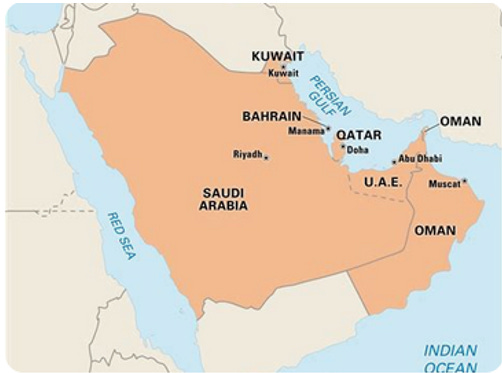
On the one hand, the US and Israel need regional actors to join their campaign against Iran. Without the participation of The Gulf Cooperation Council (GCC) of Gulf states, the war remains an external operation by Washington and West Jerusalem that causes discomfort even among Arab states that fear Iran.
If regional actors take part in pressure on Tehran it creates the appearance of a broader coalition and reduces the political cost for the US and Israel. The UAE specifically has a modern military, ports, intelligence infrastructure, financial leverage, ties with Israel, and its own territorial dispute with Iran, making it especially important for this strategy.
On the other hand, Iran views any deepening of UAE involvement as grounds for retaliation. Strikes on infrastructure, threats to shipping, accusations that Emirati territory is being used, drone attacks, and pressure through allied networks in the region show that Tehran is prepared to transfer the cost of war onto its neighbours if it considers them part of a hostile framework.
The UAE said drones had struck near the Barakah nuclear power plant and pointed to their origin from Iraqi territory, immediately linking the incident to the wider network of pro-Iranian forces in the region. This is an extremely dangerous situation for the UAE. Their cities, ports, airports, energy infrastructure, financial system, and reputation as a safe haven all depend on stability. Even limited involvement in the war could strike at the very foundation of Emirati operations.
UAE neutrality is becoming an increasingly unstable construct. Abu Dhabi does not want to enter the war openly, yet it also cannot fully distance itself from the US and Israel, because those ties provide missile defence, military support, and strategic insurance against Iran. This duality makes the UAE, from a potential arbiter in the crisis, into one of its most vulnerable participants.
The main danger for the UAE is to be dragged into the conflict, not by one abrupt decision, but through a series of gradual steps:
Financial action against Iranian networks
Deeper US-Israeli defence coordination
Visits and closed consultations with Israeli officials
Participation in securing the Strait of Hormuz
Discussion of the disputed islands as a possible lever for pressure on Iran.
Each individual step can be presented as defensive, technical, or forced. But taken together, they could lead to a situation in which the UAE is no longer merely near the war, but inside it. However, the UAE is not alone as Oman is also faces risks in this war. Sources
The Gulf after Hormuz: The real geopolitical shift is structural https://chinabeyondthewall.org/the-gulf-after-hormuz-the-real-geopolitical-shift-is-structural/
Edited from a report by Murad Sadygzade, President of the Middle East Studies Centre https://www.rt.com/news/640645-uae-us-israel-iran-war/
OMAN IS A KEY US ALLY - FOR NOW
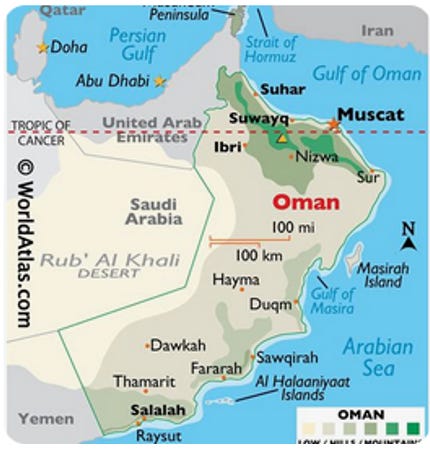
Oman mediated talks on Iran’s nuclear program until they were suspended by hostilities. Iranian state television reported that it had obtained an unofficial draft agreement that would re-open the vital waterway, with Iran and Oman jointly managing maritime traffic. Iran and Oman lie on opposite sides of the narrowest part of the Strait of Hormuz. Iran closed the route to ships from “hostile nations” following the US-Israeli airstrikes, while the US declared its own blockade of Iranian ports in April.
Tehran has since insisted on its “sovereign right” to manage traffic through the Strait and collect tolls. Oman’s supposed intentions for involvement in Iran’s shipping management caused an immediate response from the US. According to Reuters, Trump made some remarks after Iranian state TV reported that it obtained an unofficial draft agreement that would reopen the vital waterway, with Iran and Oman jointly managing maritime traffic.
Trump suggested that the US would attack its ally Oman if it attempts to seize control of the Strait of Hormuz. Trump told journalists during a cabinet meeting on Wednesday. “We’ll watch over it, but nobody’s going to control it. That’s part of the negotiation that we have.” “It’s international waters. And Oman will behave just like everybody else, or we’ll have to blow them up. They understand that. They’ll be fine,”
The warring parties continue to trade blows around the Strait risking escalation during this fragile ceasefire which is now being compromised daily. The Iranian Foreign Ministry released a statement condemning the “gross violation” of the ceasefire and saying that Iran would hold the US “responsible for all the consequences resulting from these aggressive and unjustified actions.”
Although US officials indicated this week that the sides are close to reaching a preliminary peace agreement, there are no signs that either Washington or Tehran is willing to change their original positions. Both countries have accused each other of setting unacceptable terms. As I said, it’s getting more complicated for the GCC by the day. Source
Tehran has condemned Monday’s strikes on a province in the south of the country https://www.rt.com/news/640621-iran-accuses-us-ceasefire-violation/

Austrian’s Newsletter is a reader-supported publication. To receive new posts and support my work, consider becoming a free or paid subscriber.
Comments
Nothing yet. Say the first thing.
Sign in to join the conversation.