
What did Trump and Xi achieve in Beijing? The American and Chinese presidents talked Iran, Taiwan, and trade, but found little to agree on.
Beijing has said the US must not meddle in issues related to Taiwan and human rights, and must respect China’s “development right” ahead of Trump’s visit to meet with Chinese President Xi Jinping, who he described on Tuesday as “a friend” and “somebody that we get along with.” Trump added that he plans to discuss the war with Iran, which the US and Israel have accused China of supporting.
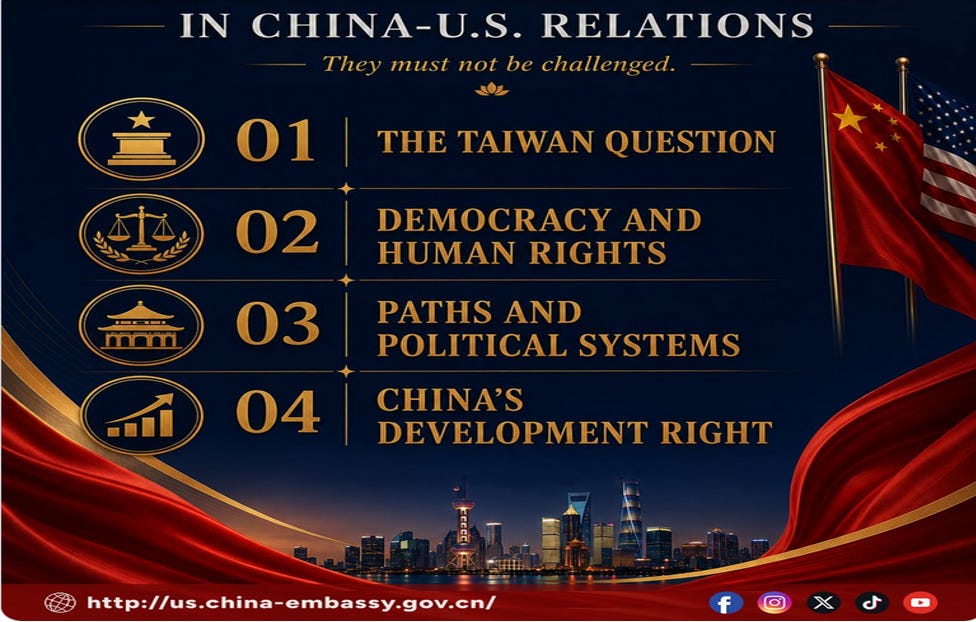
The Chinese Embassy in the US, meanwhile, outlined four red lines in relations that “must not be challenged”: Taiwan, democracy and human rights, “development paths and political systems,” and “China’s development right.” Beijing has insisted that the US must not interfere in its domestic affairs or support what it calls the “separatist” government in Taipei.
The US-Israeli war against Iran further strained relations with China after the US Treasury sanctioned a Chinese refinery for allegedly purchasing Iranian oil. As reported last week, Beijing responded by barring its private refineries from complying with the sanctions, which Chinese officials denounced as illegal.
China has denied that it provides military aid to Iran and condemned the US for blacklisting Chinese satellite companies accused of supplying data to Tehran. “The Chinese government always asks Chinese companies to operate in accordance with laws and regulations. We will firmly protect Chinese businesses’ legitimate rights and interests,” Foreign Ministry spokesman, Guo Jiakun said on Monday. Guo added that China is ready to work with the US and “manage differences in the spirit of equality, respect, and mutual benefit.”
Trump touched down on Wednesday for a two-day state visit, the first by a US president in eight years, as relations between the world’s two largest economies are at a crossroads defined by the Iran war, trade friction, and technological rivalry. The visit featured a bilateral meeting with President Xi Jinping on Thursday morning, to be followed by a visit to the Temple of Heaven and a state banquet, as well as a working lunch on Friday before Trump departs.
White House Deputy Press Secretary, Anna Kelly described the trip as “a visit of tremendous symbolic significance” whilst hinting “more good deals on behalf of our country.” The high-stakes talks will likely revolve around the US-Israeli war on Iran, which was the reason for postponing the visit, originally scheduled for late March, as well as artificial intelligence, and critical minerals. The focus will remain on trade and avoiding obvious areas of conflict.
The Iran war and the Hormuz crisis are expected to loom large over the agenda, with an unnamed US official telling reporters during a briefing that Trump would likely “apply pressure” on China on the purchase of Iranian oil and on the alleged supply of dual-use components to Tehran.
The hallmarks of this approach became evident last week when the US sanctioned Chinese refineries buying Iranian crude, as well as what Washington described as “China-based entities providing satellite imagery to enable Iran’s military strikes against US forces.” In response, China ordered its firms to ignore US sanctions, a move Max Meizlish, a research fellow at the ‘Foundation for Defence of Democracies’, described as an “unprecedented… measure of defiance by Beijing.”
Trump is also expected to call on Xi to leverage Beijing’s unique clout over Tehran to reopen the Strait of Hormuz, a critical waterway accounting for around 20% of pre-war seaborne oil trade. China, itself the world’s largest buyer of Gulf oil, has been sympathetic to the cause, urging Tehran to remove obstacles to maritime traffic.
THE ‘FIVE BS’ OF TRADE
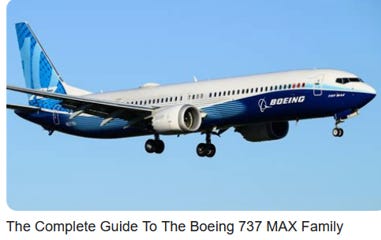
The two leaders are expected to discuss what observers have labelled the ‘Five Bs’: China’s purchase of Boeing aircraft; American beef and soybeans; the creation of a Board of Trade, and a Board of Investments. For Boeing, the leaders could greenlight the purchase of as many as five hundred 737 MAX aircraft and about 100 wide-body jets for several Chinese flight operators. The deal would be valued at tens of billions of dollars, and Boeing CEO Kelly Ortberg is reportedly a member of the US delegation.
As the world’s largest importer of soybeans, China has historically purchased half of US exports of the crop and has been a primary market for American agricultural produce. The soybean trade has not been problem-free, however, as US beans currently face a total duty of 13% from China, while Brazilian beans are subject to only 3%. In addition, while China fulfilled its pledge to purchase 12 million metric tons of beans in 2025, it is unclear whether Beijing will meet the larger target of 25 million tons annually for 2026-2028.
Taiwan is the hotspot not to be mentioned. China regards Taiwan as part of its sovereign territory and has long been a sore point in relations between Washington and Beijing. Chinese Foreign Minister, Wang Yi has described the self-governed island as “the biggest point of risk” in the bilateral relationship and urged Washington to “honour its commitments and make the right choice, to open up new space for China-US cooperation.”
Several media reports have indicated that China wants Trump to say the US “opposes” Taiwanese independence, rather than the current language, with officials in Taipei nervous that the US president could oblige. An unnamed American official told the Financial Times, “we don’t expect to see any changes in US policy [on Taiwan] going forward.” While the Trump administration has continued to supply Taiwan with weapons, the US president has previously expressed scepticism about defending the island and accused it of stealing the US semiconductor manufacturing industry.
Rare earths and tariffs are the holy grail of current trading policy. China holds a powerful card in its near-total grip on rare earth mineral supply chains, with analysts cited by the Guardian suggesting Beijing may dangle a long-term commercial arrangement to grant US access to the commodities, on condition they are not used for military ends.
The issue has been a flashpoint in relations for years, with China’s decision to introduce export restrictions on rare earth elements in 2025 sending the US high-tech industry into turmoil. While in late 2025, Washington and Beijing reached a tentative “trade truce,” which expires in November, US industry leaders have complained of delays in export licenses and overall volatility in supply chains.
The wider trade war shows both sides are locked into a “ceasefire” that puts Trump’s effective tariffs at between 19% and 24% after peaking at 145% during intense tit-for-tat escalations. The US and China are reportedly debating a one-year extension in exchange for guaranteed rare earths flows.
The digital battleground and AI is a contentious point. Trump’s visit comes as the White House has accused China of “stealing” AI technologies, including running “deliberate, industrial-scale campaigns” to extract capabilities from America-based AI models to train cheaper rivals. In response, the Chinese Embassy in Washington said Beijing “opposes the unjustified suppression of Chinese companies by the US,” adding that it “attaches great importance to the protection of intellectual property rights.”
Beijing has long protested what it views as a US crackdown on its tech companies, including restrictions on Huawei and a push to replace China-linked technology in American-connected cars, a policy widely seen as a blow to Chinese EV manufacturers. All this overlays he real agenda of resource wars, energy access, and US global supremacy.
TRUMP v CHINA: THE BATTLE FOR GLOBAL SUPREMACY
Trump’s primary aim is not merely to hinder China economically, but to reshape its development model so that it no longer poses a threat to the US. He aims to restrict the transfer of certain technologies that could allow China to surpass the US, especially in fields such as artificial intelligence, microchip production, and biotechnology.
Another priority for Trump is to keep competitive Chinese products out of the American markets. This will likely mean continuing or even escalating sanctions against major Chinese companies such as Huawei and Xiaomi. However, it is evident that Trump is using these sanctions as leverage, building up a range of measures against China to strengthen his negotiating position. What is unclear is what China wants from America.
Apparently, America is not offering much, merely the lifting of ‘some sanctions’, and leaving Taiwan alone seems to be the only cards Trump & Co have to offer. In January 2026, Boeing’s financials revealed deliveries of 600 commercial planes (reflecting a $7 billion loss) and a ‘backlog of 6100 planes.’ Who would put his name to a 6,100 backlog and wait for ten years?
It appears that the spin Trump hopes to create is heavily weighted on the ‘great relationship’ he has with Xi Jinping and releasing China from US sanctions and tariffs. Given the largess sanctions imposed by Trump relate to Iran, Xi Jinping has already instructed all related companies to ignore them. Given tariffs are absorbed by US taxpayers, Xi has used one of his key advantages whilst it seems that Trump has nothing to sell that China wants.
Several key issues are likely to dominate the leaders’ discussions. While TikTok was mentioned during their recent phone call, the platform is not expected to be a primary focus. Instead, more pressing topics such as Taiwan and the Ukraine conflict are likely to take centre stage. Trump may seek to use Taiwan as leverage against China, testing the extent to which the US can push on this issue.
On Ukraine, the US is wary of allowing China to claim the spotlight by playing a prominent role in resolving the conflict. Trump will likely aim to prevent China from gaining diplomatic prestige as a peacemaker. Moreover, he will probably attempt to drive a wedge between Russia and China, weakening their partnership. Given Russia’s energy supplies, food exports, and political support, such a split could have significant implications for China.
Although TikTok itself may not be a critical issue, it represents a unique case in US-China relations. TikTok is China’s only globally successful multimedia platform, unlike other Chinese social networks, which have struggled to break into Western markets. Blocking or taking control of TikTok would strike a financial blow to Chinese companies and hurt Beijing’s soft power.
CHINA MIGHT BE ABLE TO MEDIATE A SETTLEMENT WITH US/IRAN
Dr. Marandi was born in the United States of Iranian parents. He currently lives in Iran, where he is a professor at the University of Tehran. In the video, One Country Quietly Won this War, he points out that, often, when two countries battle each other, neither one emerges as the clear winner. Both of them are damaged by wars. The actual winner may be a country that does not appear to be directly involved in the war.
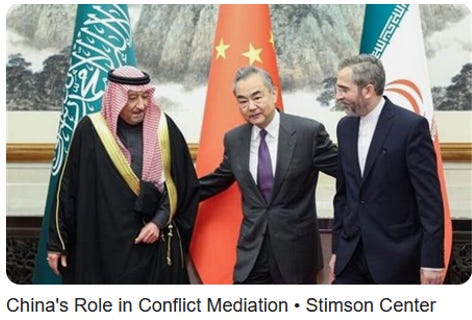
In the video referenced above, Dr. Marandi discusses three historical situations in which a nation not directly involved in a conflict gained stature by being the adult in the room, when two other nations battled each other. In this case, Dr. Marandi believes that China could very well be the country that can exert enough pressure on both sides to get them to accept a proposed solution. He says that China has acted behind the scenes to bring about the ceasefire, and that Trump has acknowledged China’s role.
Dr. Marandi suggests the idea that the meeting of the two presidents might be an opportune moment to make major steps toward a mutually agreed settlement. He believes that the underlying problem is that there isn’t enough energy (particularly oil) to support a world population of over eight billion. Dividing up markets in the way suggested would at least somewhat alleviate the shortage. Of course, there may be other terms of a settlement, as well. In addition, not all the terms may be determined precisely.
This dynamic underscores how the US is leveraging every possible tool to challenge China’s rise. Trump’s broader strategy appears focused on isolating China while exploiting trade and technological dependencies to maintain American supremacy. However, the task of balancing confrontation with negotiation will test Trump’s ability to deliver on his promises. Whether this approach will succeed remains to be seen, but it is clear that the Trump administration’s policies will reshape US-China relations for years to come. Sources
China and US Trade Talks: A Solution for Oil Shortages? https://ourfiniteworld.com/2026/05/12/china-and-us-trade-talks-a-solution-for-oil-shortages/
Trump’s expectations unrealistic https://www.globalresearch.ca/xi-trump-meet-yuge-deals/5926145
No posts
Comments
Nothing yet. Say the first thing.
Sign in to join the conversation.