
The Aboriginal working class and lumpenproletariat suffer disproportionately high levels of preventable disease, poverty and incarceration. We are, per capita, the most incarcerated people on earth. We suffer from disproportionately high suicide rates and homelessness. We face systematic harassment, brutality and murder from police, as well as racist attitudes across broader society and within institutions of capitalist government. We have lower life expectancies, lower standards of education and literacy, and are at higher risk of addiction and of state intervention in kinship relationships, and Aboriginal women are at disproportionately high risk of domestic and family violence.
Indigenous liberation is, fundamentally, the complete and permanent alleviation of these scourges - in both their class and racialised character - through the abolition of the social relations that give rise to them. It is, further to this, the actualisation and exercise of cultural autonomy and the actualisation and exercise of direct democratic political power in the determination of our lives and political futures as a part of the international working class or proletariat.
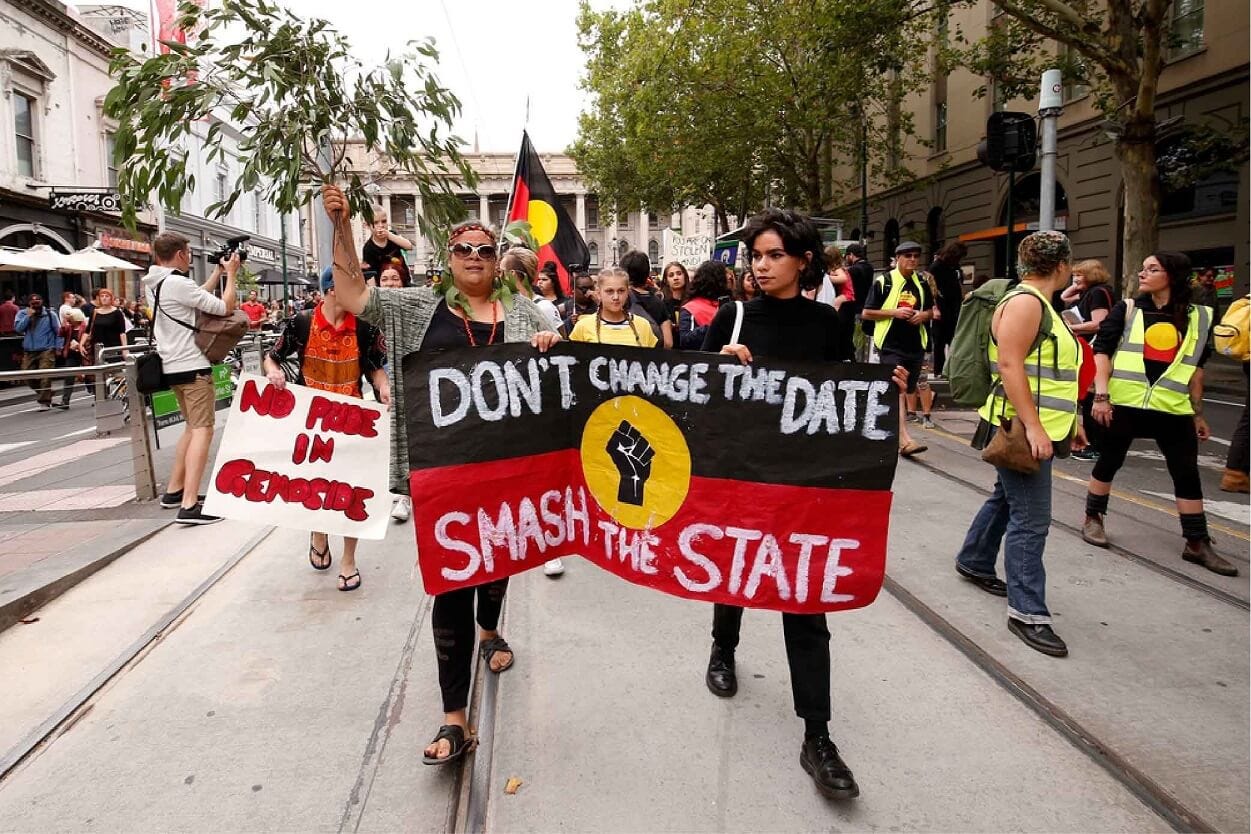
Some theorists assert that Indigenous liberation can only be won through a concrete process of ‘decolonisation’ or anti-colonial revolution. While the social and cultural impacts of colonisation persist and echo throughout Aboriginal life, in national symbolism, and in the Australian national consciousness, it is absurd to conceive of present-day Australia as a colony.
Australia has been federated under a form of independent national, state and territory governance for approximately 120 years. The British empire no longer exists and while Britain's imperialist ruling class is closely allied with Australia’s ruling class, Britain is simply not Australia's colonial administrator. The colonisation of the Australian continent, the brutal frontier wars and systematic genocide of Indigenous people laid the material basis for colonies which were originally politically and economically beholden to the motherland - Great Britain. Land and labor being the two sources of wealth, Indigenous inhabitants of the continent posed a challenge to the invading British ruling class intent on establishing penal colonies and the capitalist mode of production. Thus, enforceable claims to land by Indigenous people needed to be neutralised - and by-and-large they were, by way of a process that was ideologically justified by the infamous genocidal doctrine terra nullius and that continued across the continent for some 120 years.
Notwithstanding that Indigenous claims to land continue to call into question the foundation of private ownership of industry and the historical and present-day exploitation of natural resources (and thus the legitimacy of the Australian state), once the capitalist mode of production was established throughout the continent, and the colonies were federated into a nation with its own bourgeoisie and domestic economy, Australia was no longer a colony but an independent nation state. Present-day Australia is now one of the most advanced capitalist nation states on earth, sharing and negotiating power as part of inter-imperialist blocs like AUKUS and the Quad Alliance.
The Australian working masses - both Aboriginal and not - are subject to the exploitations inherent to working life, the demands of our bosses and the crises of the national and global capitalist market. It is true that many thousands of Aboriginal people - including many of my own family in Central Australia - do not constitute a part of the proletariat proper, but are dependent for survival on substandard service provisions from government, semi-corporate or community-controlled institutions, the provision of quarantined welfare payments, and internal familial cash circulation from family members who receive a wage.
There is no doubt that there is a racial quality to the subjugation and oppression of the Aboriginal working class and lumpenproletariat. And it is tragic and unacceptable that Aboriginal language, culture, lives and prospects are continually lost and denigrated by a system that cannot provide meaningful, prosperous lives for them. Many lumpenproletarian Aboriginal people live in disgraceful conditions of desperate inter-generational poverty and social marginalisation, and suffer from the social dysfunction, poor health, addiction, low life-expectancy and all round reduced prospects that accompany such a marginalised existence.

But none of this means that Aboriginal people are living in a colony. The institutions that fail Aboriginal people time and again, or that prop up an existence of dependency are institutions of advanced neo-liberal capitalism. Attempting to locate, in the terrain of Indigenous oppression, an ongoing colonial process, and then somehow intervene to reverse or counter it is a futile, abstract, frustrating political deadend.
Settler colonial theorists also assert that all non-Aboriginal people living in Australia are settlers who are complicit in, and who benefit from, ongoing colonisation. I will call this the ‘settler-native binary’ or the ‘colonised-coloniser binary’. The binary has as its foundation the assertion that a group or individual’s subjective political and historical standpoint, economic interests, capacity for solidarity, and moral culpability is determined solely by their real or imagined relationship to land.
Thus, in the eyes of decolonial revolutionary theorists, simply by surviving on this continent and not being Indigenous, one is inescapably culpable as an oppressor of Aboriginal people. The logical corollary of this binary is that simply by being Indigenous to this continent and having an ancestral and/or present day cultural relationship to land, an individual or group of Aboriginal people - as an immutably oppressed and colonised subject - has the exclusive right and power to lead political struggle.
Central to the problem is that, politically, the term ‘settler’ is not some all-encompassing term for anyone and everyone who is non-Indigenous. It is a term for a definite social category with a definite historical function. Settlers are a non-state social layer who are compelled to seize, occupy and cultivate land from an Indigenous population through forcible means. The function of a settler - politically - is to make way for a state’s territorial expansion and to free up resources for capitalist accumulation.
Settlers opened up the frontier in the United States, decimating the Indigenous population and destroying their means of subsistence.
Today, Israeli settlers seize homes and farmlands in the West Bank and East Jerusalem with impunity because they are serving the interests of Israel’s territorial expansion.
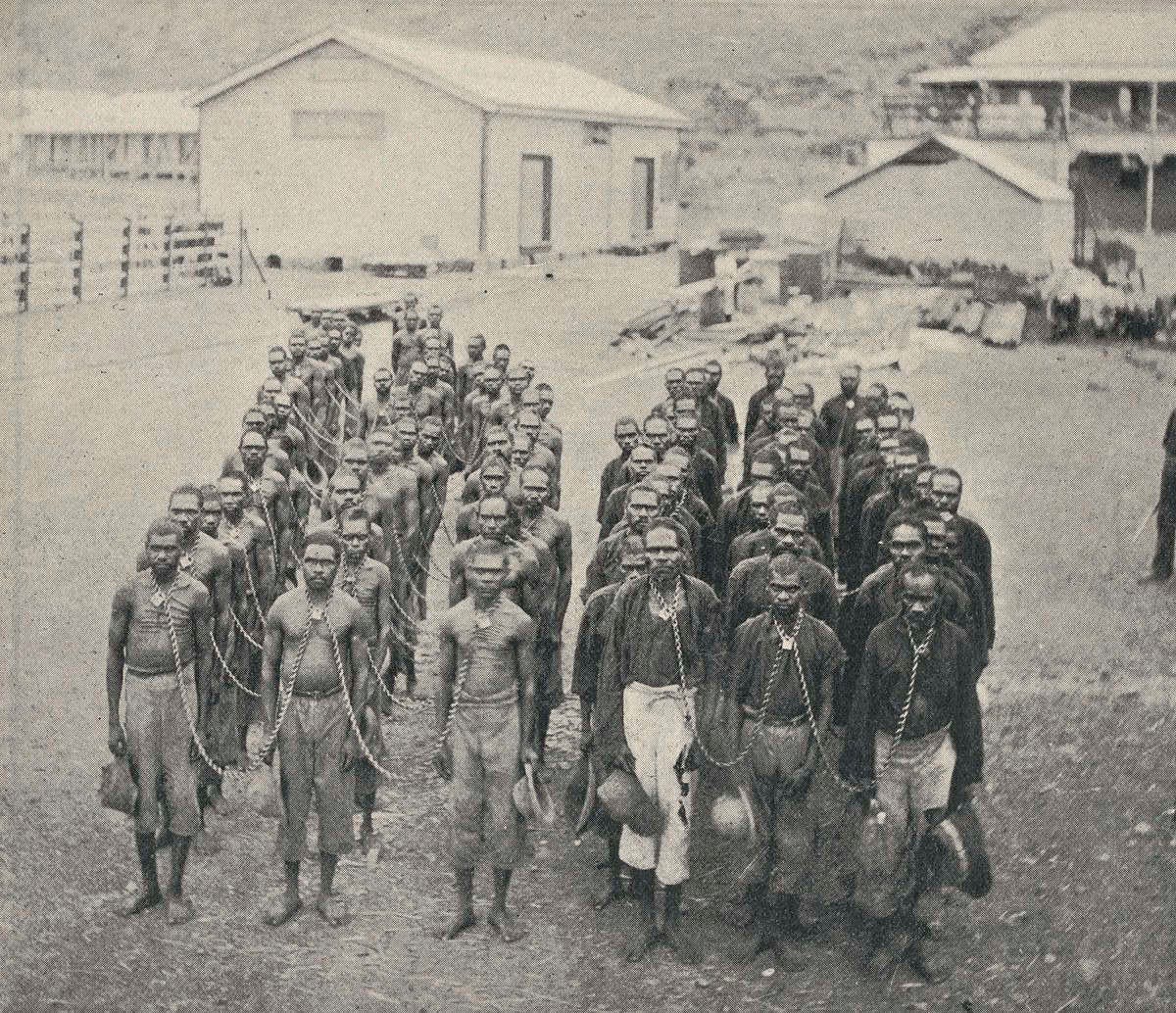
Settlers and British State actors like the police and colonial governers massacred, systematically starved, institutionalised, raped and otherwise oppressed Aboriginal people here during the expansion of the frontiers. Australia is a country founded on Indigenous dispossession and the decimation of pre-capitalist modes of production. Racism is baked into the logic of its establishment and systemic and interpersonal racism persist to this day.
But the settlement of Australia is not ongoing. And Australian workers and migrants do not benefit from Indigenous dispossession or oppression. In fact, they have an interest in fighting against it, as the class that does benefit from Indigenous oppression is the same class that drives down wages, drives up house prices, rents and the cost of living, locks up migrants and refugees, and over-polices Indigenous communities - the Australian bourgeoisie.
Australia has a multicultural working class that includes a large and growing urban and suburban Aboriginal proletariat. But how are we to understand these dynamics of solidarity and of capitalist production in relation to contemporary ‘colonial’ Australia? By the logic of the settler-native binary, Gina Reinhard must be understood - first and foremost - as a settler. Her status as a settler determines her political subjectivity and her wealth. All of her many thousands of employees out of whom she squeezes the mega profits that make her one of the wealthiest people to have ever lived - they are all settlers too; except her Aboriginal workers, who must be understood first and foremost not as workers but as natives who have opposing interests to their fellow non-Aboriginal workers.
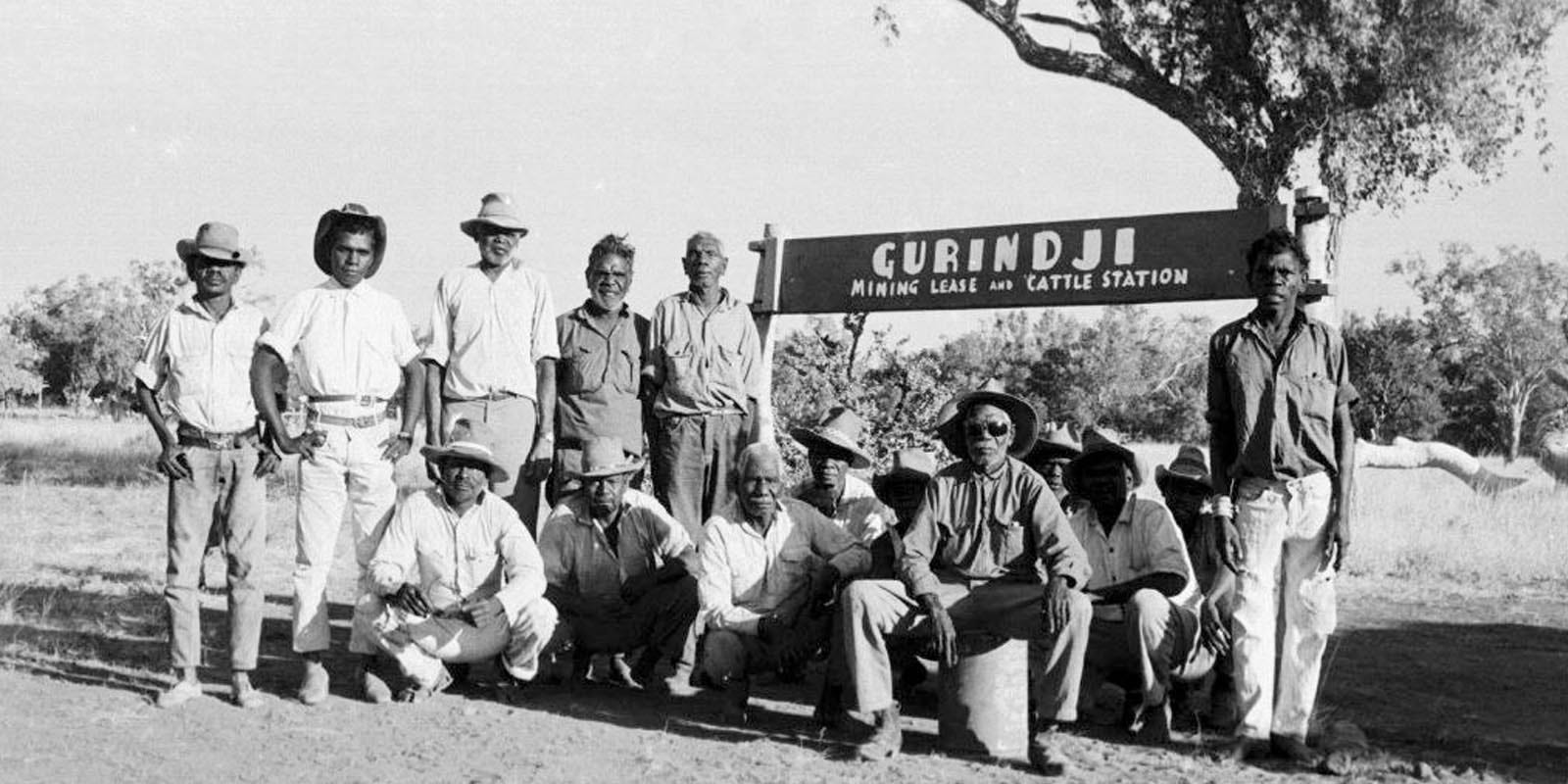
However, the heads of an Aboriginal land council that negotiate a mining lease with Reinhard, that handle the many millions of dollars paid in royalties, and invest and manage them through trusts that are not put towards meaningful social programs and political development for the masses of Aboriginal people - these people are understood under the settler-native binary primarily as oppressed colonised subjects.
The Vietnamese owner-operator of a pizza shop in Sunshine is also a settler. A South Sudanese mother of four, who lives in a housing commission tower that is about to be torn down, and who works 50 hours a week in that pizza shop, is also a settler.
The colonised/coloniser binary collapses the reality of class relations, obscuring any meaningful explanation of capitalist exploitation and an understanding of workers’ power. It undermines the possibility for meaningful solidarity amongst layers of the working class, and leads to absurd, backwards and destructive formulations of political subjectivity that undermine political struggle.
The non-Aboriginal working masses of Australia today - migrants and Australian-born - are not settlers; they are workers, who have no choice but to sell their labor for a wage. And as workers, as the daily producers of society, they are, as a class, exploited by capitalists by definition.
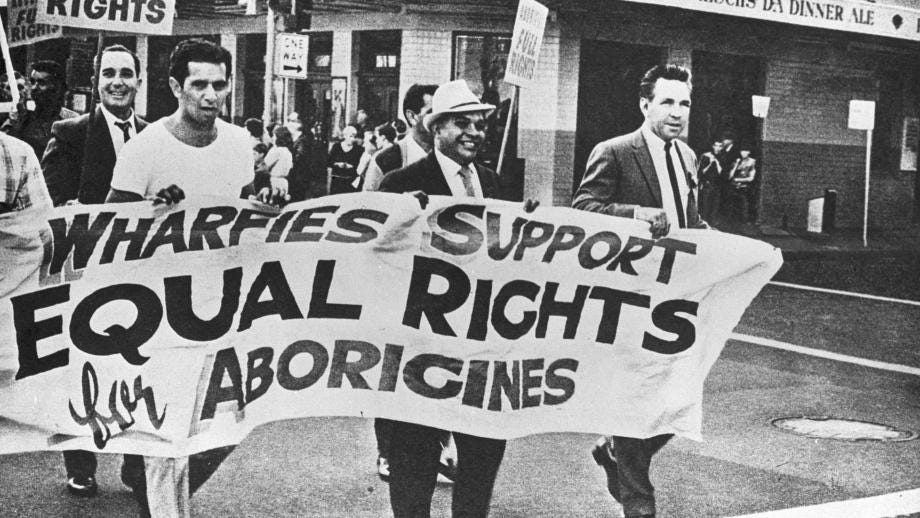
The history of solidarity between Aboriginal struggle and the socialist, communist and trade union movements is not well known. In fact, for much of the 20th century, up until the late 1970s, Aboriginal struggle and the workers’ movement were closely linked, with non-Aboriginal workers supporting Aboriginal workers in major fights and campaigns, and Aboriginal workers active in the Australian Communist Party and workers’ movement, radicalising and politicising struggle. Indeed, Aboriginal people were often known to be some of the best trade unionists and union leaders, as well as being leading communists and socialists.
Non-Aboriginal and Aboriginal workers alike have an historically unique dual social character as part of the working class: we are oppressed and exploited as workers, objectified by capital; but we are simultaneously the subjects of history with a unique political power: the power to stop and start economic activity through the withdrawal of our labour. This social position gives us the power to attack capitalist profit and pose a real economic threat to the ruling class. This power is the engine of social progress and ultimately the key weapon of revolutionary struggle; but it can only be weilded collectively by an organised proletariat.
Anyone who is serious about Indigenous liberation has a duty to politically clarify these class relations and to do away with, as soon as possible, the mystifying and moralistic categorisation of Australian workers as settlers who are irredeemably racist and politically backward beneficiaries of Indigenous oppression, purely because they do not have an ancestral or spiritual relationship to land.
For socialists, what is of primary importance in the fight for Indigenous liberation is the presence and level of organisation of a cohered revolutionary force such as a socialist party or organisation, that can intervene in struggle, provide political direction to take the struggle forward, convince activists of revolutionary politics and win them to the project of socialist revolution. Indigenous oppression and anti-Aboriginal racism in Australia today are rooted in the institutions of capitalism, from the prisons in which disproportionately high numbers of criminalised Aboriginal people (including children) languish, mostly for crimes of poverty and oppression, to the racism of the job market and employers, to the financialisation of companies and organisations established to manage resources on behalf of Aboriginal communities, to the paternalistic and top-down policy of government in the management of Aboriginal communities.
Aboriginal and non-Aboriginal people who seek to transform society as a whole and dismantle the mode of production that gives rise to exploitative class relations, racism and Indigenous oppression, must decisively abandon settler-colonial analysis of Australian capitalism and orient their organisational energy towards revolutionay party-building and the fight for an Aboriginal movement and a workers’ movement that struggle side by side against our common enemy: the Australian ruling class.

No posts
Comments
Nothing yet. Say the first thing.
Sign in to join the conversation.