
Different ways of going. Different ways of voicing.
The B-52s wrote their songs by vamping the quirky jam of the day again and again and searching, probing with improvised lyrics for the hidden song. I remember reading a Don Was interview where he talked about the process of writing “Love Shack,” about the ecstatic 10-minute jam that birthed it, about shaping it into a three-minute track.
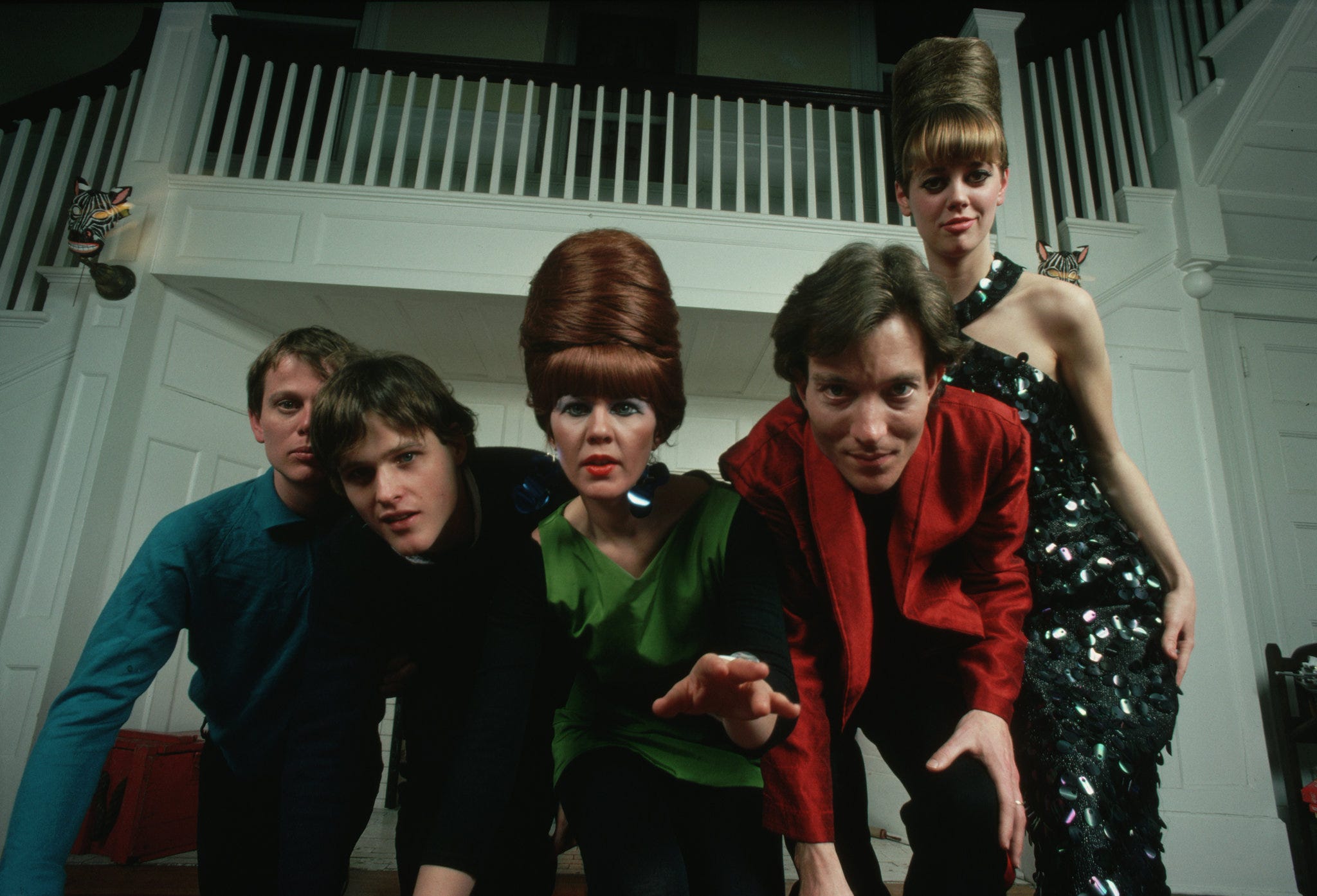
Songs are much more like sculptures than paintings. They can emerge in different ways. Different ways of going. Different ways of voicing.
Sometimes you hear the song in your mind and mold it out of clay.
Sometimes you see it scattered around on the floor in front of you and assemble it together.
Sometimes you feel it buried in the marble block and chip away.
Maybe that method accounts for the monumentality of “Love Shack”—you can still feel the weight of that giant stone. A whole universe exists that is greater than the sum of its parts. You can sense the heft, the lines cut, the lost verses. It’s almost Dylanesque in grandiosity. No time to explain. First words: “If you see a faded sign at the side of the road that says 15 miles to the Love Shack-” They never bother to complete the sentence. You gotta surrender to the world of the song or you’ll be hanging on for dear life with your fingernails.
Reminds me of “Just Like Tom Thumb’s Blues.” Dylan opens: “When you’re lost in the rain in Juarez and it’s Easter time too.”
Obscure specifics often hide shared truths and express them deeper and more truly than simple statements.
“When you’re lost in the rain in Juarez and it’s Easter time too” // “When you’re far from home, lonely, and it feels like even the weather is against you.”
Might I compare:
“If you see a faded sign at the side of the road that says 15 miles to the Love Shack” // “True joy is spontaneous and elusive.”
faded sign: true joy is hard to spot
side of the road: but it exists in common places—often only accessible in fleeting moments of magic
15 miles away: and requires an uncertain and self-directed journey
A complex set of associations no large language model could ever dream up. Overgrown roadsides, faded advertisements, happenstance. Kitsch. Mini-golf courses, roadtrips, the family minivan, hot and humid, burger joints, soft serve, “How ya doin, hun?”
Mythology is full of portals that only open at specific times in specific places under specific conditions that never recur. Greek mythology has its entrances to the underworld. Celtic mythology, which we in North America can count as part of our inheritance, is chock-full of mystical off-ramps to other realms, to faerie, that remain invisible to all except a chosen few, the thresholds often crossed by accident.
I’ll bet, dear reader, that as a kid you and perhaps your closest, most treasured friends had a secret world accessible only to you, a place you could go only under certain conditions that existed outside the rules of the human world. Maybe the entrance was a certain grove of trees, maybe even a specific tree, maybe a brambled blackberry bush with an opening too small for adults to follow. Maybe it only opened at a certain time of day, dawn or dusk, or maybe after the adults in your life thought you had gone to sleep. I’ll bet it wasn’t hard for you to get there—I’ll bet it was easily accessible—but I’ll also bet that no one could follow you there. How could they? They couldn’t see the way.
And I’ll bet that you had driven that stretch of strip-mall laden commuter road from town to town every day for the last fifteen years before catching a glimmer out of the corner of your eye, a small flash of faded color, a turn-off shrouded by knotweed and untrimmed branches, a small, intriguing sign that beckoned you to come closer.
I had a barber in Los Angeles named David who lived in San Francisco for many years where he was the lead singer, the Fred Schneider, in a cover band called, I believe, Private Idaho that did B-52s style covers of non-B-52s songs. I remember him saying a particular crowd favorite was “Rock You Like a Hurricane.” A short list! Those artists who are singular enough to be instantly recognizable in costume and whose style alone can transform the meaning of a song. Dylan, of course. Bjork. David Byrne. Chet Baker.
I count Chet Baker Sings as one of my most influential records. The nuance and melancholy he brings to those done-and-done-again standards, even “Time After Time,” a song of unabashed gratefulness and unquestioning love, is remarkable and fresh. He transforms the jazz standards into confessionals and heralds the age of the singer songwriter nearly ten years before Dylan’s first record—always back to Dylan, I guess. Chet Baker Sings—1954! 1954! It couldn’t have existed before, the technical requirements for close mic-ing vocals were new—more on that next week perhaps. Right on time.
I’m working on my next record these days: Austin Weber Sings Chet Baker Sings. I concocted that idea in college as an homage to that most important of records. Also, a fun tradition to join, the full cover record: The Louvin Brothers Sing the Delmore Brothers, Noam Pikelny Plays Kenny Baker Plays Earl Scruggs, Austin Weber Sings Chet Baker Sings. More on that next week, too, perhaps.
Yours,
Austin.
No posts
Comments
Nothing yet. Say the first thing.
Sign in to join the conversation.